Building Blocks
Sottocategorie di "Building Blocks"
- Acidi boronici e derivati dell'acido boronico(5.783 prodotti)
- Building Blocks Chirali(1.242 prodotti)
- Building Blocks Idrocarburici(6.105 prodotti)
- Building Blocks organici(61.055 prodotti)
Trovati 205383 prodotti di "Building Blocks"
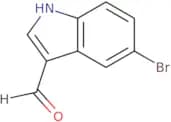
5-Bromoindole-3-carboxaldehyde
CAS:5-Bromoindole-3-carboxaldehyde is a water molecule that has been crystallized in the form of an amide. It is a chemical substance with asymmetric synthesis and significant antifungal activity. 5-Bromoindole-3-carboxaldehyde is active against some strains of the fungus Candida albicans and has been shown to inhibit the growth of kidney cells. This molecule also binds to the neurokinin 1 receptor and is used as a probe for fluorescence studies. The efficient method for synthesizing 5-Bromoindole-3-carboxaldehyde includes using silico analysis to confirm the structure on a computer, then performing an asymmetric synthesis with an acid catalyst to produce this compound.
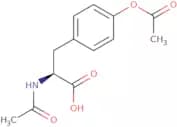
Formula:C9H6BrNOPurezza:Min. 98 Area-%Colore e forma:PowderPeso molecolare:224.05 g/molN,O-Bis-acetyl-L-tyrosine
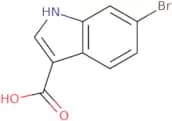
CAS:N,O-Bis-acetyl-L-tyrosine is a bioreversible acetylated amino acid that is synthesized from L-tyrosine. It can be used in the preparation of creatine kinase. N,O-Bis-acetyl-L-tyrosine has been shown to bind to the aromatic residues on creatine kinase and inhibit its activity. The acetylation of lysine residues may be reversible, but this process requires the presence of a hydroxyl group on the tyrosine residue. This reaction is catalyzed by a lysine residue on creatine kinase. Studies have shown that the kinetic properties of N,O-Bis-acetyl-L-tyrosine are similar to those of L-tyrosine and therefore it can be used as an alternative substrate for creatine biosynthesis.Formula:C13H15NO5Purezza:Min. 98 Area-%Colore e forma:White PowderPeso molecolare:265.26 g/mol6-Bromo-1H-indole-3-carboxylic acid
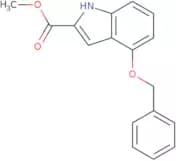
CAS:6-Bromo-1H-indole-3-carboxylic acid is a natural product that is isolated from the marine sponge Smenospongia purpurea. It was first reported in 1979 and has been used for the synthesis of other compounds. 6-Bromoindole, a precursor to 6-bromo-1H-indole-3-carboxylic acid, is biosynthesized from methyl ester and NMR spectra indicate that it has a dihedral angle of 173°. This compound has been shown to have antibacterial activity against staphylococcus.Formula:C9H6BrNO2Purezza:Min. 95%Colore e forma:PowderPeso molecolare:240.05 g/mol4-Benzyloxy-1H-indole-2-carboxylic acid methyl ester
CAS:4-Benzyloxy-1H-indole-2-carboxylic acid methyl ester is a high quality reagent that is used as an intermediate in the synthesis of various complex compounds, including useful scaffolds and building blocks. It is a versatile building block with a wide range of reactions that can be carried out on it. 4-Benzyloxy-1H-indole-2-carboxylic acid methyl ester has been shown to be useful for the synthesis of speciality chemicals and research chemicals. This compound has also been shown to be useful for the preparation of fine chemicals, such as pharmaceuticals, pesticides, and flavorants.Formula:C17H15NO3Colore e forma:PowderPeso molecolare:281.31 g/mol4'-Butylacetophenone
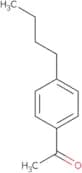
CAS:4'-Butylacetophenone (BA) is a phenolic compound that has been shown to reduce the need for an acceptor in wastewater treatment. It can be used as a substitute for hexane, which is commonly used to extract hydrophobic compounds from water. 4'-Butylacetophenone has also been shown to have anti-inflammatory properties and has been used in the synthesis of nonsteroidal anti-inflammatory drugs such as diclofenac amide.Formula:C12H16OPurezza:Min. 95%Colore e forma:PowderPeso molecolare:176.25 g/mol5-Benzyloxyindole-3-glyoxylamide
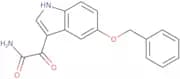
CAS:5-Benzyloxyindole-3-glyoxylamide is a versatile building block that can be used in the synthesis of complex compounds. It has been shown to have a high quality and is useful as a reagent for research purposes. 5-Benzyloxyindole-3-glyoxylamide can be used as a reaction component and is useful as an intermediate in organic synthesis. 5BIGA has CAS number 22424-62-0 and is also known as 3-(benzyloxy)-5-(2,2,2-trifluoroethoxy)indole glyoxamide.Formula:C17H14N2O3Purezza:Min. 95%Peso molecolare:294.3 g/mol4-(Bromomethyl)-2-iodo-1-nitrobenzene
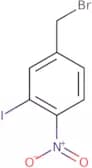
CAS:4-(Bromomethyl)-2-iodo-1-nitrobenzene is a fine chemical that can be used as an intermediate for the synthesis of target molecules. It is a versatile building block with many different reactions and applications, such as research chemicals, reaction components, and speciality chemicals. This compound is also a useful building block for the synthesis of complex molecules. It has high quality and can be used as a reagent in lab experiments.Formula:C7H5BrINO2Purezza:Min. 95%Colore e forma:PowderPeso molecolare:341.93 g/mol6-Carboxyindole
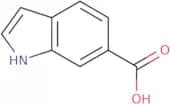
CAS:6-Carboxyindole is an indole that binds to the IL-17A receptor, which leads to the production of pro-inflammatory cytokines. It has been shown to be involved in autoimmune diseases and other inflammatory conditions. 6-Carboxyindole can be used as a probe for studying the biology of IL-17A, by binding to it and inhibiting its effects. The chemical structure of 6-carboxyindole is also useful for diagnostic purposes, as it can bind to antibodies and antigens for detecting infectious diseases or other biological processes. 6-Carboxyindole can be used in the treatment of heart tissue by binding with monoclonal antibodies that are specific for cardiac proteins such as myosin light chain kinase.Formula:C9H7NO2Purezza:Min. 95%Peso molecolare:161.16 g/mol5-Chloro-2-methylindole
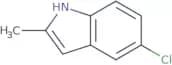
CAS:5-Chloro-2-methylindole is an antimicrobial agent that is used to treat bacterial infections. It binds to the enzyme acetylacetone hydrazide, which prevents it from forming acetoacetate and 5-chloroindole. This leads to a decrease in the formation of serotonin, which may contribute to the alleviation of symptoms in patients with cerebral escherichia coli infection. 5-Chloro-2-methylindole has been shown to have antimicrobial effects against a number of bacteria, including E. coli and Staphylococcus aureus. The drug is injected intraperitoneally as a magnetic resonance imaging contrast agent for myelography, angiography, and other medical imaging procedures.
Formula:C9H8ClNPurezza:Min. 95%Peso molecolare:165.62 g/mol4-Chloro-3-nitrobenzonitrile
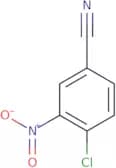
CAS:4-Chloro-3-nitrobenzonitrile is a molecule with potent antibacterial activity. It is synthesized by the reaction of sodium carbonate, hydrogen chloride, and 4-chlorobenzonitrile. 4-Chloro-3-nitrobenzonitrile has shown antimicrobial properties against a wide range of bacteria, including methicillin resistant Staphylococcus aureus (MRSA) and Enterococcus faecium. This compound has been used in the treatment of infections caused by these bacteria. 4-Chloro-3-nitrobenzonitrile also has the ability to inhibit the synthesis of fatty acids and lipids in bacterial cells, which may be responsible for its antimicrobial effects.Formula:C7H3ClN2O2Purezza:Min. 95%Colore e forma:PowderPeso molecolare:182.56 g/mol6-Chloro-5-fluoroindole
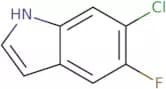
CAS:6-Chloro-5-fluoroindole is a chemical compound that has been shown to be an effective inhibitor of 5-HT2C receptors. 6-Chloro-5-fluoroindole was synthesized in 1972 by the reaction of formamide with chloroacetyl chloride, and it was found to have anti-cancer effects in 1979. 6-Chloro-5-fluoroindole binds to 5HT2C receptors and prevents the activation of G proteins. This inhibition leads to cancer cell death because the receptor is involved in many important signalling pathways. 6CI5FI is used as a research tool for studying the function of this receptor.Formula:C8H5ClFNPurezza:Min. 95%Colore e forma:PowderPeso molecolare:169.58 g/mol1-Cyano-2-hydroxy-3-butene
CAS:1-Cyano-2-hydroxy-3-butene is a mitochondrial toxin that causes apoptosis in liver cells. It has been shown to cause liver lesions in CD1 mice. 1-Cyano-2-hydroxy-3-butene reduces the mitochondrial membrane potential, which leads to a decrease in ATP production and an increase in reactive oxygen species (ROS) production. This toxin also inhibits the transcriptional activity of nuclear receptors and induces the expression of cytochrome P450 2E1, leading to increased detoxification enzyme activity. 1-Cyano-2-hydroxy-3-butene is activated by mitochondria, which leads to its ability to cause apoptosis of liver cells.Formula:C5H7NOPurezza:Min. 95%Colore e forma:Colorless PowderPeso molecolare:97.12 g/mol3-Carboxypropanesulfonamide
CAS:3-Carboxypropanesulfonamide is a chemical compound that has been shown to have the ability to modulate cardiac cell function. This compound has been shown to be effective in a reaction monitoring technique, which monitors the functional groups and techniques of chemical reactions, in order to introduce this molecule into the cell membrane and alter its potential. 3-Carboxypropanesulfonamide is capable of changing the lipid composition of the membrane by introducing a linker group that can bind with other molecules such as cholesterol or phospholipids. This linker group alters the membrane potential of cells, leading to changes in ion flow and cellular response.Formula:C4H9NO4SPurezza:Min. 95%Colore e forma:White PowderPeso molecolare:167.18 g/moltrans-4-Coumaric acid
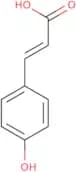
CAS:Trans-4-coumaric acid or p-coumaric acid, is a derivative of the cinnamic acid. It is the initial substrate to produce several intermediates such as ferulic acid, caffeic acid, rosmarinic acid, gallic acid, and carnosic acid. Trans-4-coumaric acid, as well as its derivatives, have antioxidant properties; they are common ingredients in cosmetics and as dietary supplement.Formula:C9H8O3Purezza:Min. 98 Area-%Colore e forma:PowderPeso molecolare:164.16 g/mol2-Chloroquinoline
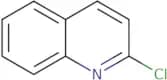
CAS:2-Chloroquinoline is a compound that has antimicrobial properties. It acts by inhibiting bacterial RNA synthesis and protein synthesis. 2-Chloroquinoline has been shown to have toxicological effects in animal studies, including cancer. It also inhibits the activity of the cb2 receptor and the CCR5 receptor, which are involved in tumor growth. The molecular docking analysis for this compound is available, which can be found on PubChem.Formula:C9H6ClNPurezza:Min. 98%Colore e forma:PowderPeso molecolare:163.6 g/mol3-Chloro-1,2-benzisothiazole
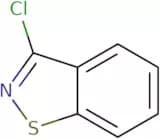
CAS:3-Chloro-1,2-benzisothiazole is a nucleophilic agent with a hydrogen bond donor. It has been shown to inhibit the replication of RNA in the presence of adenosine triphosphate (ATP) and to bind to amines. 3-Chloro-1,2-benzisothiazole is used as an inhibitor for non-nucleoside reverse transcriptase inhibitors. It has been shown to have high potency and strong inhibitory activity against HIV and other retroviruses. 3-Chloro-1,2-benzisothiazole also inhibits vibrational modes associated with enzymatic reactions.Formula:C7H4ClNSPurezza:Min. 95%Colore e forma:PowderPeso molecolare:169.63 g/mol2'-Chloroacetophenone
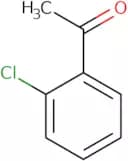
CAS:2'-Chloroacetophenone is an organic compound that has been used as a hydrogen donor in the synthesis of natural products. It is produced by the reaction of acetone with chlorine gas, and it can be isolated by distillation. 2'-Chloroacetophenone reacts with hexane to form 2-chlorohexane, which can be further reacted with methanol to form methoxybenzene. The optimum concentration for this reaction is 10% (w/v) at 25°C. This chemical also has reductase activities and may enhance the activity of other reductases. 2'-Chloroacetophenone is a colorless liquid that boils at 172°C and decomposes above 300°C. It has a molecular weight of 119.16 g/mol and a density of 1.037 g/cm3 at 20°C and 0.101 g/cm3 at 25°C. It also has an intram
Formula:C8H7ClOPurezza:Min. 96 Area-%Colore e forma:Colorless Clear LiquidPeso molecolare:154.59 g/mol2-(4'-Chlorobenzoyl)benzoic acid
CAS:2-(4'-Chlorobenzoyl)benzoic acid (2-CBA) is a sulfa drug that inhibits bacterial growth by blocking the synthesis of folic acid. It is also known to be luminescent and can be used in techniques such as luminescent probes. 2-CBA has antibacterial activity and can inhibit bacterial growth in a chromatographic method. 2-CBA is chemically stable and has been shown to have antibacterial properties against gram-positive bacteria, including Bacillus subtilis and Staphylococcus aureus. 2-CBA also has the ability to react with phthalazinone, an inhibitor of glutamine synthetase, which is involved in the production of ATP from ADP. This reaction results in the formation of an unstable intermediate which decomposes into CO2 and benzoic acid.
Formula:C14H9ClO3Purezza:Min. 95%Colore e forma:White PowderPeso molecolare:260.67 g/mol5-Chloroindole-3-acetic acid
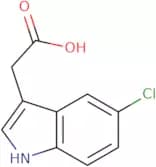
CAS:5-Chloroindole-3-acetic acid (5CI3A) is a compound that belongs to the indole class of compounds. It is structurally similar to the amino acid tryptophan, which makes it a good template molecule for the synthesis of other indoles. 5CI3A is mainly found in plants and bacteria, where it acts as an auxin. In plants, 5CI3A stimulates cell elongation and leaf growth by interacting with plant hormones such as auxins and gibberellins. This compound also binds to serum albumin, which may be responsible for its low toxicity in humans. 5CI3A has been shown to inhibit the activity of human serum albumin by forming hydrogen bonds with it. This inhibition reduces the binding affinity of 5CI3A for other proteins in serum, making it less likely to interact with them than if there were no binding competition.Formula:C10H8ClNO2Colore e forma:PowderPeso molecolare:209.63 g/mol2-Carboxy-3,4-dimethoxybenzaldehyde
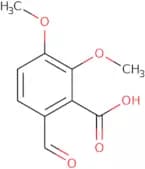
CAS:2-Carboxy-3,4-dimethoxybenzaldehyde is a chemical that belongs to the class of compounds known as butyric acid derivatives. It is a colorless liquid with a pungent odor and can be used in pharmaceutical preparations as an antispasmodic or a sedative. 2-Carboxy-3,4-dimethoxybenzaldehyde has been shown to have radical scavenging activities in tissue culture systems and dry weight reaction products in the presence of hydrochloric acid and chloride ion. This compound can also act as an acid complexing agent for hydrogen chloride and depressant activity on animal behavior.Formula:C10H10O5Purezza:Min. 95%Colore e forma:White Yellow PowderPeso molecolare:210.18 g/mol