Building Blocks
Sottocategorie di "Building Blocks"
- Acidi boronici e derivati dell'acido boronico(5.783 prodotti)
- Building Blocks Chirali(1.242 prodotti)
- Building Blocks Idrocarburici(6.105 prodotti)
- Building Blocks organici(61.055 prodotti)
Trovati 205383 prodotti di "Building Blocks"
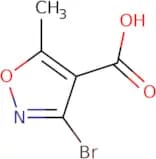
3-Bromo-5-methylisoxazole-4-carboxylic acid
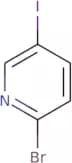
CAS:Versatile small molecule scaffoldFormula:C5H4BrNO3Purezza:Min. 95%Peso molecolare:206 g/mol2-Bromo-5-iodopyridine
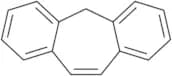
CAS:2-Bromo-5-iodopyridine is a compound that has been studied for its potential use in the treatment of neurodegenerative diseases. It inhibits nicotinic acetylcholine receptors, which are involved in the transmission of nerve impulses to the muscles. 2-Bromo-5-iodopyridine binds to acetylcholine receptors, blocking the uptake of acetylcholine and preventing it from binding with the receptor. This leads to an increase in acetylcholine levels, which increases muscle contraction and improves brain function. The crystal structure of 2-bromo-5-iodopyridine has been determined by x-ray diffraction studies. The molecule contains two bromine atoms and five iodine atoms, which are arranged such that they form a square planar geometry around a central metal ion (hydrochloric acid). Nitrogen atoms are found on opposite corners of this square plane. These nitrogen atoms can be substituted with chlorideFormula:C5H3BrINPurezza:Min. 95%Colore e forma:Off-White PowderPeso molecolare:283.89 g/molCyproheptadine Related Compound A
CAS:Cyproheptadine Related Compound A is a molecule that binds to the histamine H2 receptor and can be used for the treatment of inflammatory bowel disease, chronic bronchitis, and diabetic neuropathy. It is metabolized by hydrolysis of the ester group by hydroxylases or oxidases in the liver. Cyproheptadine Related Compound A has been shown to have anti-inflammatory effects due to its ability to inhibit prostaglandin synthesis.Formula:C15H12Purezza:Min. 95%Peso molecolare:192.26 g/mol4-tert-Butylaniline
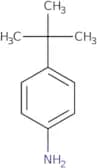
CAS:4-tert-Butylaniline is a chemical compound with the molecular formula C6H7N. It is an organic base that has acidic properties and can be used as an amine. 4-tert-Butylaniline is used in the manufacture of other chemicals, such as herbicides, pesticides, and pharmaceuticals. 4-tert-Butylaniline binds to metal ions such as palladium by hydrogen bonding. This binding increases the reactivity of the metal ion and allows it to catalyze reactions that would otherwise not occur. 4-tert-Butylaniline also has transport properties and binds to replicon cells through adsorption mechanisms.Formula:C10H15NPurezza:Min. 95%Colore e forma:Colorless Clear LiquidPeso molecolare:149.23 g/mol1,1-Dimethylpiperazin-1-ium chloride
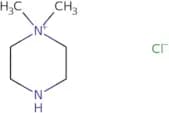
CAS:1,1-Dimethylpiperazin-1-ium chloride is a fine chemical that is used as a building block in the synthesis of complex compounds. It has been shown to be useful as a reaction component in the synthesis of speciality chemicals and intermediate products for research purposes. 1,1-Dimethylpiperazin-1-ium chloride is also an important reagent for the preparation of high quality chemical compounds.Formula:C6H15ClN2Purezza:Min. 95%Colore e forma:PowderPeso molecolare:150.65 g/mol4-(Bromomethyl)benzylamine HBr
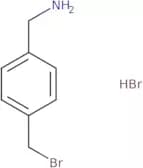
CAS:4-(Bromomethyl)benzylamine HBr is a fine chemical that can be used as a building block for organic synthesis. This compound is also a useful research chemical, reagent, and specialty chemical. 4-(Bromomethyl)benzylamine HBr has been used as a reaction component in the synthesis of various pharmaceuticals, such as theophylline and ampicillin. It has also been used as an intermediate in the production of other compounds, such as 4-hydroxybutyric acid and 3-methylthiopropionic acid. This complex compound can be purchased at high quality and is versatile enough to act as a scaffold for many reactions.Formula:C8H11Br2NPurezza:Min. 95%Colore e forma:PowderPeso molecolare:280.99 g/mol4-[(Pyridine-3-carbonyl)amino]butyric acid
CAS:4-[(Pyridine-3-carbonyl)amino]butyric acid (4-PBA) is a non-proteinogenic amino acid that has been found in food and has been shown to have therapeutic effects on a number of diseases. 4-PBA is converted to gamma-aminobutyric acid (GABA) by the enzyme GABA transaminase. It also has a synergistic effect with sodium succinate, which is another precursor in the production of GABA. This synergistic effect increases the amount of GABA produced from 4-PBA and sodium succinate when they are consumed together. 4-PBA also binds to receptors for dopamine, which may be why it is effective for treating diabetic neuropathy and Parkinson's disease.Formula:C10H12N2O3Purezza:Min. 95%Colore e forma:White PowderPeso molecolare:208.21 g/mol4-Nitrobenzylamine hydrochloride
CAS:4-Nitrobenzylamine hydrochloride is a bifunctional immobilizing agent that can be used for the immobilization of Zn2+. It reacts with nitrogen atoms, forming an amination reaction. The linker is covalently immobilized to the surface and the nature of this chemical is synthetic. 4-Nitrobenzylamine hydrochloride is synthesized by reacting nitric acid with benzaldehyde in ammonia solution at room temperature. This chemical has shown to be effective in reactions where a flow rate is needed or when diamidines are present in the reaction mixture.Formula:C7H8N2O2·HClPurezza:Min. 95%Colore e forma:PowderPeso molecolare:188.61 g/mol1-Nitrobutane
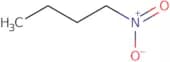
CAS:1-Nitrobutane is an organic compound with the chemical formula CH3NO2. It is a colorless liquid that is soluble in water and insoluble in ether. 1-Nitrobutane can react with hydroxyl groups to form nitroalkanes and it has been used as a reaction product for kinetic measurements of hydroxyl group concentration. The reaction mechanism of 1-nitrobutane is not completely known, but it has been proposed that the hydroxyl group reacts with the nitro group by nucleophilic substitution. 1-Nitrobutane can be used as a reagent for chromatography because it absorbs ultraviolet radiation and emits photoelectrons, which can be detected by covid-19 detectors. 1-Nitrobutane also has been shown to have antiviral properties against pandemic influenza A virus (H1N1) in cultured cells and rat liver microsomes.Formula:C4H9NO2Purezza:Min. 95%Colore e forma:PowderPeso molecolare:103.12 g/mol1,3-Dimethoxybenzene
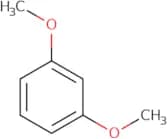
CAS:1,3-Dimethoxybenzene is a carbonyl compound with the chemical formula C6H4(OCH2)2. It is soluble in water and has a boiling point of 176 °C. This compound reacts with hydrochloric acid to produce an intermediate acid chloride and hydrogen chloride gas. 1,3-Dimethoxybenzene also reacts with trifluoromethanesulfonic acid to produce an intermediate sulfonium salt and hydrogen fluoride gas. 1,3-Dimethoxybenzene can be used as a reagent for analytical methods such as IR spectroscopy, NMR spectroscopy, or mass spectrometry. When 1,3-dimethoxybenzene is combined with sodium hydroxide and acetic acid it forms an isothiouronium salt that can be used to study the effects of fatty acids on physiological activity. 1,3-Dimethoxybenzene has conformationalFormula:C8H10O2Purezza:Min. 95%Colore e forma:Clear LiquidPeso molecolare:138.16 g/mol2,3-Diaminonaphthalene
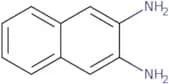
CAS:For fluorometric measurement of nitrite/nitrate in cells; inhibits NO productionFormula:C10H10N2Purezza:Min. 95 Area-%Colore e forma:Brown Off-White PowderPeso molecolare:158.2 g/mol2,3-Dihydro-1,4-benzodioxine-5-sulfonyl chloride
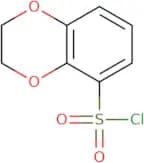
CAS:Versatile small molecule scaffold
Formula:C8H7ClO4SPurezza:Min. 95%Colore e forma:PowderPeso molecolare:234.65 g/mol(2-Bromoethyl)benzene
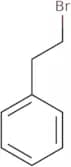
CAS:2-Bromoethylbenzene is a nucleophilic substitutive agent that can be used in organic synthesis. It reacts with an electron-rich compound to form a covalent bond and release bromine. 2-Bromoethylbenzene has been shown to have therapeutic effects on autoimmune diseases such as arthritis and lupus erythematosus. It also has the ability to inhibit protease activity, which may be due to its hydroxy derivative. The reaction mechanism of 2-bromoethylbenzene is not fully understood, but it is known that halides can increase the rate of the substitution reaction. This chemical also has pharmaceutical applications, including as a precursor in amphetamine synthesis and as a reagent in kinetic studies of enzymes.Formula:C8H9BrPurezza:Min. 95%Colore e forma:Colorless Clear LiquidPeso molecolare:185.06 g/mol2,4-Dimethoxybenzylamine
CAS:Tak-659 is an amide compound that inhibits the serine protease activity of a number of enzymes, including cathepsin B and L. Tak-659 has been shown to have inhibitory effects on inflammation in animal models by inhibiting the production of inflammatory cytokines. Tak-659 has also been shown to impair protein synthesis in gram-negative bacteria, such as Escherichia coli and Pseudomonas aeruginosa. The mechanism for this inhibition is not entirely clear but may be due to tak-659 binding to the ribosomal RNA near the peptidyl transferase center, blocking the entry of amino acids into the ribosome. Tak-659 binds with high affinity to adenosine receptors and has been shown to reduce levels of inflammatory cytokines in mouse tumor cells.
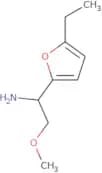
Formula:C9H13NO2Purezza:Min. 95%Colore e forma:Colorless Clear LiquidPeso molecolare:167.21 g/mol1-(5-Ethylfuran-2-yl)-2-methoxyethan-1-amine
CAS:Versatile small molecule scaffoldFormula:C9H15NO2Purezza:(%) Min. 85%Colore e forma:Clear LiquidPeso molecolare:169.22 g/mol4'-Bromo-2'-methylacetophenone
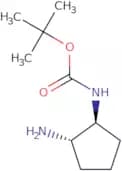
CAS:4'-Bromo-2'-methylacetophenone is a reagent and a useful intermediate that can be used in the synthesis of a variety of organic compounds. It is supplied as a fine chemical and is currently not commercially available. It has been found to be an effective building block for the synthesis of speciality chemicals, such as research chemicals and versatile building blocks.Formula:C9H9BrOPurezza:Min. 95%Colore e forma:Slightly Yellow Clear LiquidPeso molecolare:213.07 g/mol(1S,2S)-Boc-1,2-diaminocyclopentane
CAS:Please enquire for more information about (1S,2S)-Boc-1,2-diaminocyclopentane including the price, delivery time and more detailed product information at the technical inquiry form on this pageFormula:C10H20N2O2Purezza:Min. 95%Colore e forma:PowderPeso molecolare:200.28 g/mol2-[3-(Dimethylphosphoryl)phenyl]-4,4,5,5-tetramethyl-1,3,2-dioxaborolane
CAS:Versatile small molecule scaffoldFormula:C14H22BO3PPurezza:Min. 95%Colore e forma:PowderPeso molecolare:280.11 g/molcis-4,7,10,13,16,19-Docosahexaenoic acid
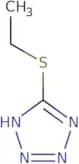
CAS:cis-4,7,10,13,16,19-Docosahexaenoic acid (also known as DHA or cervonic acid) is one of the omega-3 fatty acids (a group of highly unsaturated fatty acids). As for most omega-3 fatty acids, good sources of DHA include fish oils and other seafoods. DHA plays a key role in human brain development and function and is also found in high concentration in the retina, central nervous system and skin. As such DHA is a key nutrient which is widely used as a dietary supplement, particularly for infants and pregnant women, with its potential health benefits currently being investigated across a number of different disease areas.Formula:C22H32O2Purezza:Min. 80 Area-%Colore e forma:Yellow Clear LiquidPeso molecolare:328.49 g/mol5-Ethylthio-1H-tetrazole - Conductivity >30 uS/cm
CAS:5-Ethylthio-1H-tetrazole is a chloroformate that is used as an inhibitor of the cell membrane permeability. It can be prepared by the reaction of thiourea and ethyl bromoacetate in chloroform. This compound has been shown to inhibit the acidification of cells, which is caused by hydrogen ions leaking through the cell membrane. 5-Ethylthio-1H-tetrazole is also an inhibitor of RNA synthesis, which may be due to its ability to bind with nucleoside triphosphates and competitively inhibit ATPase activity. This product also has a luminescent property, which may be due to its ability to produce light upon oxidation in air or water.Formula:C3H6N4SColore e forma:PowderPeso molecolare:130.17 g/mol

![4-[(Pyridine-3-carbonyl)amino]butyric acid](/_next/image/?url=https%3A%2Fstatic.cymitquimica.com%2Fproducts%2F3D%2Fthumb-webp%2FFP15522.webp&w=3840&q=75)



![2-[3-(Dimethylphosphoryl)phenyl]-4,4,5,5-tetramethyl-1,3,2-dioxaborolane](/_next/image/?url=https%3A%2Fstatic.cymitquimica.com%2Fproducts%2F3D%2Fthumb-webp%2FTID11021.webp&w=3840&q=75)