Building Blocks
Questa sezione contiene prodotti fondamentali per la sintesi di composti organici e biologici. Building blocks sono i materiali di partenza essenziali utilizzati per costruire molecole complesse attraverso varie reazioni chimiche. Svolgono un ruolo critico nella scoperta di farmaci, nella scienza dei materiali e nella ricerca chimica. Presso CymitQuimica, offriamo una gamma diversificata di building blocks di alta qualità per supportare le tue ricerche innovative e progetti industriali, assicurandoti di avere i componenti essenziali per una sintesi di successo.
Sottocategorie di "Building Blocks"
- Acidi boronici e derivati dell'acido boronico(5.784 prodotti)
- Building Blocks Chirali(1.242 prodotti)
- Building Blocks Idrocarburici(6.105 prodotti)
- Building Blocks organici(61.061 prodotti)
Trovati 205399 prodotti di "Building Blocks"
Ordinare per
Purezza (%)
0
100
|
0
|
50
|
90
|
95
|
100
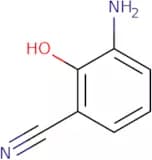
3-Amino-2-hydroxybenzonitrile
CAS:3-Amino-2-hydroxybenzonitrile is a chemical that can be used as a building block in the synthesis of other compounds. It is also a versatile intermediate for organic synthesis and can be used for the production of pharmaceuticals, agrochemicals, and many other materials. 3-Amino-2-hydroxybenzonitrile is a white solid with a melting point of 203 degrees Celsius. It has high purity, low impurities, and a high quality.
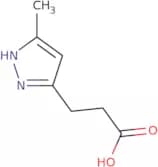
Formula:C7H6N2OPurezza:Min. 95%Colore e forma:PowderPeso molecolare:134.14 g/mol3-(3-Methyl-1H-pyrazol-5-yl)propanoic acid
CAS:Versatile small molecule scaffoldFormula:C7H10N2O2Purezza:Min. 95%Colore e forma:PowderPeso molecolare:154.17 g/molThieno[3,2-c]pyridine-7-carboxylic acid
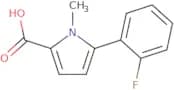
CAS:Thieno[3,2-c]pyridine-7-carboxylic acid is an anticancer drug that belongs to the class of acid derivatives. It has been shown to be active against solid tumors and has been found to be effective in inhibiting tumor growth and proliferation. Thieno[3,2-c]pyridine-7-carboxylic acid is a prodrug that is activated by hydrolysis of the ester group. The activation process occurs through an enzymatic mechanism that requires two enzymes: carboxylesterase and cytochrome P450.Formula:C8H5NO2SPurezza:Min. 95%Colore e forma:PowderPeso molecolare:179.2 g/mol5-(2-Fluorophenyl)-1-methyl-1H-pyrrole-2-carboxylic acid
CAS:Versatile small molecule scaffold
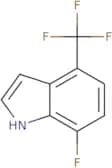
Formula:C12H10FNO2Purezza:Min. 95%Colore e forma:PowderPeso molecolare:219.21 g/mol7-Fluoro-4-(trifluoromethyl)-1H-indole
CAS:Versatile small molecule scaffoldFormula:C9H5F4NPurezza:Min. 95%Colore e forma:PowderPeso molecolare:203.14 g/mol6-Bromo-4-chlorocinnoline
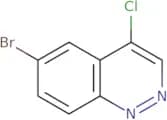
CAS:6-Bromo-4-chlorocinnoline is a versatile building block that can be used as a reaction component, reagent, or speciality chemical. It can be converted into other useful compounds with the help of various reactions. 6-Bromo-4-chlorocinnoline is a fine chemical that is a useful scaffold for the synthesis of complex compounds. This compound has been shown to react with amines to form ureas and with nitriles to form azides.Formula:C8H4BrClN2Purezza:Min. 95%Colore e forma:PowderPeso molecolare:243.5 g/mol1-(Chloromethyl)-3,5-diiodobenzene
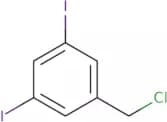
CAS:1-(Chloromethyl)-3,5-diiodobenzene is a versatile and high quality chemical building block that is useful for research purposes. It can be used as a reagent or speciality chemical in the synthesis of other compounds. This compound has been shown to be an intermediate for the synthesis of more complex compounds, such as pharmaceuticals, agrochemicals, and fine chemicals. 1-(Chloromethyl)-3,5-diiodobenzene has many uses in organic chemistry including as a reaction component or scaffold for the construction of complex molecules.Formula:C7H5ClI2Purezza:Min. 95%Colore e forma:PowderPeso molecolare:378.37 g/mol3-Methyl-5-(trifluoromethyl)isoxazole-4-carboxylic acid
CAS:Versatile small molecule scaffoldFormula:C6H4F3NO3Purezza:Min. 95%Peso molecolare:195.1 g/mol2-Bromo-N-(2-chloro-6-methylphenyl)acetamide
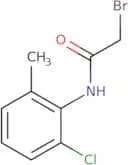
CAS:2-Bromo-N-(2-chloro-6-methylphenyl)acetamide is a fine chemical that can be used as a versatile building block for research and as a reaction component for the synthesis of complex compounds. This compound is also useful for the production of speciality chemicals and other high quality reagents.Formula:C9H9BrClNOPurezza:Min. 95%Colore e forma:PowderPeso molecolare:262.53 g/molN,N-Diethylpyrrolidine-2-carboxamide
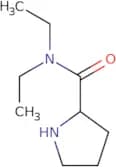
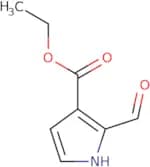
CAS:Versatile small molecule scaffoldFormula:C9H18N2OPurezza:Min. 90%Colore e forma:PowderPeso molecolare:170.25 g/molEthyl 2-formyl-1H-pyrrole-3-carboxylate
CAS:Ethyl 2-formyl-1H-pyrrole-3-carboxylate is a fine chemical that can be used as a building block in the synthesis of drugs, pesticides, and other organic compounds. It is also a reagent for the synthesis of other compounds. The compound can be easily synthesized by reacting ethyl formate with pyrrole. This process occurs spontaneously at room temperature and does not require any catalysts or solvents. Ethyl 2-formyl-1H-pyrrole-3-carboxylate has been used to synthesize antihistamines, antihypertensives, and anticancer agents. As it is a versatile building block, it can be used as an intermediate for the synthesis of many other compounds. It has also been shown to have useful scaffolding properties in drug design.Formula:C8H9NO3Purezza:Min. 95%Colore e forma:PowderPeso molecolare:167.16 g/molHexahydropyrrolo[1,2-a]pyrazine-1,4-dione
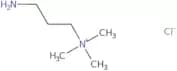
CAS:Hexahydropyrrolo[1,2-a]pyrazine-1,4-dione is a neuroprotective compound that is structurally related to the well-known anti-inflammatory drug ketoprofen. It has been shown to inhibit the production of pro-inflammatory cytokines and reactive oxygen species in vitro by a mechanism involving inhibition of mitochondrial membrane permeability. Hexahydropyrrolo[1,2-a]pyrazine-1,4-dione also inhibits bacterial growth and urea nitrogen excretion in mice. This compound has been found in cyanobacteria and some etoac extracts, as well as in bacteria from the genera Pseudomonas and Staphylococcus.Formula:C7H10N2O2Purezza:Min. 95%Peso molecolare:154.17 g/mol(3-Aminopropyl)trimethylazanium chloride
CAS:(3-Aminopropyl)trimethylazanium chloride is a fine chemical that is used as a building block and reagent in the synthesis of various organic compounds. It has been shown to be useful for reactions involving nucleophilic aromatic substitution, radical addition, and cycloaddition reactions. (3-Aminopropyl)trimethylazanium chloride has also been shown to be an effective intermediate in the synthesis of various pharmaceuticals. The CAS number is 19223-69-9.Formula:C6H17ClN2Purezza:Min. 95%Colore e forma:PowderPeso molecolare:152.66 g/mol2-[2-(Morpholin-4-yl)ethoxy]ethan-1-amine
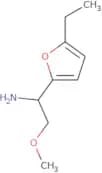
CAS:2-[2-(Morpholin-4-yl)ethoxy]ethan-1-amine is a research chemical that is used as a reagent, reaction component, or building block in the synthesis of more complex compounds. It can be used to synthesize fine chemicals such as pharmaceuticals and agrochemicals.Formula:C8H18N2O2Purezza:Min. 95%Colore e forma:Clear LiquidPeso molecolare:174.24 g/mol1-(5-Ethylfuran-2-yl)-2-methoxyethan-1-amine
CAS:Versatile small molecule scaffoldFormula:C9H15NO2Purezza:(%) Min. 85%Colore e forma:Clear LiquidPeso molecolare:169.22 g/mol1,2-Phenylenedimethanamine dihydrochloride
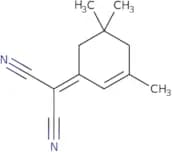
CAS:1,2-Phenylenedimethanamine dihydrochloride is a colorless to white crystalline solid that is soluble in diethyl ether, ethyl acetate and methanol. It is insoluble in water and most organic solvents. 1,2-Phenylenedimethanamine dihydrochloride is used as a reagent for the preparation of primary amines from alkyl halides. This chemical has been shown to be stable in air and remains unchanged when heated at 100°C. Synonyms include: 2-Amino-1,2-phenylene dichloride; 2-Amino-1,2-diphenylethane dichloride; 2-[(1,2)-Phenylenebis(amino)]dichloroethene; 2-[(1,2)-Phenylenebis(amino)]dichloroethene; and PhenFormula:C8H14Cl2N2Purezza:Min. 95%Colore e forma:PowderPeso molecolare:209.12 g/mol(3,5,5-Trimethylcyclohex-2-enylidene)malononitrile
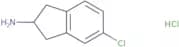
CAS:(3,5,5-Trimethylcyclohex-2-enylidene)malononitrile is a versatile compound that has various applications in different fields. It is commonly used as a research chemical and has shown promising results in the development of new medicaments. Its unique structure and properties make it an ideal candidate for further exploration.Formula:C12H14N2Purezza:Min. 95%Peso molecolare:186.25 g/mol5-Chloro-indan-2-ylamine hydrochloride
CAS:Prodotto controllato5-Chloro-indan-2-ylamine hydrochloride is a chemical that can be used as a building block in the synthesis of other chemicals. It is a reagent and useful scaffold in organic synthesis reactions, such as Friedel-Crafts reactions, and can be used to produce indenes. 5-Chloro-indan-2-ylamine hydrochloride is also an intermediate for the production of complex compounds, fine chemicals, and pharmaceuticals. The CAS number for this chemical is 73536-86-4.Formula:C9H10NCl·HClPurezza:Min. 95%Colore e forma:PowderPeso molecolare:204.09 g/mol1-(5-Propylpyridin-2-yl)ethan-1-one
CAS:Versatile small molecule scaffoldFormula:C10H13NOPurezza:Min. 95%Colore e forma:Clear LiquidPeso molecolare:163.2 g/mol2-Ethyl-2-oxazoline
CAS:Please enquire for more information about 2-Ethyl-2-oxazoline including the price, delivery time and more detailed product information at the technical inquiry form on this pageFormula:C6H14ClNO5Peso molecolare:215.63 g/mol

![Thieno[3,2-c]pyridine-7-carboxylic acid](/_next/image/?url=https%3A%2Fstatic.cymitquimica.com%2Fproducts%2F3D%2Fthumb-webp%2FSEC97587.webp&w=3840&q=75)

![Hexahydropyrrolo[1,2-a]pyrazine-1,4-dione](/_next/image/?url=https%3A%2Fstatic.cymitquimica.com%2Fproducts%2F3D%2Fthumb-webp%2FUAA17912.webp&w=3840&q=75)
![2-[2-(Morpholin-4-yl)ethoxy]ethan-1-amine](/_next/image/?url=https%3A%2Fstatic.cymitquimica.com%2Fproducts%2F3D%2Fthumb-webp%2FVAA20713.webp&w=3840&q=75)