Building Blocks
Sottocategorie di "Building Blocks"
- Acidi boronici e derivati dell'acido boronico(5.786 prodotti)
- Building Blocks Chirali(1.246 prodotti)
- Building Blocks Idrocarburici(6.107 prodotti)
- Building Blocks organici(61.079 prodotti)
Trovati 205461 prodotti di "Building Blocks"
(R,R)-2,8-Diazabicyclo[4.3.0]nonane
CAS:(R,R)-2,8-Diazabicyclo[4.3.0]nonane is an antibacterial agent that is synthesized from piperazine and fluoroquinolone derivatives. It has a high yield of (R,R)-2,8-diazabicyclo[4.3.0]nonane and a low reaction time in the microwave amination reaction. This compound can be used to replace environmentally hazardous chemicals such as mercury(II) chloride in the synthesis of (R,R)-2,8-diazabicyclo[4.3.0]nonane by avoiding the use of toxic mercury compounds and reducing the cost of production by using microwave irradiation.Formula:C7H14N2Purezza:Min. 95%Colore e forma:PowderPeso molecolare:126.2 g/mol1,8-Diazido-3,6-dioxaoctane
CAS:1,8-Diazido-3,6-dioxaoctane is a synthetic molecule that is used in the synthesis of macrolactones, polymers, and biomolecules. It can be used as a bioconjugate to attach other functional groups to biomaterials and polymers, such as azido groups. This compound has high sensitivity and thermal stability with good solubility in organic solvents. 1,8-Diazido-3,6-dioxaoctane has been shown to be compatible with many functional groups and is an important monomer for use in cross-linked polymers.Formula:C6H12N6O2Purezza:Min. 95%Colore e forma:Colorless PowderPeso molecolare:200.2 g/molNaphthol AS phosphate
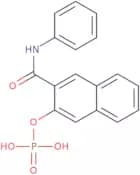
CAS:Naphthol AS phosphate is a food additive that is used as an anti-aromatase agent. It inhibits the enzyme aromatase, which converts androgens to estrogens. This inhibition prevents the development of estrogen-dependent cancers such as breast cancer in women and prostate cancer in men. Naphthol AS phosphate also has inhibitory effects on inflammatory diseases and other diseases involving cell proliferation.Formula:C17H14NO5PPurezza:Min. 95%Colore e forma:PowderPeso molecolare:343.27 g/mol4,4,4-Trifluoro-1-phenylbutan-1-one
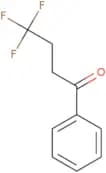
CAS:4,4,4-Trifluoro-1-phenylbutan-1-one is an organic solvent and inexpensively reactant that is used in the production of dioxane. It is a colorless liquid with a pungent odor that can be found in many industrial applications. The substance has been shown to be toxic to humans at high doses.
Formula:C10H9F3OPurezza:Min. 95%Colore e forma:PowderPeso molecolare:202.17 g/molBenzyl methyl ether
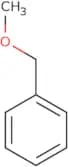
CAS:Benzyl methyl ether is a colorless liquid with a sweet odor. It is used as an organic solvent in chemical reactions and as a solvent in the synthesis of pharmaceuticals, dyes, pesticides, and other organic compounds. Benzyl methyl ether has been shown to react with oxygen and light to produce benzoic acid. The reaction between benzyl methyl ether and glycol ether can be used for sample preparation prior to analysis using gas chromatography-mass spectrometry (GC-MS). GC-MS is often used for the identification of unknown substances in environmental samples. Benzyl methyl ether can also be used for chemical ionization (CI) in mass spectrometry.Formula:C8H10OPurezza:Min. 95%Peso molecolare:122.17 g/mol2'-Nitroacetophenone
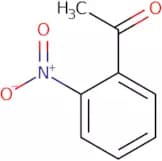
CAS:2'-Nitroacetophenone is a chemical compound that is synthesized by the reaction of acetophenone with nitric acid and sulfuric acid in an acidic environment. The optimum conditions for this reaction are at 50°C and pH=1.5-2.0, which leads to the formation of ester hydrochloride. When 2'-nitroacetophenone comes into contact with choline, it binds to form the nitro group on the aromatic ring, which can be photochemically activated to form the nitro group on the benzene ring. This chemical has inhibitory properties against mammalian cells and may be used in cancer therapy. 2'-Nitroacetophenone also reacts with hydrogen gas in a water vapor environment to form hydrogen bonds, which are necessary for asymmetric synthesis reactions involving carbonyl groups.br>br> 2'-Nitroacetophenone is used as an intermediate for pharmaceuticals such as nitrosoureas and other antic
Formula:C8H7NO3Purezza:Min. 95%Colore e forma:Yellow PowderPeso molecolare:165.15 g/mol3,4-Dibenzyloxybenzaldehyde
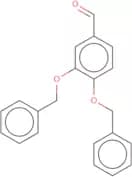
CAS:3,4-Dibenzyloxybenzaldehyde is a chemical compound with the formula ClCH=C(O)CHO. This compound is an intermediate in the synthesis of the cancer drug daunorubicin. 3,4-Dibenzyloxybenzaldehyde has been shown to induce apoptosis in human ovary cells and has been detected in urine samples from patients undergoing chemotherapy for ovarian cancer. 3,4-Dibenzyloxybenzaldehyde also inhibits the production of flavonoids and has been shown to inhibit rat striatal membranes and rat atria.
Formula:C21H18O3Purezza:Min. 95%Colore e forma:PowderPeso molecolare:318.37 g/mol6-Oxo DL-norleucine, formate salt
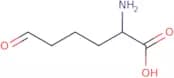
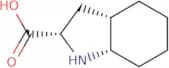
CAS:6-Oxo DL-norleucine, formate salt is an anti-inflammatory agent that has been shown to reduce the symptoms of inflammatory bowel disease. It is a prodrug that is converted in vivo to 6-oxo DL-norleucine, its active form. This drug inhibits the activity of enzymes involved in metabolic pathways including ester hydrolysis and dinucleotide phosphate metabolism. 6-Oxo DL-norleucine has also been shown to inhibit the production of inflammatory mediators such as prostaglandin E2 (PGE2), leukotriene B4 (LTB4), and reactive oxygen species (ROS) in human serum. The mechanism by which this drug exerts its effects is not yet fully understood but may be due to inhibition of p. pastoris, a fungus that can cause opportunistic fungal infections.Formula:C7H13NO5Purezza:Min. 95%Colore e forma:PowderPeso molecolare:191.18 g/molL-(2S,3aS,7aS)-Octahydroindole-2-carboxylic acid
CAS:L-Octahydroindole-2-carboxylic acid is a basic structure that is used in the industrial preparation of a number of chemical compounds. It is also used for the synthesis of L-(2S,3aS,7aS)-octahydroindole-2-carboxylic acid (LOTSC) and its ester hydrochloride salt. The kinetic energy of this molecule has been studied by measuring it's rate of reaction with cyclohexane ring. The inhibition study was done on lung cells to study the effects of LOTSC on growth factors and showed that this molecule inhibited the release of bradykinin B2, which is a peptide secreted by lungs. The pharmacokinetic properties have been studied in rats and shows that it has higher bioavailability than other molecules in this class.Formula:C9H15NO2Purezza:Min. 95%Colore e forma:PowderPeso molecolare:169.22 g/mol4-Methoxy-6-methyl-2H,5H,6H,7H,8H-[1,3]dioxolo[4,5-G]isoquinoline
CAS:4-Methoxy-6-methyl-2H,5H,6H,7H,8H-[1,3]dioxolo[4,5-G]isoquinoline is an electron donor that has been shown to have an excitatory effect on cells. It has been used for the treatment of cancer and other diseases. 4-Methoxy-6-methyl-2H,5H,6H,7H,8H-[1,3]dioxolo[4,5-G]isoquinoline has been shown to have a cavity inhibiting effect in mice and also inhibits the growth of tumor cells in rats. This drug has been evaluated for clinical use in humans and is available as a granule formulation. The particle size of 4-Methoxy-6-methyl-2H,5H,6H,7H,8H-[1,3]dioxolo[4,5-G]Formula:C12H15NO3Purezza:Min. 95%Colore e forma:PowderPeso molecolare:221.25 g/mol3-Iodo-[1,2,3]triazolo[1,5-α]pyridine
CAS:3-Iodo-[1,2,3]triazolo[1,5-α]pyridine is a fine chemical that is used as a versatile building block in the synthesis of complex compounds. It has been shown to be an intermediate for research chemicals and as a reaction component in reactions with other chemicals. 3-Iodo-[1,2,3]triazolo[1,5-α]pyridine is also a useful scaffold for the production of drugs. The compound can be synthesized from readily available starting materials and has the advantage of being easily purified. 3-Iodo-[1,2,3]triazolo[1,5-α]pyridine has CAS No. 916756-21-3 and a molecular weight of 219.27 g/mol.Formula:C6H4IN3Purezza:Min. 95%Colore e forma:PowderPeso molecolare:245.02 g/molp-Naphtholbenzein
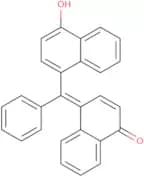
CAS:p-Naphtholbenzein is a fluorescent dye that is used in the diagnosis of human pathogens. It can be used to detect the presence of fatty acids, which are found on the surface of bacteria and in the cell wall. p-Naphtholbenzein elutes from an agar plate at pH 6.0 and can be detected using a spectrophotometer. The fluorescence of p-naphtholbenzein is absorbed by fatty acids, which emit light when excited by ultraviolet light. This makes it useful for detecting fatty acid content in cells, organisms, and surfaces. It is also used as an excipient in subclinical mastitis treatments to help reduce inflammation and improve milk production. In biodiesel reactions, p-naphtholbenzein acts as an optimal reaction catalyst because it stabilizes hydroxybenzoic acid (HBA) with benzalkonium chloride (BZK).
Formula:C27H18O2Colore e forma:PowderPeso molecolare:374.43 g/mol4-Nitrobenzeneethanol
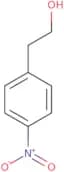
CAS:4-Nitrobenzeneethanol is a primary amine that is synthesized from the amino acid L-glutamic acid and the alcohol 4-nitrobenzyl alcohol. It is activated by reaction with sodium hydroxide solution, which releases hydrogen ions. The conjugates of this compound are isomers. 4-Nitrobenzeneethanol can be used to synthesize compounds that have different functional groups, such as monoclonal antibodies for the treatment of parasitic diseases.Formula:C8H9NO3Purezza:Min. 95%Colore e forma:PowderPeso molecolare:167.16 g/mol2,3-Dichloro-5,6-dicyanobenzoquinone
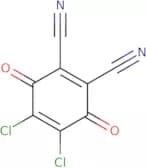
CAS:2,3-Dichloro-5,6-dicyanobenzoquinone is a chemical compound with the molecular formula C12H4Cl2O2. It is used as a chemical intermediate in the production of dyes and pesticides. 2,3-Dichloro-5,6-dicyanobenzoquinone has been shown to have cytotoxic properties against lung fibroblasts in a model system that mimics the human body's reaction to this compound. The mechanism of action is thought to involve the formation of reactive oxygen species that leads to DNA damage. 2,3-Dichloro-5,6-dicyanobenzoquinone also has antiestrogenic activity and has been shown to be active against MDA-MB-231 breast cancer cells. The activation energies for these reactions are 7.8 kcal/mol for carbonyl group elimination and 8.1 kcal/mol for hydFormula:C8Cl2N2O2Colore e forma:Yellow PowderPeso molecolare:227 g/mol2,6-Dichlorobenzaldehyde
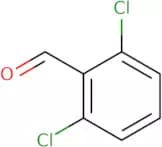
CAS:2,6-Dichlorobenzaldehyde is a nucleophilic compound that has the ability to form hydrogen bonds. It reacts with phosphorus pentachloride to produce 2-chloro-4,6-dichlorobenzene. 2,6-Dichlorobenzaldehyde can be used in the synthesis of β-unsaturated ketones and anticancer drugs such as aziridines. It is also used as a precursor for coordination complexes. This compound is an efficient method for making nitrogen nucleophiles, which are important in chain reactions and the production of polymers. The 2,6-dichlorobenzaldehyde molecule contains two chiral centers that give rise to four stereoisomers. X-ray diffraction data shows that this molecule exists as a mixture of these four isomers.Formula:C7H4Cl2OPurezza:Min. 97.5%Colore e forma:PowderPeso molecolare:175.01 g/mol5-Nitrothiophene-2-carboxylic acid
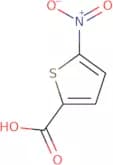
CAS:Used for preparation of pentathiophene amide
Formula:C5H3NO4SPurezza:Min. 95%Colore e forma:White PowderPeso molecolare:173.15 g/mol2,6-Dichloropyridine-1-oxide
CAS:2,6-Dichloropyridine-1-oxide is a reactive compound that has been synthesized by the reaction of ethyl diazoacetate and trifluoroacetic acid. The synthesis is scalable and can be immobilized in a ruthenium complex. The reactivity of this compound has been studied in kinetic experiments and molecular modeling simulations. 2,6-Dichloropyridine-1-oxide can form an epoxide with ethyl diazoacetate, which is used as the control experiment.Formula:C5H3Cl2NOPurezza:Min. 95%Colore e forma:White PowderPeso molecolare:163.99 g/mol5-Hydroxyindole-3-acetic acid
CAS:5-Hydroxyindole-3-acetic acid is a versatile building block that is useful as a reagent, speciality chemical, and reaction component. It has been used in the synthesis of complex compounds with various applications. The compound can be distilled to produce high-purity 5-hydroxyindole-3-acetic acid for research purposes.Formula:C10H9NO3Purezza:Min. 98.0 Area-%Peso molecolare:191.19 g/mol(N,N,Dimethyl)-(3-aminopropyl)sulfonamidehydrochloride
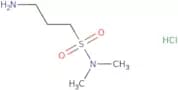
CAS:(N,N,Dimethyl)-(3-aminopropyl)sulfonamidehydrochloride is a fine chemical that can be used as a reagent for research or as a speciality chemical. It is also an intermediate for the synthesis of complex compounds and has versatile building blocks for organic synthesis. This compound is used in the preparation of pharmaceuticals, agrochemicals, and other useful chemicals. CAS No. 91893-74-2.Formula:C5H15ClN2O2SPurezza:Min. 95%Colore e forma:PowderPeso molecolare:202.7 g/mol3-Hydroxyindole
CAS:3-Hydroxyindole is a fine chemical that can be used as a versatile building block, useful intermediate, and research chemical. It is a complex compound that can be used to make compounds with a wide variety of properties. 3-Indole has been used in the synthesis of high quality reagents and as a reaction component. 3-Indole is soluble in water and other solvents such as ethanol and acetone. Its CAS number is 480-93-3.Formula:C8H7NOPeso molecolare:133.15 g/mol
![(R,R)-2,8-Diazabicyclo[4.3.0]nonane](/_next/image/?url=https%3A%2Fstatic.cymitquimica.com%2Fproducts%2F3D%2Fthumb-webp%2FFD21506.webp&w=3840&q=75)


![4-Methoxy-6-methyl-2H,5H,6H,7H,8H-[1,3]dioxolo[4,5-G]isoquinoline](/_next/image/?url=https%3A%2Fstatic.cymitquimica.com%2Fproducts%2F3D%2Fthumb-webp%2FAAA55010.webp&w=3840&q=75)
![3-Iodo-[1,2,3]triazolo[1,5-α]pyridine](/_next/image/?url=https%3A%2Fstatic.cymitquimica.com%2Fproducts%2F3D%2Fthumb-webp%2FRLB75621.webp&w=3840&q=75)