Building Blocks
Questa sezione contiene prodotti fondamentali per la sintesi di composti organici e biologici. Building blocks sono i materiali di partenza essenziali utilizzati per costruire molecole complesse attraverso varie reazioni chimiche. Svolgono un ruolo critico nella scoperta di farmaci, nella scienza dei materiali e nella ricerca chimica. Presso CymitQuimica, offriamo una gamma diversificata di building blocks di alta qualità per supportare le tue ricerche innovative e progetti industriali, assicurandoti di avere i componenti essenziali per una sintesi di successo.
Sottocategorie di "Building Blocks"
- Acidi boronici e derivati dell'acido boronico(5.778 prodotti)
- Building Blocks Chirali(1.243 prodotti)
- Building Blocks Idrocarburici(6.097 prodotti)
- Building Blocks organici(61.048 prodotti)
Trovati 203115 prodotti di "Building Blocks"
Ordinare per
Purezza (%)
0
100
|
0
|
50
|
90
|
95
|
100
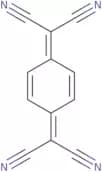
7,7,8,8-Tetracyanoquinodimethane
CAS:7,7,8,8-Tetracyanoquinodimethane is a quinoid compound that is used as an analytical chemical reagent. It has been shown to be a powerful reducing agent and can be used in the determination of trace amounts of metals. 7,7,8,8-Tetracyanoquinodimethane also reacts with cationic surfactants and hydroxyl groups to form stable compounds. The nitrogen atoms in this molecule are capable of multiple transfer reactions with other molecules.br>br> The redox potentials of this substance are negative and it has been shown to have the ability to transport pharmaceutical preparations across cell membranes. Boron nitride (BN) has been shown to stabilize the structure of 7,7,8,8-tetracyanoquinodimethane by forming strong hydrogen bonds between the BN and hydroxyl groups on this molecule.Formula:C12H4N4Purezza:Min. 95%Colore e forma:Yellow To Green Or Brown SolidPeso molecolare:204.19 g/mol1-Benzyl-3-p-tolyltriazene [for Esterification]
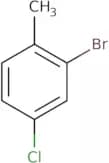
CAS:Formula:C14H15N3Purezza:>98.0%(T)Colore e forma:White to Yellow to Orange powder to crystalPeso molecolare:225.302-Bromo-4-chlorotoluene
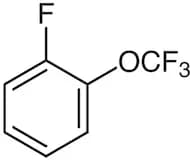
CAS:2-Bromo-4-chlorotoluene is a chemical compound with the molecular formula C6H4BrClO. It is an aromatic peroxide that has a chlorine atom attached to one of the benzene rings. 2-Bromo-4-chlorotoluene is produced by the reaction of bromine with chlorotoluene in the presence of hydrogen peroxide and sodium periodate. The reaction takes place at room temperature, producing a colourless liquid with a pungent odour. This chemical can be identified by its infrared frequencies, which are observed as vibrations between 1650 and 1700 cm−1. The molecule has a dipole moment of 0.5 D, which means it can transfer electrons to other molecules or atoms in order to form bonds. 2-Bromo-4-chlorotoluene is used as an intermediate for organic compounds such as glycol dimethyl ethers. 2-BromoFormula:C7H6BrClPurezza:Min. 95%Colore e forma:PowderPeso molecolare:205.48 g/mol1-Fluoro-2-(trifluoromethoxy)benzene
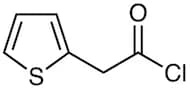
CAS:Formula:C7H4F4OPurezza:>98.0%(GC)Colore e forma:Colorless to Almost colorless clear liquidPeso molecolare:180.10Thiophene-2-acetyl Chloride
CAS:Formula:C6H5ClOSPurezza:>98.0%(GC)(T)Colore e forma:Yellow to Amber to Dark purple clear liquidPeso molecolare:160.62(3R)-(-)-1-Benzyl-3-aminopyrrolidine
CAS:Formula:C11H16N2Purezza:>98.0%(GC)(T)Colore e forma:Colorless to Almost colorless clear liquidPeso molecolare:176.267-Aminoquinoline
CAS:7-Aminoquinoline is a nucleophilic compound that is involved in the catalysis of bond cleavage. It has been shown to react with organic molecules and produce an oxygenative interaction. 7-Aminoquinoline has been shown to produce anti-inflammatory properties by inhibiting prostaglandin synthesis, which occurs through the inhibition of cyclooxygenase activity.Formula:C9H8N2Purezza:Min. 95%Colore e forma:Yellow PowderPeso molecolare:144.17 g/mol1-Ethyl-1,2-dihydro-2,2,4-trimethyl-7-quinolinol hydrochloride
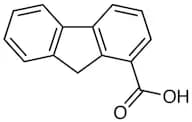
CAS:Please enquire for more information about 1-Ethyl-1,2-dihydro-2,2,4-trimethyl-7-quinolinol hydrochloride including the price, delivery time and more detailed product information at the technical inquiry form on this pageFormula:C14H19NO•HClPurezza:Min. 95%Colore e forma:PowderPeso molecolare:253.77 g/mol1-Fluorenecarboxylic Acid
CAS:Formula:C14H10O2Purezza:>98.0%(T)(HPLC)Colore e forma:White to Light yellow powder to crystalPeso molecolare:210.2312-(t-Boc-amino)-1-dodecanol
CAS:<p>12-(t-Boc-amino)-1-dodecanol is a versatile building block that is used in the synthesis of complex compounds. It can be used by itself or as a reagent or speciality chemical. This compound is useful for the synthesis of high quality research chemicals and useful scaffolds. 12-(t-Boc-amino)-1-dodecanol has CAS No. 67341-03-1 and is a fine chemical that has been widely used in the synthesis of pharmaceuticals, agrochemicals, and other organic compounds.</p>Formula:C17H35NO3Purezza:Min. 95%Colore e forma:PowderPeso molecolare:301.46 g/molN-Butanesulfonyl-O-[4-(4-pyridinyl)-butyl]-(S)-tyrosine
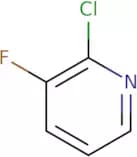
CAS:N-Butanesulfonyl-O-[4-(4-pyridinyl)-butyl]-(S)-tyrosine is a synthetic amino acid. It is soluble in water and forms hydrates. The yield of this reaction is 60%. The molecular weight of this compound is 233.3 g/mol. This compound has been shown to have proteolytic activity, which may be due to its ability to cleave peptide bonds in proteins. N-Butanesulfonyl-O-[4-(4-pyridinyl)-butyl]-(S)-tyrosine may also be used as an intermediate for the synthesis of other compounds, such as aminoglycosides and antibiotics. This chemical can be synthesized by reacting L-tyrosine with butanesulfonyl chloride in the presence of sodium hydroxide and an organic base, such as pyridine. The solvents used in this process are chloroform, dichFormula:C22H30N2O5SPurezza:Min. 95%Colore e forma:PowderPeso molecolare:434.55 g/mol2-Chloro-3-fluoropyridine
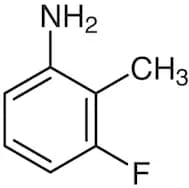
CAS:<p>2-Chloro-3-fluoropyridine is a chemical compound that is classified as an allosteric modulator. It has a profile of physicochemical and spectrometric properties, which includes a pyridine ring with two chloro substituents and one fluorine atom. 2-Chloro-3-fluoropyridine can be transported by organic solvents such as benzene or chloroform, but not by water. This chemical reacts with copper chloride to form a cross-coupling reaction, which may be useful for the synthesis of complex organic molecules. 2-Chloro-3-fluoropyridine also has biological properties that include being a ligand for some receptors in the brain and central nervous system, as well as having antioxidant activity.</p>Formula:C5H3ClFNPurezza:Min. 95%Colore e forma:Clear LiquidPeso molecolare:131.54 g/mol3-Fluoro-2-methylaniline
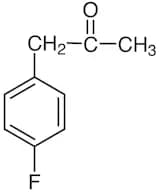
CAS:Formula:C7H8FNPurezza:>98.0%(GC)(T)Colore e forma:Light yellow to Yellow to Orange clear liquidPeso molecolare:125.154-Fluorophenylacetone
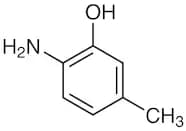
CAS:Formula:C9H9FOPurezza:>95.0%(GC)Colore e forma:Light yellow to Yellow to Orange clear liquidPeso molecolare:152.176-Amino-m-cresol
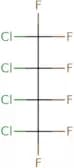
CAS:Formula:C7H9NOPurezza:>98.0%(GC)(T)Colore e forma:White to Brown powder to crystallinePeso molecolare:123.161,2,3,4-Tetrachlorohexafluorobutane
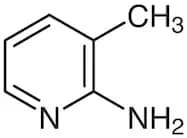
CAS:1,2,3,4-Tetrachlorohexafluorobutane is a colorless liquid with an unpleasant odor. It is used as a solvent and as a chemical intermediate in the production of other chemicals. 1,2,3,4-Tetrachlorohexafluorobutane has been shown to react with hydrochloric acid to produce hydrogen chloride gas and hydrogen fluoride. The reaction vessel must be well-ventilated and the use of protective clothing is recommended due to the potential for exposure to hydrogen fluoride. This compound can also be chlorinated using chlorine gas or hypochlorite solution.Formula:C4Cl4F6Purezza:Min. 95%Colore e forma:Colorless Clear LiquidPeso molecolare:303.84 g/mol2-Amino-3-methylpyridine
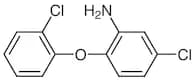
CAS:Formula:C6H8N2Purezza:>98.0%(GC)Colore e forma:White or Colorless to Light orange to Yellow powder to lump to clear liquidPeso molecolare:108.142-Amino-2',4-dichlorodiphenyl Ether
CAS:Formula:C12H9Cl2NOPurezza:>98.0%(GC)(T)Colore e forma:Colorless to Brown clear liquidPeso molecolare:254.111,1'-[1,4-Phenylenebis(methylene)]bis(4,4'-bipyridinium) Dibromide
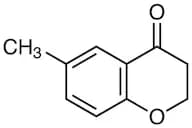
CAS:Formula:C28H24Br2N4Purezza:>98.0%(HPLC)Colore e forma:White to Light yellow to Light orange powder to crystalPeso molecolare:576.346-Methyl-4-chromanone
CAS:Formula:C10H10O2Purezza:>98.0%(GC)Colore e forma:White to Almost white powder to lumpPeso molecolare:162.19

![1-Benzyl-3-p-tolyltriazene [for Esterification]](/_next/image/?url=https%3A%2Fstatic.cymitquimica.com%2Fproducts%2F3B%2Fthumb-webp%2FB0949.webp&w=3840&q=75)




![N-Butanesulfonyl-O-[4-(4-pyridinyl)-butyl]-(S)-tyrosine](/_next/image/?url=https%3A%2Fstatic.cymitquimica.com%2Fproducts%2F3D%2Fthumb-webp%2FFB19373.webp&w=3840&q=75)
![1,1'-[1,4-Phenylenebis(methylene)]bis(4,4'-bipyridinium) Dibromide](/_next/image/?url=https%3A%2Fstatic.cymitquimica.com%2Fproducts%2F3B%2Fthumb-webp%2FP1405.webp&w=3840&q=75)