Building Blocks
Sottocategorie di "Building Blocks"
- Acidi boronici e derivati dell'acido boronico(5.780 prodotti)
- Building Blocks Chirali(1.239 prodotti)
- Building Blocks Idrocarburici(6.100 prodotti)
- Building Blocks organici(61.005 prodotti)
Trovati 205234 prodotti di "Building Blocks"
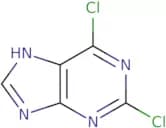
2,6-Dichloropurine
CAS:2,6-Dichloropurine is a nitrogenous base that inhibits the activity of certain enzymes in the body. It has been shown to inhibit protease activity and nitro reductases, which are enzymes that metabolize nitrosamines. 2,6-Dichloropurine also inhibits the synthesis of epidermal growth factor (EGF) and adenosine A3 receptors in vivo. This drug has potent antitumor activity against various cancer cells and is used for the treatment of HIV infections. 2,6-Dichloropurine can be synthesized from 6-fluoro-3-indoxyl-beta-D-galactopyranoside with an intramolecular hydrogen atom.
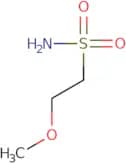
Formula:C5H2Cl2N4Purezza:Min. 98 Area-%Colore e forma:PowderPeso molecolare:189 g/mol2-Methoxyethanesulfonamide
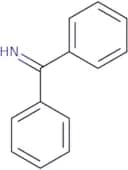
CAS:Versatile small molecule scaffoldFormula:C3H9NO3SPurezza:Min. 95%Colore e forma:Clear LiquidPeso molecolare:139.17 g/molBenzophenone imine
CAS:Benzophenone imine is a metabolite that is produced during the metabolism of benzophenones. It was first synthesized in 1887 by the reaction of copper chloride and benzene-1,2-diamine. The reaction solution was purified by fractional crystallization to give crystals of benzophenone imine hydrochloride (benzophenamine) as a white solid. The x-ray crystal structures were determined for two different forms, one with the 5-hydroxy group in the para position relative to the imine and one with it in the meta position. Benzophenone imine is an amide that has been shown to bind to 5-HT2 receptors, which are found primarily on neurons in the central nervous system. This binding leads to an increase in serotonin levels and an inhibition of glutamate release from nerve terminals. This inhibition can lead to infectious diseases such as herpes zoster.
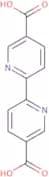
Formula:C13H11NPurezza:Min. 96.0 Area-%Colore e forma:Clear LiquidPeso molecolare:181.23 g/mol2,2'-Bipyridine-5,5'-dicarboxylic acid
CAS:2,2'-Bipyridine-5,5'-dicarboxylic acid is an algal metabolite that has been shown to have a glucose sensor function. It is synthesized by Chlorella and other green algae in response to light and high concentrations of glucose. This compound can be used as a linker for the immobilization of fluorescent probes or luminescent probes. It also has a catalytic subunit that can be used in oxidation reactions at low temperatures with chloride as the oxidant. 2,2'-Bipyridine-5,5'-dicarboxylic acid is chemically stable and does not react with chloride or ligands. It can also be used as an oxidation catalyst for reactions at high temperatures.Formula:C12H8N2O4Colore e forma:White PowderPeso molecolare:244.2 g/mol5-Bromo-2,4-dichloropyrimidine
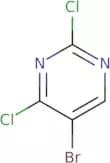
CAS:5-Bromo-2,4-dichloropyrimidine is an aryl halide compound that is synthesized from 2,4-dichloropyrimidine and bromine. It has been shown to have inhibitory activities against cancer cells in vitro. 5-Bromo-2,4-dichloropyrimidine is used in the synthesis of the drug palbociclib (also known as PLX4720), which prevents mitotic progression by binding to the mitotic checkpoint protein (e.g., cyclin B). The reaction yield for this compound is low and its absorption enhancer properties are not well understood. 5-Bromo-2,4-dichloropyrimidine has also been used in conjunction with crotonic acid as a potential anticancer agent.
Formula:C4HBrCl2N2Purezza:Min. 95%Colore e forma:Off-White Clear LiquidPeso molecolare:227.87 g/mol5-Bromo-7-azaindole
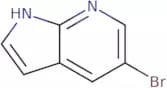
CAS:5-Bromo-7-azaindole is a nitrogen heterocycle that has shown promising anti-cancer properties. This compound is synthesized by the reaction of sodium azide and 5-bromo-2,4,6-trinitrobenzene in anhydrous conditions. 5-Bromo-7-azaindole displays significant cytotoxicity against human ovarian carcinoma cells in vivo and inhibits the proliferation of cancer cells by binding to ATP synthase. The anticancer activity of this compound is due to its ability to inhibit the synthesis of DNA and RNA, which are vital for cell division. 5-Bromo-7-azaindole also shows an increase in hydrogen bonding, which can be used to explain its structural analysis.
Formula:C7H5BrN2Purezza:Min. 98 Area-%Colore e forma:PowderPeso molecolare:197.03 g/molBenzaldehyde dimethyl acetal
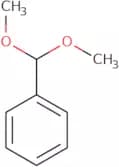
CAS:Vegetable, nutty and floral flavour/fragrance
Formula:C9H12O2Purezza:Min. 95%Colore e forma:Clear LiquidPeso molecolare:152.19 g/molDiphenylcyclopropenone
CAS:Strained cyclopropene analogue. Used as topical therapy for cutaneous warts, atopic dermatitis and alopecia areata. Efficacy as a single agent for the treatment of cutaneous metastatic melanoma has been reported.Formula:C15H10OPurezza:Min. 99 Area-%Colore e forma:White PowderPeso molecolare:206.24 g/mol2,2'-Bipyridine-6,6'-dicarboxylic acid
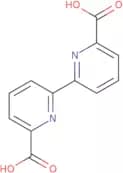
CAS:2,2'-Bipyridine-6,6'-dicarboxylic acid is a molecule that has an acidic functional group. It has been found to have a molecular weight of 220.2 g/mol and is soluble in water at elevated temperatures. 2,2'-Bipyridine-6,6'-dicarboxylic acid has been shown to be photoprocessable in the presence of sodium carbonate as a catalyst. The reaction rate can be increased by adding a diluent to the solution or by using linear models.Formula:C12H8N2O4Purezza:Min. 95%Colore e forma:Off-White PowderPeso molecolare:244.21 g/mol1-Nonanol
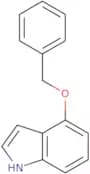
CAS:1-Nonanol is a colorless liquid with a pleasant odor. It can be synthesized from methyl pentanoate by the asymmetric addition of an inorganic acid to the ester hydrochloride. This process results in a mixture of 1-nonanol and its isomer 2-nonanol, which can be separated using an analytical method such as gas chromatography. 1-Nonanol has been shown to have high transport properties, making it useful for detergent compositions. It has also been shown to exhibit strong hydrogen bonding abilities that may contribute to its adsorption mechanism.Formula:C9H20OPurezza:Min. 95%Colore e forma:Colorless Clear LiquidPeso molecolare:144.25 g/mol4-Benzyloxyindole
CAS:4-Benzyloxyindole is a serotonin receptor binding agent. It has a macrocyclic structure that is composed of four benzyloxy groups and a nitrogen atom in the center. The 4-benzyloxyindole binds to the serotonin receptors, specifically to those that are G-protein coupled and mediate intracellular signaling cascades. 4-Benzyloxyindole has been shown to be an inhibitor of calcium channels and may be used for treatment of diseases such as hypertension, schizophrenia, depression, migraine headaches, and epilepsy.Formula:C15H13NOColore e forma:Off-White PowderPeso molecolare:223.27 g/mol2-Hydroxyisophthalic acid
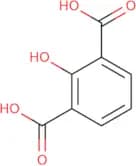
CAS:2-Hydroxyisophthalic acid is a hydroxylated derivative of p-hydroxybenzoic acid. It is used in the manufacture of esters such as 2-ethoxyethanol and 2-ethoxyethyl acetate. It has also been shown to have a number of enzyme activities, including esterases, glycosidases, and lipases. The macrocyclic structure of 2-hydroxyisophthalic acid is responsible for its ability to interact with other molecules through hydrogen bonding and coordination chemistry. The carboxylate group on 2-hydroxyisophthalic acid interacts with the hydroxy group on the fatty acids found in soap, which leads to its use as an emulsifying agent. The carbonyl oxygens on 2-hydroxyisophthalic acid are responsible for its anti-inflammatory properties as they inhibit prostaglandin synthesis when they bind to the cyclooxygenase enzymes that catalyze
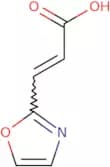
Formula:C8H6O5Purezza:Min. 95 Area-%Colore e forma:PowderPeso molecolare:182.13 g/mol(2E)-3-(1,3-Oxazol-2-yl)prop-2-enoic acid
CAS:1,3-Oxazole is an organic compound that belongs to the class of 1,3-diketones. It is a versatile building block that can be used in many different reactions. 1,3-Oxazole has been shown to be a reagent for use in research and as a speciality chemical. It has also been shown to be a useful intermediate for the synthesis of complex compounds. The compound is also a useful scaffold for developing high quality drug candidates with potential applications in medicine or other fields.
Formula:C6H5NO3Purezza:Min. 95%Peso molecolare:139.11 g/mol2-Methoxybenzoic acid
CAS:2-Methoxybenzoic acid is a nonsteroidal anti-inflammatory drug that belongs to the group of acetate extract. This compound has been shown to inhibit the production of prostaglandin E2 by inhibiting cyclooxygenase activity. 2-Methoxybenzoic acid also acts as an antagonist at serotonin 5HT1A receptors, which are involved in the regulation of mood and cognition. It is a competitive inhibitor of p-hydroxybenzoic acid, natural compounds, and protocatechuic acid with hydrogen bond interactions. 2-Methoxybenzoic acid also binds to tissue culture cells and inhibits cell growth through receptor binding.Formula:C8H8O3Purezza:Min. 95%Colore e forma:PowderPeso molecolare:152.15 g/mol3-Methyl-4-nitrobenzoic acid
CAS:3-Methyl-4-nitrobenzoic acid is a white solid that can be synthesized by heating 2,4-dichlorobenzoic acid with potassium dichromate in the presence of nitrogen. It has been shown to be effective against Candida glabrata strains and other bacteria. 3-Methyl-4-nitrobenzoic acid is soluble in water and other polar solvents, such as acetic acid or sodium carbonate, but insoluble in nonpolar solvents such as hexane or ether. The reaction mechanism for this compound is not yet known. It has been found to have a phase equilibrium between its solid and liquid forms at room temperature. Solubility data for this compound are available from experimental measurements.
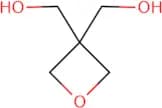
Formula:C8H7NO4Purezza:Min. 95%Colore e forma:PowderPeso molecolare:181.15 g/mol3,3-Bis(hydroxymethyl)oxetane
CAS:3,3-Bis(hydroxymethyl)oxetane is a monomer that belongs to the class of polyols. It is synthesized by ring-opening polymerization of 3,3-bis(hydroxymethyl)oxetane with trifluoromethanesulfonic acid as the catalyst. The kinetic studies show that this monomer reacts with water at high rates and has a high melting point. It is also found to be an excellent uptake agent for organic nitrates. 3,3-Bis(hydroxymethyl)oxetane can be used in the production of polyurethanes and other polymers as well as in cosmetic products.Formula:C5H10O3Purezza:Min. 95%Colore e forma:PowderPeso molecolare:118.13 g/mol6-Benzyloxyindole
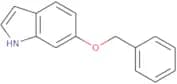
CAS:6-Benzyloxyindole is an isomer of indole with a kinetic, acidic, and synthetic process. It reacts with acetyl derivatives to form hydrogen bond and has binding activities. 6-Benzyloxyindole is an indole alkaloid that can be used as a biomimetic additive or in the synthesis of 5-methoxyindole which has been shown to inhibit the 5-ht4 receptor.Formula:C15H13NOPurezza:Min. 95%Colore e forma:PowderPeso molecolare:223.27 g/mol5-Bromopyrimidine
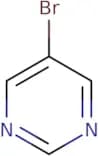
CAS:5-Bromopyrimidine is a reactive intermediate that is used in the synthesis of 4-methoxyphenylboronic acid. It is a crystalline solid with a molecular weight of 164.5 g/mol and an empirical formula of C6H4BrN3O. 5-Bromopyrimidine has been shown to be nucleophilic, reacting with β-amino acids under basic conditions to form the corresponding 2-bromo amide. It also undergoes cross-coupling reactions with halides and can be used as a building block for other organic compounds. 5-Bromopyrimidine has optical properties that are characteristic of aromatic molecules, including strong absorption bands in the ultraviolet region and visible light region.Formula:C4H3BrN2Purezza:Min. 95%Colore e forma:PowderPeso molecolare:158.98 g/molTrimethylpyruvic acid
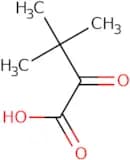
CAS:Trimethylpyruvic acid is an organic compound that is a colorless liquid with a strong odor. It is produced by the oxidation of l-tert-leucine with hydrogen peroxide in the presence of sodium hydroxide. The molecule is chiral, which means it can exist as two different forms that have different physical and chemical properties. Trimethylpyruvic acid can be used for the synthesis of other molecules, including amides, carboxylic acids, and nucleotides. It also has photochemical properties and can be used in reactions that require heating or light.Formula:C6H10O3Purezza:Min. 95%Colore e forma:Clear LiquidPeso molecolare:130.14 g/mol(R)-(-)-1,3-Butanediol
CAS:(R)-(-)-1,3-Butanediol is a chiral compound that belongs to the group of organic compounds called diols. It is used in the fermentation of Candida parapsilosis and other yeast species to produce enantiomerically pure (S)-(-)-1,3-butanediol. The racemate can be converted into the two enantiomers by chemical means or by enzymatic resolution. The process for large-scale production is similar to that for ethanol fermentation, but with 2-propanol as substrate instead of glucose. The fermentor has been shown to be effective at producing large quantities of 1,3-butanediol in a short time period.
Formula:C4H10O2Purezza:Min. 98%Colore e forma:Colorless Clear LiquidPeso molecolare:90.12 g/mol