Building Blocks
Sottocategorie di "Building Blocks"
- Acidi boronici e derivati dell'acido boronico(5.780 prodotti)
- Building Blocks Chirali(1.241 prodotti)
- Building Blocks Idrocarburici(6.100 prodotti)
- Building Blocks organici(61.023 prodotti)
Trovati 205289 prodotti di "Building Blocks"
3-Methyl-4-(trifluoromethyl)benzaldehyde
CAS:3-Methyl-4-(trifluoromethyl)benzaldehyde is a high quality research chemical. It is a versatile building block that can be used in the synthesis of complex compounds, such as pharmaceuticals and pesticides. 3-Methyl-4-(trifluoromethyl)benzaldehyde can be used as a reagent to synthesize other chemicals and as a reaction component to produce new organic compounds. 3-Methyl-4-(trifluoromethyl)benzaldehyde has CAS No. 951232-01-2.Formula:C9H7F3OPurezza:Min. 95%Colore e forma:PowderPeso molecolare:188.15 g/mol4-Biphenylmethanol
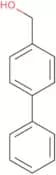
CAS:4-Biphenylmethanol is a low potency naphthalene derivative that has been shown to be carcinogenic in animal studies. It is also an inhibitor of protein synthesis, which may play a role in its carcinogenic potential. 4-Biphenylmethanol has been shown to inhibit the growth of Salmonella typhimurium and Saccharomyces cerevisiae strain when used at concentrations of 50 μg/mL or higher. This compound can react with hydrochloric acid to form hydrogen bonding interactions, which may account for its observed antibacterial activity.
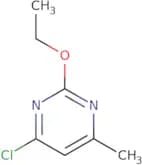
Formula:C13H12OPurezza:Min. 95%Colore e forma:PowderPeso molecolare:184.23 g/mol4-Chloro-2-ethoxy-6-methyl-pyrimidine
CAS:Versatile small molecule scaffoldFormula:C7H9ClN2OPurezza:Min. 95%Colore e forma:PowderPeso molecolare:172.61 g/molN-(2-Bromophenyl)-2,2,2-trifluoroacetamide
CAS:N-(2-Bromophenyl)-2,2,2-trifluoroacetamide is a functional chemical that has been experimentally validated by computationally optimized geometries and reaction mechanisms. It is a catalytic molecule that can be used in the conversion of alkenes to epoxides or dienes. The catalytic mechanism involves a transition state with two orbitals interacting with each other in an anti-bonding manner. This functional chemical has not yet been found in nature.
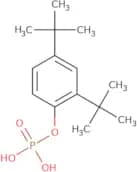
Formula:C8H5BrF3NOPurezza:Min. 95%Colore e forma:PowderPeso molecolare:268.03 g/mol(2,4-Di-tert-butylphenoxy)phosphonic acid
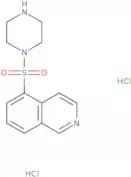
CAS:(2,4-Di-tert-butylphenoxy)phosphonic acid is a fine chemical with CAS No. 18351-37-6. It is an intermediate for the production of other chemicals and can also be used as a reagent or speciality chemical. The compound is a versatile building block that can be used in the production of complex compounds with high quality and versatility. The compound has been shown to react with many functional groups, which makes it useful in research and development. (2,4-Di-tert-butylphenoxy)phosphonic acid is also a useful scaffold for the synthesis of pharmaceuticals.Formula:C14H23O4PPurezza:Min. 95%Colore e forma:PowderPeso molecolare:286.3 g/mol5-(piperazine-1-sulfonyl)isoquinoline dihydrochloride
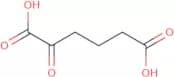
CAS:5-(piperazine-1-sulfonyl)isoquinoline dihydrochloride is an antiviral drug that inhibits the assembly of viral filaments. It is a potent inhibitor of herpes simplex virus type 1 (HSV-1) and HSV-2 in vitro. 5-(piperazine-1-sulfonyl)isoquinoline dihydrochloride has been shown to inhibit the replication of human cytomegalovirus (HCMV) in cell culture. This compound also inhibits the secretion of pertussis toxin, which is necessary for the virulence of Bordetella pertussis. 5-(piperazine-1-sulfonyl)isoquinoline dihydrochloride has been shown to have no effect on noninfected cells, suggesting it may be useful as a therapeutic agent against viruses that infect only specific types of cells.Formula:C13H17Cl2N3O2SPurezza:Min. 95%Colore e forma:PowderPeso molecolare:350.3 g/mol2-Oxoadipic acid
CAS:2-Oxoadipic acid is an intermediate in the metabolism of lysine, which is an essential amino acid that cannot be synthesized by humans and must be obtained from diet. It can be converted to picolinic acid by oxidation of the methyl group on the 2-position. The enzyme activities of 2-oxoadipic acid are similar to those of picolinic acid, but it has a longer half-life and does not cause toxicity in cells. 2-Oxoadipic acid has been used as a fluorescent derivative for biological samples and as a model system for studying cell signaling pathways and physiological functions. Chemical biology studies have shown that 2-oxoadipic acid is involved in energy metabolism and may serve as a precursor for synthesis of other compounds such as riboflavin.Formula:C6H8O5Purezza:Min. 95%Colore e forma:PowderPeso molecolare:160.12 g/mol2-(1-Methyl-4-oxo-1,4-dihydro-5H-pyrazolo[3,4-d]pyrimidin-5-yl)acetohydrazide
CAS:Prodotto controllato2-(1-Methyl-4-oxo-1,4-dihydro-5H-pyrazolo[3,4-d]pyrimidin-5-yl)acetohydrazide is a fine chemical that is a versatile building block in the synthesis of complex compounds. It is also a useful intermediate for the synthesis of pharmaceuticals and agrochemicals. CAS No. 938018-24-7Formula:C8H10N6O2Purezza:Min. 95%Peso molecolare:222.2 g/mol2-Bromo-5-methoxytoluene
CAS:2-Bromo-5-methoxytoluene is a synthetic organic compound that is used as a chemical intermediate for cellulose derivatives. It is generated by the Friedel-Crafts reaction of bromine with toluene in the presence of aluminum chloride. 2-Bromo-5-methoxytoluene has been shown to react with cellulose derivatives and other hydrogen bond acceptors. This reaction is followed by protonation, which yields a chromophore that changes color from yellow to orange. The mechanism of this reaction can be explained by an acid catalysis mechanism, which begins with protonation of the carbonyl group (C=O) and formyl group (HC=O) groups. This causes the formation of an enolate ion, which reacts with a protonated carbonyl group to yield a formyl cation and an enolate ion. The formyl cation then reacts with another protonFormula:C8H9OBrPurezza:Min. 95%Colore e forma:PowderPeso molecolare:201.06 g/mol2-Isopropylbenzoic acid
CAS:2-Isopropylbenzoic acid is a fine chemical that belongs to the group of aromatic compounds and has the molecular formula C8H10O2. This compound is used in research as an intermediate for organic synthesis, such as the production of pharmaceuticals. 2-Isopropylbenzoic acid is also a versatile building block for complex molecules, such as dyes and fragrances. It can be used as a reagent or speciality chemical in research and development, such as in polymer chemistry. 2-Isopropylbenzoic acid can be used as a reaction component for synthesis of other chemicals, such as pharmaceuticals. As an intermediate, it can be used in the production of synthetic drugs and other bioactive molecules that are difficult to synthesize by other means due to its high quality.Formula:C10H12O2Purezza:Min. 95%Colore e forma:White PowderPeso molecolare:164.2 g/mol7H-Imidazo[4,5-d]pyrimidine
CAS:7H-imidazo[4,5-d]pyrimidine is a small molecule that exhibits receptor activity against toll-like receptors. It has been shown to inhibit the production of proinflammatory cytokines and chemokines in HL60 cells. 7H-imidazo[4,5-d]pyrimidine also inhibits the activities of enzymes involved in purine metabolism and cellular metabolic processes, as well as intracellular targets including protein kinases, phosphatases and transcription factors. 7H-imidazo[4,5-d]pyrimidine has been shown to be effective against solid tumours such as murine sarcoma virus and plant tumors. This drug also inhibits the enzymatic activity of p2y receptors that are involved in inflammation and platelet aggregation.Formula:C5H4N4Purezza:Min. 95%Colore e forma:PowderPeso molecolare:120.11 g/mol4-aminobutan-2-one hydrochloride
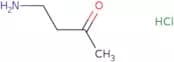
CAS:4-Aminobutan-2-one hydrochloride is a β-unsaturated compound that can be synthesized by the condensation of methyl ketone and sulfide. This reaction converts the carbonyl group to an aminoketone group. The isomers of 4-aminobutan-2-one hydrochloride include 3,4-dimethylketone and 2,3,5,6-tetramethylketone. 4-Aminobutan-2-one hydrochloride can be used as a precursor for nitriles and sulfur compounds. It also selectively reacts with sodium sulfide in water to produce cyanoacetate or with sodium hydroxide to produce hydrogen cyanide and sulfides.Formula:C4H10ClNOPurezza:Min. 95%Colore e forma:PowderPeso molecolare:123.58 g/mol2-Chloro-N-cyclopropyl-N-(2-methylpropyl)acetamide
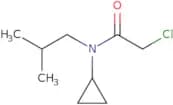
CAS:Versatile small molecule scaffoldFormula:C9H16ClNOPurezza:(%) Min. 85%Colore e forma:Clear LiquidPeso molecolare:189.68 g/molBenzofuran-4-carbaldehyde
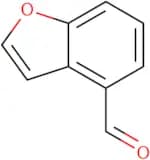
CAS:Benzofuran-4-carbaldehyde is a reactive, low molecular weight compound. It is an oxidative and thermally labile compound that can be used for the preparation of other compounds. Benzofuran-4-carbaldehyde is a colorless liquid with a boiling point of 124°C and a melting point of -27°C. It has a molecular weight of 92.07 g/mol and has a density of 0.91 g/mL at 20°C, which means it will have an octanol:water partition coefficient of 1.2. The molecule has two chiral centers, meaning there are four possible stereoisomers that can be made from it. This compound is primarily broken down into furan, formic acid, and methanol by oxidation mechanisms or by thermal decomposition pathways such as pyrolysis or condensation reactions to produce additional compounds.br>br>Benzofuran-4-carbaldehyde can be oxidized to produce reactive oxygen speciesFormula:C9H6O2Purezza:Min. 95%Peso molecolare:146.14 g/molSuccinylsulfathiazole
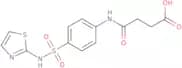
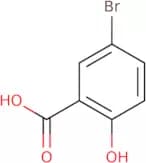
CAS:Succinylsulfathiazole is a sulfa drug that has antimicrobial activity. It is a structural analogue of sulfanilamide, which is an antibiotic used to treat infectious diseases. Sulfa drugs are structurally related to the amino acid pantothenic acid and have been shown to have beneficial effects in animal models for bowel disease, autoimmune diseases, and other conditions. Succinylsulfathiazole has been shown to inhibit the growth of Aerobacter aerogenes and other bacteria by binding to their cell wall and interfering with synthesis of DNA. Succinylsulfathiazole has been shown to inhibit the growth of Aerobacter aerogenes and other bacteria by binding to their cell wall and interfering with synthesis of DNA.Formula:C13H13N3O5S2Purezza:Min. 98 Area-%Colore e forma:PowderPeso molecolare:355.39 g/mol5-Bromosalicylic acid
CAS:5-Bromosalicylic acid is a derivative of p-hydroxybenzoic acid that is used in wastewater treatment. The reaction of 5-bromosalicylic acid with the 1,3-benzodioxole-5-carboxylic acid leads to the formation of a new compound, which can be used as an intermediate in organic synthesis. 5-Bromosalicylic acid has been shown to inhibit the growth of hepg2 cells and K562 cells by damaging DNA. It also inhibits the suzuki coupling reaction by acting as a hydrogen sink and stabilizing the transition state through intramolecular hydrogen bonding interactions. A possible mechanism for this inhibition is that 5-bromosalicylic acid reacts with hydroxide ions to form bromohydroxylated products, which then react with amine compounds to produce carboxylates that can hydrogen bond with other molecules.Formula:C7H5BrO3Purezza:Min. 95%Colore e forma:White PowderPeso molecolare:217.02 g/mol3-Bromo-1-propanol
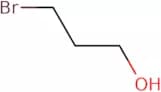
CAS:3-Bromo-1-propanol is a chemical compound that contains a hydroxyl group and an asymmetric carbon atom. This molecule has been used as a model system to study the reaction mechanism of alcohol dehydrogenase, which is the enzyme responsible for the oxidation of ethanol. 3-Bromo-1-propanol has been shown to inhibit the growth of bacteria such as Staphylococcus aureus, which are resistant to penicillin. The pharmacokinetic properties of 3-bromo-1-propanol have been studied in dogs with congestive heart failure.
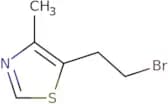
Formula:C3H7BrOPurezza:Min. 97 Area-%Colore e forma:Colorless Clear LiquidPeso molecolare:138.99 g/mol5-(2-Bromoethyl)-4-methyl-1,3-thiazole
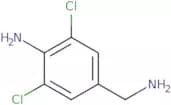
CAS:Versatile small molecule scaffoldFormula:C6H8BrNSPurezza:Min. 95%Peso molecolare:206.11 g/mol4-Amino-3,5-dichlorobenzylamine dihydrochloride
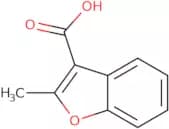
CAS:4-Amino-3,5-dichlorobenzylamine dihydrochloride is a chemical intermediate that can be used as a reagent for the synthesis of other compounds. 4-Amino-3,5-dichlorobenzylamine dihydrochloride is considered to be a high quality chemical with versatile uses. It is listed in the Chemical Abstracts Service (CAS) registry under 164648-75-3, and can be obtained from various suppliers.Formula:C7H8Cl2N2·2HClPurezza:Min. 95%Colore e forma:PowderPeso molecolare:263.98 g/mol2-Methyl-1-benzofuran-3-carboxylic acid
CAS:2-Methyl-1-benzofuran-3-carboxylic acid is a type of carboxylic acid that is cytotoxic to cancer cells. It is a major metabolite of the anticancer drug 2,4,5-trimethoxybenzaldehyde and has been shown to be effective against human breast cancer cells. The ester hydrochloride salt form of this compound has been shown to be an effective inhibitor of esterase activity in vitro. This inhibition leads to increased accumulation of 2-methyl-1-benzofuran-3-carboxylic acid in tumor tissue, which may be due to its ability to inhibit the synthesis of proteins required for the transport and metabolism of other drugs. The x-ray structure analysis revealed that this compound binds to the active site of beta lactamases in an orientation that overlaps with substrate binding sites. This binding prevents the formation of a covalent bond between penicillin G
Formula:C10H8O3Purezza:Min. 95%Colore e forma:PowderPeso molecolare:176.17 g/mol



![2-(1-Methyl-4-oxo-1,4-dihydro-5H-pyrazolo[3,4-d]pyrimidin-5-yl)acetohydrazide](/_next/image/?url=https%3A%2Fstatic.cymitquimica.com%2Fproducts%2F3D%2Fthumb-webp%2FNMB01824.webp&w=3840&q=75)


![7H-Imidazo[4,5-d]pyrimidine](/_next/image/?url=https%3A%2Fstatic.cymitquimica.com%2Fproducts%2F3D%2Fthumb-webp%2FFI34476.webp&w=3840&q=75)