Building Blocks
Sottocategorie di "Building Blocks"
- Acidi boronici e derivati dell'acido boronico(5.782 prodotti)
- Building Blocks Chirali(1.242 prodotti)
- Building Blocks Idrocarburici(6.101 prodotti)
- Building Blocks organici(61.043 prodotti)
Trovati 205351 prodotti di "Building Blocks"
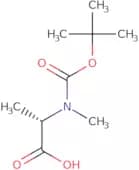
Boc-N-methyl-L-alanine
CAS:Boc-N-methyl-L-alanine is a synthetic, active natural product that is used to diagnose cancer. It has been shown to be an inhibitor of serine protease and can be used to study the interactions between steric interactions and enzyme activity. Boc-N-methyl-L-alanine has also been shown to have anti-cancer activity by inhibiting acid conjugates in cancer cells. This compound can also be used for profiling purposes, as it has been shown to inhibit all trans retinoic acid (ATRA) production in prostate cancer cells.Formula:C9H17NO4Purezza:Min. 95%Colore e forma:White PowderPeso molecolare:203.24 g/mol(3S,6S)-3-[(2S)-Butan-2-yl]-6-methylpiperazine-2,5-dione
CAS:(3S,6S)-3-[(2S)-Butan-2-yl]-6-methylpiperazine-2,5-dione is a chemical compound that acts as an anticoagulant. It inhibits the coagulation of blood by preventing platelets from clumping together and forming clots. This chemical also blocks the activation of platelets by increasing levels of cyclic adenosine monophosphate (cAMP) and cyclic guanosine monophosphate (cGMP). Studies have shown that this chemical inhibits viral replication in vitro. It blocks the PI3K/AKT pathways and reduces the expression of influenza virus proteins. The extract of Portulaca oleracea has been shown to contain flavonoids that have anti-inflammatory properties.Formula:C9H16N2O2Purezza:Min. 98 Area-%Colore e forma:PowderPeso molecolare:184.24 g/mol2,6-Dihydroxy-4-methylbenzoic acid
CAS:2,6-Dihydroxy-4-methylbenzoic acid is a phenolic compound that has been shown to have significant cytotoxicity against cancer cells and may be used in the treatment of various cancers. It is also an endophytic fungus that has been found to produce significant desorption of chloride ions from soil. This compound can also be synthesized by reacting 2,6-dihydroxyphenylacetic acid with methyl iodide or methyl bromide. The reaction system for this synthesis includes concentrated hydrochloric acid, zinc dust, and ethyl acetate. The reaction solution was crystallized in the form of a white solid and the crystals were analyzed by X-ray crystallography to determine their structure. Photocatalytic activity was observed when using 2,6-dihydroxy-4-methylbenzoic acid as an electron donor in a reaction system containing titanium dioxide and hydrogen peroxide as an electron acceptor.Formula:C8H8O4Purezza:Min. 98 Area-%Colore e forma:SolidPeso molecolare:168.15 g/mol{2-Bromo-4-[(2-chlorophenyl)methoxy]-5-methoxyphenyl}methanamine
CAS:This is a chemical intermediate with the CAS No. 937598-86-2. It is a versatile building block that can be used to synthesize new drugs and pharmaceuticals, as well as other fine chemicals. This compound has been shown to be useful in reactions such as the formation of heterocycles, the synthesis of complex compounds, and the preparation of research chemicals. The high quality of this chemical makes it suitable for use in many different types of reactions.Formula:C15H15BrClNO2Purezza:Min. 95%Colore e forma:PowderPeso molecolare:356.64 g/mol1-Butene-3,4-diol
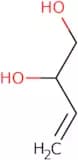
CAS:1-Butene-3,4-diol is a reactive compound that is used in analytical methods. It can be synthesized by an asymmetric synthesis from 1,2-butanediol. This product has been shown to inhibit aminotransferase activity in rat liver microsomes and to be metabolized through the cytochrome P450 system. 1-Butene-3,4-diol also inhibits polymerase chain reactions and is reactive with hydrochloric acid. It may cause fatty acid metabolism and hydroxyl group formation.Formula:C4H8O2Purezza:Min. 95%Colore e forma:Colorless Clear LiquidPeso molecolare:88.11 g/mol5-Bromo-2-nitrobenzoic acid
CAS:5-Bromo-2-nitrobenzoic acid is a chemical compound that belongs to the group of bromonitrobenzenes. It is an important intermediate in organic chemistry and has been used as a reagent for the synthesis of various heterocyclic compounds. 5-Bromo-2-nitrobenzoic acid can be used as a building block for pharmaceuticals, agrochemicals, dyes, and other chemicals. This versatile chemical has been widely used in research and development as a reaction component for synthesizing pharmaceuticals or speciality chemicals or as a building block to produce useful scaffolds.
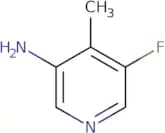
Formula:C7H4BrNO4Purezza:Min. 95%Colore e forma:Slightly Yellow PowderPeso molecolare:246.02 g/mol5-Fluoro-4-methylpyridin-3-amine
CAS:Versatile small molecule scaffoldFormula:C6H7FN2Purezza:Min. 95%Colore e forma:PowderPeso molecolare:126.13 g/mol2-Amino-4-oxopentanoic acid hydrochloride
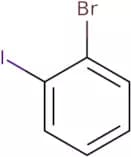
CAS:Versatile small molecule scaffoldFormula:C5H9NO3•HClPurezza:Min. 95%Colore e forma:PowderPeso molecolare:167.59 g/mol1-Bromo-2-iodobenzene
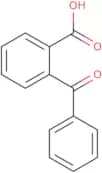
CAS:1-Bromo-2-iodobenzene is an aryl halide that is used in analytical chemistry as a model system for copper chloride. It is also used to study the interaction of 5-HT1A receptors with aromatic hydrocarbons and has been shown to be effective in treating cervical cancer. The light emission from 1-Bromo-2-iodobenzene can be used as a probe for asymmetric synthesis, and it can also be used in metathesis reactions to isolate yield. 1-Bromo-2-iodobenzene binds to lysine residues on proteins and blocks the activity of enzymes by forming covalent bonds with amino acid residues in the active site.Formula:C6H4BrIPurezza:Min. 98%Colore e forma:Yellow Clear LiquidPeso molecolare:282.9 g/mol2-Benzoylbenzoic acid
CAS:2-Benzoylbenzoic acid is an organic compound with the chemical formula C6H5CO2. It is a white solid that is soluble in water, ethanol, and ether. 2-Benzoylbenzoic acid is stable at room temperature, but decomposes when heated to above 200°C. This compound can be used as a catalyst for the synthesis of polymers.
2-Benzoylbenzoic acid is used as a raw material for the production of ferrocenecarboxylic acid and ethylene diamine. The activity index of 2-benzoylbenzoic acid was found to be high (0.7) when it was tested against Streptococcus mutans and Staphylococcus aureus.Formula:C14H10O3Purezza:Min. 95%Colore e forma:White PowderPeso molecolare:226.23 g/mol1,3-Benzenedialdehyde
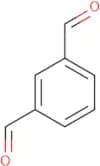
CAS:1,3-Benzenedialdehyde (1,3-BD) is a compound that is formed from the oxidation of benzene by copper chloride in a model system. It can be used as a substrate film to study covalent linkages. The electrochemical impedance spectroscopy (EIS) technique has been used to determine the stability of 1,3-BD in reaction solution. The EIS results show that 1,3-BD is stable and its complexes are relatively stable. This compound also reacts with malonic acid to form 1,2-benzenediol and 2-methylmalonic acid. The molecular structure of 1,3-BD has been determined using X-ray crystallography and it was found that nitrogen atoms are present on the molecule. Chemical reactions have not been observed with 1,3-BD when subjected to heat or light.
Formula:C8H6O2Purezza:Min. 95%Colore e forma:PowderPeso molecolare:134.13 g/mol4-Bromo-2-fluoroaniline
CAS:4-Bromo-2-fluoroaniline is a sulfonated compound that can be synthesized from 2,4,6-trimethylbenzenamine and malonic acid. It is an acidic chemical that reacts with hydroxide solution to form a molecule with a chlorinated aromatic ring. 4-Bromo-2-fluoroaniline has been used in clinical studies as an oral anti-cancer agent in the treatment of malignant melanoma and breast cancer. This drug inhibits epidermal growth factor receptor (EGFR), which may lead to decreased cell proliferation, apoptosis, and tumor formation.Formula:C6H5BrFNPurezza:Min. 99%Colore e forma:PowderPeso molecolare:190.01 g/mol3,5-Diisopropyl-4-hydroxybenzoic acid
CAS:3,5-Diisopropyl-4-hydroxybenzoic acid is a white, crystalline compound that can be found as a dimer. It is soluble in solvents such as chloroform and ethers but insoluble in water. 3,5-Diisopropyl-4-hydroxybenzoic acid is used in the production of polyesters, polymers, and resins. This compound has been used to produce propofol and decarboxylating monomers for organic solvents. 3,5-Diisopropyl-4-hydroxybenzoic acid reacts with chloride ion at high temperatures to form chlorine gas and hydrogen chloride. The melting point of this compound is 169 degrees Celsius.Formula:C13H18O3Purezza:Min. 95%Colore e forma:PowderPeso molecolare:222.28 g/mol2-Bromobenzaldehyde
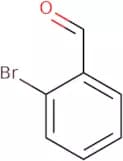
CAS:2-Bromobenzaldehyde is an important aryl aldehyde that can be synthesized through the copper-catalyzed coupling of 2-bromobenzyl bromide and phenylacetone. The synthesis of 2-bromobenzaldehyde has been used to study the effects of physiological activities on the coordination geometry. It is also used as a fluorescent probe for amines and esters, which are commonly found in bioinorganic chemistry. The compound is characterized by intermolecular hydrogen bonding and hydrogen bonding between the hydroxy group and chloride, which are associated with its acidity. 2-Bromobenzaldehyde has been shown to have antiinflammatory properties, which may be due to its ability to inhibit prostaglandin synthesis.Formula:C7H5BrOPurezza:Min. 95%Colore e forma:Off-White PowderPeso molecolare:185.02 g/molN-a-Benzoyl-L-arginine
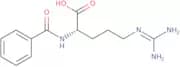
CAS:N-a-Benzoyl-L-arginine is a fluorescent substrate for soybean trypsin. It is hydrolyzed by the enzyme to release an amide and p-nitrophenyl phosphate. The amide is then hydrolyzed by esterase to produce caproic acid, which can be detected at an excitation wavelength of 340 nm and emission wavelength of 495 nm. N-a-Benzoyl-L-arginine has been shown to have proteolytic activity in cell culture, with a pH optimum of 6.8 and temperature optimum of 37 degrees Celsius. This product has been shown to be effective in women as well as in men.Formula:C13H18N4O3Purezza:Min. 95%Colore e forma:White PowderPeso molecolare:278.31 g/molEthyl propiolate
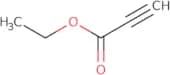
CAS:Ethyl propiolate is a halide that is structurally related to the alkylating agent trifluoroacetic acid. Ethyl propiolate inhibits the activity of several enzymes including phosphofructokinase and pyruvate kinase, which are important for energy metabolism in cells. It also has been shown to have beneficial effects on autoimmune diseases such as lupus erythematosus. The mechanism of action of ethyl propiolate is due to its ability to react with activated oxygen and form an intramolecular hydrogen bond with carbon atoms in the substrate molecule. The reaction between ethyl propiolate and diethyl ketomalonate results in the formation of diethyl 2-propiolate, which can then be hydrolyzed by water into acetaldehyde and diethyl ketomalonate.Formula:C5H6O2Purezza:Min. 98 Area-%Colore e forma:Colorless Clear LiquidPeso molecolare:98.1 g/mol4-Benzylpyridine
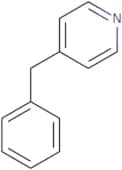
CAS:4-Benzylpyridine is an organic compound with a molecular formula of C8H6N2. It has two chlorine atoms, two nitrogen atoms, and a methyl group. The chemical structure of 4-benzylpyridine is heterocyclic and it has a molecular weight of 150.4 g/mol. 4-Benzylpyridine is soluble in organic solvents, but insoluble in water. The reactivity of this compound can be explained by the presence of the C=C double bond and one or more electron withdrawing groups (-NH2, -Cl). 4-Benzylpyridine is used as an inhibitor for many reactions such as hydrogen bonding or carboxylate reactions. The x-ray crystal structures show that the molecule's shape resembles that of 1,3-benzodioxole-5-carboxylic acid (BDC) but with a benzene ring instead on a 1,3 benzo groupFormula:C12H11NPurezza:Min. 98 Area-%Colore e forma:Colorless Clear LiquidPeso molecolare:169.22 g/mol(S)-1-(2-Amino-propan-1-yl)-4-methyl-piperazine
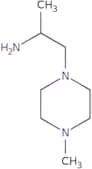
CAS:(S)-1-(2-Amino-propan-1-yl)-4-methyl-piperazine is a reagent, reaction component and building block for speciality chemicals. It is a versatile intermediate that has been used in the synthesis of complex compounds. (S)-1-(2-Amino-propan-1-yl)-4-methyl-piperazine is an important building block for the synthesis of a variety of pharmaceuticals and other organic compounds. This compound can be used as an intermediate or reagent to produce high quality research chemicals.Formula:C8H19N3Purezza:Min. 95%Peso molecolare:157.26 g/molN-α-Boc-N-ε-Fmoc-L-lysine
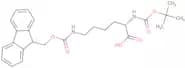
CAS:N-alpha-Boc-N-epsilon-Fmoc-L-lysine is a cyclic peptide that has antimicrobial properties. The peptide is synthesized from the amino acid lysine and contains a sequence of lysine residues. N-alpha-Boc-N-epsilon-Fmoc-L-lysine can be used to treat herpes simplex virus infections and influenza virus infections. It also has the potential to neutralize glycopeptide antibiotics, such as vancomycin, by binding to their cell wall targets and interfering with the function of these molecules. In addition, this peptide can be used to manufacture insulin analogues with improved pharmacokinetic properties and increased stability in blood plasma.Formula:C26H32N2O6Purezza:Min. 95%Colore e forma:White To Off-White SolidPeso molecolare:468.54 g/mol3-(Difluoromethyl)-1-methyl-1H-pyrazole-4-carboxamide
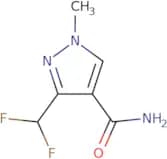
CAS:This drug is a pyrazole analog and is used as an insecticide. 3-(Difluoromethyl)-1-methyl-1H-pyrazole-4-carboxamide inhibits the growth of insects by interfering with their ability to synthesize fatty acids. The effective dose for this compound has been determined in rat hepatocytes. Target pest includes bromodomain proteins, which are proteins that regulate DNA transcription and replication. Control agents include n-oxide, fatty acid, and carbonyl group. Risk group includes prioritizing monoclonal antibodies, sequences, and heart disease
Formula:C6H7F2N3OPurezza:Min. 95%Peso molecolare:175.14 g/mol

![(3S,6S)-3-[(2S)-Butan-2-yl]-6-methylpiperazine-2,5-dione](/_next/image/?url=https%3A%2Fstatic.cymitquimica.com%2Fproducts%2F3D%2Fthumb-webp%2FKBA59069.webp&w=3840&q=75)

![{2-Bromo-4-[(2-chlorophenyl)methoxy]-5-methoxyphenyl}methanamine](/_next/image/?url=https%3A%2Fstatic.cymitquimica.com%2Fproducts%2F3D%2Fthumb-webp%2FMMB59886.webp&w=3840&q=75)