Building Blocks
Sottocategorie di "Building Blocks"
- Acidi boronici e derivati dell'acido boronico(5.783 prodotti)
- Building Blocks Chirali(1.242 prodotti)
- Building Blocks Idrocarburici(6.105 prodotti)
- Building Blocks organici(61.055 prodotti)
Trovati 205383 prodotti di "Building Blocks"
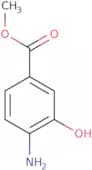
Methyl 4-amino-3-hydroxybenzoate
CAS:Methyl 4-amino-3-hydroxybenzoate is a synthetic compound that has been shown to inhibit the neuraminidase enzyme in the influenza virus. It is a ligand for the influenza virus and inhibits the release of progeny virions from infected cells. Methyl 4-amino-3-hydroxybenzoate has been shown to have antiviral effects against influenza A and B viruses in vivo and in vitro. The mechanism of action is thought to be due to its interaction with metal ion, which can reduce the availability of free water needed for viral replication.Formula:C8H9NO3Purezza:Min. 95%Colore e forma:Off-White PowderPeso molecolare:167.16 g/mol(Acetyloxy)(furan-2-yl)methyl acetate
CAS:Acetyloxy(furan-2-yl)methyl acetate is a hydrazone molecule that is used in pharmaceutical preparations. It is synthesized by the condensation of crotonylidene and acetyloxyacetic acid. This compound has shown promising anticancer activity with an activation energy of 8.3 kcal/mol for the formation of the reactive species. Acetyloxy(furan-2-yl)methyl acetate has also been shown to be effective against methicillin resistant Staphylococcus aureus, although it does not have any activity against Gram positive bacteria such as Mycobacterium tuberculosis or Mycobacterium avium complex.Formula:C9H10O5Purezza:Min. 95%Colore e forma:PowderPeso molecolare:198.17 g/molMethyl 3-amino-4-chlorobenzoate
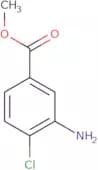
CAS:Methyl 3-amino-4-chlorobenzoate is an analog of 3-amino-4-chlorobenzoic acid. It is a multidrug that can cross the blood brain barrier and has been shown to have cytotoxic activity in vitro. Methyl 3-amino-4-chlorobenzoate has been postulated as a possible organometallic compound and may be synthesized through a chemical diversity approach. The chloride ion, which is present in methyl 3-amino-4-chlorobenzoate, has been shown to decrease the toxicity of nitrobenzoic acid, making this compound resistant to nitrosation reactions.Formula:C8H8ClNO2Purezza:Min. 95%Colore e forma:PowderPeso molecolare:185.61 g/molN-Methylquinolin-5-amine
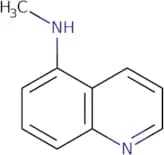
CAS:Versatile small molecule scaffoldFormula:C10H10N2Purezza:Min. 95%Colore e forma:PowderPeso molecolare:158.2 g/mol3-Methoxy-4-methylbenzamide
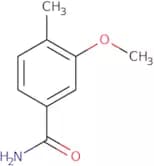
CAS:3-Methoxy-4-methylbenzamide is a chemical compound that is used as a building block in the synthesis of other compounds. It has shown to be useful in the preparation of a variety of complex compounds and has been used as a reagent in organic synthesis. 3-Methoxy-4-methylbenzamide is soluble in water, ethanol, and acetone. This compound has not been tested for toxicity or carcinogenicity.Formula:C9H11NO2Purezza:Min. 95%Peso molecolare:165.19 g/molMethyl 3,5-dibromo-4-methylbenzoate
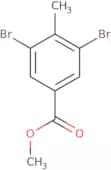
CAS:Methyl 3,5-dibromo-4-methylbenzoate is a versatile building block that can be used as a reagent or a speciality chemical. It is a high quality compound with many applications in research and synthesis. Methyl 3,5-dibromo-4-methylbenzoate is an intermediate in the manufacturing of polymers and pharmaceuticals. It is also a reaction component for the preparation of complex compounds, such as methyl 3,5-dimethoxybenzoate. Methyl 3,5-dibromo-4-methylbenzoate has been shown to be useful as a scaffold for the synthesis of novel compounds.
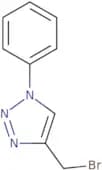
Formula:C9H8Br2O2Purezza:Min. 95%Colore e forma:Off-White PowderPeso molecolare:307.97 g/mol4-(Bromomethyl)-1-phenyl-1H-1,2,3-triazole
CAS:4-(Bromomethyl)-1-phenyl-1H-1,2,3-triazole (4BPHT) is a versatile building block for organic synthesis. It is a speciality chemical that can be used as a reagent or a research chemical. 4BPHT has been used in the synthesis of complex compounds and has been shown to be useful in the preparation of high quality compounds. 4BPHT is also an intermediate for the synthesis of useful scaffolds and can be used as a reaction component.Formula:C9H8BrN3Purezza:Min. 95%Colore e forma:PowderPeso molecolare:238.08 g/molMethyl 4-ethylbenzoate
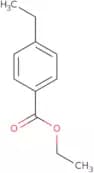
CAS:Methyl 4-ethylbenzoate is a molecule that has been shown to have synergistic effects with magnesium oxide, polyvinylpyrrolidone, and glycerin. It also has the ability to be used as a template molecule for the synthesis of hydrotalcite. Methyl 4-ethylbenzoate can be synthesized from ethyl benzoate and methyl iodide. It is an ingredient in some cosmetics and personal care products, such as skin lotions, hair conditioners, and fragrances. Methyl 4-ethylbenzoate has antioxidant properties due to its ability to scavenge free radicals. This compound is also used as a solvent for paints and lacquers.Formula:C11H14O2Purezza:Min. 95%Colore e forma:Clear LiquidPeso molecolare:178.23 g/mol4-[(5-Ethyl-1,2,4-oxadiazol-3-yl)methoxy]piperidine
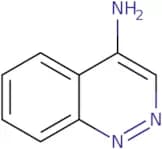
CAS:Versatile small molecule scaffoldFormula:C10H17N3O2Purezza:Min. 90%Colore e forma:Clear LiquidPeso molecolare:211.26 g/molCinnolin-4-amine
CAS:Cinnolin-4-amine is a protonated cinnoline that has been shown to have tumor-localizing properties. Cinnolin-4-amine has been shown to be cytotoxic to human tumor xenografts in mice, and this activity was demonstrated to be mediated by its interaction with the receptor for the angiotensin II type 1 receptor. It also inhibits the growth of tumor cells in culture by inhibiting DNA synthesis and protein synthesis. Cinnolin-4-amine has been shown to produce antihypertensive effects in animals and humans, which may be due to its ability to decrease blood pressure via inhibition of the sympathetic nervous system.
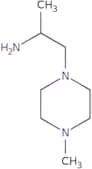
Formula:C8H7N3Purezza:Min. 95%Colore e forma:PowderPeso molecolare:145.16 g/mol(S)-1-(2-Amino-propan-1-yl)-4-methyl-piperazine
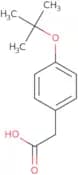
CAS:(S)-1-(2-Amino-propan-1-yl)-4-methyl-piperazine is a reagent, reaction component and building block for speciality chemicals. It is a versatile intermediate that has been used in the synthesis of complex compounds. (S)-1-(2-Amino-propan-1-yl)-4-methyl-piperazine is an important building block for the synthesis of a variety of pharmaceuticals and other organic compounds. This compound can be used as an intermediate or reagent to produce high quality research chemicals.Formula:C8H19N3Purezza:Min. 95%Peso molecolare:157.26 g/mol4-tert-Butoxyphenylacetic acid
CAS:Ruthenium complexes of 4-tert-butoxyphenylacetic acid are catalysts that have been shown to be effective in the asymmetric synthesis of alcohols and terpyridines.
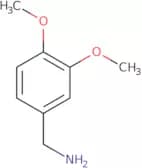
This complex has been shown to be a ligand for ruthenium metal, which is often used as a catalyst in organic reactions. The use of this catalyst has led to advances in the field of organic chemistry, specifically the synthesis of new oligomers.Formula:C12H16O3Purezza:Min. 95%Colore e forma:PowderPeso molecolare:208.25 g/mol3,4-Dimethoxybenzylamine
CAS:3,4-Dimethoxybenzylamine is an amine that is used in the synthesis of pharmaceuticals. It can be polymerized by heating with aqueous formaldehyde and hydrochloric acid to form a resin. 3,4-Dimethoxybenzylamine inhibits serotonin receptors, exhibiting inhibitory properties at concentrations of 10-5 M. 3,4-Dimethoxybenzylamine also has pharmacokinetic properties that are similar to vitamin B1. This compound has been shown to inhibit homogeneous catalysts and is used for coatings for ganglion cells.
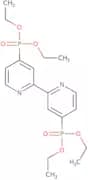
Formula:C9H13NO2Purezza:Min. 95%Colore e forma:Clear LiquidPeso molecolare:167.21 g/molTetraethyl 2,2'-bipyridine-4,4'-diylbisphosphonate
CAS:Tetraethyl 2,2'-bipyridine-4,4'-diylbisphosphonate is a chemical that is used as an intermediate in the synthesis of other fine chemicals. Tetraethyl 2,2'-bipyridine-4,4'-diylbisphosphonate can be used as a building block for synthesis of more complex compounds with high chemical and biological activity. Tetraethyl 2,2'-bipyridine-4,4'-diylbisphosphonate can also be used to synthesize speciality chemicals or research chemicals. This compound has many versatile uses due to its ability to react with different substances to form new chemical compounds.
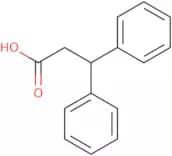
Formula:C18H26N2O6P2Purezza:Min. 95%Colore e forma:PowderPeso molecolare:428.36 g/mol3,3-Diphenylpropionic acid
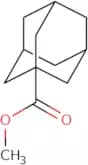
CAS:3,3-Diphenylpropionic acid is a synthetic compound that is used to treat high blood pressure. It is an ester of hydrochloric acid and 3,3-diphenylpropionic acid. 3,3-Diphenylpropionic acid lowers blood pressure by inhibiting the activity of angiotensin II, which causes constriction and shrinking of the blood vessels. The safety profile for this drug has been evaluated in a number of studies in which it was shown that there were no significant adverse effects on the heart or other organs. This drug also has a beneficial effect on diabetic neuropathy and metabolic rate. 3,3-Diphenylpropionic acid is not active against bacteria or fungi but has been shown to be effective against amines by binding to them and preventing their interaction with DNA.Formula:C15H14O2Purezza:Min. 95%Colore e forma:White PowderPeso molecolare:226.27 g/mol1-Adamantanecarboxylic acid methyl ester
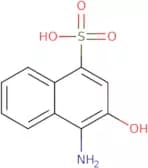
CAS:1-Adamantanecarboxylic acid methyl ester is a specialized chemical compound, classified as an ester derivative from the adamantane structure. It is sourced through the esterification of 1-adamantanecarboxylic acid, often involving methanol as a reagent under catalyzed conditions. The compound's mode of action is primarily as an intermediate in organic synthesis, where it enables the introduction of adamantyl groups into target molecules, influencing molecular structure with its bulky, rigid framework.This ester derivative finds extensive application in the realm of synthetic organic chemistry. It serves as a crucial intermediate in the development of complex organic materials and pharmaceuticals, where the adamantane moiety is required to confer specific steric and electronic properties. The incorporation of adamantane from 1-adamantanecarboxylic acid methyl ester can enhance the thermal stability, lipophilicity, and rigidity of the resultant compounds, making it invaluable for researchers focused on material sciences and drug development. Its versatile reactivity and robust structure make it a sought-after compound for advancing chemical research and innovation.Formula:C12H18O2Purezza:Min. 98%Colore e forma:White PowderPeso molecolare:194.27 g/mol1-Amino-2-naphthol-4-sulfonic acid
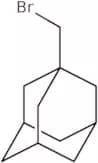
CAS:1-Amino-2-naphthol-4-sulfonic acid is a fluorescent dye that belongs to the class of naphtholsulfonates. It has been shown to react with protonated hydroxyl groups, which are present in the matrix, and form an electrochemical impedance spectrum. The fluorescence of tryptophan can be used as a probe to detect the presence of 1-amino-2-naphthol-4-sulfonic acid in a solution. This reaction mechanism suggests that adsorption is the dominating process for 1-amino-2-naphthol-4-sulfonic acid.Formula:C10H9NO4SColore e forma:PowderPeso molecolare:239.25 g/mol1-(Bromomethyl)adamantane
CAS:1-(Bromomethyl)adamantane is a synthetic chemical that is used in the preparation of other chemicals. The active site of 1-(bromomethyl)adamantane can be found on its bromine atom, which has been shown to react with copper. The regioselectivity is determined by the 1-position on adamantane, and the thermodynamic constants are affected by the carbon-halogen bond, which is present in 1-(bromomethyl)adamantane. This compound has been shown to have chromatographic properties that make it useful for separating compounds that are similar in structure. It can also be used as a reagent to synthesize other chemicals or prepare them for use in experiments.
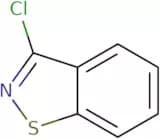
Formula:C11H17BrPurezza:Min. 95%Colore e forma:White PowderPeso molecolare:229.16 g/mol3-Chloro-1,2-benzisothiazole
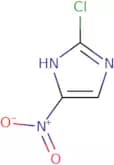
CAS:3-Chloro-1,2-benzisothiazole is a nucleophilic agent with a hydrogen bond donor. It has been shown to inhibit the replication of RNA in the presence of adenosine triphosphate (ATP) and to bind to amines. 3-Chloro-1,2-benzisothiazole is used as an inhibitor for non-nucleoside reverse transcriptase inhibitors. It has been shown to have high potency and strong inhibitory activity against HIV and other retroviruses. 3-Chloro-1,2-benzisothiazole also inhibits vibrational modes associated with enzymatic reactions.Formula:C7H4ClNSPurezza:Min. 95%Colore e forma:PowderPeso molecolare:169.63 g/mol2-Chloro-4-nitroimidazole
CAS:Radiosensitiser in hypoxic tumoursFormula:C3H2ClN3O2Purezza:Min. 95%Colore e forma:PowderPeso molecolare:147.52 g/mol


![4-[(5-Ethyl-1,2,4-oxadiazol-3-yl)methoxy]piperidine](/_next/image/?url=https%3A%2Fstatic.cymitquimica.com%2Fproducts%2F3D%2Fthumb-webp%2FBAC08222.webp&w=3840&q=75)