Building Blocks
Questa sezione contiene prodotti fondamentali per la sintesi di composti organici e biologici. Building blocks sono i materiali di partenza essenziali utilizzati per costruire molecole complesse attraverso varie reazioni chimiche. Svolgono un ruolo critico nella scoperta di farmaci, nella scienza dei materiali e nella ricerca chimica. Presso CymitQuimica, offriamo una gamma diversificata di building blocks di alta qualità per supportare le tue ricerche innovative e progetti industriali, assicurandoti di avere i componenti essenziali per una sintesi di successo.
Sottocategorie di "Building Blocks"
- Acidi boronici e derivati dell'acido boronico(5.783 prodotti)
- Building Blocks Chirali(1.242 prodotti)
- Building Blocks Idrocarburici(6.105 prodotti)
- Building Blocks organici(61.055 prodotti)
Trovati 205383 prodotti di "Building Blocks"
Ordinare per
Purezza (%)
0
100
|
0
|
50
|
90
|
95
|
100
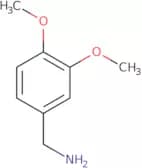
3,4-Dimethoxybenzylamine
CAS:3,4-Dimethoxybenzylamine is an amine that is used in the synthesis of pharmaceuticals. It can be polymerized by heating with aqueous formaldehyde and hydrochloric acid to form a resin. 3,4-Dimethoxybenzylamine inhibits serotonin receptors, exhibiting inhibitory properties at concentrations of 10-5 M. 3,4-Dimethoxybenzylamine also has pharmacokinetic properties that are similar to vitamin B1. This compound has been shown to inhibit homogeneous catalysts and is used for coatings for ganglion cells.
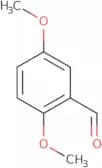
Formula:C9H13NO2Purezza:Min. 95%Colore e forma:Clear LiquidPeso molecolare:167.21 g/mol2,5-Dimethoxybenzaldehyde
CAS:Intermediate in organic synthesis
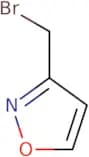
Formula:C9H10O3Purezza:Min. 98 Area-%Colore e forma:Off-White PowderPeso molecolare:166.17 g/mol3-(Bromomethyl)isoxazole
CAS:3-(Bromomethyl)isoxazole is a linker that can be used in the synthesis of other biologically active compounds. It has been shown to have an inhibitory effect on agriculturally-important bacteria, including those producing lipopolysaccharides. 3-(Bromomethyl)isoxazole has also been shown to have antibacterial activity and hydrogen bond interactions. 3-(Bromomethyl)isoxazole forms a boronic ester which is an important functional group in organic chemistry. This linker can also be used as a coagulant in water purification systems.Formula:C4H4BrNOPurezza:Min. 95%Colore e forma:Clear LiquidPeso molecolare:161.99 g/mol3,5-Diiodo-4-hydroxybenzoic acid
CAS:3,5-Diiodo-4-hydroxybenzoic acid (3,5 DIBA) is an aminotriazole that inhibits the growth of a wide range of bacteria. 3,5 DIBA inhibits the transport of catechol and 2,6-dichlorobenzoic acid into cells. This inhibition leads to decreased levels of catechol-O-methyltransferase activity and increased levels of lysine decarboxylase activity. The combination of these two reactions causes a decrease in lysine production. Lysine is important for cell division and protein synthesis in bacteria. 3,5 DIBA also inhibits root formation in plants and has been shown to inhibit the uptake of nutrients by plant roots. Also known as: Dibenzoylmethane; 1,2-Benzenediamine, 3-[(2,6-dichlorophenyl)imino]-, diiodide;Formula:C7H4I2O3Purezza:Min 97%Colore e forma:PowderPeso molecolare:389.91 g/mol2,3-Diaminobenzoic acid methyl ester
CAS:2,3-Diaminobenzoic acid methyl ester is a redox potential catalyst that has been shown to have anticancer activity in vitro and in vivo. It is a 5-ht4 receptor agonist, which causes an increase in the intracellular concentration of cAMP. The anticancer effect of this compound may be due to its ability to inhibit the growth of cancer cells by blocking DNA synthesis and cell division. The biological properties of this drug are not well understood, but it has been shown to have antioxidant effects, as well as proton-reducing and electron-accepting properties. This compound has also been studied electrochemically.Formula:C8H10N2O2Purezza:95%NmrColore e forma:PowderPeso molecolare:166.18 g/mol5-Bromoindole-2-carboxylic acid ethyl ester
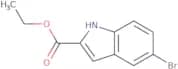
CAS:5-Bromoindole-2-carboxylic acid ethyl ester (5-BIEC) is a carboxamide antibiotic that inhibits the growth of gram-negative bacteria, including pneumoniae. 5-BIEC has been shown to have an inhibitory concentration (IC50) of 0.9 μM against Escherichia coli and other gram negative bacteria. It also has anti-proliferative effects on cancer cells, which may be due to its ability to inhibit DNA replication by binding to the beta subunit of DNA gyrase. 5-BIEC is currently being studied as a potential anticancer drug for the treatment of breast cancer, colon cancer, and leukemia.Formula:C11H10BrNO2Purezza:Min. 98 Area-%Colore e forma:PowderPeso molecolare:268.11 g/mol2,3-Diaminonaphthalene
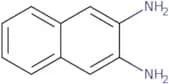
CAS:For fluorometric measurement of nitrite/nitrate in cells; inhibits NO productionFormula:C10H10N2Purezza:Min. 95 Area-%Colore e forma:Brown Off-White PowderPeso molecolare:158.2 g/mol1,3-Diphenylisobenzofuran
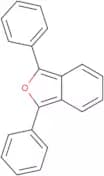
CAS:1,3-Diphenylisobenzofuran is a reactive compound that has been shown to have anti-infectious and anticancer properties. It has been shown to cause cell lysis in a variety of infectious diseases, such as Chlamydia pneumoniae, Borrelia burgdorferi, and Salmonella typhimurium. It also has anticancer activity against human tumor cells lines and is ancillary to photodynamic therapy (PDT). 1,3-Diphenylisobenzofuran is able to induce apoptosis in rat liver microsomes by binding to the thiol group of cysteine residues on proteins. The activity index for this compound was found to be 10.0 μM.Formula:C20H14OPurezza:Min. 95%Colore e forma:Yellow SolidPeso molecolare:270.32 g/molcis-4,7,10,13,16,19-Docosahexaenoic acid
CAS:cis-4,7,10,13,16,19-Docosahexaenoic acid (also known as DHA or cervonic acid) is one of the omega-3 fatty acids (a group of highly unsaturated fatty acids). As for most omega-3 fatty acids, good sources of DHA include fish oils and other seafoods. DHA plays a key role in human brain development and function and is also found in high concentration in the retina, central nervous system and skin. As such DHA is a key nutrient which is widely used as a dietary supplement, particularly for infants and pregnant women, with its potential health benefits currently being investigated across a number of different disease areas.Formula:C22H32O2Purezza:Min. 80 Area-%Colore e forma:Yellow Clear LiquidPeso molecolare:328.49 g/molO6-Diphenylcarbamoyl-N2-isobutyrylguanine
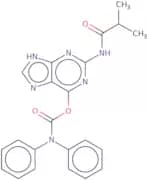
CAS:Synthetic building block for nucleic acid researchFormula:C22H20N6O3Purezza:Min. 95%Colore e forma:PowderPeso molecolare:416.43 g/molDde biotin picolyl azide
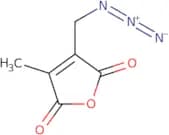
CAS:Azide-activated cleavable biotin probeFormula:C38H57N9O9SPurezza:Min. 95%Colore e forma:Clear LiquidPeso molecolare:815.98 g/mol3-(Azidomethyl)-4-methyl-2,5-dihydrofuran-2,5-dione, 1M in acetonitrile
CAS:Please enquire for more information about 3-(Azidomethyl)-4-methyl-2,5-dihydrofuran-2,5-dione, 1M in acetonitrile including the price, delivery time and more detailed product information at the technical inquiry form on this pageFormula:C6H5N3O3Purezza:Min. 95%Colore e forma:PowderPeso molecolare:167.12 g/mol(2S)-2-(Boc-amino)-4-Methyl-1-[(2R)-2-methyloxiran-2-yl]-1-oxopentane ee
CAS:Versatile small molecule scaffoldFormula:C14H25NO4Purezza:Min. 95%Colore e forma:PowderPeso molecolare:271.35 g/mol6,6'-Dimethyl-2,2'-bipyridine
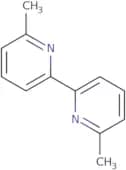
CAS:6,6'-Dimethyl-2,2'-bipyridine (DMBP) is a bidentate ligand that is used in the functional theory of antibacterial activity. The bond cleavage of DMBP is believed to be due to its high oxidation potential and its ability to form hydrogen bonds with the bacteria cell wall. DMBP has been shown to have an antibacterial effect on both Gram-positive and Gram-negative bacteria. The mechanism of action may be due to its ability to release hydroxyl radicals when exposed to ultraviolet light. This compound also has a boronic acid group that can form a complex with 4-methoxyphenylboronic acid (MPA) which can inhibit bacterial growth.Formula:C12H12N2Purezza:Min. 98%Colore e forma:PowderPeso molecolare:184.24 g/mol4-Octylbenzylamine
CAS:4-Octylbenzylamine is a hydrophobic molecule that is soluble in organic solvents. In simulations, it was shown to have affinity for anions and aromatic hydrocarbons, as well as the ability to be immobilized on surfaces. 4-Octylbenzylamine is also a chromatographic stationary phase that can be used to separate solutes with similar properties. This molecule has been oriented so that it binds to the hydrated surface of the column, which improves its affinity for anions and aromatic hydrocarbons. The high-performance liquid chromatography (HPLC) technique utilizes this property to separate molecules of different affinities from one another in a systematic manner.Formula:C15H25NPurezza:Min. 95%Colore e forma:PowderPeso molecolare:219.37 g/molTemsavir
CAS:Temsavir is a cyclic peptide that is chemically similar to the HIV-1 gp120 protein. It binds to the gp120 receptor on the outside of the virus and inhibits viral life, inhibiting viral replication and infectivity. Temsavir has been shown to be an inhibitor of HIV-1 in vivo human pharmacokinetics. The oral prodrug temsavir has been shown to be effective for the treatment of infectious diseases caused by HIV-1, such as hepatitis C virus (HCV) co-infection. Temsavir can also be used for hepatic impairment, which may not respond well to other drugs because they are primarily metabolized in the liver.Formula:C24H23N7O4Purezza:Min. 98 Area-%Colore e forma:PowderPeso molecolare:473.48 g/molN,N-Diisobutyl-2-(octylphenylphosphoryl)acetamide
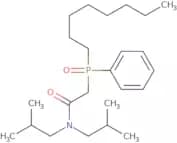
CAS:N,N-Diisobutyl-2-(octylphenylphosphoryl)acetamide is a redox active extractant that is used for the extraction of metals from acidic solutions. It has been shown to have an adsorption mechanism that includes hydrogen bonding and intramolecular hydrogen bonding. N,N-Diisobutyl-2-(octylphenylphosphoryl)acetamide also has a high redox potential and fluorescence properties. This extractant can be used as a metal chelate to extract copper from hydroxide or carbonate solutions. It can also be used in titration calorimetry experiments.Formula:C24H42NO2PPurezza:Min. 98 Area-%Colore e forma:White To Off-White SolidPeso molecolare:407.57 g/mol2,4,6-Triisopropylbenzenesulfonyl chloride
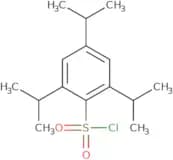
CAS:2,4,6-Triisopropylbenzenesulfonyl chloride is a molecule that belongs to the class of ethylene diamine. It has been shown to inhibit the replication of herpes simplex virus in cell culture. This compound has an intramolecular hydrogen and steric interactions with a hydroxyl group. The analog of this molecule is 2,4,6-triisopropylbenzenesulfonic acid. 2,4,6-Triisopropylbenzenesulfonyl chloride can be used as a sulfonation agent and is known for its ability to react with nitrogen nucleophiles such as amines or ammonia.Formula:C15H23SO2ClPurezza:Min. 95%Peso molecolare:302.86 g/mol1,5-Anhydro-D-glucitol 6-dihydrogenphosphate disodium
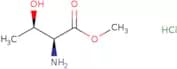
CAS:Please enquire for more information about 1,5-Anhydro-D-glucitol 6-dihydrogenphosphate disodium including the price, delivery time and more detailed product information at the technical inquiry form on this pageFormula:C6H13O8P•Na2Purezza:Min. 95%Peso molecolare:290.12 g/molL-Threonine methyl ester hydrochloride
CAS:L-Threonine methyl ester hydrochloride is a synthetic amino acid that has shown efficacy in treating Gram-negative infections. L-Threonine methyl ester hydrochloride is an agonist for the hyaluronic acid receptor and has been demonstrated to be potent in vitro against gram-negative bacteria such as Escherichia coli and Klebsiella pneumoniae. It also exhibits high stereoselectivity, with one enantiomer being more active than the other. L-Threonine methyl ester hydrochloride is currently in clinical development for cancer treatments, as it shows promise for inhibiting tumor growth and inducing apoptosis.Formula:C5H11NO3•HClPurezza:Min. 97%Colore e forma:Yellow PowderPeso molecolare:169.61 g/mol





![(2S)-2-(Boc-amino)-4-Methyl-1-[(2R)-2-methyloxiran-2-yl]-1-oxopentane ee](/_next/image/?url=https%3A%2Fstatic.cymitquimica.com%2Fproducts%2F3D%2Fthumb-webp%2FXJA06882.webp&w=3840&q=75)