


Building Blocks
Sottocategorie di "Building Blocks"
- Acidi boronici e derivati dell'acido boronico(5.783 prodotti)
- Building Blocks Chirali(1.242 prodotti)
- Building Blocks Idrocarburici(6.105 prodotti)
- Building Blocks organici(61.055 prodotti)
Trovati 205383 prodotti di "Building Blocks"
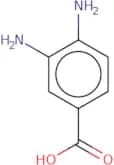
3,4-Diaminobenzoic acid
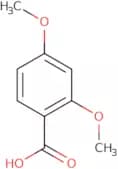
CAS:3,4-Diaminobenzoic acid is a compound that is produced by the condensation of two molecules of hydrochloric acid. 3,4-Diaminobenzoic acid has been used as a reagent in the synthesis of coumarin derivatives. This chemical has been shown to be an effective proton scavenger in an optimum concentration. Benzimidazole compounds are also synthesized from 3,4-diaminobenzoic acid and have been shown to be effective against autoimmune diseases. 3,4-Diaminobenzoic acid can be used for the production of diazonium salts, which are used in the synthesis of anti-inflammatory drugs and other pharmaceuticals. The hydroxyl group on this molecule makes it chemically stable and kinetic data shows that it has high diphenolase activity.Formula:C7H8N2O2Purezza:Min. 96 Area-%Colore e forma:PowderPeso molecolare:152.15 g/mol2,4-Dimethoxybenzoic acid
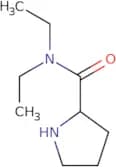
CAS:2,4-Dimethoxybenzoic acid is a phenolic compound that has been shown to bind to the ferrocene carboxylate of protocatechuic acid. The resulting complex was shown to be able to react with chloride ions in an acylation reaction. The kinetic study showed that the rate of reaction increased with increasing concentration of 2,4-dimethoxybenzoic acid. The protonation of 2,4-dimethoxybenzoic acid also increases its ability to react with chloride ions. This acidic compound can also react with amines and other compounds containing nitrogen in a similar manner as acetic anhydride. Addition of alkali hydrolysis may cause the cleavage of the hydrogen bond between 2,4-dimethoxybenzoic acid and protocatechuic acid, releasing 2,4-dimethoxybenzoic acid and protocatechuic acid.Formula:C9H10O4Purezza:Min. 95%Colore e forma:White PowderPeso molecolare:182.17 g/molN,N-Diethylpyrrolidine-2-carboxamide
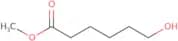
CAS:Versatile small molecule scaffoldFormula:C9H18N2OPurezza:Min. 90%Colore e forma:PowderPeso molecolare:170.25 g/molMethyl 6-hydroxyhexanoate
CAS:Methyl 6-hydroxyhexanoate is a reaction intermediate in the synthesis of glycol ethers and polycarboxylic acids. It is also used as a precursor for monoclonal antibodies for cancer therapy. Methyl 6-hydroxyhexanoate reacts with metal ions to form hydrogen bonds, which are important in the stabilization of the covalent bond between the two compounds. This reaction is catalyzed by an enzyme called lipase. The rate of this reaction is increased by adding glycosidation, which increases the number of hydrogen bonding sites on the compound. Methyl 6-hydoxyhexanoate can also be produced from methyl hydroxy and glycol ethers through a reaction that involves metal ion, glycosidation, and a lipase. The antigenicity of methyl 6-hydroxyhexanoate can be altered by changing its carboxyl group to a benzyl group.Formula:C7H14O3Purezza:Min. 95%Peso molecolare:146.18 g/molFmoc-Cl
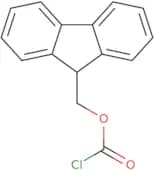
CAS:Fmoc-Cl is a fluorescent derivative that can be used as an analytical method for amino acids in human serum. This reagent is synthesized from chloroformate and derivatization of the amino acid with polymyxin B. Fmoc-Cl reacts with amino acids, producing a fluorescent molecule. The reaction solution can be applied to human serum to determine the concentration of various types of amino acids in the sample. The main matrix effect comes from the presence of human serum proteins, which have been shown to interfere with the measurement of some amino acid concentrations. Fmoc-Cl has also been studied as a potential therapeutic agent for autoimmune diseases, such as multiple sclerosis, lupus erythematosus, and rheumatoid arthritis. It has been shown that Fmoc-Cl inhibits complex enzymes and can reduce levels of certain inflammatory markers in animal models.
Formula:C15H11ClO2Purezza:Min. 95%Colore e forma:White PowderPeso molecolare:258.7 g/mol6-Bromoveratraldehyde
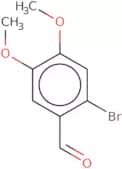
CAS:6-Bromoveratraldehyde (6BrA) is a synthetic compound that has been shown to be an effective agent for inducing apoptosis in leukemia cells. It is an efficient method for synthesizing the compound and has been used as a model study for biphenyl and naphthalene. 6BrA induces cell death by topoisomerase-mediated DNA cleavage, which results in chromosomal fragmentation and high levels of reactive oxygen species in the cell.Formula:C9H9BrO3Purezza:Min. 95%Colore e forma:White PowderPeso molecolare:245.07 g/mol4-Fluoropyridine HCl
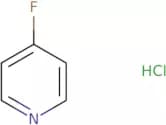
CAS:4-Fluoropyridine HCl is a pyridine that can be used as a stabilizer in organic synthesis. It can react with hydrogen fluoride to give fluorides, which are useful in organic synthesis. 4-Fluoropyridine HCl reacts with anhydrous 4-aminopyridine to give high yields of the salt of 4-aminopyridines, which are aminopyridines that have been substituted by a substituent such as chlorine, bromine, or iodine. This product is also used for the fluorination of benzene and other aromatic substrates.Formula:C5H4FN·HClPurezza:Min. 95%Colore e forma:PowderPeso molecolare:133.55 g/mol3,5-Dimethyl-4-nitrobenzoic acid
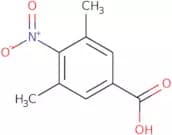
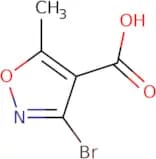
CAS:3,5-Dimethyl-4-nitrobenzoic acid is a synthetic compound that has been used in the synthesis of other organic compounds. It is not currently used as a drug, but it has been shown to inhibit the growth of bacteria in vitro. The mechanism of action for this compound is unclear. 3,5-Dimethyl-4-nitrobenzoic acid has been shown to be active against the bacterium Typhimurium and may inhibit bacterial growth by being metabolised into nitrite or nitrate ions. This chemical can also be converted into a reactive intermediate that reacts with oxygen to form superoxide anion radicals, which are known to have antibacterial effects.Formula:C9H9NO4Purezza:Min. 95%Colore e forma:PowderPeso molecolare:195.17 g/mol3-Bromo-5-methylisoxazole-4-carboxylic acid
CAS:Versatile small molecule scaffoldFormula:C5H4BrNO3Purezza:Min. 95%Peso molecolare:206 g/mol2,5-Dimethoxybenzoic acid
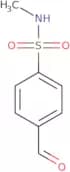
CAS:2,5-Dimethoxybenzoic acid (2,5-DMA) is a plant metabolite that belongs to the group of cinnamic acid derivatives. It can be found in plants and has been shown to have systemic effects. 2,5-DMA is involved in the cycloacylation of protocatechuic acid. This reaction is catalyzed by an enzyme called cyclooxygenase and requires molecular oxygen as a cofactor. 2,5-DMA also forms hydrogen bonds with methoxy groups and other molecules. The monoclonal antibodies against 2,5-DMA have been used for radiation therapy and are effective against cancer cells. Model studies show that 2,5-DMA can be converted into more potent metabolites by the action of cytochrome P450 enzymes or glutathione S-transferases.Formula:C9H10O4Purezza:Min. 95%Colore e forma:PowderPeso molecolare:182.17 g/mol4-Formyl-N-methylbenzenesulfonamide
CAS:4-Formyl-N-methylbenzenesulfonamide is a fine chemical that is used as a versatile building block in the synthesis of complex compounds, research chemicals, and reagents. It is highly useful as a reagent or speciality chemical in laboratory experiments involving many different reactions. 4-Formyl-N-methylbenzenesulfonamide has been shown to be an excellent intermediate for the synthesis of high quality products. This product can also be used as a scaffold in complex organic syntheses.
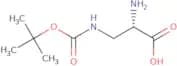
Formula:C8H9NO3SPurezza:Min. 95%Colore e forma:PowderPeso molecolare:199.23 g/molN-b-Boc-L-2,3-diaminopropionic acid
CAS:N-Boc-L-2,3-diaminopropionic acid is an antimicrobial agent that has been shown to be active against Listeria monocytogenes. It inhibits the growth of bacteria by binding to cell walls and interfering with their functions. This compound has been shown to inhibit the growth of bacterial strains such as Camembert and lactobacillus at a concentration of 10mg/mL. N-Boc-L-2,3-diaminopropionic acid also has a high heat transfer coefficient, which makes it suitable for use in cooling systems for food processing plants.Formula:C8H16N2O4Purezza:Min. 95%Colore e forma:White PowderPeso molecolare:204.22 g/mol2-(2-Hydroxyphenyl)-2-oxoacetic acid
CAS:Versatile small molecule scaffoldFormula:C8H6O4Purezza:Min. 95%Colore e forma:PowderPeso molecolare:166.1 g/molCaffeic acid
CAS:Caffeic acid is naturally produced by the metabolism of plants and fungi. Caffeic acid has an antioxidant activity that can be higher than tocopherol in oil-in-water emulsions. Caffeic acid has proven antimicrobial activity against Staphylococcus aureus. In mice, caffeic acid inhibits the enzyme 5-lipoxygenase thus inhibititing the biosynthesis of the inflammatory mediators leukotrienes.
Formula:C9H8O4Purezza:Min. 98 Area-%Colore e forma:PowderPeso molecolare:180.16 g/mol5-Fluoro-2-nitrophenylacetic acid
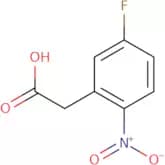
CAS:5-Fluoro-2-nitrophenylacetic acid is a high quality chemical that is used as an intermediate in the synthesis of other compounds. 5-Fluoro-2-nitrophenylacetic acid is a versatile building block that can be used as a starting material for the synthesis of complex compounds and speciality chemicals. This reagent is also useful as a research chemical and building block for pharmaceuticals. 5-Fluoro-2-nitrophenylacetic acid has CAS No. 29640-98-0, which identifies it as an important synthetic intermediate with many uses in the production of fine chemicals, pharmaceuticals, and other chemical products.Formula:C8H6FNO4Purezza:Min. 95%Colore e forma:Off-White PowderPeso molecolare:199.14 g/mol4-(Trifluoromethoxy)benzaldehyde
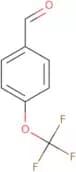
CAS:4-(Trifluoromethoxy)benzaldehyde is a chemical compound that is a substrate for tyrosinase and an inhibitor of the enzyme. It is also an anticancer compound that can be used to inhibit tumor growth by inhibiting protein synthesis. 4-(Trifluoromethoxy)benzaldehyde has been shown to have potent tyrosinase inhibition activity in vitro and in vivo, as well as binding activities with the CB2 receptor. This chemical has also been shown to inhibit virus replication, including HIV-1, and tuberculosis. 4-(Trifluoromethoxy)benzaldehyde can be used in assays to measure the potency of other compounds that are involved in tyrosinase activity or have anti-cancer properties. 4-(Trifluoromethoxy)benzaldehyde specifically binds to residues in the kinase domain of the enzyme tyrosinase, which is responsible for catalysis and regulation of this enzyme.Formula:C8H5F3O2Purezza:Min. 95%Colore e forma:Colorless Clear LiquidPeso molecolare:190.12 g/mol5-Fluoro-6-hydroxy-2,3-dihydro-1H-indole-2,3-dione
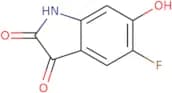
CAS:5-Fluoro-6-hydroxy-2,3-dihydro-1H-indole-2,3-dione is a reagent and useful scaffold for the synthesis of complex compounds. It is a versatile building block that can be used as a precursor in the synthesis of a range of heterocyclic compounds. 5FHDI has been shown to be an excellent reaction component and useful intermediate in organic chemistry. This compound can be used to synthesize various speciality chemicals, such as pesticides and herbicides. 5FHDI is also used as a building block for the synthesis of drugs and pharmaceuticals.Formula:C8H4FNO3Purezza:Min. 95%Peso molecolare:181.12 g/mol3,5-Dichloro-2-methoxybenzoic acid
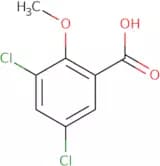
CAS:3,5-Dichloro-2-methoxybenzoic acid (3,5-DMB) is a diphenyl ether with a pharmacokinetic half-life of about 3 hours. It has two isomers: the cis and trans forms. The cis isomer is more active than the trans form. The cis isomer has been shown to be effective in treatments for amine oxidase inhibitors and short-chain fatty acids. It also has growth regulator properties that are used in treatments for psoriasis and acne. 3,5-DMB inhibits bacterial growth by binding to the enzyme dioxygenase, which catalyzes the conversion of 4-hydroxybenzoic acid into 4-hydroxyphenylpyruvic acid; this prevents the production of catecholamines and subsequent cell proliferation. This drug binds to apical membranes in the intestine by attaching to sulfhydryl groups on proteins involved in transport processes, preventing uptakeFormula:C8H6Cl2O3Purezza:Min. 95%Colore e forma:White PowderPeso molecolare:221.04 g/mol2,4-Dimethylpyrrole
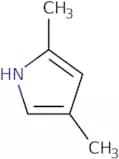
CAS:2,4-dimethylpyrrole (DMP) is a N-heterocycle with two methyl groups. It is used as a dopant in jet fuels to promote oxidative degradation and is converted into a reactive fuel (Kabana, 2011). To a lesser extent, 2,4-dimethylpyrrole has shown antifungal properties and has been used as an active agent against pathogens causing head blight and root rot in some cereals (Sefer, 2017).Formula:C6H9NPurezza:Min. 96%Colore e forma:Brown Colorless Clear LiquidPeso molecolare:95.14 g/molCis-2-Benzyltetrahydropyrrolo[3,4-C]Pyrrole-1,3(2H,3Ah)-Dione
CAS:Cis-2-Benzyltetrahydropyrrolo[3,4-C]Pyrrole-1,3(2H,3Ah)-Dione is a compound that is used as a chemical intermediate in the research and development of new medicines. It has been shown to be an effective building block for the synthesis of complex compounds with interesting biological activity.Formula:C13H14N2O2Purezza:Min. 95%Colore e forma:PowderPeso molecolare:230.26 g/mol



![Cis-2-Benzyltetrahydropyrrolo[3,4-C]Pyrrole-1,3(2H,3Ah)-Dione](/_next/image/?url=https%3A%2Fstatic.cymitquimica.com%2Fproducts%2F3D%2Fthumb-webp%2FPHA34840.webp&w=3840&q=75)