Building Blocks
Sottocategorie di "Building Blocks"
- Acidi boronici e derivati dell'acido boronico(5.783 prodotti)
- Building Blocks Chirali(1.242 prodotti)
- Building Blocks Idrocarburici(6.105 prodotti)
- Building Blocks organici(61.055 prodotti)
Trovati 205383 prodotti di "Building Blocks"
4-Hydroxybenzaldehyde
CAS:4-Hydroxybenzaldehyde is a phenolic compound that is produced in plants. 4-Hydoxybenzaldehyde is used as an extractant for sodium carbonate and hydroxyl group from acetate extract. The locomotor activity of animals was tested following administration of this substance, and it has been shown to have a high resistance against x-ray crystallography. The reaction mechanism for the formation of p-hydroxybenzoic acid from 4-hydroxybenzaldehyde has been proposed, which may be due to the oxidation of 4-hydroxybenzaldehyde by hydrogen peroxide. This reaction also induces apoptosis pathway in cells. Kinetic data for the reaction between 4-hydroxybenzaldehyde and hydrogen peroxide were obtained using UV spectroscopy.Formula:C7H6O2Purezza:Min. 95%Colore e forma:White PowderPeso molecolare:122.12 g/mol2-Chloro-3-pyridinecarboxyaldehyde
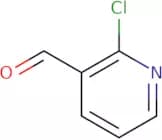
CAS:2-Chloro-3-pyridinecarboxyaldehyde is a synthetic molecule that contains two chlorines and three pyridines. It is a potential drug for the treatment of cancer or tuberculosis. The synthesis of this compound starts from 2,4-dichlorobenzaldehyde and 3-amino-5-(chloromethyl)pyridine. The reaction with acetic acid yields 2-chloro-3-pyridinecarboxyaldehyde. This product has been shown to inhibit cancer cells in vitro, but it does not have any effect on healthy cells. In addition, this product can be used as an anticancer agent against cervical cancer cells in vitro.Formula:C6H4ClNOPurezza:Min. 98 Area-%Colore e forma:PowderPeso molecolare:141.55 g/mol4-Chloro-7-azaindole
CAS:4-Chloro-7-azaindole (4CA) is a molecule that has been shown to have significant cytotoxicity against cancer cells in vitro. 4CA inhibits the growth of cancer cells by binding to their DNA, preventing the synthesis of new DNA strands and leading to cell death. The inhibitory effect of 4CA on cancer cells can be attributed to its ability to bind to nitrogen atoms in the molecule's skeleton. This binding prevents the formation of hydrogen bonds between the molecule and other molecules or proteins, which are necessary for the synthesis of new DNA strands. 4CA has been shown to be active against human ovarian carcinoma and carcinoma cell lines in vitro.Formula:C7H5N2ClPurezza:Min. 95 Area-%Colore e forma:PowderPeso molecolare:152.58 g/mol2,2-Dichloro-N-(4-hydroxyphenyl)-N-methylacetamide
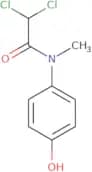
CAS:2,2-Dichloro-N-(4-hydroxyphenyl)-N-methylacetamide (FUROATE) is a synthetic antimicrobial agent that is structurally related to the furoate class of antibiotics. FUROATE has been shown to be effective against urothelial carcinoma cells and minimal toxic in animals. It binds to the fatty acid component of bacterial cell membranes and causes rapid lysis. FUROATE is used as an analytical reagent for the determination of hydroxyl groups in organic solutes. The detection limit of this test is 0.1 ppm. Monoclonal antibodies can be generated against FUROATE for use as diagnostic or therapeutic agents for infectious diseases, such as HIV infection.Formula:C9H9Cl2NO2Purezza:Min. 95%Colore e forma:PowderPeso molecolare:234.08 g/mol1-Benzyl-1,2,3,4-tetrahydroisoquinoline hydrochloride
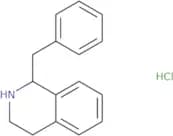
CAS:1-Benzyl-1,2,3,4-tetrahydroisoquinoline hydrochloride is a drug that has been shown to have chronic toxicity in monkeys. It has been injected subcutaneously for the treatment of fascicularis and has induced parkinsonism as a symptom. The chronic effects of this drug on humans are not well known. Further investigations are required to determine whether 1-Benzyl-1,2,3,4-tetrahydroisoquinoline hydrochloride induces Parkinsonism in humans.
Formula:C16H17N•HClPurezza:Min. 95%Colore e forma:PowderPeso molecolare:259.77 g/mol4H-Cyclopenta[2,1-b:3,4-b']dithiophene
CAS:4H-Cyclopenta[2,1-b:3,4-b']dithiophene is a molecule that has been shown to be photovoltaic. It has an optical absorption spectrum that peaks in the UV region and is able to absorb light from 300 to 400 nm. 4H-Cyclopenta[2,1-b:3,4-b']dithiophene can be fabricated into devices by means of cyclic voltammetry or other techniques. As a result of its high electron mobility and its ability to absorb visible light, this molecule may lead to high efficiency solar cells. Photovoltaic devices made with 4H-Cyclopenta[2,1-b:3,4-b']dithiophene have been shown to have efficiencies as high as 2%.Formula:C9H6S2Purezza:Min. 95%Colore e forma:PowderPeso molecolare:178.28 g/mol2-(3,5-Dimethyl-1H-pyrazol-4-yl)aniline
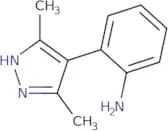
CAS:Versatile small molecule scaffoldFormula:C11H13N3Purezza:Min. 95%Colore e forma:PowderPeso molecolare:187.24 g/mol1-[4-(Trifluoromethyl)pyridin-3-yl]ethan-1-one
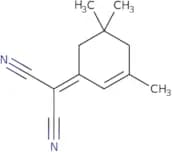
CAS:1-[4-(Trifluoromethyl)pyridin-3-yl]ethan-1-one is a high quality reagent that can be used as a useful intermediate or speciality chemical. It is a complex compound with CAS No. 955997-27-0 and is an excellent building block for the synthesis of fine chemicals, research chemicals, and other versatile compounds. 1-[4-(Trifluoromethyl)pyridin-3-yl]ethan-1-one has been shown to be useful in reactions involving nucleophilic substitution, electrophilic addition, nucleophilic aromatic substitution, and coupling reactions.Formula:C8H6F3NOPurezza:Min. 95%Colore e forma:PowderPeso molecolare:189.13 g/mol(3,5,5-Trimethylcyclohex-2-enylidene)malononitrile
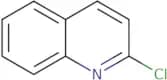
CAS:(3,5,5-Trimethylcyclohex-2-enylidene)malononitrile is a versatile compound that has various applications in different fields. It is commonly used as a research chemical and has shown promising results in the development of new medicaments. Its unique structure and properties make it an ideal candidate for further exploration.Formula:C12H14N2Purezza:Min. 95%Peso molecolare:186.25 g/mol2-Chloroquinoline
CAS:2-Chloroquinoline is a compound that has antimicrobial properties. It acts by inhibiting bacterial RNA synthesis and protein synthesis. 2-Chloroquinoline has been shown to have toxicological effects in animal studies, including cancer. It also inhibits the activity of the cb2 receptor and the CCR5 receptor, which are involved in tumor growth. The molecular docking analysis for this compound is available, which can be found on PubChem.Formula:C9H6ClNPurezza:Min. 98%Colore e forma:PowderPeso molecolare:163.6 g/molOctyl isocyanate
CAS:Octyl isocyanate is a non-steroidal anti-inflammatory drug that belongs to the class of isocyanates. The biological activity of octyl isocyanate has been studied extensively, and it has been shown to inhibit the polymerase chain reaction (PCR). Octyl isocyanate also inhibits the growth of bacteria in vitro through metal chelation and polymyxin B., which are antibiotics that bind metal ions and disrupt bacterial cell membranes. Octyl isocyanate has been shown to be reactive in vivo, leading to autophagy and necrosis.Formula:C9H17NOPurezza:Min. 97 Area-%Colore e forma:Clear LiquidPeso molecolare:155.24 g/mol2-[4-(Methylamino)oxan-4-yl]ethan-1-ol
CAS:Versatile small molecule scaffoldFormula:C8H17NO2Purezza:Min. 90%Colore e forma:Clear LiquidPeso molecolare:159.23 g/mol5-Chloro-2-mercaptobenzothiazole
CAS:5-Chloro-2-mercaptobenzothiazole (5CMB) is a thione that binds to hydrogen fluoride (HF) and sodium salts. 5CMB has been used in the synthesis of fluorinated drugs, such as 5-chloro-2-(4'-fluorophenylsulfonyl)benzothiazole, which is used for the treatment of cancer. 5CMB has also been shown to be a potential drug candidate for the treatment of Alzheimer's disease. The structure of 5CMB can be determined using crystallography techniques. Its binding constants with HF and sodium salts can be determined using matrix-assisted laser desorption ionization mass spectrometry (MALDI MS). The toxicity studies of 5CMB have been conducted on animals including mice and rats. These studies show that the LD50 value for 5CMB is 3200 mg/kg bodyweight.
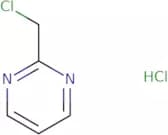
Formula:C7H4ClNS2Purezza:Min. 98 Area-%Colore e forma:PowderPeso molecolare:201.7 g/mol2-(Chloromethyl)pyrimidine HCl
CAS:2-(Chloromethyl)pyrimidine HCl is a chlorinated aromatic compound that is used in the manufacturing of nylon and other synthetic fibers. It is an intermediate for the production of polychloroparaffins, which are used as solvents and raw materials in the chemical industry. 2-(Chloromethyl)pyrimidine HCl has been shown to undergo a chlorination reaction with alcohols to produce 4-chloro-2-methyl-1,3-dioxolane. This reaction can be catalyzed by calcium hydroxide or magnesium chloride, which are both common chemicals found in household cleaners.Formula:C5H5ClN2·HClPurezza:Min. 95%Colore e forma:Yellow PowderPeso molecolare:165.02 g/mol2-Chloro-4-trifluoromethylbenzoic acid
CAS:2-Chloro-4-trifluoromethylbenzoic acid is a chemical compound with the formula CHClFO. It can be obtained by deprotonation of 2,4,6-trichlorobenzoic acid with butyllithium and subsequent reaction with chlorotrifluoromethane. The product has two regioisomers, one in which the chlorine atom is attached to the para position on the benzene ring and the other in which it is attached to the ortho position. Substituents such as alkyl groups or lithium reagents can affect both reactivity and selectivity. The halogen substituent can also be replaced by other functional groups to make derivatives of this compound.
Formula:C8H4ClF3O2Purezza:Min. 95%Colore e forma:PowderPeso molecolare:224.56 g/mol2-Chloro-6-fluorobenzaldehyde
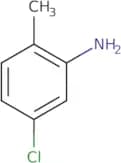
CAS:2-Chloro-6-fluorobenzaldehyde is an impurity that can be found in wastewater. It has been shown to be a reactive intermediate for the synthesis of streptochlorin, which is a natural product with potential antibiotic activity. 2-Chloro-6-fluorobenzaldehyde is produced by the reaction of chlorine and anhydrous sodium, with acid as catalyst. The molecule has two fluorine atoms and one chloride atom. This compound can also be used in the treatment of waste water due to its ability to react with hydroxyl ions and chloride ions in the presence of hydrogen chloride or hydrochloric acid. The pain model was evaluated using nmr spectra and optical properties.Formula:C7H4ClFOPurezza:Min. 95%Colore e forma:White PowderPeso molecolare:158.56 g/mol5-Chloro-2-methylaniline
CAS:5-Chloro-2-methylaniline is an organic compound that is a member of the amines class. It has been shown to be genotoxic and carcinogenic in vivo. 5-Chloro-2-methylaniline binds to DNA and inhibits the synthesis of RNA, leading to cell death. It is also toxic to aquatic organisms by inhibiting cellular respiration and causing mutations. 5-Chloro-2-methylaniline has been shown to be genotoxic in vitro and in vivo, with chronic oral toxicity observed at dietary concentrations of 0.1% (10 ppm) in animals. The toxicity of this compound may be due to its ability to form hydrogen chloride when mixed with water or other acids.Formula:C7H8ClNPurezza:Min. 95%Colore e forma:Clear LiquidPeso molecolare:141.6 g/mol2-Chloronaphthalene
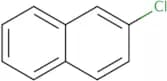
CAS:2-Chloronaphthalene is a polychlorinated naphthalene that has been shown to be an effective inducer of p450 activity, which is a cytochrome P450 enzyme. 2-Chloronaphthalene is also a structural analog of the polychlorinated biphenyls (PCBs), and has been shown to have similar toxic effects on the liver. 2-Chloronaphthalene is used as an intermediate in organic synthesis and as a precursor for other compounds. It can be used to synthesize malonic acid, which can be reacted with sodium hydroxide or carbon disulfide to produce polymeric matrices such as polyvinyl chloride.
Formula:C10H7ClPurezza:Min. 95%Colore e forma:Colourless Or White To Pink SolidPeso molecolare:162.62 g/mol5-Carboxyvanillic acid
CAS:5-Carboxyvanillic acid is a chemical compound that belongs to the class of organic compounds known as carboxylic acids. It is also called o-vanillin, and it has a molecular weight of 116.19 g/mol. 5-Carboxyvanillic acid is one of the main ingredients in natural vanilla flavour. The hydroxyl group on the 5th carbon atom of this molecule reacts with a proton, which results in an addition reaction mechanism. The reaction proceeds through two steps: first, protonation occurs at the 5th carbon atom; second, deprotonation occurs at the 4th carbon atom. This chemical compound can be found as a white crystalline solid and as a volatile oil.Formula:C9H8O6Purezza:Min. 95%Colore e forma:PowderPeso molecolare:212.16 g/molPPACK hydrochloride
CAS:Please enquire for more information about PPACK hydrochloride including the price, delivery time and more detailed product information at the technical inquiry form on this pageFormula:C21H31ClN6O3•xHClPurezza:Min. 95%Colore e forma:PowderPeso molecolare:487.42 g/mol



![4H-Cyclopenta[2,1-b:3,4-b']dithiophene](/_next/image/?url=https%3A%2Fstatic.cymitquimica.com%2Fproducts%2F3D%2Fthumb-webp%2FFC13994.webp&w=3840&q=75)
![1-[4-(Trifluoromethyl)pyridin-3-yl]ethan-1-one](/_next/image/?url=https%3A%2Fstatic.cymitquimica.com%2Fproducts%2F3D%2Fthumb-webp%2FFNB99727.webp&w=3840&q=75)

![2-[4-(Methylamino)oxan-4-yl]ethan-1-ol](/_next/image/?url=https%3A%2Fstatic.cymitquimica.com%2Fproducts%2F3D%2Fthumb-webp%2FHHC67998.webp&w=3840&q=75)