Building Blocks
Questa sezione contiene prodotti fondamentali per la sintesi di composti organici e biologici. Building blocks sono i materiali di partenza essenziali utilizzati per costruire molecole complesse attraverso varie reazioni chimiche. Svolgono un ruolo critico nella scoperta di farmaci, nella scienza dei materiali e nella ricerca chimica. Presso CymitQuimica, offriamo una gamma diversificata di building blocks di alta qualità per supportare le tue ricerche innovative e progetti industriali, assicurandoti di avere i componenti essenziali per una sintesi di successo.
Sottocategorie di "Building Blocks"
- Acidi boronici e derivati dell'acido boronico(5.784 prodotti)
- Building Blocks Chirali(1.242 prodotti)
- Building Blocks Idrocarburici(6.105 prodotti)
- Building Blocks organici(61.061 prodotti)
Trovati 205399 prodotti di "Building Blocks"
Ordinare per
Purezza (%)
0
100
|
0
|
50
|
90
|
95
|
100
1,3-Adamantanediamine dihydrochloride
CAS:1,3-Adamantanediamine dihydrochloride is a mimetic that has been shown to inhibit the fibrinolytic activity of nipecotic acid. This compound also inhibits the platelet aggregation induced by the activation of collagen receptors. It has been shown to have an antagonistic effect on NMDA receptors and to induce apoptosis in cancer cells. The structure of 1,3-Adamantanediamine dihydrochloride is similar to that of adamantane, which is a naturally occurring molecule found in plants and animals.Formula:C10H18N2·2HClPurezza:Min. 95%Colore e forma:White PowderPeso molecolare:239.18 g/mol5-Fluoroorotic acid potassium salt
CAS:Please enquire for more information about 5-Fluoroorotic acid potassium salt including the price, delivery time and more detailed product information at the technical inquiry form on this pageFormula:C5H2FN2O4KPurezza:(Free Base) Min. 98.0 Area-%Colore e forma:White PowderPeso molecolare:212.18 g/mol3-(Azidomethyl)-4-methyl-2,5-dihydrofuran-2,5-dione, 1M in acetonitrile
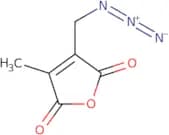
CAS:Please enquire for more information about 3-(Azidomethyl)-4-methyl-2,5-dihydrofuran-2,5-dione, 1M in acetonitrile including the price, delivery time and more detailed product information at the technical inquiry form on this pageFormula:C6H5N3O3Purezza:Min. 95%Colore e forma:PowderPeso molecolare:167.12 g/mol4,6-Difluoroindole
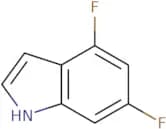
CAS:4,6-Difluoroindole is a functional group that has been optimized for use as a pharmaceutical drug. It has been shown to be an efficient inhibitor of renal organic anion transporters and monophosphate-activated protein, which are involved in the absorption of drugs from the blood into the cells. 4,6-Difluoroindole also inhibits bacterial growth by binding to ribosomal RNA and interfering with protein synthesis. This drug exhibits antibacterial activity against Gram-positive bacteria such as Mycobacterium tuberculosis and Mycobacterium avium complex. This drug is able to cross the blood-brain barrier and thus may be used to treat tuberculosis infections in the brain.Formula:C8H5F2NPurezza:Min 90%Peso molecolare:153.13 g/mol5,6-Difluoroindole
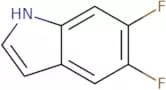
CAS:5,6-Difluoroindole is a chemical compound that has been studied in biological and chemical research. It is an analog of the neurotransmitter serotonin, which binds to the 5-HT2C receptor and activates phospholipase C (PLC) to produce inositol triphosphate (IP3). This compound may be useful for the treatment of neurodegenerative diseases such as Alzheimer's disease. 5,6-Difluoroindole has been shown to block the activity of acetylcholinesterase (AChE), which is an enzyme that breaks down acetylcholine. This leads to an increase in acetylcholine levels and a decrease in AChE activity. The reaction mechanism for this process is not known.Formula:C8H5NF2Colore e forma:PowderPeso molecolare:153.13 g/mol3-Butenoic acid, 2,5-dioxo-1-pyrrolidinyl ester
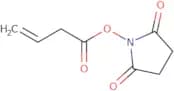
CAS:3-Butenoic acid, 2,5-dioxo-1-pyrrolidinyl ester is a fine chemical that can be used as a scaffold for the synthesis of complex compounds. This chemical is also useful as an intermediate in the synthesis of chemicals and research chemicals. It has CAS number 388091-45-0 and a molecular weight of 220.3 g/mol. 3-Butenoic acid, 2,5-dioxo-1-pyrrolidinyl ester is soluble in organic solvents such as acetone or chloroform and is not toxic to humans at low doses.Formula:C8H9NO4Purezza:Min. 95%Colore e forma:PowderPeso molecolare:183.16 g/mol2-{1-[(Pyridin-3-yl)methyl]piperidin-2-yl}ethan-1-ol
CAS:Versatile small molecule scaffoldFormula:C13H20N2OPurezza:Min. 95%Colore e forma:PowderPeso molecolare:220.31 g/mol5-(Bromomethyl)-2-methylpyridine hydrobromide
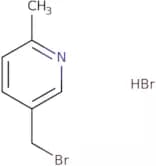
CAS:5-(Bromomethyl)-2-methylpyridine hydrobromide is a brominated reagent that is used as a reaction component in organic synthesis. It has been used to synthesize high quality, versatile building blocks and useful intermediates. 5-(Bromomethyl)-2-methylpyridine hydrobromide is also a fine chemical with CAS No. 718608-10-7.Formula:C7H9Br2NPurezza:Min. 95%Peso molecolare:266.96 g/mol8-Anilino-1-naphthalenesulfonic acid
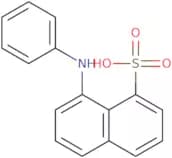
CAS:8-Anilino-1-naphthalenesulfonic acid is a potent and selective inhibitor of the proteasome. It inhibits the activity of the proteasome and leads to neuronal death. 8-Anilino-1-naphthalenesulfonic acid has been shown to have antioxidative properties in a Langmuir adsorption isotherm study. This compound also has fluorescence, which makes it useful as a fluorescent probe for protein identification in human serum. 8-Anilino-1-naphthalenesulfonic acid binds to proteins with hydrophobic regions, such as lipids and phospholipids, due to its hydrophobic effect. It can be used as an analytical method for determining the protein content in water samples.
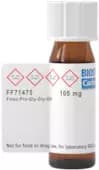
Formula:C16H13NO3SPurezza:Min. 95 Area-%Colore e forma:Brown Green PowderPeso molecolare:299.35 g/molFmoc-Pro-Gly-Gly-OH
Fmoc-Pro-Gly-Gly-OH is a synthetic peptide that is used in the manufacture of bivalirudin, an anticoagulant. It is a large molecule that can be dissolved in water or acetonitrile. The impurities may include ammonium and acetate ions. Fmoc-Pro-Gly-Gly-OH is insoluble in trifluoroacetic acid and trifluoroacetic acid/ammonium acetate mixture, but can be recrystallized from these solvents. The lyophilized product should be stored at 4°C to avoid hydrolysis. Polypeptides are not stable under acidic conditions, so care must be taken when handling this material.Formula:C24H25N3O6Purezza:Min. 95%Colore e forma:PowderPeso molecolare:451.47 g/mol2-Oxa-7-azaspiro[3.5]nonane hemioxalate
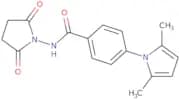
CAS:2-Oxa-7-azaspiro[3.5]nonane hemioxalate is a fine chemical that is used as a building block in research and development of complex compounds, such as pharmaceuticals, agrochemicals, and polymers. It has been shown to be useful in the synthesis of heterocycles, such as pyrrolidines, piperazines, indoles, and benzoxazoles. 2-Oxa-7-azaspiro[3.5]nonane hemioxalate can serve as a versatile building block for the preparation of various scaffolds with different functionalities. 2-Oxa-7-azaspiro[3.5]nonane hemioxalate is a reagent that can be used for the preparation of other compounds and intermediates as well.Formula:C7H13NOC2H2O4Purezza:Min. 95%Colore e forma:Off-White Clear LiquidPeso molecolare:172.2 g/mol4-(2,5-Dimethyl-1H-pyrrol-1-yl)-N-(2,5-dioxopyrrolidin-1-yl)benzamide
CAS:4-(2,5-Dimethyl-1H-pyrrol-1-yl)-N-(2,5-dioxopyrrolidin-1-yl)benzamide is a useful scaffold that can be used to synthesize high quality and versatile building blocks. This compound is also a useful intermediate in the synthesis of complex compounds. This chemical is not an approved pharmaceutical, but it has shown promising activity as an antihistamine.Formula:C17H17N3O3Purezza:Min. 95%Peso molecolare:311.33 g/mol1-Methyl-2-[(1-methyl-1H-imidazol-2-yl)disulfanyl]-1H-imidazole
CAS:1,2-Dimethyl-1H-imidazolium chloride (1MDIC) is a useful building block for the synthesis of complex compounds. It is used as a reagent in organic synthesis and has been shown to be an effective catalyst for the Diels-Alder reaction. 1,2-Dimethyl-1H-imidazolium chloride is an excellent research chemical that can be used as a reaction component in organic synthesis and provide a versatile scaffold for the synthesis of diverse structures.Formula:C8H10N4S2Purezza:Min. 95%Colore e forma:PowderPeso molecolare:226.3 g/mol(1-Sulfanylcyclohexyl)methanol
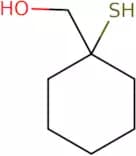
CAS:(1-Sulfanylcyclohexyl)methanol is a chemical compound that has the CAS number 212574-88-4. It is a useful intermediate and reaction component, and can be used as a speciality chemical or reagent in research. (1-Sulfanylcyclohexyl)methanol is a versatile building block with many uses, including as a useful scaffold for creating complex compounds. It can also be used to make other chemicals, such as fine chemicals and pharmaceuticals. This compound has high quality, which makes it an excellent building block for high quality products.Formula:C7H14OSPurezza:Min. 95%Peso molecolare:146.25 g/mol2,4,6-Triisopropylbenzenesulfonyl chloride
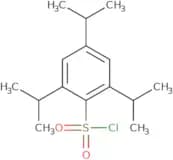
CAS:2,4,6-Triisopropylbenzenesulfonyl chloride is a molecule that belongs to the class of ethylene diamine. It has been shown to inhibit the replication of herpes simplex virus in cell culture. This compound has an intramolecular hydrogen and steric interactions with a hydroxyl group. The analog of this molecule is 2,4,6-triisopropylbenzenesulfonic acid. 2,4,6-Triisopropylbenzenesulfonyl chloride can be used as a sulfonation agent and is known for its ability to react with nitrogen nucleophiles such as amines or ammonia.Formula:C15H23SO2ClPurezza:Min. 95%Peso molecolare:302.86 g/molL-Threonine methyl ester hydrochloride
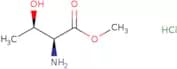
CAS:L-Threonine methyl ester hydrochloride is a synthetic amino acid that has shown efficacy in treating Gram-negative infections. L-Threonine methyl ester hydrochloride is an agonist for the hyaluronic acid receptor and has been demonstrated to be potent in vitro against gram-negative bacteria such as Escherichia coli and Klebsiella pneumoniae. It also exhibits high stereoselectivity, with one enantiomer being more active than the other. L-Threonine methyl ester hydrochloride is currently in clinical development for cancer treatments, as it shows promise for inhibiting tumor growth and inducing apoptosis.Formula:C5H11NO3•HClPurezza:Min. 97%Colore e forma:Yellow PowderPeso molecolare:169.61 g/molL-Tryptophan β-naphthylamide
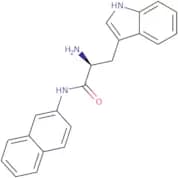
CAS:L-Tryptophan beta-naphthylamide is a fine chemical that is useful for research purposes. It can be used as a versatile building block in the synthesis of other chemicals and can also be used as a reaction component. L-Tryptophan beta-naphthylamide has been used to synthesize complex compounds such as 5,6-dihydroindolizine, which has been shown to have anti-inflammatory properties. This compound can also be used as a reagent in organic synthesis.Formula:C21H19N3OPurezza:Min. 95%Colore e forma:PowderPeso molecolare:329.4 g/mol6-Oxo DL-norleucine, formate salt
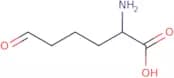
CAS:6-Oxo DL-norleucine, formate salt is an anti-inflammatory agent that has been shown to reduce the symptoms of inflammatory bowel disease. It is a prodrug that is converted in vivo to 6-oxo DL-norleucine, its active form. This drug inhibits the activity of enzymes involved in metabolic pathways including ester hydrolysis and dinucleotide phosphate metabolism. 6-Oxo DL-norleucine has also been shown to inhibit the production of inflammatory mediators such as prostaglandin E2 (PGE2), leukotriene B4 (LTB4), and reactive oxygen species (ROS) in human serum. The mechanism by which this drug exerts its effects is not yet fully understood but may be due to inhibition of p. pastoris, a fungus that can cause opportunistic fungal infections.Formula:C7H13NO5Purezza:Min. 95%Colore e forma:PowderPeso molecolare:191.18 g/mol2-Fluoro-3-methylbenzoic acid
CAS:2-Fluoro-3-methylbenzoic acid is a high quality, versatile building block that has been shown to be an effective reagent for the synthesis of complex compounds. It is also a useful intermediate in the synthesis of fine chemicals and speciality chemicals. This compound can be used as a reaction component for many chemical reactions, such as the formation of new bonds and the removal of protecting groups. As a versatile building block, 2-fluoro-3-methylbenzoic acid is an important starting material for synthesizing a number of natural products, pharmaceuticals, and other organic compounds.Formula:C8H7FO2Purezza:Min. 95%Colore e forma:White PowderPeso molecolare:154.14 g/molEthyl 4-iodobenzoate
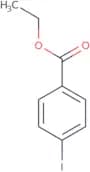
CAS:Ethyl 4-iodobenzoate is an amide that reacts with a variety of substances, including retinoic acid and pemetrexed. It is a reactive substance that can be used in the synthesis of other substances such as iron oxides and transfer mechanism. Ethyl 4-iodobenzoate is also used for the preparation of picolinic acid and crystalline structure. Radical coupling reactions are most common and involve halides, phenyl groups, and aryl halides. The reaction temperature ranges from room temperature to 100 ˚C, while the reaction mechanism varies depending on the type of coupling reaction.Formula:C9H9IO2Purezza:Min. 95%Colore e forma:PowderPeso molecolare:276.07 g/mol



![2-{1-[(Pyridin-3-yl)methyl]piperidin-2-yl}ethan-1-ol](/_next/image/?url=https%3A%2Fstatic.cymitquimica.com%2Fproducts%2F3D%2Fthumb-webp%2FZZB80618.webp&w=3840&q=75)
![2-Oxa-7-azaspiro[3.5]nonane hemioxalate](/_next/image/?url=https%3A%2Fstatic.cymitquimica.com%2Fproducts%2F3D%2Fthumb-webp%2FFO29380.webp&w=3840&q=75)
![1-Methyl-2-[(1-methyl-1H-imidazol-2-yl)disulfanyl]-1H-imidazole](/_next/image/?url=https%3A%2Fstatic.cymitquimica.com%2Fproducts%2F3D%2Fthumb-webp%2FLCA74729.webp&w=3840&q=75)