Building Blocks
Sottocategorie di "Building Blocks"
- Acidi boronici e derivati dell'acido boronico(5.784 prodotti)
- Building Blocks Chirali(1.244 prodotti)
- Building Blocks Idrocarburici(6.105 prodotti)
- Building Blocks organici(61.076 prodotti)
Trovati 205455 prodotti di "Building Blocks"
2-Amino-4,6-dimethoxybenzoic acid
CAS:2-Amino-4,6-dimethoxybenzoic acid is an organic chemical compound that can be used as a building block for the synthesis of other compounds. 2-Amino-4,6-dimethoxybenzoic acid has a number of uses including being a reagent in organic and inorganic reactions, such as the synthesis of dyes, pharmaceuticals, and pesticides. It is also used as a building block for complex compounds that are difficult to make. This chemical has been classified by the Chemical Abstract Services (CAS) registry with CAS number 21577-57-1.
Formula:C9H11NO4Purezza:Min. 95%Colore e forma:Yellow SolidPeso molecolare:197.19 g/mol2-(Aminomethyl)benzamide hydrochloride
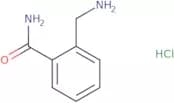
CAS:2-(Aminomethyl)benzamide hydrochloride is a research chemical with high quality and versatile building block properties. It is a useful intermediate in the synthesis of complex compounds, and can be used as a reagent for the production of speciality chemicals. 2-(Aminomethyl)benzamide hydrochloride is also an important reaction component in the synthesis of some fine chemicals, such as pharmaceuticals, dyes, pesticides, and perfumes. 2-(Aminomethyl)benzamide hydrochloride has CAS No. 1187927-15-6 and can be purchased from chemical suppliers worldwide.Formula:C8H10N2O·HClPurezza:Min. 95%Colore e forma:White PowderPeso molecolare:186.64 g/molN-Acetyl-L-alanine
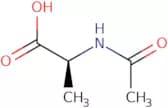
CAS:N-Acetyl-L-alanine is the N-acetylated form of L-alanine and is a nonessential amino acid. It is an amide containing one nitrogen atom and two carbonyl groups. The nitrogen can be found in either the alpha or beta position on the amide. The biological properties of N-acetyl-L-alanine are similar to those of L-alanine, as it is used as a substrate for protein synthesis and has been shown to inhibit p21 and epidermal growth factor. The conformational properties of N-acetyl-L-alanine are different from that of L-alanine due to its changed shape, which may affect its biological activity.
Formula:C5H9NO3Purezza:Min. 95%Colore e forma:White PowderPeso molecolare:131.13 g/mol2-Amino-4,6-dichloropyrimidine
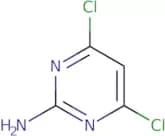
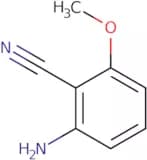
CAS:2-Amino-4,6-dichloropyrimidine is a chemical compound that can be used as an intermediate in the synthesis of other compounds. It is usually prepared by chlorinating 2-amino-pyrimidine with sodium hypochlorite. 2-Amino-4,6-dichloropyrimidine has been shown to inhibit the growth of herpes simplex virus and influenza virus when it is added to cell cultures. This compound also inhibits the replication of protonated nucleic acids by reacting with the amide group of nucleophilic amino acids in DNA or RNA. The reaction between 2-amino-4,6-dichloropyrimidine and amines gives pyridinium salts, which are useful intermediates in organic chemistry reactions.Formula:C4H3Cl2N3Purezza:90%Colore e forma:Off-White PowderPeso molecolare:163.99 g/mol2-Amino-6-methoxybenzonitrile
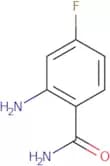
CAS:2-Amino-6-methoxybenzonitrile is an organic compound that belongs to a group of monosubstituted hydroxylamines. It has been used in the synthesis of various analogues, such as caprolactam and methoxyanthranilic acid. Hydrochloric acid reacts with 2-amino-6-methoxybenzonitrile to form 2-amino-6-hydroxybenzonitrile, which can be oxidized to 2-amino-6-(hydroxymethyl)benzonitrile. This reaction is catalyzed by copper or zinc metal.Formula:C8H8N2OPurezza:Min. 95%Colore e forma:PowderPeso molecolare:148.16 g/mol2-Amino-4-fluorobenzamide
CAS:2-Amino-4-fluorobenzamide is a catalyst that reacts with alcohols and cyclizes them to form quinazolinones. It has been shown to oxidize various alcohols including those with an electron-donating group, such as esters and nitro groups. 2-Amino-4-fluorobenzamide also reacts with electron-deficient alcohols, such as oximes and hydrazines. The mechanism of the oxidative cyclizations is not well understood but it is likely that they are initiated by a nucleophilic attack on the carbonyl carbon atom followed by a concerted or stepwise oxidation of the C=O double bond. The oxidative cyclization reactions are mechanistically similar to those of other catalytic oxidations, such as those used in the industrial production of acetic acid from methanol.Formula:C7H7FN2OPurezza:Min. 95%Colore e forma:PowderPeso molecolare:154.14 g/molN-Acetyl-L-tyrosine
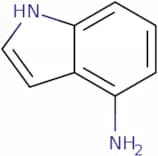
CAS:N-Acetyl-L-tyrosine is a tyrosine derivative with a chemical structure similar to that of an amino acid. It is used as a model system in biochemistry and molecular biology to study the transfer reactions of tyrosine, which are important for energy metabolism, protein synthesis, and metal chelation. N-Acetyl-L-tyrosine is also an effective substrate molecule for many analytical methods, such as thin layer chromatography or liquid chromatography.Formula:C11H13NO4Purezza:Min. 95%Colore e forma:White PowderPeso molecolare:223.23 g/mol4-Aminoindole
CAS:4-Aminoindole is a heterocycle with a carboxy group and four nitrogen atoms. It can be synthesized by reacting hydrochloric acid with nitrobenzene. 4-Aminoindole has shown potential as a drug target, which may be due to its ability to inhibit the enzyme carboxamidase. The compound is also acidic in water, making it an ideal candidate for use as an acid catalyst. Electropolymerization of 4-aminoindole has been achieved using Pt electrodes in the presence of an acidic environment. This reaction results in the formation of functional groups on the metal surface that are not found in most other electropolymerization reactions.
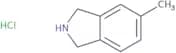
Formula:C8H8N2Colore e forma:PowderPeso molecolare:132.16 g/mol5-Methyl-2,3-dihydro-1H-isoindole hydrochloride
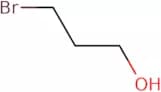
CAS:5-Methyl-2,3-dihydro-1H-isoindole hydrochloride is a chemical that can be used as a reagent in organic synthesis. It may also be useful in the manufacture of pharmaceuticals, dyes, and other chemicals. 5-Methyl-2,3-dihydro-1H-isoindole hydrochloride is an important building block for making complex compounds and fine chemicals. This chemical has been assigned CAS No. 1204600-16-7, which identifies it as a high quality research chemical.Formula:C9H12ClNPurezza:Min. 95%Colore e forma:PowderPeso molecolare:169.65 g/mol3-Bromo-1-propanol
CAS:3-Bromo-1-propanol is a chemical compound that contains a hydroxyl group and an asymmetric carbon atom. This molecule has been used as a model system to study the reaction mechanism of alcohol dehydrogenase, which is the enzyme responsible for the oxidation of ethanol. 3-Bromo-1-propanol has been shown to inhibit the growth of bacteria such as Staphylococcus aureus, which are resistant to penicillin. The pharmacokinetic properties of 3-bromo-1-propanol have been studied in dogs with congestive heart failure.
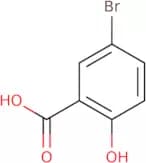
Formula:C3H7BrOPurezza:Min. 97 Area-%Colore e forma:Colorless Clear LiquidPeso molecolare:138.99 g/mol5-Bromosalicylic acid
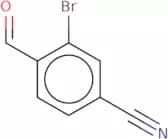
CAS:5-Bromosalicylic acid is a derivative of p-hydroxybenzoic acid that is used in wastewater treatment. The reaction of 5-bromosalicylic acid with the 1,3-benzodioxole-5-carboxylic acid leads to the formation of a new compound, which can be used as an intermediate in organic synthesis. 5-Bromosalicylic acid has been shown to inhibit the growth of hepg2 cells and K562 cells by damaging DNA. It also inhibits the suzuki coupling reaction by acting as a hydrogen sink and stabilizing the transition state through intramolecular hydrogen bonding interactions. A possible mechanism for this inhibition is that 5-bromosalicylic acid reacts with hydroxide ions to form bromohydroxylated products, which then react with amine compounds to produce carboxylates that can hydrogen bond with other molecules.Formula:C7H5BrO3Purezza:Min. 95%Colore e forma:White PowderPeso molecolare:217.02 g/mol2-Bromo-4-cyanobenzaldehyde
CAS:2-Bromo-4-cyanobenzaldehyde is a potent protease inhibitor and can be used as an antiviral agent. It inhibits the NS3 protease of hepatitis C virus (HCV) with IC50 of 0.2 μM. 2-Bromo-4-cyanobenzaldehyde has been evaluated for its ability to inhibit replicons from HCV genotypes 1, 2, 3, 4 and 5 with varying degrees of potency. In vitro studies have shown that 2-bromo-4-cyanobenzaldehyde is a potent inhibitor of HCV NS3 protease, demonstrating activity against all major HCV genotypes in cell culture. This molecule has also been shown to inhibit the replication of HIV, herpes simplex virus type 1 and human rhinovirus type 2 in cell culture.Formula:C8H4BrNOPurezza:Min. 95%Colore e forma:PowderPeso molecolare:210.03 g/mol5-Bromo-2-nitrobenzoic acid
CAS:5-Bromo-2-nitrobenzoic acid is a chemical compound that belongs to the group of bromonitrobenzenes. It is an important intermediate in organic chemistry and has been used as a reagent for the synthesis of various heterocyclic compounds. 5-Bromo-2-nitrobenzoic acid can be used as a building block for pharmaceuticals, agrochemicals, dyes, and other chemicals. This versatile chemical has been widely used in research and development as a reaction component for synthesizing pharmaceuticals or speciality chemicals or as a building block to produce useful scaffolds.
Formula:C7H4BrNO4Purezza:Min. 95%Colore e forma:Slightly Yellow PowderPeso molecolare:246.02 g/mol4-Bromo-1H-pyrrolo[2,3-b]pyridine-3-carboxylic acid
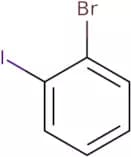
CAS:4-Bromo-1H-pyrrolo[2,3-b]pyridine-3-carboxylic acid is a high quality reagent that is used as an intermediate in the synthesis of other compounds. It has a CAS No. of 1000340-36-2 and can be purchased at a very competitive price. This chemical is useful for the synthesis of complex compounds, such as fine chemicals and speciality chemicals. It can also be used as a building block for versatile chemical reactions, or as a building block for the synthesis of valuable research chemicals.Formula:C8H5BrN2O2Purezza:Min. 95%Colore e forma:PowderPeso molecolare:241.04 g/mol1-Bromo-2-iodobenzene
CAS:1-Bromo-2-iodobenzene is an aryl halide that is used in analytical chemistry as a model system for copper chloride. It is also used to study the interaction of 5-HT1A receptors with aromatic hydrocarbons and has been shown to be effective in treating cervical cancer. The light emission from 1-Bromo-2-iodobenzene can be used as a probe for asymmetric synthesis, and it can also be used in metathesis reactions to isolate yield. 1-Bromo-2-iodobenzene binds to lysine residues on proteins and blocks the activity of enzymes by forming covalent bonds with amino acid residues in the active site.Formula:C6H4BrIPurezza:Min. 98%Colore e forma:Yellow Clear LiquidPeso molecolare:282.9 g/mol2-(4-Methylphenyl)piperidine
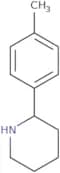
CAS:Versatile small molecule scaffold
Formula:C12H17NPurezza:Min. 95%Colore e forma:Clear LiquidPeso molecolare:175.27 g/mol2-Benzoylbenzoic acid
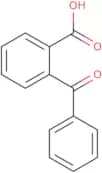
CAS:2-Benzoylbenzoic acid is an organic compound with the chemical formula C6H5CO2. It is a white solid that is soluble in water, ethanol, and ether. 2-Benzoylbenzoic acid is stable at room temperature, but decomposes when heated to above 200°C. This compound can be used as a catalyst for the synthesis of polymers.
2-Benzoylbenzoic acid is used as a raw material for the production of ferrocenecarboxylic acid and ethylene diamine. The activity index of 2-benzoylbenzoic acid was found to be high (0.7) when it was tested against Streptococcus mutans and Staphylococcus aureus.Formula:C14H10O3Purezza:Min. 95%Colore e forma:White PowderPeso molecolare:226.23 g/mol1,3-Benzenedialdehyde
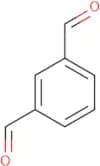
CAS:1,3-Benzenedialdehyde (1,3-BD) is a compound that is formed from the oxidation of benzene by copper chloride in a model system. It can be used as a substrate film to study covalent linkages. The electrochemical impedance spectroscopy (EIS) technique has been used to determine the stability of 1,3-BD in reaction solution. The EIS results show that 1,3-BD is stable and its complexes are relatively stable. This compound also reacts with malonic acid to form 1,2-benzenediol and 2-methylmalonic acid. The molecular structure of 1,3-BD has been determined using X-ray crystallography and it was found that nitrogen atoms are present on the molecule. Chemical reactions have not been observed with 1,3-BD when subjected to heat or light.
Formula:C8H6O2Purezza:Min. 95%Colore e forma:PowderPeso molecolare:134.13 g/mol4-Bromo-2-fluoroaniline
CAS:4-Bromo-2-fluoroaniline is a sulfonated compound that can be synthesized from 2,4,6-trimethylbenzenamine and malonic acid. It is an acidic chemical that reacts with hydroxide solution to form a molecule with a chlorinated aromatic ring. 4-Bromo-2-fluoroaniline has been used in clinical studies as an oral anti-cancer agent in the treatment of malignant melanoma and breast cancer. This drug inhibits epidermal growth factor receptor (EGFR), which may lead to decreased cell proliferation, apoptosis, and tumor formation.Formula:C6H5BrFNPurezza:Min. 99%Colore e forma:PowderPeso molecolare:190.01 g/molα-Me-D-Leu-OH
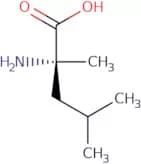
CAS:a-Me-D-Leu-OH is a versatile building block that is used as a reagent in the synthesis of complex compounds, research chemicals, and speciality chemicals. It is also a useful scaffold for drug design. This chemical is also widely used as an intermediate in organic syntheses.
Formula:C7H15NO2Purezza:Min. 95%Colore e forma:PowderPeso molecolare:145.2 g/mol




![4-Bromo-1H-pyrrolo[2,3-b]pyridine-3-carboxylic acid](/_next/image/?url=https%3A%2Fstatic.cymitquimica.com%2Fproducts%2F3D%2Fthumb-webp%2FAQB34036.webp&w=3840&q=75)