


Building Blocks
Questa sezione contiene prodotti fondamentali per la sintesi di composti organici e biologici. Building blocks sono i materiali di partenza essenziali utilizzati per costruire molecole complesse attraverso varie reazioni chimiche. Svolgono un ruolo critico nella scoperta di farmaci, nella scienza dei materiali e nella ricerca chimica. Presso CymitQuimica, offriamo una gamma diversificata di building blocks di alta qualità per supportare le tue ricerche innovative e progetti industriali, assicurandoti di avere i componenti essenziali per una sintesi di successo.
Sottocategorie di "Building Blocks"
- Acidi boronici e derivati dell'acido boronico(5.756 prodotti)
- Building Blocks Chirali(1.242 prodotti)
- Building Blocks Idrocarburici(6.095 prodotti)
- Building Blocks organici(61.036 prodotti)
Trovati 195887 prodotti di "Building Blocks"
Ordinare per
Purezza (%)
0
100
|
0
|
50
|
90
|
95
|
100
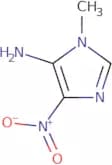
5-Amino-1-methyl-4-nitroimidazole
CAS:<p>5-Amino-1-methyl-4-nitroimidazole is a chemical compound that belongs to the class of azides. It has a molecular weight of 122.13 and a melting point of 187°C. 5-Amino-1-methyl-4-nitroimidazole can be synthesized by amination reaction between methyl nitrite and ammonia in the presence of anhydrous ammonia, followed by filtration. The product is obtained as white crystalline powder with a molecular formula of C3H6N3O2 and a molecular weight of 122.13 g/mol. This compound has been used as an intermediate for the synthesis of other compounds, such as 2,5-diaminohexane hydrochloride ((C6H14N2)Cl). 5-Amino-1-methyl-4-nitroimidazole is also used in xerography, photography, and semiconduct</p>Formula:C4H6N4O2Purezza:Min. 95%Colore e forma:PowderPeso molecolare:142.12 g/molN-Acetylimidazole
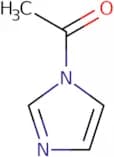
CAS:<p>N-Acetylimidazole is a drug that belongs to the class of glycol esters. It is an inhibitor of the enzyme acetylcholinesterase and has been used in the treatment of autoimmune diseases, such as myasthenia gravis. N-Acetylimidazole can inhibit the activity of other enzymes, such as p-nitrophenyl phosphate oxidase, which may be responsible for its anti-inflammatory properties. This drug has been shown to inhibit microbial growth in vitro by inhibiting the synthesis of choline and acetylcholine in the body. N-Acetylimidazole also inhibits bacterial growth by acting as a substrate molecule for bacterial enzymes that catalyze transfer reactions, including phosphotransferases and hydrolases.</p>Formula:C5H6N2OPurezza:Min. 95%Colore e forma:White PowderPeso molecolare:110.11 g/molGlutaric acid monoethyl ester chloride
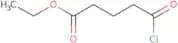
CAS:<p>Glutaric acid monoethyl ester chloride is an acid that has been used in pharmaceutical preparations and as a topical agent. It is used to treat chronic pulmonary diseases, such as asthma. The acidic properties of glutaric acid monoethyl ester chloride make it an effective agent for the treatment of autoimmune diseases, such as rheumatoid arthritis and multiple sclerosis. Glutaric acid monoethyl ester chloride also has dopamine-enhancing effects and can be used for the treatment of cancer. It is a monoclonal antibody that binds to brain infarction sites, preventing the progression of this disease. Glutaric acid monoethyl ester chloride has also been shown to have anti-inflammatory properties in bowel disease models, making it an effective treatment for inflammatory bowel disease (IBD).</p>Formula:C7H11ClO3Purezza:Min. 95%Peso molecolare:178.61 g/mol2-(3-Methylphenyl)propan-2-ol
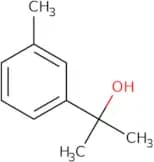
CAS:<p>2-(3-Methylphenyl)propan-2-ol is an oxygenated compound that has been shown to have antibacterial activity against Staphylococcus. It has also been shown to have antiacetylcholinesterase and bactericidal effects, which are believed to be due to its ability to inhibit the synthesis of a neurotransmitter called acetylcholine. 2-(3-Methylphenyl)propan-2-ol has also been shown to have antimicrobial bioactivities against Trichophyton mentagrophytes, a fungus that causes ringworm in humans. Interestingly, this molecule was found in plants from the Lamiaceae family, which includes herbs such as sage and thyme. These plants are used for their antimicrobial properties in traditional medicine. 2-(3-Methylphenyl)propan-2-ol also shows bioactivities against Alzheimer's disease and chemical compositions that may be helpful for treating these diseases.</p>Formula:C10H14OPurezza:Min. 95%Peso molecolare:150.22 g/mol4-Chlorobenzotrichloride
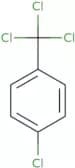
CAS:<p>4-Chlorobenzotrichloride is a hydrogen fluoride reagent that is used as an antibacterial agent. It has been shown to be highly active against gram-negative bacteria, including Pseudomonas aeruginosa and Escherichia coli. 4-Chlorobenzotrichloride is also a specific inhibitor of the bacterial enzyme DNA polymerase III and can inhibit the synthesis of DNA in mammalian cells. The administration of this drug has been shown to protect mice from brain damage due to oxygen deprivation. 4-Chlorobenzotrichloride has also been shown to have anti-cancer activity in various types of cancers, including breast cancer and chronic bronchitis. This drug binds specifically to mouse monoclonal antibodies that are specific for the cell surface markers CD3, CD4, or CD8 on T cells.</p>Formula:C7H4Cl4Purezza:Min. 95%Peso molecolare:229.91 g/molN-(Pyridin-4-yl)benzamide
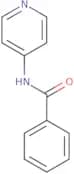
CAS:<p>N-(Pyridin-4-yl)benzamide is a control agent that is used as a pest control. It inhibits the enzyme nitric oxide synthase and prevents the production of nitric oxide, which has been implicated in the uncontrolled proliferation of certain cells. N-(Pyridin-4-yl)benzamide also has anti-cancer properties, inhibiting cancer cell growth by regulating DNA replication and protein synthesis. This drug is effective against colon cancer cells but not against breast cancer cells.<br>The supramolecular chemistry of this molecule was studied using diffraction techniques on calf thymus DNA and bacterial DNA gyrase. The transfer of energy from one molecule to another was observed using absorption spectroscopy on mouse brain tissue.</p>Formula:C12H10N2OPurezza:Min. 95%Peso molecolare:198.22 g/molAzepane-2-carboxylic acid hydrochloride
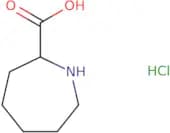
CAS:<p>Versatile small molecule scaffold</p>Formula:C7H14ClNO2Purezza:Min. 95%Peso molecolare:179.64 g/mol2-[(Naphthalen-2-yloxy)methyl]oxirane
CAS:<p>2-[(Naphthalen-2-yloxy)methyl]oxirane is a monomer that can be used to produce epoxides, amines, and other organic compounds. It is used as a transport agent and catalytic agent for the ring-opening of epoxides. The cyanosilylation reaction of 2-[(naphthalen-2-yloxy)methyl]oxirane with bis[trimethylsilyl]acetamide produces cyanosilylated products. This compound has been shown to be a ligand for phosphazene and polyethers, as well as an effective catalyst in the synthesis of cyclic ethers.</p>Formula:C13H12O2Purezza:Min. 95%Peso molecolare:200.23 g/molButyl ethenyl(methyl)phosphinate
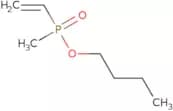
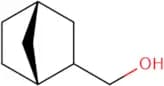
CAS:<p>Versatile small molecule scaffold</p>Formula:C7H15O2PPurezza:Min. 95%Peso molecolare:162.17 g/molNorbornane-2-methanol
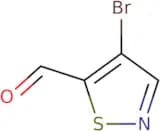
CAS:<p>Norbornane-2-methanol is a viscosity additive in lubricants, diesel fuel, and other industrial products. It is also used as a grignard reagent for the synthesis of organic compounds. Norbornane-2-methanol has been shown to react with copper chromite to produce the reactive chemical species quadricyclane, which can be used to synthesize organic compounds. Norbornane-2-methanol also reacts with primary alcohols to form a thermally stable c–h bond. The deuterium labeled version of this compound has been used in techniques such as nuclear magnetic resonance spectroscopy and mass spectrometry.</p>Formula:C8H14OPurezza:Min. 95%Peso molecolare:126.2 g/mol4-Bromo-1,2-thiazole-5-carbaldehyde
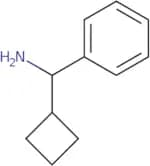
CAS:<p>Versatile small molecule scaffold</p>Formula:C4H2BrNOSPurezza:Min. 95%Peso molecolare:192.04 g/molCyclobutyl(phenyl)methanamine
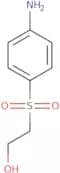
CAS:<p>Versatile small molecule scaffold</p>Formula:C11H15NPurezza:Min. 95%Peso molecolare:161.24 g/mol2-(4-Aminobenzenesulfonyl)ethan-1-ol
CAS:<p>2-(4-Aminobenzenesulfonyl)ethan-1-ol is a reactive chemical that is used in wastewater treatment. It reacts with sulfate, amines, and industrial hydrogen sulfate to form sulfonates, which are less toxic than the original compounds. 2-(4-aminobenzenesulfonyl)ethan-1-ol is also used as an activator for activated sludge. This chemical has been shown to be effective in dechlorination of aromatic amines and transformation of other pollutants such as ammonia, phenols, and tetrachloroethylene.</p>Formula:C8H11NO3SPurezza:Min. 95%Colore e forma:PowderPeso molecolare:201.24 g/mol3-(Aminooxy)propanoic acid hydrochloride
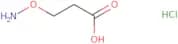
CAS:<p>3-Aminooxypropanoic acid hydrochloride is an oxime that is a chemical used as a chiral auxiliary in organic synthesis. It can also be used as a reagent to synthesize pyridinium salts. 3-Aminopropanoic acid hydrochloride is prepared by refluxing 3-aminopropionic acid with potassium hydroxide and ethyl bromoacetate in the presence of dimethylformamide. The reaction mixture is then cooled and acetone is added to precipitate the product, which is filtered off and dried.<br>3-Aminopropanoic acid hydrochloride reacts with potassium cyanide to form an imine intermediate, which can be converted into various substituted aminooxacetic acids through acylation with various substituted acylureido bromides or chlorides.</p>Formula:C3H8ClNO3Purezza:Min. 95%Peso molecolare:141.55 g/mol4,5-Dichloro-2-methylbenzoic acid
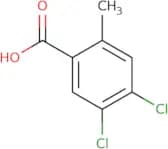
CAS:<p>4,5-Dichloro-2-methylbenzoic acid is a colorless crystalline solid. It is soluble in water and hydrochloric acid but insoluble in ethanol. The compound can be acetylated by chloroacetyl chloride to form 4,5-dichloro-2-methylbenzoic acid ethyl ester. The yield of this reaction is high and the product crystallizes readily from water. This reagent can be used for the synthesis of 2-alkylthiophenes with alkali metal hydroxides or metal salts as well as for the preparation of 2,4,5-trichlorobenzoic acid with hypoiodite or acetyl chloride. 4,5-Dichloro-2-methylbenzoic acid can also be used as a starting material for the production of dyes and drugs.</p>Formula:C8H6Cl2O2Purezza:Min. 95%Peso molecolare:205.03 g/mol(Naphthalen-1-yl)methanethiol
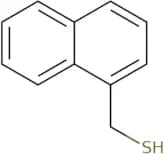
CAS:<p>Naphthalen-1-ylmethanethiol is a molecular compound with the molecular formula CHS. It consists of one naphthalene ring and one methanethiol group. Naphthalen-1-ylmethanethiol has been found to have a high photoelectron emission intensity in the region of 2.5 eV, which is characteristic for sulfur-containing molecules. This molecule has three different types of orbitals: sigma, pi, and omega, each with different energies and intensities. The pi orbital is composed of four orbitals that are perpendicular to each other; the sigma orbital is composed of two orbitals that are perpendicular to each other; and the omega orbital is composed of two orbitals that point towards each other. The pi orbital has the highest energy and intensity as well as the lowest binding energy.</p>Formula:C11H10SPurezza:Min. 95%Peso molecolare:174.26 g/mol4-Methyl-5-thiazoleacetic acid
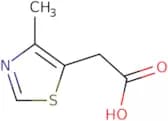
CAS:<p>4-Methyl-5-thiazoleacetic acid (MTAA) is a metabolite of chlormethiazole. It has been shown to have similar pharmacological properties as the parent drug, including analgesic, anti-inflammatory and antiemetic effects. MTAA is excreted quantitatively in urine and has been detected as an endogenous metabolite in humans. Gas chromatography with mass spectrometry was used to analyze human urine samples for MTAA and its metabolites. The metabolism of MTAA has been studied by extracting rat liver homogenates, analyzing them for MTAA, and determining the metabolic products that were found in the extractions. These studies show that 4-methyl-5-thiazoleacetic acid is metabolized to produce a number of metabolites, including edisylate, which is also an active metabolite of chlormethiazole.</p>Formula:C6H7NO2SPurezza:Min. 95%Peso molecolare:157.19 g/mol1,3-Diethyl 2-diazopropanedioate
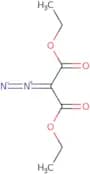
CAS:<p>1,3-Diethyl 2-diazopropanedioate is a heterocyclic molecule with a chemical formula of C6H8N2O4. It has been used in pharmaceutical preparations and as an intermediate in the synthesis of other chemicals. 1,3-Diethyl 2-diazopropanedioate is hydrolyzed by ectonucleotidase to produce malonic acid and ethyl diazoacetate. This reaction may be important in the development of cancer due to its ability to react with DNA. The reactions are also involved in the chain reactions that lead to clotting of blood and thrombin receptor activation, which can result in a heart attack or stroke.</p>Formula:C7H10N2O4Purezza:Min. 95%Peso molecolare:186.17 g/molMethyl [(4-aminobenzoyl)amino]acetate
CAS:<p>Versatile small molecule scaffold</p>Formula:C10H12N2O3Purezza:Min. 95%Peso molecolare:208.21 g/mol2,5-Diazabicyclo[2.2.1]heptane, dihydrochloride
CAS:<p>Versatile small molecule scaffold</p>Formula:C5H10N2·2HClPurezza:Min. 95%Peso molecolare:171.07 g/mol

![2-[(Naphthalen-2-yloxy)methyl]oxirane](/_next/image/?url=https%3A%2Fstatic.cymitquimica.com%2Fproducts%2F3D%2Fthumb-webp%2FFAA23406.webp&w=3840&q=75)
![Methyl [(4-aminobenzoyl)amino]acetate](/_next/image/?url=https%3A%2Fstatic.cymitquimica.com%2Fproducts%2F3D%2Fthumb-webp%2FFAA25986.webp&w=3840&q=75)
![2,5-Diazabicyclo[2.2.1]heptane, dihydrochloride](/_next/image/?url=https%3A%2Fstatic.cymitquimica.com%2Fproducts%2F3D%2Fthumb-webp%2FFAA26020.webp&w=3840&q=75)