


Building Blocks
Sottocategorie di "Building Blocks"
- Acidi boronici e derivati dell'acido boronico(5.784 prodotti)
- Building Blocks Chirali(1.242 prodotti)
- Building Blocks Idrocarburici(6.105 prodotti)
- Building Blocks organici(61.065 prodotti)
Trovati 205418 prodotti di "Building Blocks"
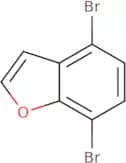
4,7-Dibromo-1-benzofuran
CAS:Versatile small molecule scaffold
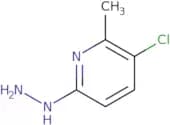
Formula:C8H4Br2OPurezza:Min. 95%Peso molecolare:275.92 g/mol3-Chloro-6-hydrazinylpicoline
CAS:Versatile small molecule scaffold
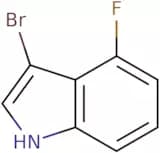
Formula:C6H8ClN3Purezza:Min. 95%Peso molecolare:157.6 g/mol3-Bromo-4-fluoro-1H-indole
CAS:Versatile small molecule scaffold
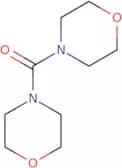
Formula:C8H5BrFNPurezza:Min. 95%Peso molecolare:214.03 g/mol4,4'-Carbonyldimorpholine
CAS:4,4'-Carbonyldimorpholine is a thioxanthone that can be used in coatings and UV-curable inks. It is a cationic monomer that can polymerize with other monomers to form polymers with high molecular weight. 4,4'-Carbonyldimorpholine also reacts with fatty acids to produce water-soluble polymers and amines to produce water-insoluble polymers. This agent has been shown to interact with the surface of metals and acrylates, which are compounds that are used in coatings and UV-curable inks. The nature of this compound is dependent on the environment it is exposed to.
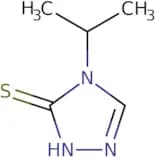
Formula:C9H16N2O3Purezza:Min. 95%Peso molecolare:200.24 g/mol4-(Propan-2-yl)-4H-1,2,4-triazole-3-thiol
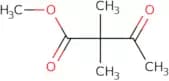
CAS:Versatile small molecule scaffoldFormula:C5H9N3SPurezza:Min. 95%Peso molecolare:143.21 g/molMethyl 2,2-diMethylacetoacetate
CAS:Methyl 2,2-diMethylacetoacetate is a deuterated acetoacetate. It has a transition state that is oriented. This acetoacetate can be modified by modifiers such as transition metals and ligands. The methyl group can be removed from the molecule by hydrolysis or hydrogenation to form 2,3-dihydroxypropanoic acid.
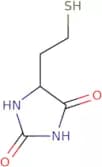
Formula:C7H12O3Purezza:Min. 95%Peso molecolare:144.17 g/mol5-(2-Sulfanylethyl)imidazolidine-2,4-dione
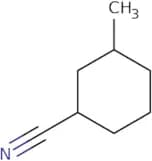
CAS:Versatile small molecule scaffoldFormula:C5H8N2O2SPurezza:Min. 95%Peso molecolare:160.2 g/mol3-Methylcyclohexane-1-carbonitrile
CAS:Versatile small molecule scaffold
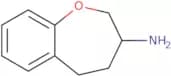
Formula:C8H13NPurezza:Min. 95%Peso molecolare:123.2 g/mol2,3,4,5-Tetrahydro-1-benzoxepin-3-amine
CAS:Versatile small molecule scaffold
Formula:C10H13NOPurezza:Min. 95%Peso molecolare:163.22 g/mol1-Chloro-4-[(2-isothiocyanatoethyl)sulfanyl]benzene
CAS:Versatile small molecule scaffold
Formula:C9H8ClNS2Purezza:Min. 95%Peso molecolare:229.8 g/mol2-Methylsulfonylthiophene
CAS:2-Methylsulfonylthiophene is a modulating agent that can inhibit the activity of carbonic anhydrase, adenosine receptors and 5-membered heteroaryl. It has been shown to have affinity for CB1 receptor antagonists and is used to treat cardiovascular diseases. 2-Methylsulfonylthiophene also inhibits the enzymatic activity of anhydrase in the eye, which leads to suppression of intraocular pressure (IOP). The drug also has anti-glaucoma effects by reducing the production of aqueous humour. 2-Methylsulfonylthiophene is used as a dyestuff intermediate and as an organic solvent.
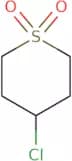
Formula:C5H6O2S2Purezza:Min. 95%Peso molecolare:162.23 g/mol4-Cchlorotetrahydro-2H-thiopyran 1,1-dioxide
CAS:4-chlorotetrahydro-2H-thiopyran 1,1-dioxide is an experimental heterocyclic compound. It has a dipole and a methylcyclohexane ring with an axial orientation. The density of the molecule is 1.499 g/cm3. This compound has conformational energies and substituents that are stable at room temperature. Theory predicts that this compound will have 3 conformers, all of which are energetically favorable, with one being more stable than the others. The energies and conformers are influenced by the steric interactions between substituents and cyclohexanes in the molecule. 4-chlorotetrahydro-2H-thiopyran 1,1-dioxide has no electrostatic interactions because it does not have any electronegative atoms or groups.
Formula:C5H9ClO2SPurezza:Min. 95%Peso molecolare:168.64 g/molCyclopropyl(3,4-dimethylphenyl)methanone
CAS:Cyclopropyl(3,4-dimethylphenyl)methanone (CPM) is a synthetic cannabinoid that has been shown to have similar effects to the natural cannabinoids found in cannabis. CPM binds to and activates the CB2 receptor, which is found on cells of the immune system, brain, and other organs. It has been studied for its ability to reduce glioma tumor growth in mice by inhibiting glutamate release. The molecular modeling study showed that CPM binds to the receptor with a geometry similar to other CB2 agonists like JWH-133. In addition, CPM inhibits locomotor activity in rats and has been shown to produce some symptoms of anxiety in mice. A receptor knockout study with mice showed that CPM can bind to CB2 receptors without activating them. X-ray diffraction data indicated that CPM is an achiral molecule with an idealized molecular geometry of "s".
Formula:C12H14OPurezza:Min. 95%Peso molecolare:174.24 g/mol1,9,10,11,12,12-Hexachloro-5-oxatetracyclo[7.2.1.0²,⁸.0⁴,⁶]dodec-10-ene-3,7-dione
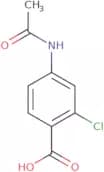
CAS:Versatile small molecule scaffoldFormula:C11H4Cl6O3Purezza:Min. 95%Peso molecolare:396.9 g/mol2-Chloro-4-acetamidobenzoic acid
CAS:2-Chloro-4-acetamidobenzoic acid is a nonsteroidal anti-inflammatory drug that binds to cyclooxygenase, thereby inhibiting the production of prostaglandins. 2-Chloro-4-acetamidobenzoic acid has been shown to be cytotoxic in vitro, eliciting DNA damage and cell death in some cells. This effect may be due to inhibition of mitochondrial function by 2-chloro-4-acetamidobenzoic acid. The drug has also been found to inhibit the growth of human leukemia cells and mouse mammary tumor cells in vitro. 2-Chloro-4-acetamidobenzoic acid is used as a research tool for studying the effects of cyclooxygenase inhibitors on cell cycle analysis, because it does not cause erythrocyte hemolysis.
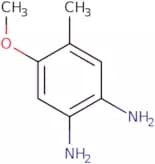
Formula:C9H8ClNO3Purezza:Min. 95%Peso molecolare:213.62 g/mol4-Methoxy-5-methylbenzene-1,2-diamine
CAS:Versatile small molecule scaffold
Formula:C8H12N2OPurezza:90%MinPeso molecolare:152.19 g/mol3-[(2-Nitrophenyl)amino]propanoic acid
CAS:Versatile small molecule scaffold
Formula:C9H10N2O4Purezza:Min. 95%Peso molecolare:210.19 g/molrac-(2R,6S)-2,4,6-Trimethylmorpholine
CAS:Versatile small molecule scaffold
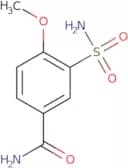
Formula:C7H15NOPurezza:Min. 95%Peso molecolare:129.2 g/mol4-Methoxy-3-sulfamoylbenzamide
CAS:Versatile small molecule scaffold
Formula:C8H10N2O4SPurezza:Min. 95%Peso molecolare:230.24 g/molN-[3-(Dimethylamino)propyl]-2-hydroxybenzamide
CAS:Versatile small molecule scaffoldFormula:C12H18N2O2Purezza:Min. 95%Peso molecolare:222.28 g/mol

![1-Chloro-4-[(2-isothiocyanatoethyl)sulfanyl]benzene](/_next/image/?url=https%3A%2Fstatic.cymitquimica.com%2Fproducts%2F3D%2Fthumb-webp%2FNBA75240.webp&w=3840&q=75)


![1,9,10,11,12,12-Hexachloro-5-oxatetracyclo[7.2.1.0²,⁸.0⁴,⁶]dodec-10-ene-3,7-dione](/_next/image/?url=https%3A%2Fstatic.cymitquimica.com%2Fproducts%2F3D%2Fthumb-webp%2FNBA66780.webp&w=3840&q=75)
![3-[(2-Nitrophenyl)amino]propanoic acid](/_next/image/?url=https%3A%2Fstatic.cymitquimica.com%2Fproducts%2F3D%2Fthumb-webp%2FNBA58458.webp&w=3840&q=75)
![N-[3-(Dimethylamino)propyl]-2-hydroxybenzamide](/_next/image/?url=https%3A%2Fstatic.cymitquimica.com%2Fproducts%2F3D%2Fthumb-webp%2FNBA39443.webp&w=3840&q=75)