Building Blocks
Sottocategorie di "Building Blocks"
- Acidi boronici e derivati dell'acido boronico(5.784 prodotti)
- Building Blocks Chirali(1.242 prodotti)
- Building Blocks Idrocarburici(6.105 prodotti)
- Building Blocks organici(61.061 prodotti)
Trovati 205399 prodotti di "Building Blocks"
5-bromo-1,3-dichloroisoquinoline
CAS:Versatile small molecule scaffold
Formula:C9H4BrCl2NPurezza:Min. 95%Peso molecolare:276.9 g/mol8-Benzyl-8-azabicyclo[3.2.1]octan-3-ol
CAS:Versatile small molecule scaffold
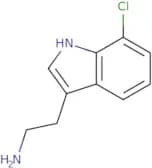
Formula:C14H19NOPurezza:Min. 95%Peso molecolare:217.31 g/mol2-(7-Chloro-1H-indol-3-yl)ethan-1-amine
CAS:Prodotto controllato7-Chloro-1,2,3,4-tetrahydroisoquinoline alkaloids are indole alkaloids that have been found in a wide variety of plants. They are synthesized through oxidative coupling and chlorination of tryptamine. The chlorination step is catalyzed by an enzyme called 7-chloroindole synthase (ICS). This enzyme is encoded by a gene that has been cloned from the plant cell line N6. A number of compounds related to 7-chloroindole have been found in soil bacteria. These compounds can be used for the construction of synthetic pathways for the production of different heterocycles. One such compound is 2-(7-chloro-1H-indol-3-yl)ethanamine, which has shown receptor activity against serotonin.
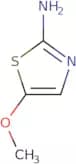
Formula:C10H11ClN2Purezza:Min. 95%Peso molecolare:194.66 g/mol5-Methoxy-2-thiazolamine
CAS:Versatile small molecule scaffold
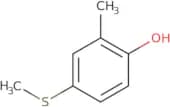
Formula:C4H6N2OSPurezza:Min. 95%Peso molecolare:130.17 g/mol2-Methyl-4-(methylsulfanyl)phenol
CAS:Versatile small molecule scaffold
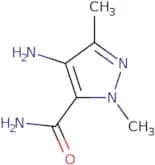
Formula:C8H10OSPurezza:Min. 95%Peso molecolare:154.23 g/mol4-Amino-1,3-dimethyl-1H-pyrazole-5-carboxamide
CAS:Versatile small molecule scaffold
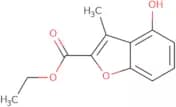
Formula:C6H10N4OPurezza:Min. 95%Peso molecolare:154.17 g/molEthyl 4-hydroxy-3-methyl-1-benzofuran-2-carboxylate
CAS:Ethyl 4-hydroxy-3-methyl-1-benzofuran-2-carboxylate (EHMC) is an oxadiazole compound that has been shown to be toxic to the central nervous system. It is a tetraacetate ester of the compound and it has been shown to induce death in mice. EHMC has also been observed to produce thionyl chloride, aldehydes and dehydrogenation products in tissue samples. Elution profiles of EHMC from liquid chromatography have shown that this chemical can be quickly metabolized by methylation and subsequent degradation into benzofuran derivatives. The heterozygote for this compound is known for its ability to metabolize carbohydrates more efficiently than normal individuals.Formula:C12H12O4Purezza:Min. 95%Peso molecolare:220.22 g/mol1-Isopropyl-[1,4]diazepane
CAS:Versatile small molecule scaffold
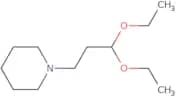
Formula:C8H18N2Purezza:Min. 95%Peso molecolare:142.25 g/mol1-(3,3-Diethoxypropyl)piperidine
CAS:Versatile small molecule scaffold
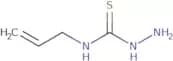
Formula:C12H25NO2Purezza:Min. 95%Peso molecolare:215.33 g/mol4-Allyl-3-thiosemicarbazide
CAS:4-Allyl-3-thiosemicarbazide is a copper complex that inhibits the growth of cancer cells. Copper chloride is an important catalyst for this reaction. The coordination geometry of the copper ion and the structure of the product are key factors in determining its cytotoxicity. This compound has been shown to have significant cytotoxicity against a variety of cancer cell lines, including leukemia, lymphoma, breast, prostate, lung, pancreatic and colon cancer cells. 4-Allyl-3-thiosemicarbazide is also able to inhibit kinesin by binding to its ATPase site and preventing it from transporting cargo along microtubules.
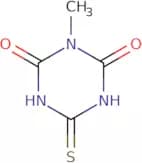
Formula:C4H9N3SPurezza:Min. 95%Peso molecolare:131.2 g/mol3-Methyl-6-sulfanyl-1,2,3,4-tetrahydro-1,3,5-triazine-2,4-dione
CAS:Versatile small molecule scaffoldFormula:C4H5N3O2SPurezza:Min. 95%Peso molecolare:159.17 g/mol(1-Bromo-2-methylpropan-2-yl)benzene
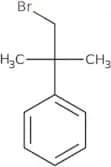
CAS:1-Bromo-2-methylpropan-2-yl)benzene is an organic solvent that has a hydrogen bond. It is used in the synthesis of malonic acid and kinetic studies. This solvent has been shown to react with chloride to form 1,2-dibromochloromethane. The reaction rate for this reaction is affected by the presence of other halides, such as iodine and bromine. 1-Bromo-2-methylpropan-2-yl)benzene can also be used as a polymerization inhibitor.
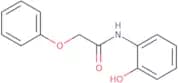
Formula:C10H13BrPurezza:Min. 95%Peso molecolare:213.11 g/molN-(2-Hydroxyphenyl)-2-phenoxyacetamide
CAS:Versatile small molecule scaffold
Formula:C14H13NO3Purezza:Min. 95%Peso molecolare:243.26 g/mol3-Hydroxy-N-phenylbenzamide
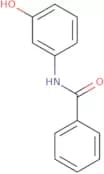
CAS:3-Hydroxy-N-phenylbenzamide (3HB) is a chemical compound that has been isolated from the plant Caryophyllaceae. This compound is an electrophile, which can react with nucleophiles in biological systems. 3HB produces anthranilic acid when it reacts with amino acids, and this compound may be responsible for the antimicrobial activity of 3HB. 3HB was shown to have fungitoxic effects against some fungi including Fusarium oxysporum, Rhizoctonia solani, and Stemphylium sp., but not against other fungi such as Alternaria alternata and Penicillium cyclopium. The phytoalexin caryophyllin, which is produced by infected plants, also inhibits fungal growth.
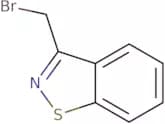
Formula:C13H11NO2Purezza:Min. 95%Peso molecolare:213.23 g/mol3-(Bromomethyl)-1,2-benzothiazole
CAS:Versatile small molecule scaffold
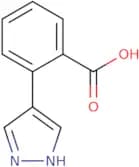
Formula:C8H6BrNSPurezza:Min. 95%Peso molecolare:228.11 g/mol2-(1H-Pyrazol-4-yl)benzoic acid
CAS:Versatile small molecule scaffold
Formula:C10H8N2O2Purezza:Min. 95%Peso molecolare:188.18 g/molMethyl 8-aminooctanoate
CAS:Methyl 8-aminooctanoate is a fatty acid amide that inhibits the HIV virus by binding to its receptor. Methyl 8-aminooctanoate has been shown to inhibit the production of human immunodeficiency virus (HIV) in vitro, which may be due to its ability to inhibit the interaction between HIV and its receptor. Methyl 8-aminooctanoate is metabolized by esterases in vivo and excreted in urine. The pharmacokinetic properties of this drug have been evaluated in humans and optimized for a long-chain fatty ester form.
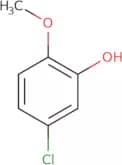
Formula:C9H19NO2Purezza:Min. 95%Peso molecolare:173.25 g/mol5-Chloro-2-methoxyphenol
CAS:5-Chloro-2-methoxyphenol is a phenolic compound that is used in wastewater treatment. It can be synthesized from 2-chloro-5-hydroxyphenol and sodium hydroxide. 5-Chloro-2-methoxyphenol has been shown to inhibit the growth of Pseudomonas strains, including P. aeruginosa, P. putida, and P. fluorescens. This inhibition may be due to its ability to release Mn2+ ions from the bacteria's cell wall by oxidation reactions. The bacterial strain also needs a carbon source for 5-chloro-2-methoxyphenol to be effective against it and it is not active against radiation, oxidation products, or hplc analysis.BR>BR>
Formula:C7H7ClO2Purezza:Min. 95%Peso molecolare:158.58 g/mol[3-(Methylsulfanyl)phenyl]methanol
CAS:Versatile small molecule scaffold
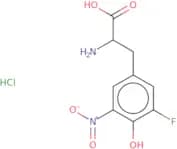
Formula:C8H10OSPurezza:Min. 95%Peso molecolare:154.23 g/mol2-Amino-3-(3-fluoro-4-hydroxy-5-nitrophenyl)propanoic acid hydrochloride
CAS:Versatile small molecule scaffold
Formula:C9H10ClFN2O5Purezza:Min. 95%Peso molecolare:280.6 g/mol


![8-Benzyl-8-azabicyclo[3.2.1]octan-3-ol](/_next/image/?url=https%3A%2Fstatic.cymitquimica.com%2Fproducts%2F3D%2Fthumb-webp%2FDAA80468.webp&w=3840&q=75)
![1-Isopropyl-[1,4]diazepane](/_next/image/?url=https%3A%2Fstatic.cymitquimica.com%2Fproducts%2F3D%2Fthumb-webp%2FJCA03961.webp&w=3840&q=75)

![[3-(Methylsulfanyl)phenyl]methanol](/_next/image/?url=https%3A%2Fstatic.cymitquimica.com%2Fproducts%2F3D%2Fthumb-webp%2FJCA08333.webp&w=3840&q=75)