Building Blocks
Sottocategorie di "Building Blocks"
- Acidi boronici e derivati dell'acido boronico(5.786 prodotti)
- Building Blocks Chirali(1.246 prodotti)
- Building Blocks Idrocarburici(6.107 prodotti)
- Building Blocks organici(61.079 prodotti)
Trovati 205461 prodotti di "Building Blocks"
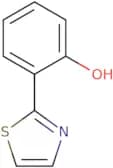
2-(1,3-Thiazol-2-yl)phenol
CAS:2-(1,3-Thiazol-2-yl)phenol (TPTZ) is a chemiluminescent compound that can be used to detect the presence of DNA. It can be used as the substrate for an assay that detects mutations in dna. TPTZ is uniquely detectable by chemiluminescence, and it has been shown to inhibit herpes virus replication and induce apoptosis in cancer cells. TPTZ also has anti-atherosclerotic effects by reducing inflammation in the blood vessels.
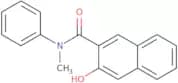
Formula:C9H7NOSPurezza:Min. 95%Peso molecolare:177.22 g/mol3-Hydroxy-N-methyl-N-phenylnaphthalene-2-carboxamide
CAS:Versatile small molecule scaffold
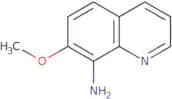
Formula:C18H15NO2Purezza:Min. 95%Peso molecolare:277.3 g/mol7-methoxyquinolin-8-amine
CAS:Versatile small molecule scaffold
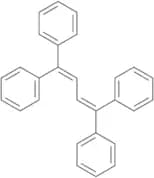
Formula:C10H10N2OPurezza:Min. 95%Peso molecolare:174.2 g/mol1,1,4,4-Tetraphenyl-1,3-butadiene
CAS:1,1,4,4-Tetraphenyl-1,3-butadiene is a chemical compound that is stable in air and water. It has been shown to be active against pluripotent cells which are the precursor of all cells in the body. 1,1,4,4-Tetraphenyl-1,3-butadiene has been used for a number of biochemical research studies and has been shown to have electrochemical properties as an electrode material. This compound also has high values for toxicological studies. It can be found in the atmosphere at low levels but can also be released into the environment from industrial sources such as electric arc furnaces or coal burning plants.
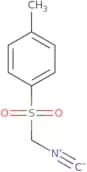
Formula:C28H22Purezza:Min. 99.0%Colore e forma:White PowderPeso molecolare:358.47 g/mol4-Toluenesulfonylmethylisonitrile
CAS:4-Toluenesulfonylmethylisonitrile is a potent antagonist of the malonic acid receptor that has been shown to be reactive. It is synthesized by reacting methyl ketones with trifluoroacetic acid and nitrogen gas in the presence of a catalyst. The reaction mechanism has been studied using gravimetric analysis and the thermodynamic data have been calculated for fatty acids. 4-Toluenesulfonylmethylisonitrile can be used to make esters.
Formula:C9H9NO2SPurezza:Min. 95%Colore e forma:Off-White To Yellow SolidPeso molecolare:195.24 g/molTrifluoromethanesulfonyl chloride
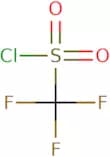
CAS:Trifluoromethanesulfonyl chloride is a reactive chemical that reacts with nucleophilic groups in biological molecules. It is used for the treatment of infectious diseases and metabolic disorders. Trifluoromethanesulfonyl chloride has been shown to have receptor activity against various microorganisms, including resistant strains. Structural analysis has shown that the active form of trifluoromethanesulfonyl chloride binds to malonic acid and other coumarin derivatives. This binding prevents the formation of hydrogen bonds, which would otherwise stabilize the molecule, leading to its degradation. Trifluoromethanesulfonyl chloride also reacts with magnesium salt to produce trifluoroacetic acid, which is an organic solvent that can be used as a reaction medium or a reagent in organic synthesis.
Formula:CClF3O2SPurezza:Min. 95%Peso molecolare:168.52 g/molSulfathiazole
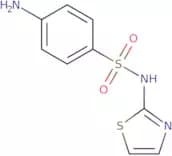
CAS:Sulfathiazole is a sulfonamide antibacterial agent with a chemical structure similar to that of the sulfa drugs. It is active against Gram-positive and Gram-negative bacteria, including those resistant to other antibiotics. Sulfathiazole has been shown to be effective against infectious diseases caused by Escherichia coli, Klebsiella pneumoniae, Proteus mirabilis, and Salmonella typhi. The mechanism of action of sulfathiazole is not fully understood. One hypothesis is that it inhibits the synthesis of folic acid in bacteria by inhibiting enzymes involved in purine metabolism. This drug also has complex pharmacological effects on human cells because it can inhibit both receptor activity and enzyme activity in complex cellular processes such as protein synthesis and DNA synthesis.
Formula:C9H9N3O2S2Purezza:Min. 95%Colore e forma:PowderPeso molecolare:255.32 g/mol(2E)-3-[4-(Heptyloxy)-3-methoxyphenyl]prop-2-enoic acid
CAS:Versatile small molecule scaffold
Formula:C17H24O4Purezza:Min. 95%Peso molecolare:292.4 g/mol8-Oxabicyclo[3.2.1]octan-3-amine HCl
CAS:Versatile small molecule scaffold
Formula:C7H14ClNOPurezza:Min. 95%Peso molecolare:163.65 g/mol3-{[(9H-Fluoren-9-yl)methoxy]carbonyl}-2,3,4,5-tetrahydro-1H-3-benzazepine-7-carboxylic acid
CAS:Versatile small molecule scaffold
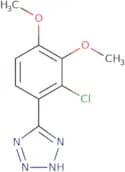
Formula:C26H23NO4Purezza:Min. 95%Peso molecolare:413.5 g/mol5-(2-Chloro-3,4-dimethoxyphenyl)-2H-1,2,3,4-tetrazole
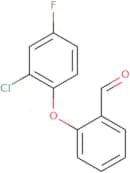
CAS:Versatile small molecule scaffoldFormula:C9H9ClN4O2Purezza:Min. 95%Peso molecolare:240.64 g/mol2-(2-Chloro-4-fluorophenoxy)benzaldehyde
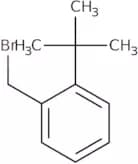
CAS:Versatile small molecule scaffoldFormula:C13H8ClFO2Purezza:Min. 95%Peso molecolare:250.65 g/mol1-(Bromomethyl)-2-tert-butylbenzene
CAS:Versatile small molecule scaffold
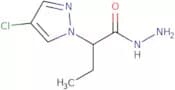
Formula:C11H15BrPurezza:Min. 95%Peso molecolare:227.14 g/mol2-(4-Chloro-1H-pyrazol-1-yl)butanohydrazide
CAS:Versatile small molecule scaffoldFormula:C7H11ClN4OPurezza:Min. 95%Peso molecolare:202.64 g/mol2-[4-Chloro-3,5-bis(difluoromethyl)-1H-pyrazol-1-yl]propanoic acid
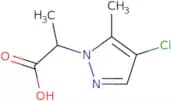
CAS:Versatile small molecule scaffoldFormula:C8H7ClF4N2O2Purezza:Min. 95%Peso molecolare:274.6 g/mol2-(4-Chloro-5-methyl-1H-pyrazol-1-yl)propanoic acid
CAS:Versatile small molecule scaffold
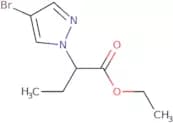
Formula:C7H9ClN2O2Purezza:Min. 95%Peso molecolare:188.61 g/molEthyl 2-(4-bromo-1H-pyrazol-1-yl)butanoate
CAS:Versatile small molecule scaffoldFormula:C9H13BrN2O2Purezza:Min. 95%Peso molecolare:261.12 g/molPerfluoroheptanoyl chloride
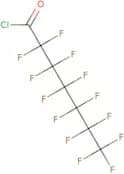
CAS:Perfluoroheptanoyl chloride is a fluorinated hydrocarbon that is used as a surfactant in detergent compositions. It has been shown to be biostable, which means it does not react with other molecules in the environment. This compound also has low environmental toxicity because of its resistance to peroxidation and its ability to form stable complexes with metals. Perfluoroheptanoyl chloride has been shown to cause allergic reactions in some people and may cause adverse effects on animal health. Research on the effects of perfluoroheptanoyl chloride on Xenopus oocytes has demonstrated that this compound can affect gene expression and result in cell death.
Formula:C7CIF13OPurezza:Min. 95%Colore e forma:Colourless LiquidPeso molecolare:382.51 g/molRef: 3D-FP36361
Prodotto fuori produzione4-Pyrimidinecarboxaldehyde
CAS:4-Pyrimidinecarboxaldehyde is an organic compound that is used in the synthesis of pyrazoles. It can be prepared by the reaction of ethylenediamine with molybdenum trioxide in ethanol, followed by hydrolysis of the amine. 4-Pyrimidinecarboxaldehyde can also be obtained from methylpyrazine by oxidation to methylpyrazone and subsequent reaction with magnesium oxide. The nature of 4-pyrimidinecarboxaldehyde’s molecular target is not yet known, but it has been shown to have antineoplastic properties.
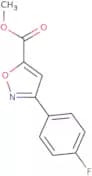
Formula:C5H4N2OPurezza:Min. 95%Colore e forma:Colourless To Yellow LiquidPeso molecolare:108.1 g/molMethyl 3-(4-fluorophenyl)-1,2-oxazole-5-carboxylate
CAS:Versatile small molecule scaffold
Formula:C11H8FNO3Purezza:Min. 95%Peso molecolare:221.18 g/mol

![(2E)-3-[4-(Heptyloxy)-3-methoxyphenyl]prop-2-enoic acid](/_next/image/?url=https%3A%2Fstatic.cymitquimica.com%2Fproducts%2F3D%2Fthumb-webp%2FFQC94990.webp&w=3840&q=75)
![8-Oxabicyclo[3.2.1]octan-3-amine HCl](/_next/image/?url=https%3A%2Fstatic.cymitquimica.com%2Fproducts%2F3D%2Fthumb-webp%2FFQC90633.webp&w=3840&q=75)
![3-{[(9H-Fluoren-9-yl)methoxy]carbonyl}-2,3,4,5-tetrahydro-1H-3-benzazepine-7-carboxylic acid](/_next/image/?url=https%3A%2Fstatic.cymitquimica.com%2Fproducts%2F3D%2Fthumb-webp%2FFQC74341.webp&w=3840&q=75)
![2-[4-Chloro-3,5-bis(difluoromethyl)-1H-pyrazol-1-yl]propanoic acid](/_next/image/?url=https%3A%2Fstatic.cymitquimica.com%2Fproducts%2F3D%2Fthumb-webp%2FFQB67867.webp&w=3840&q=75)