


Building Blocks
Questa sezione contiene prodotti fondamentali per la sintesi di composti organici e biologici. Building blocks sono i materiali di partenza essenziali utilizzati per costruire molecole complesse attraverso varie reazioni chimiche. Svolgono un ruolo critico nella scoperta di farmaci, nella scienza dei materiali e nella ricerca chimica. Presso CymitQuimica, offriamo una gamma diversificata di building blocks di alta qualità per supportare le tue ricerche innovative e progetti industriali, assicurandoti di avere i componenti essenziali per una sintesi di successo.
Sottocategorie di "Building Blocks"
- Acidi boronici e derivati dell'acido boronico(5.756 prodotti)
- Building Blocks Chirali(1.242 prodotti)
- Building Blocks Idrocarburici(6.095 prodotti)
- Building Blocks organici(61.037 prodotti)
Trovati 196200 prodotti di "Building Blocks"
Ordinare per
Purezza (%)
0
100
|
0
|
50
|
90
|
95
|
100
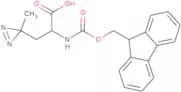
Fmoc-L-photo-leucine
CAS:<p>Versatile small molecule scaffold</p>Formula:C20H19N3O4Purezza:Min. 95%Peso molecolare:365.4 g/molSodium 2,3-dihydroxypropane-1-sulfonate
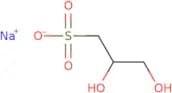
CAS:<p>Sodium 2,3-dihydroxypropane-1-sulfonate is a granular detergent that can be used in the production of heavy duty liquid and solid granules. It is an anionic surfactant with a sulfonate group that has a granular consistency. This detergent is often used as a wetting agent in detergents and as a dispersing agent in paints, dyes, and pharmaceuticals. Sodium 2,3-dihydroxypropane-1-sulfonate has been shown to be effective at removing particulate matter from water and can also be used as a stabilizer for other surfactants during manufacturing.</p>Formula:C3H7NaO5SPurezza:Min. 95%Peso molecolare:178.14 g/molBMS-986165
CAS:Prodotto controllato<p>BMS-986165 is a P-glycoprotein (P-gp) inhibitor that has been shown to reduce the absorption of ciclosporin, tacrolimus, and everolimus in vitro. BMS-986165 has an activity index of 100% and inhibits the inflammatory response by inhibiting the production of cytokines. It has been found to be effective for treating bowel diseases, such as ulcerative colitis and Crohn's disease. The drug also may be used for the treatment of autoimmune diseases, such as psoriasis or rheumatoid arthritis. BMS-986165 is administered orally and is rapidly absorbed. It is metabolized by CYP3A4 and excreted in urine as metabolites. END>> END>></p>Formula:C20H19D3N8O3Purezza:Min. 95%Peso molecolare:425.46 g/molN-Ethylcyclobutanamine hydrochloride
CAS:<p>Versatile small molecule scaffold</p>Formula:C6H13NPurezza:Min. 95%Peso molecolare:99.17 g/mol(2R)-2-Acetamido-3,3-dimethylbutanoic acid
CAS:<p>Versatile small molecule scaffold</p>Formula:C8H15NO3Purezza:Min. 95%Peso molecolare:173.21 g/mol5-Bromo-1-methyl-3H-1,3-benzodiazol-2-one
CAS:<p>Versatile small molecule scaffold</p>Formula:C8H7BrN2OPurezza:Min. 95%Peso molecolare:227.06 g/mol(4-(tert-Butoxy)phenyl)methanamine
CAS:<p>(4-(tert-Butoxy)phenyl)methanamine (BPMT) is a ligand that binds to the alpha-2 receptor and acts as an antagonist. This compound has been shown to be a molecular target for positron emission tomography imaging, which is used in the diagnosis of tumours. BPMT is also used in the treatment of neuropeptide-associated disorders such as Parkinson's disease. The chiral nature of this compound makes it useful for the production of radiopharmaceuticals and other diagnostic agents with different physical properties.</p>Formula:C11H17NOPurezza:Min. 95%Peso molecolare:179.26 g/mol3-Methylbenzo[b]thiophene-2-carboxylic acid
CAS:<p>3-Methylbenzo[b]thiophene-2-carboxylic acid (MBTCA) is a heterocyclic compound that is an intermediate in the synthesis of 3-methylthiophene-2-carboxylic acid, a precursor to other drugs. MBTCA is an aerobic, nonpolar compound that has shown antimicrobial activity against some bacteria and fungi. It also has been shown to have practicality as a biomolecular probe for methyl groups in organic solvents. MBTCA can be synthesized by nitration of benzene in the presence of sulfur and sulfoxides. This reaction produces nitrobenzene, which can then be oxidized by potassium permanganate or hydrogen peroxide to produce MBTCA. The most common isomer of MBTCA is 2-(3,5-dimethoxybenzylidene)tetrahydrofuran, with three methyl groups on the</p>Formula:C10H8O2SPurezza:Min. 95%Peso molecolare:192.23 g/mol3-Methoxy-benzenesulfonic acid
CAS:<p>Versatile small molecule scaffold</p>Formula:C7H8O4SPurezza:Min. 95%Peso molecolare:188.2 g/mol2-Methoxy-benzenesulfonic acid
CAS:<p>2-Methoxy-benzenesulfonic acid is a synthetic chemical compound that is used in the production of polymers and other ester compounds. It can be produced by reacting benzenesulfonyl chloride with methanol in the presence of a strong acid catalyst. 2-Methoxy-benzenesulfonic acid reacts with radiation to produce reactive oxygen species that are capable of damaging cellular structures. The molecule contains an intramolecular hydrogen bond, which stabilizes the structure and helps to form hydrogen bonds with other molecules. 2-Methoxy-benzenesulfonic acid also has a hydroxyl group, which allows it to function as an acidic compound that can react with water and cause inflammation. This functional group also makes it soluble in water, allowing it to penetrate tissue structures.</p>Formula:C7H8O4SPurezza:Min. 95%Peso molecolare:188.2 g/mol6-Amino-2-propylhexanoic acid hydrochloride
CAS:<p>Versatile small molecule scaffold</p>Formula:C9H19NO2•HClPurezza:Min. 95%Peso molecolare:209.71 g/molmethyl 4-bromo-3-formylbenzoate
CAS:<p>Versatile small molecule scaffold</p>Formula:C9H7BrO3Purezza:Min. 95%Peso molecolare:243.1 g/mol4-(2,6-Difluorophenyl)piperidin-4-ol hydrochloride
CAS:<p>Versatile small molecule scaffold</p>Formula:C11H14ClF2NOPurezza:Min. 95%Peso molecolare:249.68 g/mol6-Hydroxyquinoline-4-carboxylic acid
CAS:<p>Versatile small molecule scaffold</p>Formula:C10H7NO3Purezza:Min. 95%Peso molecolare:189.17 g/mol2,6-Dichloro-4-fluorobenzoic acid
CAS:<p>Versatile small molecule scaffold</p>Formula:C7H3Cl2FO2Purezza:Min. 95%Peso molecolare:209 g/mol5-Oxotetrahydrofuran-2-carboxylic acid
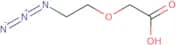
CAS:<p>5-Oxotetrahydrofuran-2-carboxylic acid is a solid phase extraction compound that can be used to extract and purify compounds from biological samples. It is synthesized by an asymmetric synthesis of the acetate ester of 5-hydroxytetrahydrofuran-2-carboxylic acid, which is then hydrolyzed to give the desired product. 5-Oxotetrahydrofuran-2-carboxylic acid has been used in cell culture studies as a diagnostic agent for cancer cells. The reactive nature of this molecule allows it to react with chloride ions and fatty acids, which leads to the death of cancer cells.</p>Formula:C5H6O4Purezza:Min. 95%Peso molecolare:130.1 g/mol2-(2-Azidoethoxy)acetic Acid
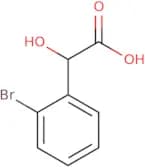
CAS:<p>2-(2-Azidoethoxy)acetic Acid is a hydrophobic antibacterial agent that can be used to inhibit bacterial growth by disrupting the cell membrane. It has been shown to inhibit the growth of Staphylococcus aureus and Escherichia coli, which may be due to its ability to bind to the glutathione moiety in the bacterial cell membrane. 2-(2-Azidoethoxy)acetic Acid has been shown to have antimicrobial activity against both Gram-positive and Gram-negative bacteria in vitro. This compound is also able to cross the cell membrane, inhibiting bacterial replication in vivo.</p>Formula:C4H7N3O3Purezza:Min. 95%Peso molecolare:145.12 g/mol2-(2-Bromophenyl)-2-hydroxyacetic acid
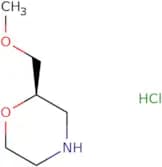
CAS:<p>2-Bromophenyl-2-hydroxyacetic acid is a ligand that binds to the ethylene receptor in plants and can be used as a monomer for the polymerization of polyethylene. It has been shown that 2-bromophenyl-2-hydroxyacetic acid can also be used as an initiator for the polymerization of β-cyclodextrin. This compound has also been shown to be an analyte in gas chromatography, which is used to separate compounds based on their chemical properties. The use of this compound as a tethering agent has also been investigated with copolymerization reactions in order to create more stable polymers. 2-Bromophenyl-2-hydroxyacetic acid has been found to inhibit nonsteroidal antiinflammatory drugs and may have potential applications for chiral synthesis, such as mandelic acid production.</p>Formula:C8H7BrO3Purezza:Min. 95%Peso molecolare:231.04 g/mol(R)-2-(Methoxymethyl)-morpholine hydrochloride
CAS:<p>Versatile small molecule scaffold</p>Formula:C6H14ClNO2Purezza:Min. 95%Peso molecolare:167.63 g/mol4-{[(tert-butoxy)carbonyl]amino}-4-methylpentanoic acid
CAS:<p>Versatile small molecule scaffold</p>Formula:C11H21NO4Purezza:Min. 95%Peso molecolare:231.3 g/mol



![3-Methylbenzo[b]thiophene-2-carboxylic acid](/_next/image/?url=https%3A%2Fstatic.cymitquimica.com%2Fproducts%2F3D%2Fthumb-webp%2FDAA13378.webp&w=3840&q=75)


![4-{[(tert-butoxy)carbonyl]amino}-4-methylpentanoic acid](/_next/image/?url=https%3A%2Fstatic.cymitquimica.com%2Fproducts%2F3D%2Fthumb-webp%2FZZB37240.webp&w=3840&q=75)