


Building Blocks
Questa sezione contiene prodotti fondamentali per la sintesi di composti organici e biologici. Building blocks sono i materiali di partenza essenziali utilizzati per costruire molecole complesse attraverso varie reazioni chimiche. Svolgono un ruolo critico nella scoperta di farmaci, nella scienza dei materiali e nella ricerca chimica. Presso CymitQuimica, offriamo una gamma diversificata di building blocks di alta qualità per supportare le tue ricerche innovative e progetti industriali, assicurandoti di avere i componenti essenziali per una sintesi di successo.
Sottocategorie di "Building Blocks"
- Acidi boronici e derivati dell'acido boronico(5.756 prodotti)
- Building Blocks Chirali(1.242 prodotti)
- Building Blocks Idrocarburici(6.095 prodotti)
- Building Blocks organici(61.037 prodotti)
Trovati 196200 prodotti di "Building Blocks"
Ordinare per
Purezza (%)
0
100
|
0
|
50
|
90
|
95
|
100
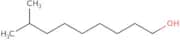
8-Methylnonan-1-ol
CAS:<p>Please enquire for more information about 8-Methylnonan-1-ol including the price, delivery time and more detailed product information at the technical inquiry form on this page</p>Formula:C10H22OPurezza:Min. 95%Peso molecolare:158.28 g/mol4-Bromo-2,6-dimethoxybenzaldehyde
CAS:<p>Versatile small molecule scaffold</p>Formula:C9H9BrO3Purezza:Min. 95%Peso molecolare:245.07 g/mol5-Bromo-3-(difluoromethyl)pyridine-2-carboxylic acid
CAS:<p>Versatile small molecule scaffold</p>Formula:C7H4BrF2NO2Purezza:Min. 95%Peso molecolare:252.01 g/mol2-boc-5-oxo-2-azabicyclo[2.2.2]octane
CAS:<p>Versatile small molecule scaffold</p>Formula:C12H19NO3Purezza:Min. 95%Peso molecolare:225.29 g/mol(R)-2-[(9H-Fluoren-9-ylmethoxycarbonylamino)-methyl]-butyric acid
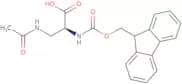
CAS:<p>Versatile small molecule scaffold</p>Formula:C20H21NO4Purezza:Min. 95%Colore e forma:PowderPeso molecolare:339.4 g/molFmoc-Dap(Ac)-OH
CAS:<p>Fmoc-Dap(Ac)-OH is a fine chemical that is used as a building block in the synthesis of complex compounds. It reacts with various nucleophiles to form an amide bond, and has been shown to be useful for both research and industrial applications. Fmoc-Dap(Ac)-OH can also be used as a reagent to synthesize peptides, which are biologically active compounds that form the basis of many drugs. This versatile intermediate is also used as a scaffold in the construction of more complex molecules. Fmoc-Dap(Ac)-OH has CAS No. 181952-29-4 and is classified as a speciality chemical by the International Union of Pure and Applied Chemistry (IUPAC).</p>Formula:C20H20N2O5Purezza:Min. 95%Colore e forma:PowderPeso molecolare:368.38 g/mol5-Chloro-1H-pyrrolo[2,3-c]pyridine-3-carboxylic acid
CAS:<p>Versatile small molecule scaffold</p>Formula:C8H5ClN2O2Purezza:Min. 95%Peso molecolare:196.59 g/mol1-Methyl-1,2,4-triazole
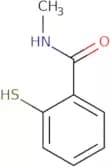
CAS:<p>1-Methyl-1,2,4-triazole is a molecule containing nitrogen atoms. It can be used as a monomer in the preparation of polymers or materials. 1-Methyl-1,2,4-triazole has been shown to be effective for the equilibration of mixtures of organic compounds in analytical methods and matrix effect studies. The reaction vessel must be unsymmetrical to prevent the polymer from sticking to it and causing potential problems with the separation process.</p>Formula:C3H5N3Purezza:Min. 98%Colore e forma:Clear LiquidPeso molecolare:83.09 g/mol2-Mercapto-N-methylbenzamide
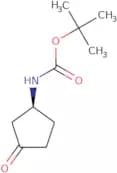
CAS:<p>2-Mercapto-N-methylbenzamide is a synthetic compound that has been shown to have inhibitory activities against activated brain cells and cell lines. This drug has been used in the synthesis of axitinib, a cancer drug that inhibits cellular growth. 2-Mercapto-N-methylbenzamide is also used as a preservative in cosmetics and can be found in carbonated drinks and foods. It has been shown to inhibit the production of serotonin in microbicidal reactions by inhibiting the enzyme hydroxymethyl transferase, which catalyzes the conversion of 5-hydroxytryptophan to serotonin. It also prevents the reaction products from being formed by reacting with hypoxanthine, xanthine, and phosphoribosyl pyrophosphate (PRPP). 2-Mercapto-N-methylbenzamide also reacts with plasma samples to form ethylmercaptoacetate, which is then oxidized to merc</p>Formula:C8H9NOSPurezza:Min. 95%Colore e forma:White PowderPeso molecolare:167.23 g/mol(S)-tert-Butyl (3-oxocyclopentyl)carbamate
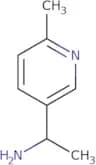
CAS:<p>Versatile small molecule scaffold</p>Formula:C10H17NO3Purezza:Min. 95%Peso molecolare:199.25 g/mol1-(6-Methylpyridin-3-yl)ethanamine
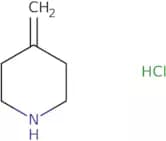
CAS:<p>Versatile small molecule scaffold</p>Formula:C8H12N2Purezza:Min. 95%Peso molecolare:136.19 g/mol4-Methylenepiperidine hydrochloride
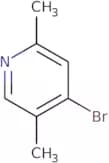
CAS:<p>4-Methylenepiperidine hydrochloride is a synthetic, ethylene oxide derivative that is used as an antifungal drug. It is also used in the synthesis of other compounds and as a reagent in organic chemistry. 4-Methylenepiperidine hydrochloride can be synthesized by reacting ethylene with an alkoxide, followed by adding a metal halide such as organolithium reagents to form the desired product. The yield rate of this reaction is high and it is easy to perform on a large scale.</p>Formula:C6H11N·HClPurezza:Min. 95%Colore e forma:White PowderPeso molecolare:133.62 g/mol4-Bromo-2,5-dimethylpyridine
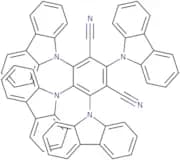
CAS:<p>4-Bromo-2,5-dimethylpyridine is an organic compound that belongs to the group of amino compounds. It is a potential intermediate in the synthesis of other compounds. 4-Bromo-2,5-dimethylpyridine can react with potassium to form 4-bromopyridine and 3-bromo-4-methylpyridine. It may also be used as a reactant in aminations and as an intermediate in the preparation of n-oxides.</p>Formula:C7H8BrNPurezza:Min. 95%Peso molecolare:186.05 g/mol2,4,5,6-Tetra(9H-carbazol-9-yl)isophthalonitrile
CAS:<p>2,4,5,6-Tetra(9H-carbazol-9-yl)isophthalonitrile is a redox molecule that emits light when excited by an electron or photon. It is used in organic light emitting devices (OLEDs) as the emissive material. This compound has been shown to have low chemical stability and limited transport properties. Its efficiency can be improved by increasing the concentration of the molecule. Activated 2,4,5,6-tetra(9H-carbazol-9-yl)isophthalonitrile emits a bright red orange emission with a maximum at 569 nm and it is activated by electron transfer from an electrode. 2,4,5,6-Tetra(9H-carbazol-9-yl)isophthalonitrile has been shown to emit blue light when excited by UV light in the presence of oxygen as an oxidant.</p>Formula:C56H32N6Purezza:Min. 98 Area-%Colore e forma:PowderPeso molecolare:788.89 g/molMethyl 6-oxospiro[3.3]heptane-2-carboxylate
CAS:<p>Versatile small molecule scaffold</p>Formula:C9H12O3Purezza:Min. 95%Peso molecolare:168.19 g/molSodium ethanethiolate
CAS:<p>Sodium ethanethiolate is a detergent composition that is used in the manufacturing of other detergents. It has a receptor binding mechanism and binds to the fatty acid component of the lipid bilayer. The hydroxyl group on the ethanethiolate molecule reacts with the hydrophobic region of the lipid bilayer, leading to disruption of membrane function. Sodium-dependent glucose transport is inhibited by sodium ethanethiolate, which also has metabolic disorders as a side effect. It is a bicyclic heterocycle and can be synthesized from p-hydroxybenzoic acid and trifluoroacetic acid. The chemical stability of this compound is high, making it useful for industrial applications.</p>Formula:C2H5NaSPurezza:(¹H-Nmr) Min. 90 Area-%Colore e forma:White PowderPeso molecolare:84.12 g/molSodium 4-hydroxybenzenesulfonate dihydrate
CAS:<p>Sodium 4-hydroxybenzenesulfonate dihydrate is a hydrogenated compound with reactive properties. It is used in the production of optical materials and is used to produce hydrogen peroxide, which is a strong oxidizing agent. Sodium 4-hydroxybenzenesulfonate dihydrate has been shown to react with calcium ions to form calcium sulfinates. The luminescence property of this compound can be enhanced by mixing it with other compounds such as x-ray diffraction study, functional groups, or hydrogen peroxide. The reaction time for the formation of sodium 4-hydroxybenzenesulfonate dihydrate can be shortened by adding anions such as sulfamic acid.</p>Formula:C6H5NaO4S·2H2OPurezza:Min. 95%Colore e forma:White To Off-White SolidPeso molecolare:232.19 g/mol5-amino-2-chloropyridin-4-ol
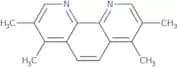
CAS:<p>Versatile small molecule scaffold</p>Formula:C5H5ClN2OPurezza:Min. 95%Peso molecolare:144.56 g/mol3,4,7,8-Tetramethyl-1,10-phenanthroline
CAS:<p>Metal-chelating agent</p>Formula:C16H16N2Purezza:Min. 98 Area-%Colore e forma:White PowderPeso molecolare:236.31 g/mol(1R,8S,9s)-Bicyclo[6.1.0]non-4-yn-9-ylmethanol
CAS:<p>(1R,8S,9s)-Bicyclo[6.1.0]non-4-yn-9-ylmethanol is a congener that belongs to the class of monoclonal antibodies. It is a degradable and photophysical agent that enhances ionotropic gelation and proton exchange in an acidic environment. This agent has been shown to react with nucleophilic groups, such as amines and thiols, and has fluorescence properties that are sensitive to pH changes. The reactive nature of this compound makes it useful for the localization of model proteins in analytical chemistry experiments.</p>Formula:C10H14OPurezza:Min. 95%Peso molecolare:150.22 g/mol


![2-boc-5-oxo-2-azabicyclo[2.2.2]octane](/_next/image/?url=https%3A%2Fstatic.cymitquimica.com%2Fproducts%2F3D%2Fthumb-webp%2FSZA71422.webp&w=3840&q=75)
![(R)-2-[(9H-Fluoren-9-ylmethoxycarbonylamino)-methyl]-butyric acid](/_next/image/?url=https%3A%2Fstatic.cymitquimica.com%2Fproducts%2F3D%2Fthumb-webp%2FSYB71157.webp&w=3840&q=75)
![5-Chloro-1H-pyrrolo[2,3-c]pyridine-3-carboxylic acid](/_next/image/?url=https%3A%2Fstatic.cymitquimica.com%2Fproducts%2F3D%2Fthumb-webp%2FSSB19336.webp&w=3840&q=75)

![Methyl 6-oxospiro[3.3]heptane-2-carboxylate](/_next/image/?url=https%3A%2Fstatic.cymitquimica.com%2Fproducts%2F3D%2Fthumb-webp%2FNVB48098.webp&w=3840&q=75)


![(1R,8S,9s)-Bicyclo[6.1.0]non-4-yn-9-ylmethanol](/_next/image/?url=https%3A%2Fstatic.cymitquimica.com%2Fproducts%2F3D%2Fthumb-webp%2FNAC16690.webp&w=3840&q=75)