Building Blocks
Questa sezione contiene prodotti fondamentali per la sintesi di composti organici e biologici. Building blocks sono i materiali di partenza essenziali utilizzati per costruire molecole complesse attraverso varie reazioni chimiche. Svolgono un ruolo critico nella scoperta di farmaci, nella scienza dei materiali e nella ricerca chimica. Presso CymitQuimica, offriamo una gamma diversificata di building blocks di alta qualità per supportare le tue ricerche innovative e progetti industriali, assicurandoti di avere i componenti essenziali per una sintesi di successo.
Sottocategorie di "Building Blocks"
- Acidi boronici e derivati dell'acido boronico(5.756 prodotti)
- Building Blocks Chirali(1.242 prodotti)
- Building Blocks Idrocarburici(6.095 prodotti)
- Building Blocks organici(61.055 prodotti)
Trovati 199650 prodotti di "Building Blocks"
Ordinare per
Purezza (%)
0
100
|
0
|
50
|
90
|
95
|
100
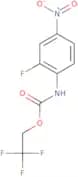
2,2,2-Trifluoroethyl N-(2-fluoro-4-nitrophenyl)carbamate
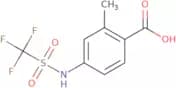
CAS:<p>Versatile small molecule scaffold</p>Formula:C9H6F4N2O4Purezza:Min. 95%Peso molecolare:282.15 g/mol2-Methyl-4-trifluoromethanesulfonamidobenzoic acid
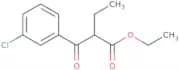
CAS:<p>Versatile small molecule scaffold</p>Formula:C9H8F3NO4SPurezza:Min. 95%Peso molecolare:283.23 g/molEthyl 2-(3-chlorobenzoyl)butanoate
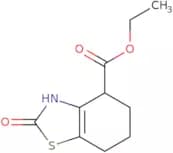
CAS:<p>Versatile small molecule scaffold</p>Formula:C13H15ClO3Purezza:Min. 95%Peso molecolare:254.71 g/molEthyl 2-hydroxy-4,5,6,7-tetrahydro-1,3-benzothiazole-4-carboxylate
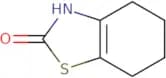
CAS:<p>Versatile small molecule scaffold</p>Formula:C10H13NO3SPurezza:Min. 95%Peso molecolare:227.28 g/mol2,3,4,5,6,7-Hexahydro-1,3-benzothiazol-2-one
CAS:<p>Versatile small molecule scaffold</p>Formula:C7H9NOSPurezza:Min. 95%Peso molecolare:155.22 g/mol2H,3H,4H,5H,6H,7H,8H-Cyclohepta[D][1,3]thiazol-2-one
CAS:<p>2H,3H,4H,5H,6H,7H,8H-Cyclohepta[D][1,3]thiazol-2-one is a synthetic compound that has been modified to produce various derivatives. It is used in the synthesis of oligosaccharides and polysaccharides. This chemical also has potential applications in the treatment of cancer and diabetes.</p>Formula:C8H11NOSPurezza:Min. 95%Peso molecolare:169.25 g/mol3-(1,3-Dioxo-2,3-dihydro-1H-isoindol-2-yl)propanethioamide
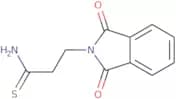
CAS:<p>Versatile small molecule scaffold</p>Formula:C11H10N2O2SPurezza:Min. 95%Peso molecolare:234.28 g/mol(2-Chloro-4-methylphenyl)thiourea
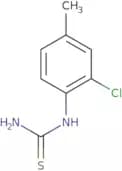
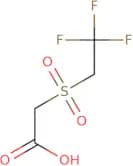
CAS:<p>Versatile small molecule scaffold</p>Formula:C8H9ClN2SPurezza:Min. 95%Peso molecolare:200.69 g/mol2-(2,2,2-Trifluoroethanesulfonyl)acetic acid
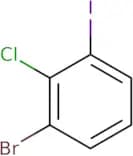
CAS:<p>Trifloxacin is a broad-spectrum antibacterial drug that belongs to the class of formyloxy compounds and the cephalosporin family. It has been shown to be active against both Gram-positive and Gram-negative bacteria, with activity against strains resistant to penicillin, ampicillin, erythromycin, and chloramphenicol. Trifloxacin binds to the bacterial ribosome by displacement of a pyridyl group in the ribosomal RNA, inhibiting protein synthesis. This binding inhibits cell growth by preventing the production of proteins that are vital for cell division.<br>br><br>Trifloxacin has also been found to inhibit DNA gyrase and topoisomerase IV in vitro. Trifloxacin's mechanism of action is similar to that of other quinolones such as norfloxacin and ciprofloxacin.</p>Formula:C4H5F3O4SPurezza:Min. 95%Peso molecolare:206.14 g/mol1-Bromo-2-chloro-3-iodobenzene
CAS:<p>Versatile small molecule scaffold</p>Formula:C6H3BrClIPurezza:Min. 95%Peso molecolare:317.35 g/mol4-Chloro-[1,1'-biphenyl]-3-amine
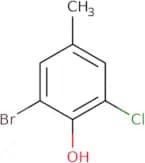
CAS:<p>Versatile small molecule scaffold</p>Formula:C12H10ClNPurezza:Min. 95%Peso molecolare:203.67 g/mol2-Bromo-6-chloro-4-methylphenol
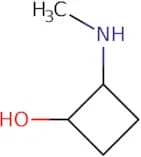
CAS:<p>Versatile small molecule scaffold</p>Formula:C7H6BrClOPurezza:Min. 95%Peso molecolare:221.48 g/molTrans-2-(methylamino)cyclobutan-1-ol
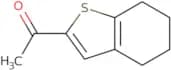
CAS:<p>Versatile small molecule scaffold</p>Formula:C5H11NOPurezza:Min. 95%Peso molecolare:101.15 g/mol1-(4,5,6,7-Tetrahydro-1-benzothiophen-2-yl)ethan-1-one
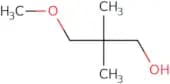
CAS:<p>Versatile small molecule scaffold</p>Formula:C10H12OSPurezza:Min. 95%Peso molecolare:180.27 g/mol3-Methoxy-2,2-dimethylpropan-1-ol
CAS:<p>3-Methoxy-2,2-dimethylpropan-1-ol is an experimental chemical that belongs to the group of cations. It has a transition state with yields of 1.0 kcal/mol and a molecular ion peak at m/z = 143. The spectra of 3-methoxy-2,2-dimethylpropan-1-ol show methoxy as the primary methyl group and an energetics of -3.3 kcal/mol. 3-Methoxy-2,2-dimethylpropan-1-ol can be used for fragmentation reactions. It also has been shown to form isomers by substituting the methoxy group on either side of the methyl group on the propane chain and it has a metastable isomeric form that can be observed in mass spectrometry. 3-Methoxypropane can also be used in transfer reactions to produce isobutene which is an isomeric</p>Formula:C6H14O2Purezza:Min. 95%Peso molecolare:118.17 g/mol2-(2-Bromoethyl)phenol
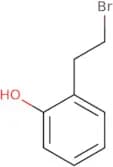
CAS:<p>Versatile small molecule scaffold</p>Formula:C8H9BrOPurezza:Min. 95%Peso molecolare:201.06 g/molMethyl 1-Methyl-1H-1,2,4-triazole-5-carboxylate
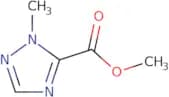
CAS:<p>Versatile small molecule scaffold</p>Formula:C5H7N3O2Purezza:Min. 95%Peso molecolare:141.13 g/mol1-{Bicyclo[2.2.2]octan-1-yl}ethan-1-one
CAS:<p>Versatile small molecule scaffold</p>Formula:C10H16OPurezza:Min. 95%Peso molecolare:152.23 g/mol[3-(Hydroxymethyl)quinolin-2-yl]methanol
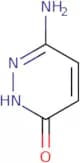
CAS:<p>Versatile small molecule scaffold</p>Formula:C11H11NO2Purezza:Min. 95%Peso molecolare:189.21 g/mol6-Aminopyridazin-3(2H)-one
CAS:<p>6-Aminopyridazin-3(2H)-one is a chemical that belongs to the class of pyrazoles. It is non-toxic, has low solubility in water, and has not been shown to react with any other substances. It is a yellow solid that can be found in nature as an intermediate in the metabolism of amino acids. 6-Aminopyridazin-3(2H)-one can be used for screening purposes or research purposes.</p>Formula:C4H5N3OPurezza:Min. 95%Peso molecolare:111.1 g/mol

![2H,3H,4H,5H,6H,7H,8H-Cyclohepta[D][1,3]thiazol-2-one](/_next/image/?url=https%3A%2Fstatic.cymitquimica.com%2Fproducts%2F3D%2Fthumb-webp%2FHCA00116.webp&w=3840&q=75)
![4-Chloro-[1,1'-biphenyl]-3-amine](/_next/image/?url=https%3A%2Fstatic.cymitquimica.com%2Fproducts%2F3D%2Fthumb-webp%2FHCA01394.webp&w=3840&q=75)
![1-{Bicyclo[2.2.2]octan-1-yl}ethan-1-one](/_next/image/?url=https%3A%2Fstatic.cymitquimica.com%2Fproducts%2F3D%2Fthumb-webp%2FHCA03201.webp&w=3840&q=75)
![[3-(Hydroxymethyl)quinolin-2-yl]methanol](/_next/image/?url=https%3A%2Fstatic.cymitquimica.com%2Fproducts%2F3D%2Fthumb-webp%2FHCA03214.webp&w=3840&q=75)