Building Blocks
Questa sezione contiene prodotti fondamentali per la sintesi di composti organici e biologici. Building blocks sono i materiali di partenza essenziali utilizzati per costruire molecole complesse attraverso varie reazioni chimiche. Svolgono un ruolo critico nella scoperta di farmaci, nella scienza dei materiali e nella ricerca chimica. Presso CymitQuimica, offriamo una gamma diversificata di building blocks di alta qualità per supportare le tue ricerche innovative e progetti industriali, assicurandoti di avere i componenti essenziali per una sintesi di successo.
Sottocategorie di "Building Blocks"
- Acidi boronici e derivati dell'acido boronico(5.756 prodotti)
- Building Blocks Chirali(1.242 prodotti)
- Building Blocks Idrocarburici(6.095 prodotti)
- Building Blocks organici(61.055 prodotti)
Trovati 199650 prodotti di "Building Blocks"
Ordinare per
Purezza (%)
0
100
|
0
|
50
|
90
|
95
|
100
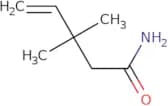
3,3-Dimethylpent-4-enamide
CAS:<p>Versatile small molecule scaffold</p>Formula:C7H13NOPurezza:Min. 95%Peso molecolare:127.18 g/mol6,8-Dimethyl-3H,4H-imidazo[1,5-a][1,3,5]triazin-4-one
CAS:6,8-dimethyl-3H,4H-imidazo[1,5-a][1,3,5]triazin-4-one is a cytotoxic compound that binds to chloride anions in the cell membrane and causes disruption of the ionic equilibrium. It also binds to human cells by coordinating with the anionic sites on the cell surface. This drug has been shown to inhibit growth and induce apoptosis in bladder cancer cells. 6,8-Dimethyl-3H,4H-imidazo[1,5-a][1,3,5]triazin-4-one also inhibits tumor growth in mice transplanted with human bladder cancer cells. The drug works by binding to DNA bases and causing crosslinking of DNA chains. This leads to inhibition of RNA synthesis and protein synthesis.Formula:C7H8N4OPurezza:Min. 95%Peso molecolare:164.16 g/molMethyl 4-pyridylacetate hydrochloride
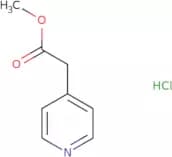
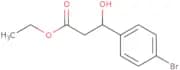
CAS:<p>Versatile small molecule scaffold</p>Formula:C8H9NO2·HClPurezza:Min. 95%Peso molecolare:187.63 g/molEthyl 3-(4-bromophenyl)-3-hydroxypropanoate
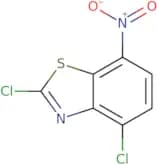
CAS:<p>Versatile small molecule scaffold</p>Formula:C11H13BrO3Purezza:Min. 95%Peso molecolare:273.12 g/mol2,4-Dichloro-7-nitro-1,3-benzothiazole
CAS:<p>Versatile small molecule scaffold</p>Formula:C7H2Cl2N2O2SPurezza:Min. 95%Peso molecolare:249.07 g/mol1-[2-(Ethylsulfanyl)phenyl]ethan-1-one
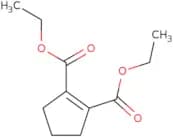
CAS:<p>Versatile small molecule scaffold</p>Formula:C10H12OSPurezza:Min. 95%Peso molecolare:180.27 g/mol1,2-Diethyl cyclopent-1-ene-1,2-dicarboxylate
CAS:<p>Versatile small molecule scaffold</p>Formula:C11H16O4Purezza:Min. 95%Peso molecolare:212.24 g/mol2-[(Pyridin-3-ylmethyl)-amino]-ethanol
CAS:<p>2-[(Pyridin-3-ylmethyl)-amino]-ethanol is the methanol analogue of the coordination compound 2-[(pyridin-2-ylmethyl)-amino]-ethanol. The molecule has a chain structure, with two coordination bonds and a total of six atoms. It is a dimeric molecule that can be polymerized to form polymers. The structure is metallic with antiferromagnetic coupling between the two metal centers, which can be assembled into larger structures. This compound interacts with other molecules at the coordinated sites where it binds. Magnetism results from the unpaired electron spins on each metal center and from spin-spin interactions between these centers.</p>Formula:C8H12N2OPurezza:Min. 95%Peso molecolare:152.19 g/mol9-Ethyl-9H-carbazole-3,6-dicarbaldehyde
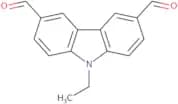
CAS:<p>9-Ethyl-9H-carbazole-3,6-dicarbaldehyde (9ECDA) is a fluorescent molecule that has been shown to have anticholinesterase activity. This compound is being developed for the treatment of cervical cancer and other cancers. 9ECDA is synthesized by reacting 2,4,5,6-tetrafluorobenzaldehyde with excess ethyl acetoacetate in the presence of sodium methoxide. 9ECDA can be used as a fluorescent probe for the detection of anions in water. This compound also has optical properties that are dependent on its anion conjugation state. The fluorescence of 9ECDA is quenched when it binds to butyrylcholinesterase and other anionic binding sites.</p>Formula:C16H13NO2Purezza:Min. 95%Peso molecolare:251.28 g/molSodium 5-chloro-4-methyl-2-nitrobenzene-1-sulfonate
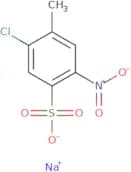
CAS:<p>Versatile small molecule scaffold</p>Formula:C7H5ClNNaO5SPurezza:Min. 95%Peso molecolare:273.63 g/mol2-(1-Phenylcyclopentyl)acetic acid
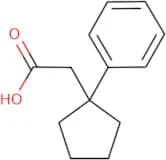
CAS:<p>Versatile small molecule scaffold</p>Formula:C13H16O2Purezza:Min. 95%Peso molecolare:204.26 g/mol2-(Trifluoromethyl)-1,3-oxathiolan-2-amine
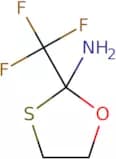
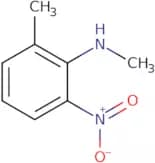
CAS:<p>Versatile small molecule scaffold</p>Formula:C4H6F3NOSPurezza:Min. 95%Peso molecolare:173.16 g/molN,2-Dimethyl-6-nitroaniline
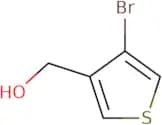
CAS:<p>Versatile small molecule scaffold</p>Formula:C8H10N2O2Purezza:Min. 95%Peso molecolare:166.18 g/mol3-Bromo-4-(hydroxymethyl)thiophene
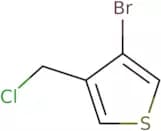
CAS:<p>Versatile small molecule scaffold</p>Formula:C5H5BrOSPurezza:Min. 95%Peso molecolare:193.06 g/mol3-Bromo-4-(chloromethyl)thiophene
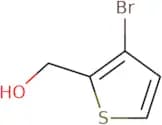
CAS:<p>Versatile small molecule scaffold</p>Formula:C5H4BrClSPurezza:Min. 95%Peso molecolare:211.51 g/mol(3-Bromothiophen-2-yl)methanol
CAS:<p>(3-Bromothiophen-2-yl)methanol is a reactive, hydrocarbon group that can be used in the synthesis of natural products. It is a synthetic product, and it has been shown to react with sulfur to form a molecule. (3-Bromothiophen-2-yl)methanol is an innovative, natural product that can be used in the synthesis of polymers. This product also reacts with ammonia to form a tetracyclic compound. The optical properties of (3-bromothiophen-2-yl)methanol are recording and hydrocarbon.</p>Formula:C5H5BrOSPurezza:Min. 95%Peso molecolare:193.06 g/mol6-[(Oxiran-2-yl)methoxy]-1H-indole
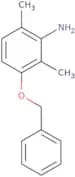
CAS:<p>Versatile small molecule scaffold</p>Formula:C11H11NO2Purezza:Min. 95%Peso molecolare:189.21 g/mol3-(Benzyloxy)-2,6-dimethylaniline
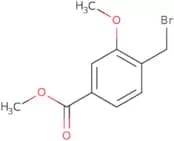
CAS:<p>Versatile small molecule scaffold</p>Formula:C15H17NOPurezza:Min. 95%Peso molecolare:227.3 g/molMethyl 4-(bromomethyl)-3-methoxybenzoate
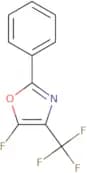
CAS:<p>Versatile small molecule scaffold</p>Formula:C10H11BrO3Purezza:Min. 95%Peso molecolare:259.1 g/mol5-Fluoro-2-phenyl-4-(trifluoromethyl)-1,3-oxazole
CAS:<p>Versatile small molecule scaffold</p>Formula:C10H5F4NOPurezza:Min. 95%Peso molecolare:231.15 g/mol

![6,8-Dimethyl-3H,4H-imidazo[1,5-a][1,3,5]triazin-4-one](/_next/image/?url=https%3A%2Fstatic.cymitquimica.com%2Fproducts%2F3D%2Fthumb-webp%2FVCA18782.webp&w=3840&q=75)
![1-[2-(Ethylsulfanyl)phenyl]ethan-1-one](/_next/image/?url=https%3A%2Fstatic.cymitquimica.com%2Fproducts%2F3D%2Fthumb-webp%2FVCA20155.webp&w=3840&q=75)
![2-[(Pyridin-3-ylmethyl)-amino]-ethanol](/_next/image/?url=https%3A%2Fstatic.cymitquimica.com%2Fproducts%2F3D%2Fthumb-webp%2FVCA20651.webp&w=3840&q=75)
![6-[(Oxiran-2-yl)methoxy]-1H-indole](/_next/image/?url=https%3A%2Fstatic.cymitquimica.com%2Fproducts%2F3D%2Fthumb-webp%2FVCA26093.webp&w=3840&q=75)