Building Blocks
Questa sezione contiene prodotti fondamentali per la sintesi di composti organici e biologici. Building blocks sono i materiali di partenza essenziali utilizzati per costruire molecole complesse attraverso varie reazioni chimiche. Svolgono un ruolo critico nella scoperta di farmaci, nella scienza dei materiali e nella ricerca chimica. Presso CymitQuimica, offriamo una gamma diversificata di building blocks di alta qualità per supportare le tue ricerche innovative e progetti industriali, assicurandoti di avere i componenti essenziali per una sintesi di successo.
Sottocategorie di "Building Blocks"
- Acidi boronici e derivati dell'acido boronico(5.778 prodotti)
- Building Blocks Chirali(1.243 prodotti)
- Building Blocks Idrocarburici(6.097 prodotti)
- Building Blocks organici(61.048 prodotti)
Trovati 203115 prodotti di "Building Blocks"
Ordinare per
Purezza (%)
0
100
|
0
|
50
|
90
|
95
|
100
2-({1-[(tert-Butoxy)carbonyl]pyrrolidin-3-yl}amino)acetic acid
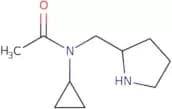
CAS:Versatile small molecule scaffoldFormula:C11H20N2O4Purezza:Min. 95%Peso molecolare:244.29 g/molN-Cyclopropyl-N-(pyrrolidin-2-ylmethyl)acetamide
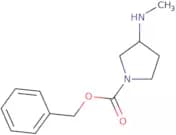
CAS:Versatile small molecule scaffoldFormula:C10H18N2OPurezza:Min. 95%Peso molecolare:182.26 g/molBenzyl 3-(methylamino)pyrrolidine-1-carboxylate
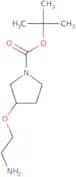
CAS:Versatile small molecule scaffoldFormula:C13H18N2O2Purezza:Min. 95%Peso molecolare:234.29 g/mol3-(2-Amino-ethoxy)-pyrrolidine-1-carboxylic acid tert-butyl ester
CAS:Versatile small molecule scaffoldFormula:C11H22N2O3Purezza:Min. 95%Peso molecolare:230.31 g/mol[1-(2-Aminoethyl)pyrrolidin-3-yl]methanol
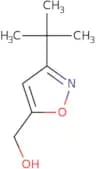
CAS:Versatile small molecule scaffoldFormula:C7H16N2OPurezza:Min. 95%Peso molecolare:144.21 g/mol(3-tert-Butyl-1,2-oxazol-5-yl)methanol
CAS:Versatile small molecule scaffoldFormula:C8H13NO2Purezza:Min. 95%Peso molecolare:155.19 g/mol1-[3-(Chloromethyl)-4-ethoxyphenyl]ethan-1-one
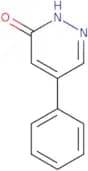
CAS:Versatile small molecule scaffoldFormula:C11H13ClO2Purezza:Min. 95%Peso molecolare:212.67 g/mol5-Phenyl-2,3-dihydropyridazin-3-one
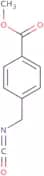
CAS:Versatile small molecule scaffoldFormula:C10H8N2OPurezza:Min. 95%Peso molecolare:172.18 g/molMethyl 4-(isocyanatomethyl)benzoate
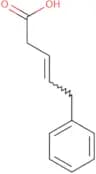
CAS:<p>Versatile small molecule scaffold</p>Formula:C10H9NO3Purezza:Min. 95%Peso molecolare:191.18 g/mol(3E)-5-Phenylpent-3-enoic acid
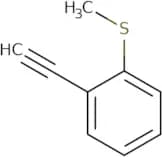
CAS:<p>Versatile small molecule scaffold</p>Formula:C11H12O2Purezza:Min. 95%Peso molecolare:176.21 g/mol1-Ethynyl-2-(methylsulfanyl)benzene
CAS:1-Ethynyl-2-(methylsulfanyl)benzene is a potent antioxidant. It has been shown to have antimicrobial activity against both Gram-positive and Gram-negative bacteria, as well as antifungal activity against both mold and yeast. 1-Ethynyl-2-(methylsulfanyl)benzene has been shown to inhibit the growth of S. aureus and E. coli in vitro, having an IC50 of less than 0.1 μg/mL. This compound also inhibits the growth of Bacillus subtilis and B. cereus, with IC50 values of 0.5 and 0.06 μg/mL respectively, but is not active against Escherichia coli or Pseudomonas aeruginosa at concentrations up to 200 μg/mL.Formula:C9H8SPurezza:Min. 95%Peso molecolare:148.23 g/molMethyl 5-methyl-1H-imidazole-4-carboxylate hydrochloride
CAS:Versatile small molecule scaffoldFormula:C6H9ClN2O2Purezza:Min. 95%Peso molecolare:176.6 g/mol4-[(2,6-Dimethylphenyl)methyl]-1H-imidazole hydrochloride
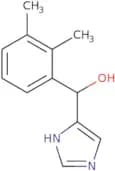
CAS:Versatile small molecule scaffoldFormula:C12H15ClN2Purezza:Min. 95%Peso molecolare:222.71 g/mol(2,3-dimethylphenyl)(1H-imidazol-5-yl)methanol
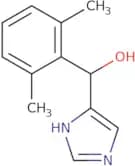
CAS:Versatile small molecule scaffoldFormula:C12H14N2OPurezza:Min. 95%Peso molecolare:202.25 g/mol(2,6-Dimethylphenyl)(1H-imidazol-4-yl)methanol
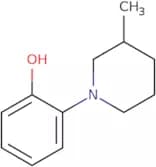
CAS:<p>Versatile small molecule scaffold</p>Formula:C12H14N2OPurezza:Min. 95%Peso molecolare:202.26 g/mol2-(3-Methylpiperidin-1-yl)phenol
CAS:<p>Versatile small molecule scaffold</p>Formula:C12H17NOPurezza:Min. 95%Peso molecolare:191.27 g/mol3-[5-(4-Chlorophenyl)-1,3,4-oxadiazol-2-yl]propanoic acid
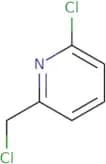
CAS:Versatile small molecule scaffoldFormula:C11H9ClN2O3Purezza:Min. 95%Peso molecolare:252.65 g/mol2-Chloro-6-(chloromethyl)pyridine
CAS:<p>2-Chloro-6-(chloromethyl)pyridine (2C6CP) is a chloride precursor that can be used for the synthesis of metal chlorides, such as copper chlorides. 2C6CP is synthesized by reacting thionyl chloride with the substituted pyridine under anhydrous conditions at -78°C. The resultant 2C6CP is then hydrolyzed to produce the desired chloride.<br>2C6CP has been shown to act as a ligand in coordination chemistry. It was first synthesized by reacting 3-chloropyridine with thionyl chloride and then hydrolyzing it to 2-chloropyridine. This method was later modified to use 4-chlorobenzoyl chloride instead of 3-chloropyridine, producing 2,4-dichloropyridine.</p>Formula:C6H5Cl2NPurezza:Min. 95%Peso molecolare:162.02 g/mol4-(Benzylsulfanyl)benzaldehyde
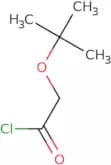
CAS:<p>Benzylsulfanylbenzaldehyde is a benzyl derivative that has been studied for its optical properties and electronic structures. The sulfur atom in this molecule is replaced with an electron-donating group, which gives the molecule a positive charge. This change also makes the substituent more polar and thus increases its ability to interact with other molecules. Substituents are groups attached to benzene rings in order to modify their chemical or physical properties. Chromophores are groups of atoms that absorb light and can be used to identify substances by their color. Electron withdrawing groups cause the dipole moment of the molecule to increase, while electron donating groups have the opposite effect on the dipole moment.</p>Formula:C14H12OSPurezza:Min. 95%Peso molecolare:228.31 g/mol2-(tert-Butoxy)acetyl chloride
CAS:Versatile small molecule scaffoldFormula:C6H11ClO2Purezza:Min. 95%Peso molecolare:150.6 g/mol
![2-({1-[(tert-Butoxy)carbonyl]pyrrolidin-3-yl}amino)acetic acid](/_next/image/?url=https%3A%2Fstatic.cymitquimica.com%2Fproducts%2F3D%2Fthumb-webp%2FDEC97396.webp&w=3840&q=75)

![[1-(2-Aminoethyl)pyrrolidin-3-yl]methanol](/_next/image/?url=https%3A%2Fstatic.cymitquimica.com%2Fproducts%2F3D%2Fthumb-webp%2FDEC96574.webp&w=3840&q=75)
![1-[3-(Chloromethyl)-4-ethoxyphenyl]ethan-1-one](/_next/image/?url=https%3A%2Fstatic.cymitquimica.com%2Fproducts%2F3D%2Fthumb-webp%2FDDA92773.webp&w=3840&q=75)

![4-[(2,6-Dimethylphenyl)methyl]-1H-imidazole hydrochloride](/_next/image/?url=https%3A%2Fstatic.cymitquimica.com%2Fproducts%2F3D%2Fthumb-webp%2FDDA89245.webp&w=3840&q=75)
![3-[5-(4-Chlorophenyl)-1,3,4-oxadiazol-2-yl]propanoic acid](/_next/image/?url=https%3A%2Fstatic.cymitquimica.com%2Fproducts%2F3D%2Fthumb-webp%2FDDA85861.webp&w=3840&q=75)