Building Blocks
Questa sezione contiene prodotti fondamentali per la sintesi di composti organici e biologici. Building blocks sono i materiali di partenza essenziali utilizzati per costruire molecole complesse attraverso varie reazioni chimiche. Svolgono un ruolo critico nella scoperta di farmaci, nella scienza dei materiali e nella ricerca chimica. Presso CymitQuimica, offriamo una gamma diversificata di building blocks di alta qualità per supportare le tue ricerche innovative e progetti industriali, assicurandoti di avere i componenti essenziali per una sintesi di successo.
Sottocategorie di "Building Blocks"
- Acidi boronici e derivati dell'acido boronico(5.778 prodotti)
- Building Blocks Chirali(1.243 prodotti)
- Building Blocks Idrocarburici(6.097 prodotti)
- Building Blocks organici(61.048 prodotti)
Trovati 203115 prodotti di "Building Blocks"
Ordinare per
Purezza (%)
0
100
|
0
|
50
|
90
|
95
|
100
spiro[2.5]octane-1-carboxylic acid
CAS:<p>Versatile small molecule scaffold</p>Formula:C9H14O2Purezza:Min. 95%Peso molecolare:154.2 g/molSpiro[2.5]oct-1-ylamine hydrochloride
CAS:<p>Versatile small molecule scaffold</p>Formula:C8H15N·HClPurezza:Min. 95%Peso molecolare:161.67 g/molSpiro[2.4]heptane-1-carboxylic acid
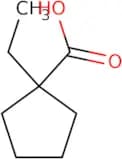
CAS:<p>Versatile small molecule scaffold</p>Formula:C8H12O2Purezza:Min. 95%Peso molecolare:140.18 g/mol1-Ethylcyclopentane-1-carboxylic acid
CAS:<p>Versatile small molecule scaffold</p>Formula:C8H14O2Purezza:Min. 95%Peso molecolare:142.2 g/molN-(3-Methoxyphenyl)prop-2-enamide
CAS:<p>Versatile small molecule scaffold</p>Formula:C10H11NO2Purezza:Min. 95%Peso molecolare:177.2 g/mol4-Methoxy-2-pyridinecarboxylic acid N-oxide
CAS:4-Methoxy-2-pyridinecarboxylic acid N-oxide is a ligand that can form complexes with proton, which is an organic solvent. It has been shown to be able to form ternary complex formation with picolinic acid and a variety of acceptors. 4-Methoxy-2-pyridinecarboxylic acid N-oxide has been shown to catalyze the transfer reactions of hydride and catalysis.Formula:C7H7NO4Purezza:Min. 95%Peso molecolare:169.13 g/mol2-Phenylpent-4-en-1-amine
CAS:Prodotto controllato2-Phenylpent-4-en-1-amine is an organic compound that is synthesized by the bond cleavage of an amine and a terminal alkyne. It has been used in ligand design, which is the process of creating molecules to bind to a specific biological target. 2-Phenylpent-4-en-1-amine can be used as a chiral catalyst for asymmetric synthesis, making it enantiopure and optically active. The crystal structure of 2-phenylpentaene was determined by X-ray crystallography, which revealed that it has a c–h bond between its two phenyl groups. This bond may have been formed from an interaction with zirconium.Formula:C11H15NPurezza:Min. 95%Peso molecolare:161.24 g/mol2-Chloro-3,4-dihydronaphthalen-1(2H)-one
CAS:<p>2-Chloro-3,4-dihydronaphthalen-1(2H)-one is a sulfoxide with significant antifungal activity. It has been shown to be effective against Candida albicans and other fungi, including Aspergillus niger and Mucor racemosus. It is commonly used as an electrolyte in electroluminescent devices, such as light emitting diodes (LEDs). The reaction time for the formation of 2-chloro-3,4-dihydronaphthalen-1(2H)-one from potassium sulfate is dependent on the acid catalyst used. Organic chemists have shown that the use of 2-chloro-3,4-dihydronaphthalen-1(2H)-one can inhibit leukotriene synthesis.</p>Formula:C10H9OClPurezza:Min. 95%Peso molecolare:180.63 g/mol1,3-Bis(1-naphthalenyloxy)-2-propanol
CAS:<p>1,3-Bis(1-naphthalenyloxy)-2-propanol is a solvated molecule with 1,3-diphenylpropane as the solvent. It has a basicity of 5.4 and an entropy of -10.5 J mol(-1) K(-1). The solubility of 1,3-bis(1-naphthalenyloxy)-2-propanol in organic solvents ranges from 0.03 to 10 g/L. This compound is soluble in acetone, methanol, ethanol and toluene. The experimentally determined enthalpy of vaporization for 1,3-bis(1-naphthalenyloxy)-2-propanol was found to be -12 J mol(-1) K(-1).</p>Formula:C23H20O3Purezza:Min. 95%Peso molecolare:344.4 g/mol5-Ethyl-2,2-dimethyl-1,3-dioxane-4,6-dione
CAS:Versatile small molecule scaffoldFormula:C8H12O4Purezza:Min. 95%Peso molecolare:172.18 g/mol2-(2,2,3,3-Tetramethylcyclopropyl)acetic acid
CAS:<p>Versatile small molecule scaffold</p>Formula:C9H16O2Purezza:Min. 95%Peso molecolare:156.22 g/mol8-chloro-2-methyl-2,3,4,5-tetrahydro-1H-pyrido[4,3-b]indole
CAS:<p>Versatile small molecule scaffold</p>Formula:C12H13ClN2Purezza:Min. 95%Peso molecolare:220.7 g/mol9H-Carbazol-9-amine
CAS:9H-Carbazol-9-amine is an amine used as a fluorescent probe in the study of Alzheimer's disease. It has been shown to quench fluorescence from other substances, and can be used to detect the presence of chloride ions. 9H-Carbazol-9-amine has been shown to bind to DNA via hydrogen bonding, which may help elucidate the mechanism by which it inhibits the production of amyloid beta peptides and prevents neuronal cell death. 9H-Carbazol-9-amine is also a cholinergic agent that binds to acetylcholine receptors on nerve cells and increases their activity.Formula:C12H10N2Purezza:Min. 95%Peso molecolare:182.22 g/molN-Methyl-1H-benzo[d]imidazol-2-amine
CAS:N-Methyl-1H-benzo[d]imidazol-2-amine is a drug that has analgesic and antiinflammatory effects. It is used in the treatment of pain, inflammation, or fever. This active form has been shown to inhibit prostaglandin synthesis by oxidizing cyclooxygenase. N-Methyl-1H-benzo[d]imidazol-2-amine also inhibits the synthesis of inflammatory mediators such as leukotrienes and prostaglandins. The compound has significant activity against carrageenan induced paw edema in rats. The oral bioavailability of this compound is high and it can be taken orally with no adverse side effects.Formula:C8H9N3Purezza:Min. 95%Peso molecolare:147.18 g/mol2-(4-Nitrophenyl)thiazole-4-carboxylic acid
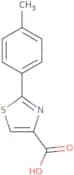
CAS:Versatile small molecule scaffoldFormula:C10H6N2O4SPurezza:Min. 95%Peso molecolare:250.23 g/mol2-(4-Methylphenyl)-1,3-thiazole-4-carboxylic acid
CAS:2-(4-Methylphenyl)-1,3-thiazole-4-carboxylic acid is a chlorinated compound that has been shown to have anticancer activity. It is structurally modified to increase its potency and has been shown to inhibit cancer cell proliferation in vitro. 2-(4-Methylphenyl)-1,3-thiazole-4-carboxylic acid has been used in the treatment for breast cancer and prostate cancer. This drug also has anticancer effects on the mcf7 cell line, which is an immortalized human mammary epithelial cell line. The mechanism of action of this drug is very similar to that of other anticancer agents: inhibiting DNA synthesis by interfering with DNA replication or by inducing apoptosis.Formula:C11H9NO2SPurezza:Min. 95%Peso molecolare:219.26 g/mol2-[(3,5-Dichlorophenyl)sulfanyl]acetic acid
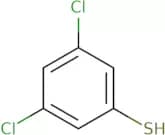
CAS:Versatile small molecule scaffoldFormula:C8H6Cl2O2SPurezza:Min. 95%Peso molecolare:237.1 g/mol3,5-Dichlorothiophenol
CAS:3,5-Dichlorothiophenol is a potent inhibitor of the enzyme acetylcholinesterase. As an inhibitor of the enzyme, it blocks the breakdown of acetylcholine and leads to accumulation of acetylcholine at nerve endings. This can lead to death by asphyxiation. Acetylcholinesterase inhibitors such as 3,5-dichlorothiophenol are used in insecticides and chemical warfare agents. 3,5-Dichlorothiophenol has been shown to inhibit the enzyme acetycholinesterase in a dose-dependent manner in vitro with an IC50 of 8 μM. It has also been shown that 3,5-dichlorothiophenol can be used in surface-enhanced Raman spectroscopy (SERS) for detection of metal ions on surfaces.Formula:C6H4Cl2SPurezza:Min. 95%Peso molecolare:179.07 g/mol2,3-Dichlorobenzenethiol
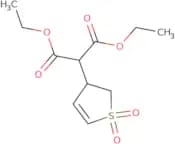
CAS:<p>2,3-Dichlorobenzenethiol is an organic compound that is used as a reagent in the synthesis of polymers. It inhibits HIV infection by inhibiting viral replication through the inhibition of reverse transcriptase and protease enzymes. This chemical has been used as a standard in analytical methods for estimating the inhibitory effect of substances on these enzymes. 2,3-Dichlorobenzenethiol also has an inhibitory effect on cyclohexane ring formation and polymerization initiation. It is also an important intermediate for the synthesis of naphthalene.</p>Formula:C6H4Cl2SPurezza:Min. 95%Peso molecolare:179.06 g/mol1,3-Diethyl 2-(1,1-dioxo-2,3-dihydro-1λ⁶-thiophen-3-yl)propanedioate
CAS:<p>Versatile small molecule scaffold</p>Formula:C11H16O6SPurezza:Min. 95%Peso molecolare:276.31 g/mol
![spiro[2.5]octane-1-carboxylic acid](/_next/image/?url=https%3A%2Fstatic.cymitquimica.com%2Fproducts%2F3D%2Fthumb-webp%2FSAA20286.webp&w=3840&q=75)

![Spiro[2.5]oct-1-ylamine hydrochloride](/_next/image/?url=https%3A%2Fstatic.cymitquimica.com%2Fproducts%2F3D%2Fthumb-webp%2FSAA20291.webp&w=3840&q=75)
![Spiro[2.4]heptane-1-carboxylic acid](/_next/image/?url=https%3A%2Fstatic.cymitquimica.com%2Fproducts%2F3D%2Fthumb-webp%2FSAA20294.webp&w=3840&q=75)


![8-chloro-2-methyl-2,3,4,5-tetrahydro-1H-pyrido[4,3-b]indole](/_next/image/?url=https%3A%2Fstatic.cymitquimica.com%2Fproducts%2F3D%2Fthumb-webp%2FSAA22345.webp&w=3840&q=75)

![N-Methyl-1H-benzo[d]imidazol-2-amine](/_next/image/?url=https%3A%2Fstatic.cymitquimica.com%2Fproducts%2F3D%2Fthumb-webp%2FSAA22838.webp&w=3840&q=75)

![2-[(3,5-Dichlorophenyl)sulfanyl]acetic acid](/_next/image/?url=https%3A%2Fstatic.cymitquimica.com%2Fproducts%2F3D%2Fthumb-webp%2FSAA23193.webp&w=3840&q=75)