Building Blocks
Questa sezione contiene prodotti fondamentali per la sintesi di composti organici e biologici. Building blocks sono i materiali di partenza essenziali utilizzati per costruire molecole complesse attraverso varie reazioni chimiche. Svolgono un ruolo critico nella scoperta di farmaci, nella scienza dei materiali e nella ricerca chimica. Presso CymitQuimica, offriamo una gamma diversificata di building blocks di alta qualità per supportare le tue ricerche innovative e progetti industriali, assicurandoti di avere i componenti essenziali per una sintesi di successo.
Sottocategorie di "Building Blocks"
- Acidi boronici e derivati dell'acido boronico(5.778 prodotti)
- Building Blocks Chirali(1.243 prodotti)
- Building Blocks Idrocarburici(6.097 prodotti)
- Building Blocks organici(61.048 prodotti)
Trovati 203115 prodotti di "Building Blocks"
Ordinare per
Purezza (%)
0
100
|
0
|
50
|
90
|
95
|
100
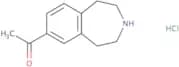
1-(2,3,4,5-Tetrahydro-1H-3-benzazepin-7-yl)ethan-1-one hydrochloride
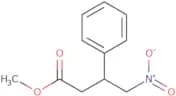
CAS:Versatile small molecule scaffoldFormula:C12H16ClNOPurezza:Min. 95%Peso molecolare:225.71 g/molMethyl 4-nitro-3-phenylbutanoate
CAS:<p>Methyl 4-nitro-3-phenylbutanoate is a nitro compound that is used as a reagent for the silylation of phenols. It is also used in the synthesis of functionalized aliphatic nitro compounds and has been found to be able to eliminate certain nitrosamines. Methyl 4-nitro-3-phenylbutanoate is an aliphatic, nitro compound with conjugated stereochemistry.</p>Formula:C11H13NO4Purezza:Min. 95%Peso molecolare:223.22 g/molPentamethylphenylacetonitrile
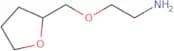
CAS:<p>Pentamethylphenylacetonitrile (PMP) is an aldehyde that is used as a reagent in the synthesis of other chemical compounds. It is also used in the preparation of phase transfer catalysts. PMP is typically available as a white powder and can be dissolved in organic solvents such as acetone or benzene. The chemical properties of PMP are similar to those of other aldehydes, including its susceptibility to oxidation, which can lead to the formation of carboxylic acids.</p>Formula:C13H17NPurezza:Min. 95%Peso molecolare:187.28 g/mol2-(Tetrahydro-2-furanylmethoxy)-1-ethanamine
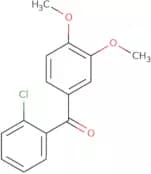
CAS:<p>Versatile small molecule scaffold</p>Formula:C7H15NO2Purezza:Min. 95%Peso molecolare:145.2 g/mol(2-Chlorophenyl)(3,4-dimethoxyphenyl)methanone
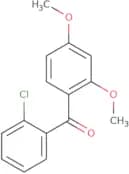
CAS:Versatile small molecule scaffoldFormula:C15H13ClO3Purezza:Min. 95%Peso molecolare:276.71 g/mol(2-Chlorophenyl)(2,4-dimethoxyphenyl)methanone
CAS:<p>Versatile small molecule scaffold</p>Formula:C15H13ClO3Purezza:Min. 95%Peso molecolare:276.71 g/mol2-{[(3-Methylphenyl)methyl]sulfanyl}acetic acid
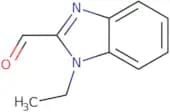
CAS:Versatile small molecule scaffoldFormula:C10H12O2SPurezza:Min. 95%Peso molecolare:196.27 g/mol1-Ethyl-1H-benzoimidazole-2-carbaldehyde
CAS:1-Ethyl-1H-benzoimidazole-2-carbaldehyde is a nonspecific heteroaromatic compound that has been shown to be sensitive to solvation. The conformers of this molecule have been determined by intramolecular sensitivity and regression analysis. This molecule is an intramolecular heteroaromatic compound with an electronic transition. The conformers are determined by the polarizability and electronic transitions of the molecule. This molecule has solvatochromism, which is a change in color due to changes in solvent polarity. 1-Ethyl-1H-benzoimidazole-2-carbaldehyde has been shown to exhibit conformational changes in response to changes in temperature, pressure, or solvent conditions, which can lead to changes in its physical properties such as color and melting point.Formula:C10H10N2OPurezza:Min. 95%Peso molecolare:174.2 g/molEthylene Glycol Mono(4-bromophenyl) Ether
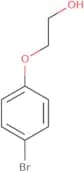
CAS:Ethylene Glycol Mono(4-bromophenyl) Ether is an organic compound with the chemical formula C6H5BrOCH2. It is a colorless liquid, which can be obtained by reacting benzophenone with magnesium in diethyl ether. It is used to synthesize organolithiums and organomercurials. Ethylene Glycol Mono(4-bromophenyl) Ether can be prepared by reacting naphthalene with mercuric chloride. The product is obtained as a white solid or crystalline powder after crystallization from ethanol.Formula:C8H9BrO2Purezza:Min. 95%Peso molecolare:217.06 g/mol2-(2-Bromophenoxy)ethanol
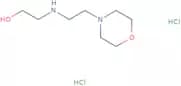
CAS:<p>2-(2-Bromophenoxy)ethanol is a primary alcohol that can be used as a probe in enzymatic reactions, such as the ring-opening of pyridinium salts. It reacts with nucleophilic compounds to form lactams, which are macrocyclic molecules. 2-(2-Bromophenoxy)ethanol can also be used to synthesize epoxides and alcohols.</p>Formula:C8H9BrO2Purezza:Min. 95%Peso molecolare:217.06 g/mol2-(2-Morpholinoethylamino) ethanol 2HCl
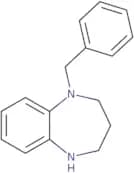
CAS:Versatile small molecule scaffoldFormula:C8H20Cl2N2O2Purezza:Min. 95%Peso molecolare:247.16 g/mol1-Benzyl-2,3,4,5-tetrahydro-1H-1,5-benzodiazepine
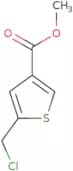
CAS:<p>Versatile small molecule scaffold</p>Formula:C16H18N2Purezza:Min. 95%Peso molecolare:238.33 g/molMethyl 5-(chloromethyl)thiophene-3-carboxylate
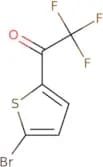
CAS:<p>Versatile small molecule scaffold</p>Formula:C7H7ClO2SPurezza:Min. 95%Peso molecolare:190.65 g/mol1-(5-Bromothiophen-2-yl)-2,2,2-trifluoroethanone
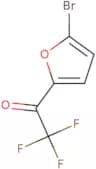
CAS:1-(5-Bromothiophen-2-yl)-2,2,2-trifluoroethanone is a fluorescent probe that binds to proteins in the brain. This probe has been shown to have high affinity for human brain and selectively targets neurodegenerative diseases such as Alzheimer's disease. It is also a selective probe for molecular imaging of the brain and has been shown to be permeable to cells.Formula:C6H2BrF3OSPurezza:Min. 95%Peso molecolare:259.04 g/mol1-(5-Bromofuran-2-yl)-2,2,2-trifluoroethan-1-one
CAS:Versatile small molecule scaffoldFormula:C6H2BrF3O2Purezza:Min. 95%Peso molecolare:242.98 g/mol2-[(Methylsulfanyl)methyl]aniline
CAS:<p>2-[(Methylsulfanyl)methyl]aniline is a substituted aniline that has the chemical formula C6H8NS. It is a colorless to white solid that is soluble in polar solvents such as water, alcohols and ethers. 2-[(Methylsulfanyl)methyl]aniline has a molecular weight of 194.2 g/mol and chemical formula C6H8NS. The molecule can be classified as a secondary amine with two methyl sulfanyl substituents on the benzene ring. The compound has a melting point of 110°C and boiling point of 220°C at atmospheric pressure. The infrared spectrum for the compound displays absorptions at 3,900 cm-1 (O-H), 1,650 cm-1 (N-H), 1,200 cm-1 (C=O) and 730 cm-1 (C=N). The magnetic resonance spectrum displays signals at δ =</p>Formula:C8H11NSPurezza:Min. 95%Peso molecolare:153.25 g/mol1-benzyl-1,3-diazinan-2-one
CAS:1-Benzyl-1,3-diazinan-2-one is a fluorobenzene that contains an aromatic ring with a nitrogen atom in the 1 and 2 positions. This compound is an ionization mass spectrometric standard for the molecular ion at m/z = 123. The electron ionization spectrum of this compound exhibits a single peak at m/z = 123, which corresponds to the molecular ion. The fragmentation of 1-benzyl-1,3-diazinan-2-one yields two peaks at m/z = 67 and 69. These fragments correspond to the loss of one hydrogen from C6 and C8 respectively.Formula:C11H14N2OPurezza:Min. 95%Peso molecolare:190.25 g/mol1-Naphthaleneacethydrazide
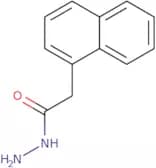
CAS:<p>1-Naphthaleneacethydrazide is a hydrazone compound that can be synthesized by reacting 1-naphthol with ethylhydrazine. It has been shown to be a very powerful and selective oxidant, with a high conversion yield. The compound is used in the synthesis of transition metal complexes, including octahedral, square planar and tetrahedral complexes. Transition metals such as chromium, nickel and iron are used in the catalytic production of polymers. Hydrazides can be used as reducing agents or as precursors for other compounds. The hydrazones are also used in the preparation of magnetic materials.<br>1-Naphthaleneacethydrazide has been shown to have a strong affinity for elemental nitrogen and has been proposed as an oxidizing agent for nitrogen gas (N2) reduction.</p>Formula:C12H12N2OPurezza:Min. 95%Peso molecolare:200.24 g/mol1-(4-Methylpyridin-2-yl)piperazine
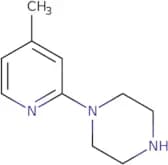
CAS:1-(4-Methylpyridin-2-yl)piperazine (1MPP) is a potent 5-lipoxygenase inhibitor that inhibits the synthesis of leukotrienes and histamine. 1MPP is an effective antiasthmatic drug and has been shown to have potent activities against asthma, bronchial asthma, chronic obstructive pulmonary disease, and allergic rhinitis. The pharmacological effects of 1MPP are due to its ability to inhibit the biosynthesis of leukotrienes from arachidonic acid by blocking the enzyme 5-lipoxygenase. This inhibition leads to a decrease in inflammatory reactions caused by these molecules.Formula:C10H15N3Purezza:Min. 95%Peso molecolare:177.25 g/mol2-Amino-N,5-dimethylbenzamide
CAS:<p>Versatile small molecule scaffold</p>Formula:C9H12N2OPurezza:Min. 95%Peso molecolare:164.2 g/mol


![2-{[(3-Methylphenyl)methyl]sulfanyl}acetic acid](/_next/image/?url=https%3A%2Fstatic.cymitquimica.com%2Fproducts%2F3D%2Fthumb-webp%2FJBA72235.webp&w=3840&q=75)

![2-[(Methylsulfanyl)methyl]aniline](/_next/image/?url=https%3A%2Fstatic.cymitquimica.com%2Fproducts%2F3D%2Fthumb-webp%2FJBA77484.webp&w=3840&q=75)