Building Blocks
Questa sezione contiene prodotti fondamentali per la sintesi di composti organici e biologici. Building blocks sono i materiali di partenza essenziali utilizzati per costruire molecole complesse attraverso varie reazioni chimiche. Svolgono un ruolo critico nella scoperta di farmaci, nella scienza dei materiali e nella ricerca chimica. Presso CymitQuimica, offriamo una gamma diversificata di building blocks di alta qualità per supportare le tue ricerche innovative e progetti industriali, assicurandoti di avere i componenti essenziali per una sintesi di successo.
Sottocategorie di "Building Blocks"
- Acidi boronici e derivati dell'acido boronico(5.778 prodotti)
- Building Blocks Chirali(1.243 prodotti)
- Building Blocks Idrocarburici(6.097 prodotti)
- Building Blocks organici(61.052 prodotti)
Trovati 201390 prodotti di "Building Blocks"
Ordinare per
Purezza (%)
0
100
|
0
|
50
|
90
|
95
|
100
4-Amino-N-methylpiperidine-1-carboxamide
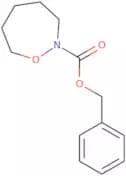
CAS:<p>Versatile small molecule scaffold</p>Formula:C7H15N3OPurezza:Min. 95%Peso molecolare:157.21 g/molBenzyl 1,2-oxazepane-2-carboxylate
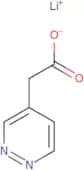
CAS:Versatile small molecule scaffoldFormula:C13H17NO3Purezza:Min. 95%Peso molecolare:235.28 g/molLithium 2-(pyridazin-4-yl)acetate
CAS:<p>Versatile small molecule scaffold</p>Formula:C6H5LiN2O2Purezza:Min. 95%Peso molecolare:144.1 g/mol(2R)-2-{[(tert-Butoxy)carbonyl]amino}hex-5-ynoic acid
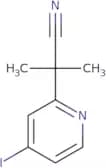
CAS:<p>(2R)-2-{[(tert-Butoxy)carbonyl]amino}hex-5-ynoic acid is a synthetic macrocycle that has been shown to have biological and chemical activities. It targets bacterial biofilms, and the cyclodepsipeptide has been shown to inhibit the growth of Gram-positive bacteria in vitro. This compound also inhibits the development of biofilm by inhibiting the production of extracellular polymeric substances (EPS) on the surface of bacteria, which are important for bacterial attachment to surfaces. The cyclodepsipeptide binds to EPS through hydrophobic interactions, promoting its detachment from surfaces. This macrocyclization prevents EPS formation by binding to proteins involved in its synthesis. The cyclodepsipeptide also has an effect on bacterial cell membrane integrity, which may be due to its ability to inhibit protein synthesis and DNA replication.</p>Formula:C11H17NO4Purezza:Min. 95%Peso molecolare:227.26 g/mol2-(4-Iodopyridin-2-yl)-2-methylpropanenitrile
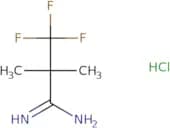
CAS:Versatile small molecule scaffoldFormula:C9H9IN2Purezza:Min. 95%Peso molecolare:272.09 g/mol3,3,3-Trifluoro-2,2-dimethylpropanimidamide hydrochloride
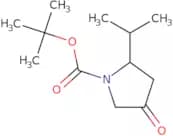
CAS:<p>Versatile small molecule scaffold</p>Formula:C5H10ClF3N2Purezza:Min. 95%Peso molecolare:190.59 g/moltert-Butyl 4-oxo-2-(propan-2-yl)pyrrolidine-1-carboxylate
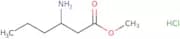
CAS:Versatile small molecule scaffoldFormula:C12H21NO3Purezza:Min. 95%Peso molecolare:227.3 g/molMethyl 3-aminohexanoate hydrochloride
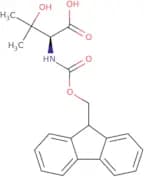
CAS:<p>Versatile small molecule scaffold</p>Formula:C7H15NO2•HClPurezza:Min. 95%Colore e forma:PowderPeso molecolare:181.66 g/molFmoc-(S)-2-amino-3-hydroxy-3-methylbutanoic acid
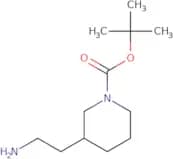
CAS:Versatile small molecule scaffoldFormula:C20H21NO5Purezza:Min. 95%Peso molecolare:355.39 g/moltert-Butyl (3R)-3-(2-aminoethyl)piperidine-1-carboxylate
CAS:Versatile small molecule scaffoldFormula:C12H24N2O2Purezza:Min. 95%Peso molecolare:228.33 g/mol2-(3-Methoxyphenyl)-1-phenylethan-1-amine hydrochloride
CAS:Prodotto controllatoVersatile small molecule scaffoldFormula:C15H18ClNOPurezza:Min. 95%Peso molecolare:263.8 g/mol8-Chloro-3-methyl[1,2,4]triazolo[4,3-a]pyrazine
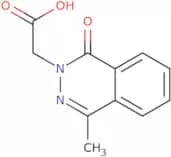
CAS:<p>Versatile small molecule scaffold</p>Formula:C6H5ClN4Purezza:Min. 95%Peso molecolare:168.58 g/mol(4-Methyl-1-oxo-1H-phthalazin-2-yl)acetic acid
CAS:Versatile small molecule scaffoldFormula:C11H10N2O3Purezza:Min. 95%Peso molecolare:218.21 g/mol2-[(Methoxycarbonyl)(methyl)amino]benzoic acid
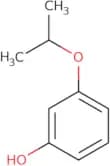
CAS:<p>2-[(Methoxycarbonyl)(methyl)amino]benzoic acid (MBAA) is a peptide that can be used as a research tool in various biological disciplines. It is an ion channel activator and inhibitor of protein interactions. MBAA interacts with the extracellular domain of the alpha-subunit of the voltage-gated potassium channel, leading to opening of the channel. This compound also binds to the receptor for bradykinin, which activates its function. MBAA has been shown to inhibit Na+/K+ ATPase activity and L-type Ca2+ currents in neuronal cells.</p>Formula:C10H11NO4Purezza:Min. 95%Peso molecolare:209.2 g/mol3-(Propan-2-yloxy)phenol
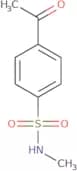
CAS:<p>Versatile small molecule scaffold</p>Formula:C9H12O2Purezza:Min. 95%Peso molecolare:152.19 g/mol4-Acetyl-N-methylbenzene-1-sulfonamide
CAS:Versatile small molecule scaffoldFormula:C9H11NO3SPurezza:Min. 95%Peso molecolare:213.26 g/mol4-[(4-Chlorophenyl)methyl]piperidin-4-ol hydrochloride
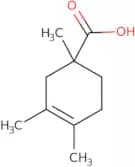
CAS:<p>Versatile small molecule scaffold</p>Formula:C12H17Cl2NOPurezza:Min. 95%Peso molecolare:262.17 g/mol1,3,4-Trimethylcyclohex-3-enecarboxylic acid
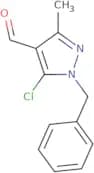
CAS:1,3,4-Trimethylcyclohex-3-enecarboxylic acid is a hydroaromatic that can be found in the allyl group of substances. It also has a hydrocarbons and alcohols group. The substance is used as an intermediate for the production of other chemicals.Formula:C10H16O2Purezza:Min. 95%Peso molecolare:168.23 g/mol1-Benzyl-5-chloro-3-methyl-1H-pyrazole-4-carbaldehyde
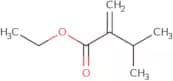
CAS:<p>Versatile small molecule scaffold</p>Formula:C12H11ClN2OPurezza:Min. 95%Peso molecolare:234.68 g/molEthyl 3-methyl-2-methylidenebutanoate
CAS:Versatile small molecule scaffoldFormula:C8H14O2Purezza:Min. 95%Peso molecolare:142.2 g/mol


![(2R)-2-{[(tert-Butoxy)carbonyl]amino}hex-5-ynoic acid](/_next/image/?url=https%3A%2Fstatic.cymitquimica.com%2Fproducts%2F3D%2Fthumb-webp%2FSYB46482.webp&w=3840&q=75)
![8-Chloro-3-methyl[1,2,4]triazolo[4,3-a]pyrazine](/_next/image/?url=https%3A%2Fstatic.cymitquimica.com%2Fproducts%2F3D%2Fthumb-webp%2FTCA77478.webp&w=3840&q=75)
![2-[(Methoxycarbonyl)(methyl)amino]benzoic acid](/_next/image/?url=https%3A%2Fstatic.cymitquimica.com%2Fproducts%2F3D%2Fthumb-webp%2FTCA79040.webp&w=3840&q=75)
![4-[(4-Chlorophenyl)methyl]piperidin-4-ol hydrochloride](/_next/image/?url=https%3A%2Fstatic.cymitquimica.com%2Fproducts%2F3D%2Fthumb-webp%2FTCA80886.webp&w=3840&q=75)