


Building Blocks
Sottocategorie di "Building Blocks"
- Acidi boronici e derivati dell'acido boronico(5.786 prodotti)
- Building Blocks Chirali(1.246 prodotti)
- Building Blocks Idrocarburici(6.107 prodotti)
- Building Blocks organici(61.079 prodotti)
Trovati 205461 prodotti di "Building Blocks"
3-Methyl-1-[2-(morpholin-4-yl)ethyl]thiourea
CAS:Versatile small molecule scaffold
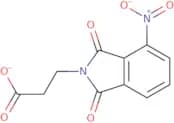
Formula:C8H17N3OSPurezza:Min. 95%Peso molecolare:203.31 g/mol3-(4-Nitro-1,3-dioxo-2,3-dihydro-1H-isoindol-2-yl)propanoic acid
CAS:Versatile small molecule scaffold
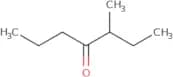
Formula:C11H7N2O6Purezza:Min. 95%Peso molecolare:263.18 g/mol3-Methyl-4-heptanone
CAS:3-Methyl-4-heptanone is an antibacterial agent that has been shown to have a broad spectrum of activity against bacteria. It is a reactive molecule and can form various products during the reaction with other molecules. 3-Methyl-4-heptanone has been found to be effective against Staphylococcus, Songaricum, and other genera of bacteria. 3-Methyl-4-heptanone is a fatty acid that possesses a primary alcohol group and one or more oxygenated functional groups such as hydroxyl (-OH) or alkoxy (-OCH3). 3-Methyl-4-heptanone also possesses 16 carbon atoms, which are arranged in three rings.
Formula:C8H16OPurezza:Min. 95%Peso molecolare:128.22 g/mol2-(1-Phenylethyl)oxirane
CAS:Versatile small molecule scaffold
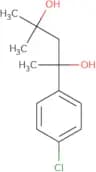
Formula:C10H12OPurezza:Min. 95%Peso molecolare:148.2 g/mol2-(4-Chlorophenyl)-4-methylpentane-2,4-diol
CAS:Prodotto controllato2-(4-Chlorophenyl)-4-methylpentane-2,4-diol is an analog of 2-(4-chlorophenyl)-4-methylpentane that has been shown to be a CB2 receptor agonist, which may be useful in the treatment of inflammatory bowel disease. The structure of this compound is similar to that of the natural ligand for the CB2 receptor, 2-(6′-hydroxyhexahydrocannabinol). This compound has also been shown to act as an agonist for toll-like receptor 4 (TLR4) and as a sodium citrate synthase inhibitor. This molecule can be synthesized from two molecules of acetone with a chiral catalyst by using asymmetric synthesis.
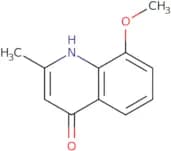
Formula:C12H17ClO2Purezza:Min. 95%Peso molecolare:228.71 g/mol8-Methoxy-2-methylquinolin-4(1H)-one
CAS:Versatile small molecule scaffold
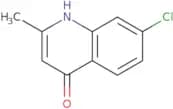
Formula:C11H11NO2Purezza:Min. 95%Peso molecolare:189.21 g/mol7-Chloro-4-hydroxy-2-methylquinoline
CAS:Versatile small molecule scaffoldFormula:C10H8ClNOPurezza:Min. 95%Peso molecolare:193.63 g/mol6-Chloro-4-hydroxy-2-methylquinoline
CAS:6-Chloro-4-hydroxy-2-methylquinoline is a vasorelaxant that blocks potassium channels in the cell membrane. 6CHMQ has been shown to inhibit calcium and potassium channels, which are involved in the transmission of nerve impulses. It also inhibits glibenclamide binding to pancreatic beta cells, which is an action that contributes to the anti-diabetic effects of this drug. 6CHMQ has been shown to block voltage gated potassium channels and may have a role in regulating blood pressure by inhibiting the release of norepinephrine.
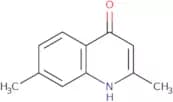
Formula:C10H8ClNOPurezza:Min. 95%Peso molecolare:193.63 g/mol2,7-Dimethylquinolin-4-ol
CAS:Versatile small molecule scaffold
Formula:C11H11NOPurezza:Min. 95%Peso molecolare:173.21 g/mol{7-Oxabicyclo[2.2.1]heptan-1-yl}methanol
CAS:Versatile small molecule scaffold
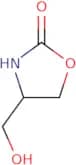
Formula:C7H12O2Purezza:Min. 95%Peso molecolare:128.2 g/mol4-(Hydroxymethyl)oxazolidin-2-one
CAS:4-(Hydroxymethyl)oxazolidin-2-one is an activated form of oxazolidinones that can react with potassium ions to form a stable, water soluble salt. This reaction is catalyzed by lanthanum ion and the reaction mechanism involves the formation of fatty acid esters. It has been found to be effective in the synthesis of methyl palmitate, which is a fatty acid that can be used as a raw material for biodiesel production. The reaction intermediates are dehydrating and constant, and the metal ion is lanthanum. 4-(Hydroxymethyl)oxazolidin-2-one has impurities such as adiponitrile, acidic impurities, and stereoselective impurities.
Formula:C4H7NO3Purezza:Min. 95%Peso molecolare:117.1 g/mol5H,6H,7H-Cyclopenta[C]pyridine-4-carbonitrile
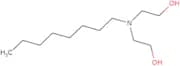
CAS:Versatile small molecule scaffoldFormula:C9H8N2Purezza:Min. 95%Peso molecolare:144.17 g/mol2,2'-(Octylazanediyl)diethanol
CAS:2,2'-(Octylazanediyl)diethanol is a boron-containing chemical that is used to extract uranium from its ores. It is an effective complexing agent for the extraction of uranium from its ores. This chemical has been shown to be able to extract uranium from ores with a concentration of up to 0.15%. The extraction process takes place in acidic containers and is optimized by varying the reaction time and diethanolamine concentration. 2,2'-(Octylazanediyl)diethanol also inhibits ATPase activity in bacteria, which may be due to its ability to inhibit the transport function in these organisms.
Formula:C12H27NO2Purezza:Min. 95%Peso molecolare:217.35 g/molRef: 3D-QAA52005
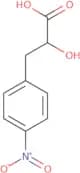
Prodotto fuori produzione2-Hydroxy-3-(4-nitrophenyl)propanoic acid
CAS:Versatile small molecule scaffold
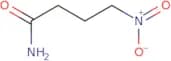
Formula:C9H9NO5Purezza:Min. 95%Peso molecolare:211.17 g/mol4-Nitrobutanamide
CAS:4-Nitrobutanamide is an aliphatic aldehyde that is used as a reagent in the synthesis of quinoxaline derivatives. 4-Nitrobutanamide can be synthesized by the reaction of ammonium carbonate with aliphatic aldehydes and quinoxaline. The mechanism for this reaction has been elucidated through electrospray ionization mass spectrometry. This compound is also used in the synthesis of activated ammonium amides.
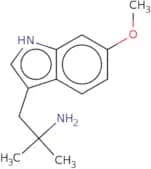
Formula:C4H8N2O3Purezza:Min. 95%Peso molecolare:132.12 g/mol1-(6-Methoxy-1H-indol-3-yl)-2-methylpropan-2-amine
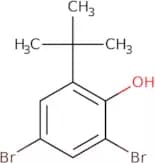
CAS:Prodotto controllatoVersatile small molecule scaffoldFormula:C13H18N2OPurezza:Min. 95%Peso molecolare:218.3 g/mol2,4-Dibromo-6-tert-butylphenol
CAS:Versatile small molecule scaffold
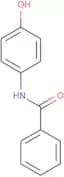
Formula:C10H12Br2OPurezza:Min. 95%Peso molecolare:308.01 g/molN-(4-Hydroxyphenyl)benzamide
CAS:4-Hydroxyphenylbenzamide is a metabolite of biphenyl and an estrogen receptor modulator. It has been shown to inhibit the proliferation of human breast cancer cells in vitro. 4-Hydroxyphenylbenzamide binds to the estrogen receptors and inhibits the negative feedback on the hypothalamus, which leads to increased levels of luteinizing hormone and follicle stimulating hormone. This results in vasomotor symptoms such as hot flashes, night sweats, and mood swings. The drug also has effects on bone metabolism by increasing bone resorption and decreasing bone formation. 4-Hydroxyphenylbenzamide is metabolized in the liver by glucuronidation conjugates, which are excreted in feces or eliminated through urine.
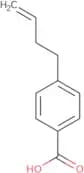
Formula:C13H11NO2Purezza:Min. 95%Peso molecolare:213.23 g/mol4-(But-3-en-1-yl)benzoic acid
CAS:Versatile small molecule scaffold
Formula:C11H12O2Purezza:Min. 95%Peso molecolare:176.21 g/mol4-(methoxycarbonyl)bicyclo[2.2.1]heptane-1-carboxylic acid
CAS:4-(Methoxycarbonyl)bicyclo[2.2.1]heptane-1-carboxylic acid is a dicarboxylic acid that can be prepared by the reaction of malonic ester and allyl alcohol in the presence of base. It is a precursor to 4-hydroxybutyric acid, which is an intermediate in the conversion of lysine to methionine. 4-(Methoxycarbonyl)bicyclo[2.2.1]heptane-1-carboxylic acid is used as a monoester and diester in the preparation of detergents and emulsifiers, as well as being used in the synthesis of pharmaceuticals and other organic compounds. The monoester form has been shown to have high yields for use with Burkholderia cepacia lipases (BCL) immobilized on silica gel, while the diesters are
Formula:C10H14O4Purezza:Min. 95%Peso molecolare:198.2 g/mol
![3-Methyl-1-[2-(morpholin-4-yl)ethyl]thiourea](/_next/image/?url=https%3A%2Fstatic.cymitquimica.com%2Fproducts%2F3D%2Fthumb-webp%2FQAA77599.webp&w=3840&q=75)



![{7-Oxabicyclo[2.2.1]heptan-1-yl}methanol](/_next/image/?url=https%3A%2Fstatic.cymitquimica.com%2Fproducts%2F3D%2Fthumb-webp%2FQAA57403.webp&w=3840&q=75)
![5H,6H,7H-Cyclopenta[C]pyridine-4-carbonitrile](/_next/image/?url=https%3A%2Fstatic.cymitquimica.com%2Fproducts%2F3D%2Fthumb-webp%2FQAA52447.webp&w=3840&q=75)
![4-(methoxycarbonyl)bicyclo[2.2.1]heptane-1-carboxylic acid](/_next/image/?url=https%3A%2Fstatic.cymitquimica.com%2Fproducts%2F3D%2Fthumb-webp%2FQAA44877.webp&w=3840&q=75)