Building Blocks
Sottocategorie di "Building Blocks"
- Acidi boronici e derivati dell'acido boronico(5.780 prodotti)
- Building Blocks Chirali(1.241 prodotti)
- Building Blocks Idrocarburici(6.100 prodotti)
- Building Blocks organici(61.023 prodotti)
Trovati 205289 prodotti di "Building Blocks"
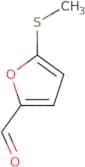
5-(Methylsulfanyl)furan-2-carbaldehyde
CAS:Versatile small molecule scaffold
Formula:C6H6O2SPurezza:Min. 95%Peso molecolare:142.18 g/mol3-(2-Chloroethyl)pyrrolidin-2-one
CAS:Versatile small molecule scaffold
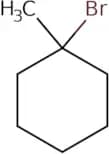
Formula:C6H10ClNOPurezza:Min. 95%Peso molecolare:147.6 g/mol1-Bromo-1-methylcyclohexane
CAS:1-Bromo-1-methylcyclohexane is a monomolecular gas that is used as an intermediate in organic synthesis. It reacts with halides to form cyclopentyl derivatives. This reaction has been shown to be faster than the corresponding reaction of 1-bromocyclohexane with chlorides or bromides. The rate of this reaction may be due to the polarizability and conformational changes of the molecule upon substitution by a methyl group. 1-Bromo-1-methylcyclohexane is also an ionizing reagent, which means it can cause electrophilic reactions to occur on other molecules. It has been found that the solvent effect on this product can affect its reactivity, with solvents such as water having more of an effect than solvents such as benzene. 1-Bromo-1-methylcyclohexane has been shown to interact with other compounds in both transfer and complex
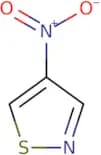
Formula:C7H13BrPurezza:Min. 95%Peso molecolare:177.08 g/mol4-Nitroisothiazole
CAS:4-Nitroisothiazole is a nitro derivative of isothiazole that has been shown to have inhibitory effects on bacterial growth. It has been shown to be active against the gram-positive bacterium, Staphylococcus aureus, and the gram-negative bacterium Escherichia coli. 4-Nitroisothiazole inhibits the growth of bacteria by binding to the cytoplasmic membrane, leading to an increase in the redox potential and preventing electron transport. 4-Nitroisothiazole also inhibits cellular respiration and protein synthesis, which leads to cell death.
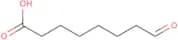
Formula:C3H2N2O2SPurezza:Min. 95%Peso molecolare:130.13 g/mol8-Oxo-octanoic acid
CAS:8-Oxo-octanoic acid is an oxo fatty acid that is naturally produced in the body. It is also found in urine and plasma samples. 8-Oxo-octanoic acid has been shown to be a product of lipid peroxidation and may increase the risk of cardiovascular disease. This compound is metabolized by esterases to form 8-oxo-nonanoic acid, which can be detected in urine samples. The presence of 8-oxo-octanoic acid in plasma can be used as a marker for oxidative stress.
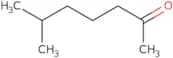
Formula:C8H14O3Purezza:Min. 95%Peso molecolare:158.19 g/mol6-Methylheptan-2-one
CAS:6-Methylheptan-2-one is a chemical substance that can be found in the form of an oxidation product of tripalmitin. It is used as an analytical control agent for the qualitative and quantitative analysis of tripalmitin. 6-Methylheptan-2-one is analyzed by gas chromatography with mass spectrometry detection (GC/MS). The use of solid phase microextraction (SPME) allows for the sample to be taken from a solid matrix and analyzed without any interference from other compounds. This method has been validated with animals and has been shown to be accurate, precise, and sensitive. 6-Methylheptan-2-one is also an active substance in inflammatory bowel disease (IBD) due to its ability to induce oxidative stress in the intestine, which causes inflammation. This compound also has a fatty acid composition consisting primarily of unsaturated β-ketones such as methylpentanoate or methylhexanoate
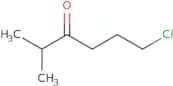
Formula:C8H16OPurezza:Min. 95%Peso molecolare:128.21 g/mol6-Chloro-2-methylhexan-3-one
CAS:Versatile small molecule scaffold
Formula:C7H13ClOPurezza:Min. 95%Peso molecolare:148.63 g/molN-[Carbamothioyl(phenyl)methyl]benzamide
CAS:Versatile small molecule scaffold
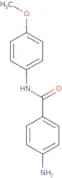
Formula:C15H14N2OSPurezza:Min. 95%Peso molecolare:270.3 g/mol4-Amino-n-(4-methoxyphenyl)benzamide
CAS:4-Amino-N-(4-methoxyphenyl)benzamide is a catalytic sulfamate that has been optimized for use in the synthesis of benzimidazole derivatives. 4-Amino-N-(4-methoxyphenyl)benzamide is used as a reagent for the preparation of aldehydes from sulfamic acid and various types of carboxylic acids. The reaction mechanism involves nucleophilic attack by the hydroxyl group from the sulfamate on the carbonyl carbon atom to form an intermediate, which then reacts with water to release hydrogen sulfate and form a new double bond.
Formula:C14H14N2O2Purezza:Min. 95%Peso molecolare:242.27 g/mol1-(4-Phenoxyphenyl)propan-1-one
CAS:Versatile small molecule scaffold
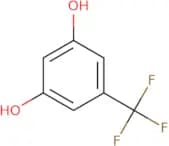
Formula:C15H14O2Purezza:Min. 95%Peso molecolare:226.27 g/mol5-(Trifluoromethyl)benzene-1,3-diol
CAS:Versatile small molecule scaffold
Formula:C7H5F3O2Purezza:Min. 95%Peso molecolare:178.11 g/mol6-Phenyl-3-thio-1,2,4-triazin-5(2H)-one
CAS:The spectral and crystallographic properties of 6-phenyl-3-thio-1,2,4-triazin-5(2H)-one were investigated in order to elucidate the molecular structures. The crystal structure of this compound was determined by x-ray crystallography. The compound is a regioisomeric mixture of two chiral isomers that are mirror images of each other. 6PST has a molecular formula of C8H6NOS and a molecular weight of 172.14 g/mol. It has been shown that the compound can be prepared by condensation reaction between 2-(phenylsulfanyl)ethanol and ethylenecarbonate. The spectroscopic studies revealed that it possesses an absorption band at 418 nm in the ultraviolet region. The crosslinked structure of this molecule was also studied using infrared spectroscopy, which showed presence of hydrogen bonds in the molecule.
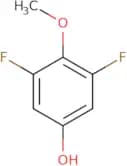
Formula:C9H7N3OSPurezza:Min. 95%Peso molecolare:205.24 g/mol3,5-Difluoro-4-methoxyphenol
CAS:Versatile small molecule scaffold
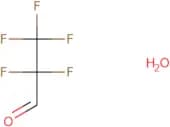
Formula:C7H6F2O2Purezza:Min. 95%Peso molecolare:160.12 g/mol2,2,3,3,3-Pentafluoropropane-1,1-diol
CAS:Versatile small molecule scaffold
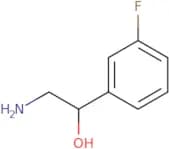
Formula:C3H3F5O2Purezza:Min. 95%Peso molecolare:166.05 g/mol2-Amino-1-(3-fluorophenyl)ethanol
CAS:Versatile small molecule scaffold
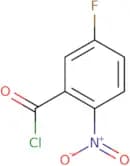
Formula:C8H10FNOPurezza:Min. 95%Peso molecolare:155.17 g/mol5-Fluoro-2-nitrobenzoyl chloride
CAS:5-Fluoro-2-nitrobenzoyl chloride is a conformationally locked macrocyclic compound that has been synthesized by solid phase synthesis. It is found in two conformational states and can be made to switch between these two states by applying a force to the molecule. This conformation can be controlled by changing the side chain of 5-fluoro-2-nitrobenzoyl chloride, which can be done experimentally. The conformational behavior of this macrocycle was studied using molecular dynamics simulations and it was found that there are four possible conformations for the molecule. The conformations with different side chains were found to have different energies, which could be used as a measure of their relative stability.
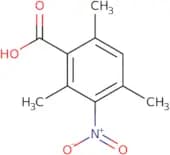
Formula:C7H3ClFNO3Purezza:Min. 95%Peso molecolare:203.55 g/mol2,4,6-Trimethyl-3-nitrobenzoic acid
CAS:Versatile small molecule scaffold
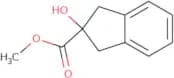
Formula:C10H11NO4Purezza:Min. 95%Peso molecolare:209.2 g/molMethyl 2-hydroxy-2,3-dihydro-1H-indene-2-carboxylate
CAS:Versatile small molecule scaffoldFormula:C11H12O3Purezza:Min. 95%Peso molecolare:192.21 g/mol4-(Aminomethyl)piperidin-4-ol
CAS:Versatile small molecule scaffold
Formula:C6H14N2OPurezza:Min. 95%Peso molecolare:130.19 g/mol4-(Butan-2-yloxy)-6-chloro-2-methylpyrimidine
CAS:Versatile small molecule scaffold
Formula:C9H13ClN2OPurezza:Min. 95%Peso molecolare:200.66 g/mol


![N-[Carbamothioyl(phenyl)methyl]benzamide](/_next/image/?url=https%3A%2Fstatic.cymitquimica.com%2Fproducts%2F3D%2Fthumb-webp%2FAAA89278.webp&w=3840&q=75)