Building Blocks
Questa sezione contiene prodotti fondamentali per la sintesi di composti organici e biologici. Building blocks sono i materiali di partenza essenziali utilizzati per costruire molecole complesse attraverso varie reazioni chimiche. Svolgono un ruolo critico nella scoperta di farmaci, nella scienza dei materiali e nella ricerca chimica. Presso CymitQuimica, offriamo una gamma diversificata di building blocks di alta qualità per supportare le tue ricerche innovative e progetti industriali, assicurandoti di avere i componenti essenziali per una sintesi di successo.
Sottocategorie di "Building Blocks"
- Acidi boronici e derivati dell'acido boronico(5.778 prodotti)
- Building Blocks Chirali(1.243 prodotti)
- Building Blocks Idrocarburici(6.098 prodotti)
- Building Blocks organici(61.057 prodotti)
Trovati 200716 prodotti di "Building Blocks"
Ordinare per
Purezza (%)
0
100
|
0
|
50
|
90
|
95
|
100
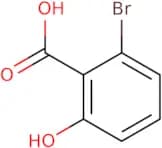
2-Bromo-6-hydroxybenzoic acid
CAS:<p>2-Bromo-6-hydroxybenzoic acid is a nucleophilic compound with a bromine atom at the 2 position. It is used in organic synthesis as a building block in the preparation of amides and other functional groups. This efficient preparation can be achieved by treating anilines with sodium nitrite and hydroxylamine in ethanol.</p>Formula:C7H5BrO3Purezza:Min. 95%Peso molecolare:217.02 g/mol3-Bromo-4,5-dihydroxybenzonitrile
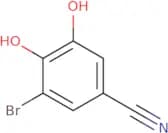
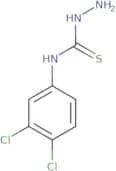
CAS:<p>3-Bromo-4,5-dihydroxybenzonitrile is a molecule that has been found to be effective in treating neurodegenerative diseases. It has been shown to inhibit gene transcription, leading to the inhibition of cell proliferation and apoptosis. This drug also inhibits N-acetylglucosamine glycosylase, an enzyme that is involved in the removal of the amino group from cellular glycerophospholipids. 3-Bromo-4,5-dihydroxybenzonitrile binds to the hydrophobic pocket of DNA and prevents the formation of hydrogen bonds with the nucleobases. 3-Bromo-4,5-dihydroxybenzonitrile is a cochlear toxicant as it can cause hearing loss and deafness when administered at high doses. The cochlear toxicity may be due to its ability to inhibit tyrosine kinase activity, protein phosphatase 2</p>Formula:C7H4BrNO2Purezza:Min. 95%Peso molecolare:214.02 g/mol4-(3,4-Dichlorophenyl)-3-thiosemicarbazide
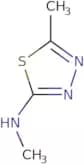
CAS:<p>Versatile small molecule scaffold</p>Formula:C7H7Cl2N3SPurezza:Min. 95%Peso molecolare:236.12 g/molN,5-Dimethyl-1,3,4-thiadiazol-2-amine
CAS:Versatile small molecule scaffoldFormula:C4H7N3SPurezza:Min. 95%Peso molecolare:129.19 g/mol2-(4-Chlorophenyl)imidazo[1,2-a]pyridine
CAS:<p>Versatile small molecule scaffold</p>Formula:C13H9ClN2Purezza:Min. 95%Peso molecolare:228.68 g/molImidazo[1,2-a]pyridine-2-carbonitrile
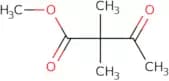
CAS:Versatile small molecule scaffoldFormula:C8H5N3Purezza:Min. 95%Peso molecolare:143.15 g/molMethyl 2,2-diMethylacetoacetate
CAS:<p>Methyl 2,2-diMethylacetoacetate is a deuterated acetoacetate. It has a transition state that is oriented. This acetoacetate can be modified by modifiers such as transition metals and ligands. The methyl group can be removed from the molecule by hydrolysis or hydrogenation to form 2,3-dihydroxypropanoic acid.</p>Formula:C7H12O3Purezza:Min. 95%Peso molecolare:144.17 g/mol[1-(Aminomethyl)cyclopentyl]methanamine
CAS:<p>Versatile small molecule scaffold</p>Formula:C7H16N2Purezza:Min. 95%Peso molecolare:128.22 g/mol1-[(Aminooxy)methyl]-4-methylbenzene hydrochloride
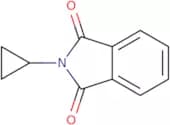
CAS:Versatile small molecule scaffoldFormula:C8H12ClNOPurezza:Min. 95%Peso molecolare:173.64 g/mol2-Cyclopropyl-2,3-dihydro-1H-isoindole-1,3-dione
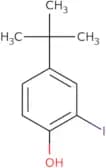
CAS:Sodium carbonate is a white crystalline, water-soluble salt that is used in the manufacture of glass, textiles, paper, soap and detergents. It can be made by the reaction of sodium hydroxide and carbon dioxide at high temperature. The cyclopropylboronic acid (B) reacts with copper(II) chloride to form a carboxylate anion. The resulting compound reacts with dichloroethane to form the 2-cyclopropyl-2,3-dihydro-1H-isoindole-1,3-dione (A). This type of reaction is known as a nucleophilic substitution reaction.Formula:C11H9NO2Purezza:Min. 95%Peso molecolare:187.19 g/mol4-(tert-Butyl)-2-iodophenol
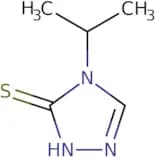
CAS:<p>Versatile small molecule scaffold</p>Formula:C10H13IOPurezza:Min. 95%Peso molecolare:276.12 g/mol4-(Propan-2-yl)-4H-1,2,4-triazole-3-thiol
CAS:Versatile small molecule scaffoldFormula:C5H9N3SPurezza:Min. 95%Peso molecolare:143.21 g/molSodium thiophene-2-sulfinate
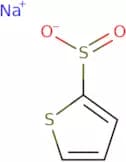
CAS:Sodium thiophene-2-sulfinate is a synthetic reagent that can be used to form methylenecyclopropanes, which are highly reactive with respect to oxidizing agents. A radical coupling mechanism has been proposed for the reaction of sodium thiophene-2-sulfinate with peroxide, which proceeds through a chain mechanism. The functional groups on the molecule allow for selective reactions with anilines and other electrophiles. This reagent is also effective in the synthesis of type-2 diabetes drugs and for investigating mechanistic aspects of these reactions.Formula:C4H3NaO2S2Purezza:Min. 95%Peso molecolare:170.2 g/mol2,5-Dichloro-4-methylphenol
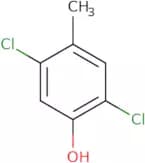
CAS:Versatile small molecule scaffoldFormula:C7H6Cl2OPurezza:Min. 95%Peso molecolare:177.02 g/mol4-(2-Piperidin-1-yl-ethoxy)-phenylamine
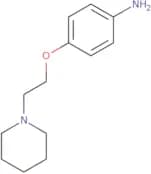
CAS:Versatile small molecule scaffoldFormula:C13H20N2OPurezza:Min. 95%Peso molecolare:220.32 g/mol4-[2-(4-Methylpiperazin-1-yl)ethoxy]aniline
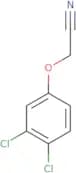
CAS:<p>Versatile small molecule scaffold</p>Formula:C13H21N3OPurezza:Min. 95%Peso molecolare:235.33 g/mol2-(3,4-Dichlorophenoxy)acetonitrile
CAS:<p>Versatile small molecule scaffold</p>Formula:C8H5Cl2NOPurezza:Min. 95%Peso molecolare:202.03 g/mol4,4'-Carbonyldimorpholine
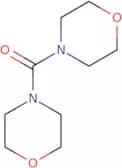
CAS:<p>4,4'-Carbonyldimorpholine is a thioxanthone that can be used in coatings and UV-curable inks. It is a cationic monomer that can polymerize with other monomers to form polymers with high molecular weight. 4,4'-Carbonyldimorpholine also reacts with fatty acids to produce water-soluble polymers and amines to produce water-insoluble polymers. This agent has been shown to interact with the surface of metals and acrylates, which are compounds that are used in coatings and UV-curable inks. The nature of this compound is dependent on the environment it is exposed to.</p>Formula:C9H16N2O3Purezza:Min. 95%Peso molecolare:200.24 g/mol2-(4-Methoxy-benzenesulfonylamino)-benzoic acid
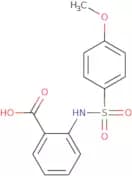
CAS:Versatile small molecule scaffoldFormula:C14H13NO5SPurezza:Min. 95%Peso molecolare:307.32 g/mol2-(Naphthalen-2-yl)propan-1-ol
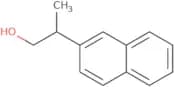
CAS:<p>2-(Naphthalen-2-yl)propan-1-ol is a chemical compound that has a chloride, fatty acid, carbonyl group, and an enantiomer. It can be used as an immobilizing agent for the preparation of enantiopure compounds. This compound is most commonly used as a reagent in organic chemistry to form reaction products with lipase and other enzymes. The reaction time varies depending on the enzyme used. 2-(Naphthalen-2-yl)propan-1-ol can also be activated by heating it with an acid or base to produce a different molecule.</p>Formula:C13H14OPurezza:Min. 95%Peso molecolare:186.25 g/mol

![2-(4-Chlorophenyl)imidazo[1,2-a]pyridine](/_next/image/?url=https%3A%2Fstatic.cymitquimica.com%2Fproducts%2F3D%2Fthumb-webp%2FNBA92274.webp&w=3840&q=75)
![Imidazo[1,2-a]pyridine-2-carbonitrile](/_next/image/?url=https%3A%2Fstatic.cymitquimica.com%2Fproducts%2F3D%2Fthumb-webp%2FNBA92279.webp&w=3840&q=75)
![[1-(Aminomethyl)cyclopentyl]methanamine](/_next/image/?url=https%3A%2Fstatic.cymitquimica.com%2Fproducts%2F3D%2Fthumb-webp%2FNBA93272.webp&w=3840&q=75)
![1-[(Aminooxy)methyl]-4-methylbenzene hydrochloride](/_next/image/?url=https%3A%2Fstatic.cymitquimica.com%2Fproducts%2F3D%2Fthumb-webp%2FNBA93662.webp&w=3840&q=75)
![4-[2-(4-Methylpiperazin-1-yl)ethoxy]aniline](/_next/image/?url=https%3A%2Fstatic.cymitquimica.com%2Fproducts%2F3D%2Fthumb-webp%2FNBA94828.webp&w=3840&q=75)