Building Blocks
Questa sezione contiene prodotti fondamentali per la sintesi di composti organici e biologici. Building blocks sono i materiali di partenza essenziali utilizzati per costruire molecole complesse attraverso varie reazioni chimiche. Svolgono un ruolo critico nella scoperta di farmaci, nella scienza dei materiali e nella ricerca chimica. Presso CymitQuimica, offriamo una gamma diversificata di building blocks di alta qualità per supportare le tue ricerche innovative e progetti industriali, assicurandoti di avere i componenti essenziali per una sintesi di successo.
Sottocategorie di "Building Blocks"
- Acidi boronici e derivati dell'acido boronico(5.778 prodotti)
- Building Blocks Chirali(1.243 prodotti)
- Building Blocks Idrocarburici(6.097 prodotti)
- Building Blocks organici(61.052 prodotti)
Trovati 201390 prodotti di "Building Blocks"
Ordinare per
Purezza (%)
0
100
|
0
|
50
|
90
|
95
|
100
3-Aminobenzanilide
CAS:3-Aminobenzanilide is a reactive chemical substance that belongs to the class of amides. It is a hydrochloride salt, which is soluble in water and has the ability to form an amide bond with a variety of compounds. 3-Aminobenzanilide reacts with hydrochloric acid to create photochemical properties. The reactivity can be decreased by adding an amine to the molecule or by substituting it with chloride ions. 3-Aminobenzanilide has been shown to have lipid-lowering effects and may be used as a drug for this purpose. It also inhibits tyrosine kinase activity and may be used for this purpose as well. 3-Aminobenzanilide is found in anilines, which are chemicals that are usually made from benzene and ammonia. This compound can also be used as a model system for other molecules that contain nitro groups, such as nitroglycerin.Formula:C13H12N2OPurezza:Min. 95%Peso molecolare:212.25 g/mol5-tert-Butyl-2-hydroxybenzoic acid
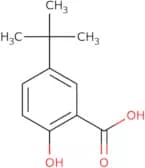
CAS:5-tert-Butyl-2-hydroxybenzoic acid (5BHB) is a synthetic, hydrophobic and polyvalent compound that can reversibly activate xenobiotic metabolizing enzymes. 5BHB has been shown to induce CYP1A2 activity in human liver cells, as well as increase the activity of other xenobiotic metabolizing enzymes such as CYP3A4, CYP2D6, and CYP2C19. This activation occurs through the direct binding of 5BHB to nuclear receptors, which are proteins embedded within the cell membrane that bind with specific hormones or other molecules. A cavity within the receptor binds with the hydrophobic 5BHB molecule. The activation of these enzymes leads to increased metabolism of foreign compounds in the body and may be beneficial in reducing drug toxicity.Formula:C11H14O3Purezza:Min. 98 Area-%Colore e forma:PowderPeso molecolare:194.23 g/mol5-(Benzyloxy)-2-hydroxybenzoic acid
CAS:Versatile small molecule scaffoldFormula:C14H12O4Purezza:Min. 95%Peso molecolare:244.25 g/mol2-Methanesulfonylcyclohexan-1-one
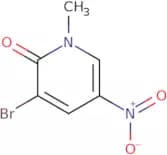
CAS:<p>Versatile small molecule scaffold</p>Formula:C7H12O3SPurezza:Min. 95%Peso molecolare:176.24 g/mol3-Bromo-1-methyl-5-nitropyridin-2(1H)-one
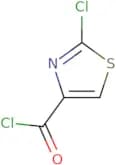
CAS:Versatile small molecule scaffoldFormula:C6H5BrN2O3Purezza:Min. 95%Peso molecolare:233.02 g/mol2-Chloro-1,3-thiazole-4-carbonyl chloride
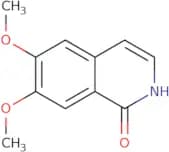
CAS:<p>Versatile small molecule scaffold</p>Formula:C4HCl2NOSPurezza:Min. 95%Peso molecolare:182.03 g/mol6,7-Dimethoxy-1,2-dihydroisoquinolin-1-one
CAS:Versatile small molecule scaffoldFormula:C11H11NO3Purezza:Min. 95%Peso molecolare:205.21 g/molEthyl 3-hydroxy-1H-indazole-1-carboxylate
CAS:Versatile small molecule scaffoldFormula:C10H10N2O3Purezza:Min. 95%Peso molecolare:206.2 g/mol1-(2-Hydroxy-4,6-dimethylphenyl)ethan-1-one
CAS:1-(2-Hydroxy-4,6-dimethylphenyl)ethan-1-one is an experimental molecule that is a hydrogen bond acceptor. It has a C3v conformation with the H atom in the hydroxymethyl group in a trans position and the methyl group on the opposite side of the ring. The experimentally determined frequencies for this molecule are in good agreement with those predicted by theory. This molecule has been observed to have a conformational change when it is protonated or deprotonated. In addition, this molecule can be used as an intermediate for polyhalogenating benzonitrile derivatives and carboxylic acids.Formula:C10H12O2Purezza:Min. 95%Peso molecolare:164.2 g/mol1-[Amino(phenyl)methyl]cyclohexan-1-ol hydrochloride
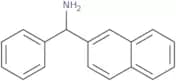
CAS:Versatile small molecule scaffoldFormula:C13H20ClNOPurezza:Min. 95%Peso molecolare:241.8 g/molNaphthalen-2-yl(phenyl)methanamine
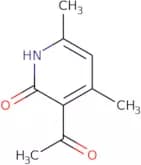
CAS:<p>Versatile small molecule scaffold</p>Formula:C17H15NPurezza:Min. 95%Peso molecolare:233.31 g/mol3-Acetyl-4,6-dimethyl-1,2-dihydropyridin-2-one
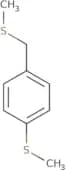
CAS:3-Acetyl-4,6-dimethyl-1,2-dihydropyridin-2-one is an organic compound with the chemical formula CHNO. It is a white crystalline solid that is soluble in water and polar organic solvents. The molecule features a cyclic amide group that can be cleaved to give three equivalents of ammonia. This acid has been shown to react with morpholine to form an acidic, basic isomeric mixture of 3-(morpholinomethyl)pyridine (3MP). The structure of the 3MP was determined by x-ray structural analysis and found to have a similar structure to pyridine.Formula:C9H11NO2Purezza:Min. 95%Peso molecolare:165.19 g/mol4-(Methylsulfanyl)benzyl methyl sulfide
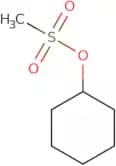
CAS:Versatile small molecule scaffoldFormula:C9H12S2Purezza:Min. 95%Peso molecolare:184.3 g/molCyclohexyl methanesulfonate
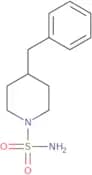
CAS:<p>Cyclohexyl methanesulfonate is a synthetic compound that acts as an inhibitor of the CCR5 receptor. It blocks the binding of HIV-1 to cells and prevents infection. Cyclohexyl methanesulfonate has been shown to be effective in preventing inflammatory diseases, such as Crohn's disease, and autoimmune diseases such as type 1 diabetes mellitus. Cyclohexyl methanesulfonate is a low-energy radical that can be synthesized using hydrochloric acid or sodium carbonate in the presence of trifluoroacetic acid. The synthesis requires a hydroxybenzoic acid and a trifluoromethanesulfonic acid for the formation of cyclohexane.</p>Formula:C7H14O3SPurezza:Min. 95%Peso molecolare:178.25 g/mol4-Benzylpiperidine-1-sulfonamide
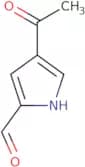
CAS:<p>Versatile small molecule scaffold</p>Formula:C12H18N2O2SPurezza:Min. 95%Peso molecolare:254.35 g/mol4-Acetyl-1H-pyrrole-2-carboxaldehyde
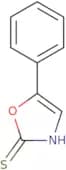
CAS:4-Acetyl-1H-pyrrole-2-carboxaldehyde is a molecule that can be used to regulate proton transfer. It has been shown to have a photophysical effect, in which it absorbs light and transfers the energy to a nearby acceptor. 4-Acetyl-1H-pyrrole-2-carboxaldehyde also facilitates the transfer of protons from one compound to another. The thermodynamics of this reaction are dependent on substituent effects as well as pyrazole ring geometry. 4-Acetyl-1H-pyrrole-2-carboxaldehyde is able to undergo Friedel–Crafts reactions, where it forms an ethoxycarbonyl group by attacking a double bond with carbon monoxide and hydrogen chloride. This can be done in two ways: the dihedral or syn orientation, which results in different products.Formula:C7H7NO2Purezza:Min. 95%Peso molecolare:137.14 g/mol5-Phenyl-1,3-oxazole-2-thiol
CAS:<p>Versatile small molecule scaffold</p>Formula:C9H7NOSPurezza:Min. 95%Peso molecolare:177.22 g/mol4-(Piperidin-3-yl)-1H-indole
CAS:Versatile small molecule scaffoldFormula:C13H16N2Purezza:Min. 95%Peso molecolare:200.3 g/mol1-Bromo-4-[(2-chloroethyl)sulfanyl]benzene
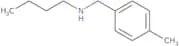
CAS:Versatile small molecule scaffoldFormula:C8H8BrClSPurezza:Min. 95%Peso molecolare:251.57 g/molN-(4-Methylbenzyl)butan-1-amine
CAS:Versatile small molecule scaffoldFormula:C12H19NPurezza:Min. 95%Peso molecolare:177.29 g/mol






![1-[Amino(phenyl)methyl]cyclohexan-1-ol hydrochloride](/_next/image/?url=https%3A%2Fstatic.cymitquimica.com%2Fproducts%2F3D%2Fthumb-webp%2FRAA11293.webp&w=3840&q=75)

![1-Bromo-4-[(2-chloroethyl)sulfanyl]benzene](/_next/image/?url=https%3A%2Fstatic.cymitquimica.com%2Fproducts%2F3D%2Fthumb-webp%2FRAA18114.webp&w=3840&q=75)