Building Blocks
Questa sezione contiene prodotti fondamentali per la sintesi di composti organici e biologici. Building blocks sono i materiali di partenza essenziali utilizzati per costruire molecole complesse attraverso varie reazioni chimiche. Svolgono un ruolo critico nella scoperta di farmaci, nella scienza dei materiali e nella ricerca chimica. Presso CymitQuimica, offriamo una gamma diversificata di building blocks di alta qualità per supportare le tue ricerche innovative e progetti industriali, assicurandoti di avere i componenti essenziali per una sintesi di successo.
Sottocategorie di "Building Blocks"
- Acidi boronici e derivati dell'acido boronico(5.778 prodotti)
- Building Blocks Chirali(1.243 prodotti)
- Building Blocks Idrocarburici(6.097 prodotti)
- Building Blocks organici(61.048 prodotti)
Trovati 203115 prodotti di "Building Blocks"
Ordinare per
Purezza (%)
0
100
|
0
|
50
|
90
|
95
|
100
2-(2,6-Dimethylphenoxy)acetohydrazide
CAS:<p>2-(2,6-Dimethylphenoxy)acetohydrazide is a herbicide that inhibits the growth of monocotyledon and dicotyledon plants. It is used to control weeds in fields of soybeans, rice, corn, wheat, oats, barley and rye. The compound was found to be the most effective herbicide for the control of weeds in bioassays conducted with various types of plants. 2-(2,6-Dimethylphenoxy)acetohydrazide has been shown to inhibit the growth of Brassica species such as cabbage and broccoli by interfering with phenol synthesis.</p>Formula:C10H14N2O2Purezza:Min. 95%Peso molecolare:194.24 g/mol2-{Bicyclo[2.2.1]heptan-2-yl}acetonitrile
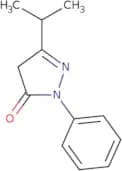
CAS:Versatile small molecule scaffoldFormula:C9H13NPurezza:Min. 95%Peso molecolare:135.21 g/mol3-Isopropyl-1-phenyl-1H-pyrazol-5(4H)-one
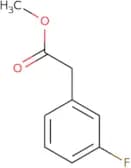
CAS:<p>Versatile small molecule scaffold</p>Formula:C12H14N2OPurezza:Min. 95%Peso molecolare:202.25 g/molMethyl 3-Fluorophenylacetate
CAS:<p>Methyl 3-Fluorophenylacetate is an alkali, cyclopropene carboxamide that has a nucleophilic functionality. It is positioned strategically in biomolecular chemistry and biomolecular function. Methyl 3-Fluorophenylacetate has been used as a building block to synthesize bioactive molecules such as peptides and polymers. In addition, it can be used as a fluorescent probe for the identification of nucleophilic functionalities.</p>Formula:C9H9FO2Purezza:Min. 95%Peso molecolare:168.17 g/mol2-{4-Chloro-1H-pyrazolo[3,4-d]pyrimidin-1-yl}ethan-1-ol
CAS:Versatile small molecule scaffoldFormula:C7H7ClN4OPurezza:Min. 95%Peso molecolare:198.61 g/mol[3-(1H-1,3-Benzodiazol-2-yl)propyl](methyl)amine
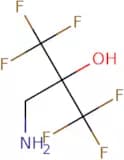
CAS:Versatile small molecule scaffoldFormula:C11H15N3Purezza:Min. 95%Peso molecolare:189.26 g/mol3-Amino-1,1,1-trifluoro-2-(trifluoromethyl)propan-2-ol
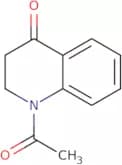
CAS:Versatile small molecule scaffoldFormula:C4H5F6NOPurezza:Min. 95%Peso molecolare:197.08 g/mol1-acetyl-1,2,3,4-tetrahydroquinolin-4-one
CAS:<p>1-Acetyl-1,2,3,4-tetrahydroquinolin-4-one is a chemical compound that can be prepared by nitration of quinolin-4-one with concentrated sulfuric acid. This chemical has the following constants:</p>Formula:C11H11NO2Purezza:Min. 95%Peso molecolare:189.21 g/mol3-Phenyl-cyclopentanone
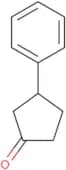
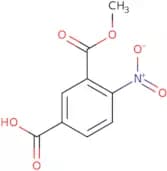
CAS:3-Phenyl-cyclopentanone is a conformational chiral reagent that is used in the synthesis of enantiomerically pure compounds. It is a substrate for many enzymatic reactions, such as alkylation, and can be used to prepare one of the two possible stereoisomers. 3-Phenyl-cyclopentanone has been shown to show positive dichroism in the visible region and negative dichroism in the near infrared region. This compound also has potential for use as an analytical reagent due to its ability to separate solutes based on their chromatographic properties.Formula:C11H12OPurezza:Min. 95%Peso molecolare:160.21 g/mol3-(Methoxycarbonyl)-4-nitrobenzoic acid
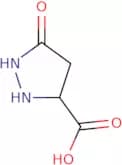
CAS:Versatile small molecule scaffoldFormula:C9H7NO6Purezza:Min. 95%Peso molecolare:225.16 g/mol5-Oxopyrazolidine-3-carboxylic acid
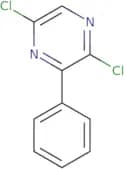
CAS:<p>Versatile small molecule scaffold</p>Formula:C4H6N2O3Purezza:Min. 95%Peso molecolare:130.1 g/mol2,5-Dichloro-3-phenylpyrazine
CAS:Versatile small molecule scaffoldFormula:C10H6Cl2N2Purezza:Min. 95%Peso molecolare:225.07 g/molDiethyl[(piperidin-2-yl)methyl]amine
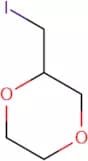
CAS:Versatile small molecule scaffoldFormula:C10H22N2Purezza:Min. 95%Peso molecolare:170.3 g/mol2-(iodomethyl)-1,4-dioxane
CAS:2-(iodomethyl)-1,4-dioxane is a cytotoxic moiety that binds to the capsid protein of a virus. It has been shown to be an antiviral agent against HIV-1 and other retroviruses. 2-(iodomethyl)-1,4-dioxane is hydrophobic, connecting and binds to hydrophobic regions in proteins. The compound was also observed to have antiviral activity against HIV-2 and SIV. 2-(iodomethyl)-1,4-dioxane was found to form hydrogen bonds with the capsid proteins of both HIV-1 and HIV-2, which are important for viral infectivity. This compound has been used as a linker for attaching cytotoxic molecules such as doxorubicin or camptothecin to liposomes or nanoparticles.Formula:C5H9IO2Purezza:Min. 95%Peso molecolare:228.03 g/molSpiro[benzo[d][1,3]dioxole-2,1'-cyclohexan]-5-amine
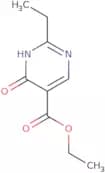
CAS:Versatile small molecule scaffoldFormula:C12H15NO2Purezza:Min. 95%Peso molecolare:205.26 g/molEthyl 2-ethyl-6-oxo-1,6-dihydropyrimidine-5-carboxylate
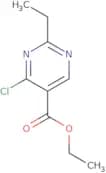
CAS:<p>Versatile small molecule scaffold</p>Formula:C9H12N2O3Purezza:Min. 95%Peso molecolare:196.2 g/molEthyl 4-chloro-2-ethylpyrimidine-5-carboxylate
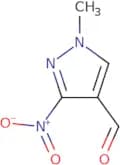
CAS:<p>Versatile small molecule scaffold</p>Formula:C9H11ClN2O2Purezza:Min. 95%Peso molecolare:214.65 g/mol1-Methyl-3-nitro-1H-pyrazole-4-carbaldehyde
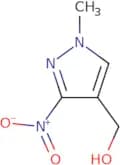
CAS:<p>Versatile small molecule scaffold</p>Formula:C5H5N3O3Purezza:Min. 95%Peso molecolare:155.11 g/mol(1-Methyl-3-nitro-1H-pyrazol-4-yl)methanol
CAS:<p>Versatile small molecule scaffold</p>Formula:C5H7N3O3Purezza:Min. 95%Peso molecolare:157.13 g/mol2-Methylpiperidine-1-carbonyl chloride
CAS:Versatile small molecule scaffoldFormula:C7H12ClNOPurezza:Min. 95%Peso molecolare:161.63 g/mol

![2-{Bicyclo[2.2.1]heptan-2-yl}acetonitrile](/_next/image/?url=https%3A%2Fstatic.cymitquimica.com%2Fproducts%2F3D%2Fthumb-webp%2FPCA11809.webp&w=3840&q=75)
![2-{4-Chloro-1H-pyrazolo[3,4-d]pyrimidin-1-yl}ethan-1-ol](/_next/image/?url=https%3A%2Fstatic.cymitquimica.com%2Fproducts%2F3D%2Fthumb-webp%2FPCA12715.webp&w=3840&q=75)
amine](/_next/image/?url=https%3A%2Fstatic.cymitquimica.com%2Fproducts%2F3D%2Fthumb-webp%2FPCA13752.webp&w=3840&q=75)
![Diethyl[(piperidin-2-yl)methyl]amine](/_next/image/?url=https%3A%2Fstatic.cymitquimica.com%2Fproducts%2F3D%2Fthumb-webp%2FPCA16809.webp&w=3840&q=75)
![Spiro[benzo[d][1,3]dioxole-2,1'-cyclohexan]-5-amine](/_next/image/?url=https%3A%2Fstatic.cymitquimica.com%2Fproducts%2F3D%2Fthumb-webp%2FPCA17941.webp&w=3840&q=75)