Building Blocks
Questa sezione contiene prodotti fondamentali per la sintesi di composti organici e biologici. Building blocks sono i materiali di partenza essenziali utilizzati per costruire molecole complesse attraverso varie reazioni chimiche. Svolgono un ruolo critico nella scoperta di farmaci, nella scienza dei materiali e nella ricerca chimica. Presso CymitQuimica, offriamo una gamma diversificata di building blocks di alta qualità per supportare le tue ricerche innovative e progetti industriali, assicurandoti di avere i componenti essenziali per una sintesi di successo.
Sottocategorie di "Building Blocks"
- Acidi boronici e derivati dell'acido boronico(5.778 prodotti)
- Building Blocks Chirali(1.243 prodotti)
- Building Blocks Idrocarburici(6.097 prodotti)
- Building Blocks organici(61.048 prodotti)
Trovati 203115 prodotti di "Building Blocks"
Ordinare per
Purezza (%)
0
100
|
0
|
50
|
90
|
95
|
100
2-[(6-Phenylpyridazin-3-yl)amino]ethan-1-ol
CAS:Versatile small molecule scaffoldFormula:C12H13N3OPurezza:Min. 95%Peso molecolare:215.25 g/mol3-(5-Methyl-1,2-oxazol-3-yl)propanoic acid
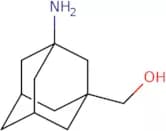
CAS:3-(5-Methyl-1,2-oxazol-3-yl)propanoic acid (MTPA) is an extracellular cationic surfactant that has been shown to be an efficient method for the synthesis of citric acid. MTPA is a stable and soluble compound that is used in the production of polymers, plastics, and cosmetics. It also has antioxidant effects due to its ability to scavenge free radicals. MTPA can be synthesized by reacting methyl 3-(5-methyl-1,2-oxazol-3-yl)propanoate with hydrochloric acid and chlorine gas or chlorate ions in aqueous solution.Formula:C7H9NO3Purezza:Min. 95%Peso molecolare:155.15 g/mol(3-Aminoadamantan-1-yl)methanol
CAS:<p>3-Aminoadamantan-1-ylmethanol (3MAM) is a carboxylic acid that is the target molecule in the hydrolysis of adamantane. It can be synthesized from 3-aminoadamantane by reacting with methanol, which reacts with the carboxylic acid group to form an ester. 3MAM is used as a neutralization agent for the synthesis of other compounds, such as 2-adamantanol. 3MAM is reactive with elemental mercury, which causes it to break down and form a carboxylic acid. Hydrolysis of 3MAM also occurs under acidic conditions and produces acetic acid, water, and hydrogen gas.</p>Formula:C11H19NOPurezza:Min. 95%Peso molecolare:181.27 g/molBenzyl prolinate hydrochloride
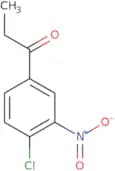
CAS:<p>Benzyl prolinate hydrochloride is a pressor drug that has been shown to be active against angiotensin-converting enzyme (ACE) and other enzymes. It is an inhibitor of the enzyme that converts angiotensin I to angiotensin II, which causes vasoconstriction and stimulates the release of aldosterone. The diethylamine salt of this compound is used as an antihypertensive agent in animals. Benzyl prolinate hydrochloride also inhibits esterase enzymes, which are involved in the metabolism of drugs such as barbiturates and benzodiazepines. This drug has been shown to inhibit both high-and low-activity forms of esterases.</p>Formula:C12H16ClNO2Purezza:Min. 95%Peso molecolare:241.71 g/mol1-(4-Chloro-3-nitrophenyl)propan-1-one
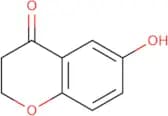
CAS:Versatile small molecule scaffoldFormula:C9H8ClNO3Purezza:Min. 95%Peso molecolare:213.62 g/mol6-Hydroxy-chroman-4-one
CAS:<p>6-Hydroxy-chroman-4-one is a synthetic compound that is structurally similar to flavonoids. It has been shown as an antipsychotic agent in schizophrenia, but needs to be tested further. 6-Hydroxy-chroman-4-one binds to the dopamine D2 receptor, which is one of the main receptors involved in schizophrenia. This binding prevents the receptor from functioning, reducing psychotic symptoms. There are also a number of benzisoxazole derivatives that have been synthesized and tested for antipsychotic properties. 6-Hydroxy-chroman-4-one binds to the dopamine D2 receptor and prevents it from functioning, reducing psychotic symptoms.<br>6-Hydroxy chroman 4 one can also be used as a medicine or synthesize with other compounds such as chloropropane or isoflavones to make medicines.</p>Formula:C9H8O3Purezza:Min. 95%Peso molecolare:164.16 g/mol1-Methyl-4-oxo-5-[3-(trifluoromethyl)phenyl]-1,4-dihydropyridine-3-carboxylic acid
CAS:Versatile small molecule scaffoldFormula:C14H10F3NO3Purezza:Min. 95%Peso molecolare:297.23 g/molMethyl 2-amino-4-methoxybutanoate hydrochloride
CAS:Versatile small molecule scaffoldFormula:C6H14ClNO3Purezza:Min. 95%Peso molecolare:183.63 g/molEthyl 4-tert-butylbenzoylformate
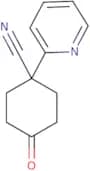
CAS:<p>Versatile small molecule scaffold</p>Formula:C14H18O3Purezza:Min. 95%Peso molecolare:234.29 g/mol4-Oxo-1-(2-pyridinyl)cyclohexanecarbonitrile
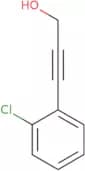
CAS:Versatile small molecule scaffoldFormula:C12H12N2OPurezza:Min. 95%Peso molecolare:200.24 g/mol3-(2-Chlorophenyl)prop-2-yn-1-ol
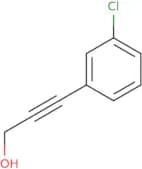
CAS:<p>Versatile small molecule scaffold</p>Formula:C9H7ClOPurezza:Min. 95%Peso molecolare:166.6 g/mol3-(3-Chloro-phenyl)-prop-2-yn-1-ol
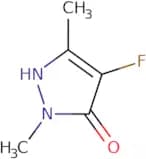
CAS:<p>Versatile small molecule scaffold</p>Formula:C9H7ClOPurezza:Min. 95%Peso molecolare:166.6 g/mol4-Fluoro-1,3-dimethyl-1H-pyrazol-5-ol
CAS:Versatile small molecule scaffoldFormula:C5H7FN2OPurezza:Min. 95%Peso molecolare:130.12 g/mol3-(Ethoxymethyl)aniline
CAS:Versatile small molecule scaffoldFormula:C9H13NOPurezza:Min. 95%Peso molecolare:151.21 g/mol3-[(Hexyloxy)methyl]aniline
CAS:<p>Versatile small molecule scaffold</p>Formula:C13H21NOPurezza:Min. 95%Peso molecolare:207.31 g/mol2-[[(1,1-Dimethylethyl)dimethylsilyl]oxy]phenol
CAS:<p>Versatile small molecule scaffold</p>Formula:C12H20O2SiPurezza:Min. 95%Peso molecolare:224.37 g/mol2-{[(Pyridin-2-yl)methyl]sulfanyl}ethan-1-ol
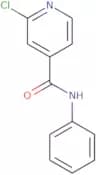
CAS:Versatile small molecule scaffoldFormula:C8H11NOSPurezza:Min. 95%Peso molecolare:169.25 g/mol2-Chloro-N-phenylisonicotinamide
CAS:<p>Versatile small molecule scaffold</p>Formula:C12H9ClN2OPurezza:Min. 95%Peso molecolare:232.67 g/mol3,6-Dimethyl-2-sulfanyl-3,4-dihydroquinazolin-4-one
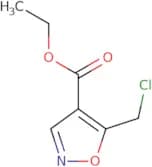
CAS:Versatile small molecule scaffoldFormula:C10H10N2OSPurezza:Min. 95%Peso molecolare:206.3 g/molEthyl 5-(chloromethyl)-1,2-oxazole-4-carboxylate
CAS:Versatile small molecule scaffoldFormula:C7H8ClNO3Purezza:Min. 95%Peso molecolare:189.59 g/mol
![2-[(6-Phenylpyridazin-3-yl)amino]ethan-1-ol](/_next/image/?url=https%3A%2Fstatic.cymitquimica.com%2Fproducts%2F3D%2Fthumb-webp%2FFDA07191.webp&w=3840&q=75)



![1-Methyl-4-oxo-5-[3-(trifluoromethyl)phenyl]-1,4-dihydropyridine-3-carboxylic acid](/_next/image/?url=https%3A%2Fstatic.cymitquimica.com%2Fproducts%2F3D%2Fthumb-webp%2FFDA09715.webp&w=3840&q=75)



![3-[(Hexyloxy)methyl]aniline](/_next/image/?url=https%3A%2Fstatic.cymitquimica.com%2Fproducts%2F3D%2Fthumb-webp%2FFDA17200.webp&w=3840&q=75)
![2-[[(1,1-Dimethylethyl)dimethylsilyl]oxy]phenol](/_next/image/?url=https%3A%2Fstatic.cymitquimica.com%2Fproducts%2F3D%2Fthumb-webp%2FFDA18046.webp&w=3840&q=75)
![2-{[(Pyridin-2-yl)methyl]sulfanyl}ethan-1-ol](/_next/image/?url=https%3A%2Fstatic.cymitquimica.com%2Fproducts%2F3D%2Fthumb-webp%2FFDA19191.webp&w=3840&q=75)