Building Blocks
Sottocategorie di "Building Blocks"
- Acidi boronici e derivati dell'acido boronico(5.780 prodotti)
- Building Blocks Chirali(1.239 prodotti)
- Building Blocks Idrocarburici(6.100 prodotti)
- Building Blocks organici(61.005 prodotti)
Trovati 205234 prodotti di "Building Blocks"
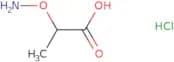
2-(Aminooxy)propanoic acid hydrochloride
CAS:Versatile small molecule scaffold
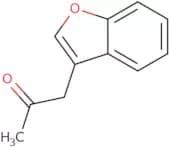
Formula:C3H8ClNO3Purezza:Min. 95%Peso molecolare:141.55 g/mol1-(1-Benzofuran-3-yl)propan-2-one
CAS:Versatile small molecule scaffold
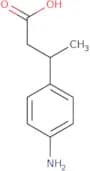
Formula:C11H10O2Purezza:Min. 95%Peso molecolare:174.2 g/mol3-(4-Aminophenyl)butanoic acid
CAS:Versatile small molecule scaffold
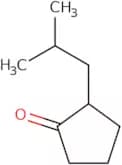
Formula:C10H13NO2Purezza:Min. 95%Peso molecolare:179.22 g/mol2-Iso-butylcyclopentanone
CAS:2-Iso-butylcyclopentanone is a ketone that has triplet and singlet states with rate constants of 8.9x10 M/s and 0.003 M/s, respectively. It has been shown to undergo photoelimination reactions in the presence of acyclic or cyclic triplet sensitizers. 2-Iso-butylcyclopentanone also undergoes a rate-limiting step in the formation of an excited state, which is called the S1 state or triplet. This reaction can be followed by measuring the fluorescence spectrum of the compound using a spectrofluorimeter, which shows that it emits light at wavelengths of 333 nm and 395 nm.
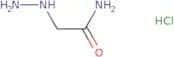
Formula:C9H16OPurezza:Min. 95%Peso molecolare:140.22 g/mol2-Hydrazinylacetamide hydrochloride
CAS:Versatile small molecule scaffold
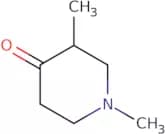
Formula:C2H8ClN3OPurezza:Min. 95%Peso molecolare:125.56 g/mol1,3-Dimethyl-4-piperidone
CAS:1,3-Dimethyl-4-piperidone is a colorless liquid at room temperature that is soluble in water and polar organic solvents. It is a protonated nucleophile that reacts with electrophiles to form alkylations. 1,3-Dimethyl-4-piperidone also reacts with chloride to form an imine, which can be hydrolyzed to yield piperidine. A Grignard reagent can be formed from 1,3-dimethyl-4-piperidone and potassium phosphate. The nature of the product obtained depends on the order of addition of reactants. 1,3-Dimethyl-4-piperidone has been shown to have a number of isomers.
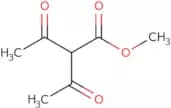
Formula:C7H13NOPurezza:Min. 95%Peso molecolare:127.19 g/molMethyl 2-acetyl-3-oxobutanoate
CAS:Methyl 2-acetyl-3-oxobutanoate (M2OB) is an acceptor molecule in the Michael reaction. The temperature of the reaction is usually between -20°C and 0°C. A primary amine, a trifluoroacetic acid, and vinylene are required for the reaction to occur. Methyl 2-acetyl-3-oxobutanoate can be converted to an amide or pyrazole derivatives by hydrogenolysis. M2OB has a carboxylate group that is hydrolyzed by acidic conditions. M2OB reacts with pentamethoxybenzene in a pyrimidine compound synthesis.
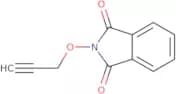
Formula:C7H10O4Purezza:Min. 95%Peso molecolare:158.15 g/mol2-prop-2-ynoxyisoindoline-1,3-dione
CAS:2-Prop-2-ynoxyisoindoline-1,3-dione is a multifunctional pyridine derivative with potential anticancer activity. It has been shown to inhibit HDAC and panobinostat, an inhibitor of histone deacetylase. 2-Prop-2-ynoxyisoindoline-1,3-dione has a solubility of less than 20 mg/mL in most solvents and is insoluble in water. This compound has been shown to have a low yield when synthesized from 2,6-dichloropyridine. These properties are advantageous for cell culture studies because they allow for the detection of changes in cellular morphology and the frequency of cell division. 2-Prop-2-ynoxyisoindoline-1,3-dione also has an activated aromatic ring that can be used as a prodrug to activate other compounds that need activation at this site (e.g., transition metals).
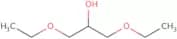
Formula:C11H7NO3Purezza:Min. 95%Peso molecolare:201.18 g/mol1,3-Diethoxy-2-propanol
CAS:1,3-Diethoxy-2-propanol is a crystalline cellulose derivative that is soluble in water. It has been shown to have synergistic effects with methyl ethyl in the treatment of bowel disease. It also has been shown to inhibit the growth of cervical cancer cells and inflammatory bowel disease. The chemical structure has a basic structure, which may be due to its reaction with p-hydroxybenzoic acid. The reaction mechanism is not well understood, but it may be related to its ability to bind to fluorophores such as fluorescence probe and asymmetric synthesis.
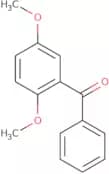
Formula:C7H16O3Purezza:Min. 95%Peso molecolare:148.2 g/mol(2,5-Dimethoxyphenyl)(phenyl)methanone
CAS:Versatile small molecule scaffold
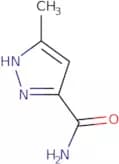
Formula:C15H14O3Purezza:Min. 95%Peso molecolare:242.27 g/mol5-Methyl-1H-pyrazole-3-carboxylic acid amide
CAS:Versatile small molecule scaffold
Formula:C5H7N3OPurezza:Min. 95%Peso molecolare:125.13 g/mol2-Hydroxy-3,3-dimethylbutanoic acid
CAS:2-Hydroxy-3,3-dimethylbutanoic acid is an organic compound that is used as a precursor to hypochlorite. It is synthesized by the catalytic oxidation of ethyl formate with a palladium catalyst in an alkaline solution. The resulting 2-hydroxy-3,3-dimethylbutanoic acid has a high yield and can be used as a starting material for the manufacture of sodium hypochlorite and other chlorinating agents. The optical purity of the product can be improved by using ruthenium or copper catalysts in place of palladium.
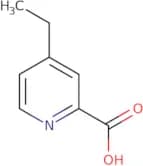
Formula:C6H12O3Purezza:Min. 95%Peso molecolare:132.16 g/mol4-Ethylpyridine-2-carboxylic acid
CAS:Versatile small molecule scaffold
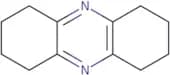
Formula:C8H9NO2Purezza:Min. 95%Peso molecolare:151.16 g/mol1,2,3,4,6,7,8,9-Octahydrophenazine
CAS:1,2,3,4,6,7,8,9-Octahydrophenazine is a cyclic ether that is usually obtained by the hydrogenation of diethylene. It is used as a pharmaceutical intermediate. 1,2,3,4,6,7,8,9-Octahydrophenazine has been shown to coordinate with metal ions such as copper and copper chromite. This coordination stabilizes the molecule and prevents decomposition. 1,2,3,4-Octahydrophenazine also has anti-inflammatory properties due to its ability to inhibit prostaglandin synthesis by inhibiting enzyme activity in the cyclooxygenase pathway.
Formula:C12H16N2Purezza:Min. 95%Peso molecolare:188.27 g/molEthyl 4,5-diaminonicotinate
CAS:Versatile small molecule scaffold
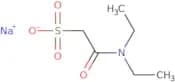
Formula:C8H11N3O2Purezza:Min. 95%Peso molecolare:181.19 g/molSodium (diethylcarbamoyl)methanesulfonate
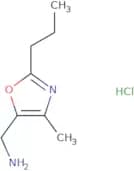
CAS:Versatile small molecule scaffoldFormula:C6H12NNaO4SPurezza:Min. 95%Peso molecolare:217.22 g/mol(4-Methyl-2-propyl-1,3-oxazol-5-yl)methanamine hydrochloride
CAS:Versatile small molecule scaffold
Formula:C8H15ClN2OPurezza:Min. 95%Peso molecolare:190.67 g/mol1-(2-Amino-2-phenylethyl)-1,2-dihydropyridin-2-one hydrochloride
CAS:Versatile small molecule scaffold
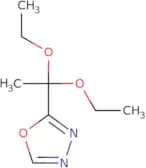
Formula:C13H15ClN2OPurezza:Min. 95%Peso molecolare:250.72 g/mol2-(1,1-Diethoxyethyl)-1,3,4-oxadiazole
CAS:Versatile small molecule scaffold
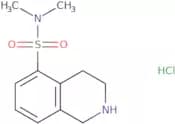
Formula:C8H14N2O3Purezza:Min. 95%Peso molecolare:186.21 g/molN,N-Dimethyl-1,2,3,4-tetrahydroisoquinoline-5-sulfonamide hydrochloride
CAS:Versatile small molecule scaffoldFormula:C11H17ClN2O2SPurezza:Min. 95%Peso molecolare:276.78 g/mol