Building Blocks
Sottocategorie di "Building Blocks"
- Acidi boronici e derivati dell'acido boronico(5.780 prodotti)
- Building Blocks Chirali(1.241 prodotti)
- Building Blocks Idrocarburici(6.100 prodotti)
- Building Blocks organici(61.023 prodotti)
Trovati 205289 prodotti di "Building Blocks"
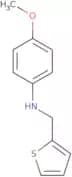
4-Methoxy-N-(thiophen-2-ylmethyl)aniline
CAS:Versatile small molecule scaffoldFormula:C12H13NOSPurezza:Min. 95%Peso molecolare:219.3 g/mol3-Methoxyphenyl isothiocyanate
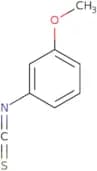
CAS:3-Methoxyphenyl isothiocyanate is a molecule that can be synthesized in the laboratory. It has been shown to have tuberculostatic activity and inhibits the growth of Mycobacterium tuberculosis by inhibiting protein synthesis. This compound also decreases the production of reactive oxygen species, which are implicated in many diseases, including cancer. 3-Methoxyphenyl isothiocyanate has been shown to inhibit the oxidation of thione compounds and also show antioxidant activity.
Formula:C8H7NOSPurezza:Min. 95%Peso molecolare:165.21 g/molButane-1,4-disulfonyl dichloride
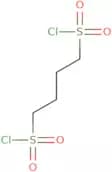
CAS:Butane-1,4-disulfonyl dichloride is a positron-emitting radiopharmaceutical that can be used as a marker for positron emission tomography. It is a diamagnetic molecule with an effective nuclear magnetic resonance (NMR) chemical shift of 2.2 ppm and has a diameter of about 0.5 nm. Butane-1,4-disulfonyl dichloride can be synthesized by reacting pyridine with peroxide in the presence of divalent metal ions such as Cu(II), Ni(II), or Zn(II). This compound is used to label radiotracers such as 3H, 14C, 11C, 15O, 13N, 18F, and 76Br for imaging biological tissues. The radiolabeled compound binds to methyl groups on proteins and lipids within the tissue to form positron emitting molecules that permit detection by PET scan. Butane-1,4-dis
Formula:C4H8Cl2O4S2Purezza:Min. 95%Peso molecolare:255.1 g/mol1-Methanesulfinyloctane
CAS:Versatile small molecule scaffold
Formula:C9H20OSPurezza:Min. 95%Peso molecolare:176.3 g/molN-(5-Acetamidopentyl)acetamide
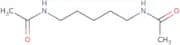
CAS:5-Acetamidopentylacetamide (5AA) is a molecule that is used in the treatment of cancer. It inhibits the growth of tumor cells by causing cell death in the cytoplasm. 5AA has been shown to inhibit the production of tumor necrosis factor alpha, as well as protein kinase C and phospholipase A2, which are involved in tumor cell proliferation. This molecule also induces apoptosis and inhibits viral replication by preventing viral RNA transcription. 5AA is a potent inducer of gene expression in diploid lymphoblastoid cells, which may be due to its ability to stimulate uptake and metabolism of the drug. It has been shown that 5AA can be taken up by fibroblast cells in culture through passive diffusion or an active transport mechanism. This agent is metabolized into an organic solvent and excreted via trichloroacetic acid (TCA) or salivary routes. The use of 5AA has
Formula:C9H18N2O2Purezza:Min. 95%Peso molecolare:186.25 g/molMethyl 2-methylidenepentanoate
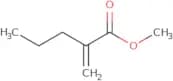
CAS:Versatile small molecule scaffold
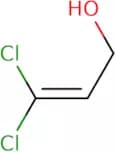
Formula:C7H12O2Purezza:Min. 95%Peso molecolare:128.17 g/mol3,3-Dichloroprop-2-en-1-ol
CAS:Versatile small molecule scaffold
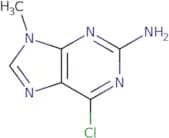
Formula:C3H4Cl2OPurezza:Min. 95%Peso molecolare:126.97 g/mol6-chloro-9-methyl-9H-purin-2-amine
CAS:6-chloro-9-methyl-9H-purin-2-amine is a cytostatic agent that is used in the synthesis of other compounds. It is prepared by the quaternization of 6-chloropurine with methylmagnesium chloride followed by amination with methyl iodide. Purinium chloride is then obtained by reacting chloroform with potassium hydrogen fluoride and hydrochloric acid. This product can be used as an intermediate in the synthesis of purines, x-rays, and iodides. 6-Chloro-9-[methyl(3,5,6 -trimethylphenyl)amino]purin-2 amine has been shown to have cytostatic activity against human lymphocytes in vitro.
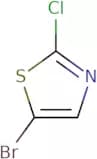
Formula:C6H6ClN5Purezza:Min. 95%Peso molecolare:183.6 g/mol5-Bromo-2-chlorothiazole
CAS:5-Bromo-2-chlorothiazole is a dihalogenated aromatic heterocycle that has been synthesized from tetrachloromethane and lithium bromide. This molecule has been used as a reagent for the synthesis of other heterocycles and has also been shown to yield high yields in reactions with other compounds.
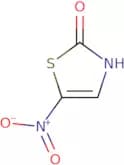
Formula:C3HBrClNSPurezza:Min. 95%Peso molecolare:198.47 g/mol5-Nitro-2,3-dihydro-1,3-thiazol-2-one
CAS:Versatile small molecule scaffold
Formula:C3H2N2O3SPurezza:Min. 95%Peso molecolare:146.13 g/molBis(2-dimethylaminoethyl) Ether
CAS:Prodotto controllatoBis(2-dimethylaminoethyl) Ether is a growth factor that is used to grow cells in culture. It has been shown to stimulate the proliferation of cells by stimulating the release of amines, water vapor and ft-ir spectroscopy from the cell. The molecule also has a cavity that can be filled with hydrochloric acid and sodium carbonate, which generates hydrogen gas as a result of an exothermic reaction. This molecule is also able to form hydrogen bonding interactions with other molecules, such as ethylene diamine.
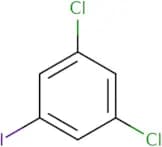
Formula:C8H20N2OPurezza:Min. 95%Peso molecolare:160.26 g/mol1,3-Dichloro-5-iodobenzene
CAS:1,3-Dichloro-5-iodobenzene is a synthetic chemical that belongs to the class of trifluoroacetic acid. It hydrolyzes in water to give hydrochloric acid, which is an irritant. 1,3-Dichloro-5-iodobenzene has been shown to inhibit the activity of cytochrome P450 enzymes. It has two isomers and can be used as a macrocyclic probe for nucleophilic attack on aromatic rings. The stereoselectivity of this compound is also selective for the less hindered side of the biphenyl ring.
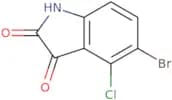
Formula:C6H3Cl2IPurezza:Min. 95%Peso molecolare:272.89 g/mol5-Bromo-4-chloro-2,3-dihydro-1H-indole-2,3-dione
CAS:Versatile small molecule scaffold
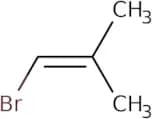
Formula:C8H3BrClNO2Purezza:Min. 95%Peso molecolare:260.47 g/mol1-Bromo-2-methyl-1-propene
CAS:1-Bromo-2-methyl-1-propene is a brominated aliphatic solvent that is used as an intermediate in organic synthesis. The compound has been shown to be an efficient inhibitor of the enzyme pancreatic lipase, which is involved in the digestion of fats and oils. Autofluorescent properties are observed with this compound, which may be due to its ability to absorb light at wavelengths greater than 400 nm and reemit it at wavelengths less than 400 nm. 1-Bromo-2-methyl-1-propene also has antibacterial activity, with a kinetic energy of about 28 kcal/mol, which is slightly higher than that of penicillin G (19 kcal/mol). This property makes it a potential drug for preventing infections in patients undergoing surgery. 1-Bromo-2-methyl-1-propene can also inhibit lipofuscin production and has been shown to have therapeutic effects on age related macular degener
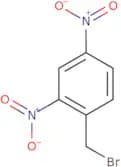
Formula:C4H7BrPurezza:Min. 95%Peso molecolare:135 g/mol1-(Bromomethyl)-2,4-dinitrobenzene
CAS:1-(Bromomethyl)-2,4-dinitrobenzene is a phenacyl derivative that can be used for the synthesis of β-unsaturated aldehydes. It is activated with chloride and reacted with various halides to generate the desired product. 1-(Bromomethyl)-2,4-dinitrobenzene has been shown to react with photoexcited acceptors such as benzophenone and tetrachloroethene to produce trisubstituted products. The mechanistic study of this compound provides insight into the activation process and the resulting products.
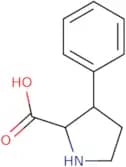
Formula:C7H5BrN2O4Purezza:Min. 95%Peso molecolare:261.03 g/mol3-Phenylpyrrolidine-2-carboxylic acid
CAS:3-Phenylpyrrolidine-2-carboxylic acid is a peptidomimetic that has been shown to have high affinity for melanocortin receptors. It is an agonist of the melanocortin receptor MC3 and MC4. 3-Phenylpyrrolidine-2-carboxylic acid has been synthesized, and its pharmacological properties have been simulated using molecular dynamic simulations. The molecule has a carbonyl group in the skeleton, which allows it to form steric interactions with the receptor. These interactions are important for the activation of the receptor by 3-Phenylpyrrolidine-2-carboxylic acid.
Formula:C11H13NO2Purezza:Min. 95%Peso molecolare:191.23 g/mol2-(Dimethylamino)-1-(3,4,5-trifluorophenyl)ethan-1-ol
CAS:Versatile small molecule scaffoldFormula:C10H12F3NOPurezza:Min. 95%Peso molecolare:219.2 g/mol2-Azaspiro[4.4]nonane-2-carboxamide
CAS:Versatile small molecule scaffold
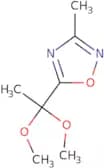
Formula:C9H16N2OPurezza:Min. 95%Peso molecolare:168.2 g/mol5-(1,1-Dimethoxyethyl)-3-methyl-1,2,4-oxadiazole
CAS:Versatile small molecule scaffold
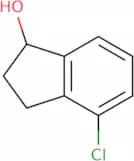
Formula:C7H12N2O3Purezza:Min. 95%Peso molecolare:172.18 g/mol(1R)-4-Chloro-2,3-dihydro-1H-inden-1-ol
CAS:Versatile small molecule scaffold
Formula:C9H9ClOPurezza:Min. 95%Peso molecolare:168.62 g/mol



![2-Azaspiro[4.4]nonane-2-carboxamide](/_next/image/?url=https%3A%2Fstatic.cymitquimica.com%2Fproducts%2F3D%2Fthumb-webp%2FCZC07966.webp&w=3840&q=75)