Building Blocks
Sottocategorie di "Building Blocks"
- Acidi boronici e derivati dell'acido boronico(5.784 prodotti)
- Building Blocks Chirali(1.243 prodotti)
- Building Blocks Idrocarburici(6.105 prodotti)
- Building Blocks organici(61.066 prodotti)
Trovati 205426 prodotti di "Building Blocks"
Cyclopropyl(3,4-dimethylphenyl)methanone
CAS:Cyclopropyl(3,4-dimethylphenyl)methanone (CPM) is a synthetic cannabinoid that has been shown to have similar effects to the natural cannabinoids found in cannabis. CPM binds to and activates the CB2 receptor, which is found on cells of the immune system, brain, and other organs. It has been studied for its ability to reduce glioma tumor growth in mice by inhibiting glutamate release. The molecular modeling study showed that CPM binds to the receptor with a geometry similar to other CB2 agonists like JWH-133. In addition, CPM inhibits locomotor activity in rats and has been shown to produce some symptoms of anxiety in mice. A receptor knockout study with mice showed that CPM can bind to CB2 receptors without activating them. X-ray diffraction data indicated that CPM is an achiral molecule with an idealized molecular geometry of "s".
Formula:C12H14OPurezza:Min. 95%Peso molecolare:174.24 g/mol1,9,10,11,12,12-Hexachloro-5-oxatetracyclo[7.2.1.0²,⁸.0⁴,⁶]dodec-10-ene-3,7-dione
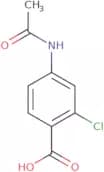
CAS:Versatile small molecule scaffoldFormula:C11H4Cl6O3Purezza:Min. 95%Peso molecolare:396.9 g/mol2-Chloro-4-acetamidobenzoic acid
CAS:2-Chloro-4-acetamidobenzoic acid is a nonsteroidal anti-inflammatory drug that binds to cyclooxygenase, thereby inhibiting the production of prostaglandins. 2-Chloro-4-acetamidobenzoic acid has been shown to be cytotoxic in vitro, eliciting DNA damage and cell death in some cells. This effect may be due to inhibition of mitochondrial function by 2-chloro-4-acetamidobenzoic acid. The drug has also been found to inhibit the growth of human leukemia cells and mouse mammary tumor cells in vitro. 2-Chloro-4-acetamidobenzoic acid is used as a research tool for studying the effects of cyclooxygenase inhibitors on cell cycle analysis, because it does not cause erythrocyte hemolysis.
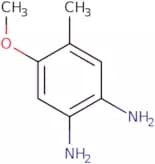
Formula:C9H8ClNO3Purezza:Min. 95%Peso molecolare:213.62 g/mol4-Methoxy-5-methylbenzene-1,2-diamine
CAS:Versatile small molecule scaffold
Formula:C8H12N2OPurezza:90%MinPeso molecolare:152.19 g/mol3-[(2-Nitrophenyl)amino]propanoic acid
CAS:Versatile small molecule scaffold
Formula:C9H10N2O4Purezza:Min. 95%Peso molecolare:210.19 g/molrac-(2R,6S)-2,4,6-Trimethylmorpholine
CAS:Versatile small molecule scaffold
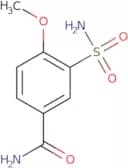
Formula:C7H15NOPurezza:Min. 95%Peso molecolare:129.2 g/mol4-Methoxy-3-sulfamoylbenzamide
CAS:Versatile small molecule scaffold
Formula:C8H10N2O4SPurezza:Min. 95%Peso molecolare:230.24 g/molN-[3-(Dimethylamino)propyl]-2-hydroxybenzamide
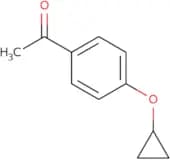
CAS:Versatile small molecule scaffoldFormula:C12H18N2O2Purezza:Min. 95%Peso molecolare:222.28 g/mol1-(4-Cyclopropoxyphenyl)ethan-1-one
CAS:1-(4-Cyclopropoxyphenyl)ethan-1-one is a stable, colorless ether. It is used in the acylation of aromatic or aliphatic compounds and has been shown to undergo acylation reactions with nitric acid, sulfuric acid, or phosphoric acid. This compound can also be cleaved with hydrochloric acid to form propionaldehyde.
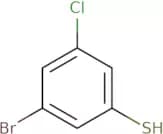
Formula:C11H12O2Purezza:Min. 95%Peso molecolare:176.21 g/mol3-Bromo-5-chlorobenzene-1-thiol
CAS:Versatile small molecule scaffold
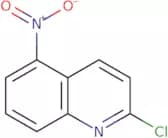
Formula:C6H4BrClSPurezza:Min. 95%Peso molecolare:223.52 g/mol2-Chloro-5-nitroquinoline
CAS:2-Chloro-5-nitroquinoline is an oxidized aminoquinoline that is synthesized from nitric acid and benzene. It contains a nitro group, which makes it susceptible to oxidation. 2-Chloro-5-nitroquinoline is used as a solvent for rubber, plastics, and waxes. It can also be used as a solvent in the production of quinolines and other nitrogen compounds. Nitration of this compound produces 2-chloroquinoline, which can be transformed into 2-chloroquinolinium hydroxide by reaction with sodium hydroxide. The substituent on the ortho position can be determined by oleum or bromine water.
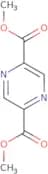
Formula:C9H5ClN2O2Purezza:Min. 95%Peso molecolare:208.6 g/molDimethyl Pyrazine-2,5-dicarboxylate
CAS:Versatile small molecule scaffold
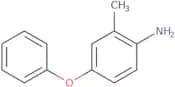
Formula:C8H8N2O4Purezza:Min. 95%Peso molecolare:196.16 g/mol2-Methyl-4-phenoxyaniline
CAS:Versatile small molecule scaffold
Formula:C13H13NOPurezza:Min. 95%Peso molecolare:199.25 g/mol3-tert-Butylbenzene-1-sulfonamide
CAS:Versatile small molecule scaffold
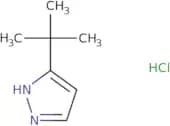
Formula:C10H15NO2SPurezza:Min. 95%Peso molecolare:213.3 g/mol3-t-Butyl-1H-pyrazole hydrochloride
CAS:Versatile small molecule scaffold
Formula:C7H13ClN2Purezza:Min. 95%Peso molecolare:160.64 g/molN-{8-Cyclopropyl-8-azabicyclo[3.2.1]octan-3-ylidene}hydroxylamine
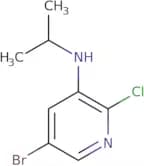
CAS:Versatile small molecule scaffoldFormula:C10H16N2OPurezza:Min. 95%Peso molecolare:180.25 g/mol5-Bromo-2-chloro-N-(propan-2-yl)pyridin-3-amine
CAS:Versatile small molecule scaffoldFormula:C8H10BrClN2Purezza:Min. 95%Peso molecolare:249.53 g/moltert-Butyl 1-(piperidin-3-yl)-2-azabicyclo[3.2.0]heptane-2-carboxylate
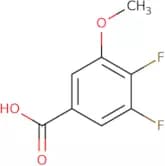
CAS:Versatile small molecule scaffoldFormula:C16H28N2O2Purezza:Min. 95%Peso molecolare:280.41 g/mol3,4-Difluoro-5-methoxybenzoic acid
CAS:3,4-Difluoro-5-methoxybenzoic acid is a reactive compound that is produced as a Grignard reagent. It reacts with other organic compounds to form new compounds. 3,4-Difluoro-5-methoxybenzoic acid contains the methoxy group, which is found in many drugs. The methoxy group can be removed from 3,4-Difluoro-5-methoxybenzoic acid by reacting it with an alkali metal such as sodium hydroxide to produce 3,4-dihydroxybenzoic acid.
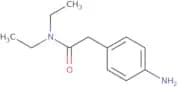
Formula:C8H6F2O3Purezza:Min. 95%Peso molecolare:188.13 g/mol2-(4-Aminophenyl)-N,N-diethylacetamide
CAS:Versatile small molecule scaffoldFormula:C12H18N2OPurezza:Min. 95%Peso molecolare:206.28 g/mol


![1,9,10,11,12,12-Hexachloro-5-oxatetracyclo[7.2.1.0²,⁸.0⁴,⁶]dodec-10-ene-3,7-dione](/_next/image/?url=https%3A%2Fstatic.cymitquimica.com%2Fproducts%2F3D%2Fthumb-webp%2FNBA66780.webp&w=3840&q=75)
![3-[(2-Nitrophenyl)amino]propanoic acid](/_next/image/?url=https%3A%2Fstatic.cymitquimica.com%2Fproducts%2F3D%2Fthumb-webp%2FNBA58458.webp&w=3840&q=75)
![N-[3-(Dimethylamino)propyl]-2-hydroxybenzamide](/_next/image/?url=https%3A%2Fstatic.cymitquimica.com%2Fproducts%2F3D%2Fthumb-webp%2FNBA39443.webp&w=3840&q=75)

![N-{8-Cyclopropyl-8-azabicyclo[3.2.1]octan-3-ylidene}hydroxylamine](/_next/image/?url=https%3A%2Fstatic.cymitquimica.com%2Fproducts%2F3D%2Fthumb-webp%2FMXB16091.webp&w=3840&q=75)
![tert-Butyl 1-(piperidin-3-yl)-2-azabicyclo[3.2.0]heptane-2-carboxylate](/_next/image/?url=https%3A%2Fstatic.cymitquimica.com%2Fproducts%2F3D%2Fthumb-webp%2FMKD78712.webp&w=3840&q=75)