Building Blocks
Questa sezione contiene prodotti fondamentali per la sintesi di composti organici e biologici. Building blocks sono i materiali di partenza essenziali utilizzati per costruire molecole complesse attraverso varie reazioni chimiche. Svolgono un ruolo critico nella scoperta di farmaci, nella scienza dei materiali e nella ricerca chimica. Presso CymitQuimica, offriamo una gamma diversificata di building blocks di alta qualità per supportare le tue ricerche innovative e progetti industriali, assicurandoti di avere i componenti essenziali per una sintesi di successo.
Sottocategorie di "Building Blocks"
- Acidi boronici e derivati dell'acido boronico(5.778 prodotti)
- Building Blocks Chirali(1.243 prodotti)
- Building Blocks Idrocarburici(6.097 prodotti)
- Building Blocks organici(61.045 prodotti)
Trovati 203842 prodotti di "Building Blocks"
Ordinare per
Purezza (%)
0
100
|
0
|
50
|
90
|
95
|
100
(2S)-2-[(3,4,5-Trimethoxyphenyl)formamido]propanoic acid
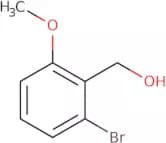
CAS:<p>Versatile small molecule scaffold</p>Formula:C13H17NO6Purezza:Min. 95%Peso molecolare:283.28 g/mol(2-Bromo-6-methoxyphenyl)methanol
CAS:Versatile small molecule scaffoldFormula:C8H9BrO2Purezza:Min. 95%Peso molecolare:217.06 g/molMethyl 2-(6-hydroxy-2-methylpyrimidin-4-yl)acetate
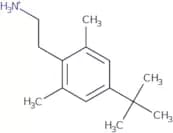
CAS:Versatile small molecule scaffoldFormula:C8H10N2O3Purezza:Min. 95%Peso molecolare:182.18 g/mol2-(4-tert-Butyl-2,6-dimethylphenyl)ethan-1-amine
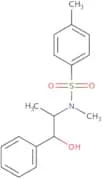
CAS:Prodotto controllato<p>Versatile small molecule scaffold</p>Formula:C14H24NPurezza:Min. 95%Peso molecolare:206.35 g/mol1-Hydroxy-N-methyl-S-(4-methylphenyl)-1-phenylpropane-2-sulfonamido
CAS:Versatile small molecule scaffoldFormula:C17H21NO3SPurezza:Min. 95%Peso molecolare:319.4 g/mol1-Benzyl-4-methyl-2,3,4,5-tetrahydro-1H-1,5-benzodiazepine
CAS:<p>Versatile small molecule scaffold</p>Formula:C17H20N2Purezza:Min. 95%Peso molecolare:252.35 g/mol7-Methoxy-3,4-dihydro-2H-benzo[b][1,4]oxazine
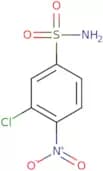
CAS:Versatile small molecule scaffoldFormula:C9H11NO2Purezza:Min. 95%Peso molecolare:165.19 g/mol3-Chloro-4-nitrobenzene-1-sulfonamide
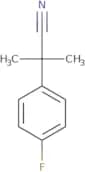
CAS:<p>3-Chloro-4-nitrobenzene-1-sulfonamide is a potent antiproliferative agent that binds to the bcl-xl protein and inhibits cancer cell growth. It has been shown to induce apoptosis in cancer cells, and has been found to inhibit the expression of the mcl-1 protein. 3-Chloro-4-nitrobenzene-1-sulfonamide binds directly to the bcl2 family proteins Bax and Bak, which are involved in regulating apoptosis, leading to cell death. This drug also causes dose dependent inhibition of proliferation in cancer cells at low concentrations while not affecting healthy cells.</p>Formula:C6H5ClN2O4SPurezza:Min. 95%Peso molecolare:236.63 g/mol2-(4-Fluorophenyl)-2-methylpropanenitrile
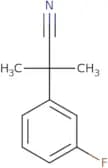
CAS:<p>Versatile small molecule scaffold</p>Formula:C10H10FNPurezza:Min. 95%Peso molecolare:163.19 g/mol2-(3-Fluorophenyl)-2-methylpropanenitrile
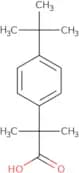
CAS:Versatile small molecule scaffoldFormula:C10H10FNPurezza:Min. 95%Peso molecolare:163.19 g/mol2-(4-tert-Butylphenyl)-2-methylpropanoic acid
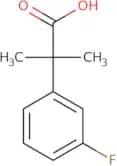
CAS:Versatile small molecule scaffoldFormula:C14H20O2Purezza:Min. 95%Peso molecolare:220.31 g/mol2-(3-Fluorophenyl)-2-methylpropanoic acid
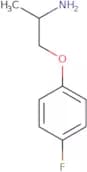
CAS:<p>Versatile small molecule scaffold</p>Formula:C10H11FO2Purezza:Min. 95%Peso molecolare:182.2 g/mol1-(2-Aminopropoxy)-4-fluorobenzene
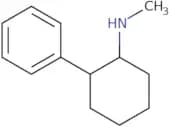
CAS:<p>Versatile small molecule scaffold</p>Formula:C9H12FNOPurezza:Min. 95%Peso molecolare:169.2 g/molN-Methyl-2-phenylcyclohexan-1-amine
CAS:<p>Versatile small molecule scaffold</p>Formula:C13H19NPurezza:Min. 95%Peso molecolare:189.3 g/mol[1-(3-Methoxyphenyl)cyclopentyl]methanamine
CAS:Versatile small molecule scaffoldFormula:C13H19NOPurezza:Min. 95%Peso molecolare:205.3 g/mol3,5-Dimethyldodecanoic acid
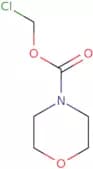
CAS:3,5-Dimethyldodecanoic acid is a fatty acid with high densities that has potential use in pest control. It is synthesized by the enantioselective addition of malonic acid to oleic acid and it has been shown to be a potent attractant for the target pest. The stereoisomers of 3,5-dimethyldodecanoic acid are active against different pests, which may be due to their ability to bind to specific receptors on the insect's antennae. This compound could also be used as a chromatographic stationary phase for separating stereoisomers.Formula:C14H28O2Purezza:Min. 95%Peso molecolare:228.37 g/molchloromethyl morpholine-4-carboxylate
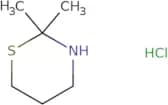
CAS:Versatile small molecule scaffoldFormula:C6H10ClNO3Purezza:Min. 95%Peso molecolare:179.6 g/mol2,2-Dimethyl-1,3-thiazinane hydrochloride
CAS:Versatile small molecule scaffoldFormula:C6H14ClNSPurezza:Min. 95%Peso molecolare:167.7 g/mol4-[(1S)-1-Hydroxyethyl]phenol
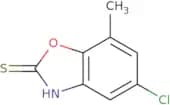
CAS:4-[(1S)-1-Hydroxyethyl]phenol is a compound that is metabolized to 4-hydroxymandelic acid and 4-hydroxyphenylglycine by microbial metabolism. This chemical has been shown to be a substrate for the enzyme dehydrogenase, which may be flavoprotein or polyacrylamide gel. The regiospecificity of the reaction was determined through enantiomer analysis of vanillyl alcohol as the product. Enantiomers were separated using a short-chain alkyl ester, although other solvents such as acetone may be used. The eugenol isomers are present in the reaction products and they can be determined by gas chromatography or liquid chromatography with a mass spectrometer detector. 4-[(1S)-1-Hydroxyethyl]phenol has an optimum pH of 7 and its reactivity increases at pH values below 6.5 or above 8.5.Formula:C8H10O2Purezza:Min. 95%Peso molecolare:138.16 g/mol5-Chloro-7-methyl-1,3-benzoxazole-2-thiol
CAS:5-Chloro-7-methyl-1,3-benzoxazole-2-thiol is a benzoxazole that has been shown to have high binding affinity for the 5HT3 receptor in the distal colon. It has been proposed as a potential therapeutic agent for irritable bowel syndrome (IBS). This compound may be useful for treating IBS because it has been shown to act as an antagonist of the 5HT3 receptor, which is involved in the regulation of visceral pain. 5Chloro-7-methyl-1,3-benzoxazole-2-thiol does not bind to other receptors and does not show any agonist activity.Formula:C8H6ClNOSPurezza:Min. 95%Peso molecolare:199.66 g/mol
![(2S)-2-[(3,4,5-Trimethoxyphenyl)formamido]propanoic acid](/_next/image/?url=https%3A%2Fstatic.cymitquimica.com%2Fproducts%2F3D%2Fthumb-webp%2FTDA70967.webp&w=3840&q=75)



![7-Methoxy-3,4-dihydro-2H-benzo[b][1,4]oxazine](/_next/image/?url=https%3A%2Fstatic.cymitquimica.com%2Fproducts%2F3D%2Fthumb-webp%2FTDA73522.webp&w=3840&q=75)
![[1-(3-Methoxyphenyl)cyclopentyl]methanamine](/_next/image/?url=https%3A%2Fstatic.cymitquimica.com%2Fproducts%2F3D%2Fthumb-webp%2FTDA75930.webp&w=3840&q=75)

![4-[(1S)-1-Hydroxyethyl]phenol](/_next/image/?url=https%3A%2Fstatic.cymitquimica.com%2Fproducts%2F3D%2Fthumb-webp%2FTDA78159.webp&w=3840&q=75)