Building Blocks
Sottocategorie di "Building Blocks"
- Acidi boronici e derivati dell'acido boronico(5.780 prodotti)
- Building Blocks Chirali(1.241 prodotti)
- Building Blocks Idrocarburici(6.100 prodotti)
- Building Blocks organici(61.023 prodotti)
Trovati 205289 prodotti di "Building Blocks"
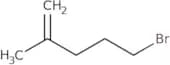
5-bromo-2-methylpent-1-ene
CAS:5-bromo-2-methylpent-1-ene is an organic compound that belongs to the group of isopentenyl compounds. It is a synthetic compound that has been shown to be effective as an antimicrobial agent. 5-bromo-2-methylpent-1-ene has a copper complex which binds to the copper and diphosphate groups in bacterial DNA, preventing replication and transcription. This drug also inhibits the synthesis of proteins by binding to ribosomes, thereby inhibiting protein synthesis. The antimicrobial activity of 5-bromo-2-methylpent-1e is due to its ability to inhibit RNA synthesis and DNA synthesis in bacteria.
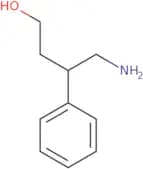
Formula:C6H11BrPurezza:Min. 95%Peso molecolare:163.06 g/mol4-Amino-3-phenylbutan-1-ol
CAS:Versatile small molecule scaffold
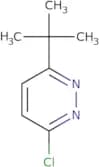
Formula:C10H15NOPurezza:Min. 95%Peso molecolare:165.23 g/mol3-tert-Butyl-6-chloropyridazine
CAS:Versatile small molecule scaffold
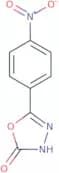
Formula:C8H11ClN2Purezza:Min. 95%Peso molecolare:170.64 g/mol5-(4-Nitrophenyl)-1,3,4-oxadiazol-2-ol
CAS:Nitrophenols, such as 5-(4-nitrophenyl)-1,3,4-oxadiazol-2-ol (NPO), are a class of drugs that bind to the c1-6 alkyl receptor. This binding causes receptor desensitization and leads to the inhibition of the release of neurotransmitters such as acetylcholine, histamine, and serotonin. NPO is an excipient in some pharmaceuticals and may also be used for treatment of high blood pressure or damaged heart tissue. The carboxylic acid group on NPO can react with sodium ions to form a salt called sodium nitrophenolate. The residue from this reaction can be removed by adding a cationic polymer before use.
Formula:C8H5N3O4Purezza:Min. 95%Peso molecolare:207.14 g/mol5-Methyl-2-sulfanyl-4H,7H-[1,2,4]triazolo[1,5-a]pyrimidin-7-one
CAS:Versatile small molecule scaffold
Formula:C6H6N4OSPurezza:Min. 95%Peso molecolare:182.2 g/mol1',2'-Dihydrospiro[cyclopentane-1,3'-indole]-2'-one
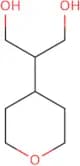
CAS:1',2'-Dihydrospiro[cyclopentane-1,3'-indole]-2'-one is a bromodomain inhibitor that inhibits the function of the bromodomain and prevents it from binding to acetylated lysine residues in the N-terminal domain of histones. This drug has been shown to inhibit the growth and proliferation of cancer cells in vitro. 1',2'-Dihydrospiro[cyclopentane-1,3'-indole]-2'-one is used as an excipient or diluent in pharmaceutical formulations. The drug is also used therapeutically as bromodomain inhibitors for cancers including breast, prostate, and colorectal cancers.Formula:C12H13NOPurezza:Min. 95%Peso molecolare:187.24 g/mol2-(Oxan-4-yl)propane-1,3-diol
CAS:Versatile small molecule scaffold
Formula:C8H16O3Purezza:Min. 95%Peso molecolare:160.21 g/mol2-Ethoxy-1,3-oxazole-4-carboxamide
CAS:Versatile small molecule scaffold
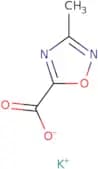
Formula:C6H8N2O3Purezza:Min. 95%Peso molecolare:156.1 g/molPotassium 3-methyl-1,2,4-oxadiazole-5-carboxylate
CAS:Versatile small molecule scaffold
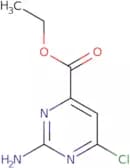
Formula:C4H3KN2O3Purezza:Min. 95%Peso molecolare:166.18 g/molEthyl 2-amino-6-chloropyrimidine-4-carboxylate
CAS:Versatile small molecule scaffoldFormula:C7H8ClN3O2Purezza:Min. 95%Peso molecolare:201.61 g/moltert-Butyl N-[(5-aminopyrimidin-2-yl)methyl]carbamate
CAS:Versatile small molecule scaffold
Formula:C10H16N4O2Purezza:Min. 95%Peso molecolare:224.3 g/mol2,4-Dibromo-1,3-oxazole
CAS:2,4-Dibromo-1,3-oxazole is a nitro compound and an important intermediate in the synthesis of herbicides. It is also used to produce coatings and as a reagent for organic synthesis. The compound can be synthesized by the palladium-catalyzed coupling of phenyl bromides with 2,4-dichloro-1,3-oxazole. 2,4-Dibromo-1,3-oxazole has been shown to have potent horticultural activity against plant diseases caused by anions such as fusarium oxysporum. This compound has a pharmacokinetic profile that is favourable for oral administration in humans. The lysine analogues are converted into picolinic acid and then to 2,4-dibromo-1,3-oxazole in the body. The dialkylamino substituents on the molecule are believed to be responsible
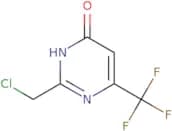
Formula:C3HBr2NOPurezza:Min. 95%Peso molecolare:226.85 g/mol2-(Chloromethyl)-6-(trifluoromethyl)pyrimidin-4-ol
CAS:Versatile small molecule scaffold
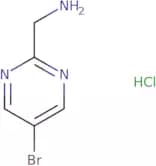
Formula:C6H4ClF3N2OPurezza:Min. 95%Peso molecolare:212.56 g/mol(5-bromopyrimidin-2-yl)methanamine hcl
CAS:Versatile small molecule scaffold
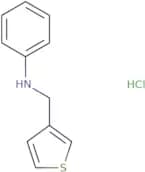
Formula:C5H7BrClN3Purezza:Min. 95%Peso molecolare:224.49 g/molN-(Thiophen-3-ylmethyl)aniline hydrochloride
CAS:Versatile small molecule scaffold
Formula:C11H12ClNSPurezza:Min. 95%Peso molecolare:225.74 g/mol{4-[(3-Fluorophenyl)methoxy]phenyl}methanamine hydrochloride
CAS:Versatile small molecule scaffold
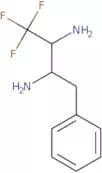
Formula:C14H15ClFNOPurezza:Min. 95%Peso molecolare:267.72 g/mol1,1,1-Trifluoro-4-phenylbutane-2,3-diamine
CAS:Versatile small molecule scaffold
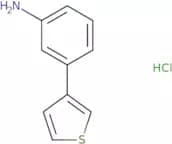
Formula:C10H13F3N2Purezza:Min. 95%Peso molecolare:218.22 g/mol3-(Thiophen-3-yl)aniline hydrochloride
CAS:Versatile small molecule scaffold
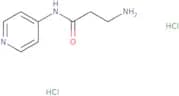
Formula:C10H10ClNSPurezza:Min. 95%Peso molecolare:211.71 g/mol3-Amino-N-(pyridin-4-yl)propanamide dihydrochloride
CAS:Versatile small molecule scaffoldFormula:C8H13Cl2N3OPurezza:Min. 95%Peso molecolare:238.11 g/mol

![5-Methyl-2-sulfanyl-4H,7H-[1,2,4]triazolo[1,5-a]pyrimidin-7-one](/_next/image/?url=https%3A%2Fstatic.cymitquimica.com%2Fproducts%2F3D%2Fthumb-webp%2FRBA12281.webp&w=3840&q=75)
![1',2'-Dihydrospiro[cyclopentane-1,3'-indole]-2'-one](/_next/image/?url=https%3A%2Fstatic.cymitquimica.com%2Fproducts%2F3D%2Fthumb-webp%2FRBA05867.webp&w=3840&q=75)
![tert-Butyl N-[(5-aminopyrimidin-2-yl)methyl]carbamate](/_next/image/?url=https%3A%2Fstatic.cymitquimica.com%2Fproducts%2F3D%2Fthumb-webp%2FQZB60083.webp&w=3840&q=75)

![{4-[(3-Fluorophenyl)methoxy]phenyl}methanamine hydrochloride](/_next/image/?url=https%3A%2Fstatic.cymitquimica.com%2Fproducts%2F3D%2Fthumb-webp%2FQZB52951.webp&w=3840&q=75)