


Building Blocks
Questa sezione contiene prodotti fondamentali per la sintesi di composti organici e biologici. Building blocks sono i materiali di partenza essenziali utilizzati per costruire molecole complesse attraverso varie reazioni chimiche. Svolgono un ruolo critico nella scoperta di farmaci, nella scienza dei materiali e nella ricerca chimica. Presso CymitQuimica, offriamo una gamma diversificata di building blocks di alta qualità per supportare le tue ricerche innovative e progetti industriali, assicurandoti di avere i componenti essenziali per una sintesi di successo.
Sottocategorie di "Building Blocks"
- Acidi boronici e derivati dell'acido boronico(5.756 prodotti)
- Building Blocks Chirali(1.242 prodotti)
- Building Blocks Idrocarburici(6.095 prodotti)
- Building Blocks organici(61.055 prodotti)
Trovati 199650 prodotti di "Building Blocks"
Ordinare per
Purezza (%)
0
100
|
0
|
50
|
90
|
95
|
100
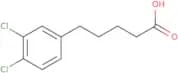
5-(3,4-Dichlorophenyl)pentanoic acid
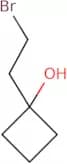
CAS:<p>Versatile small molecule scaffold</p>Formula:C11H12Cl2O2Purezza:Min. 95%Peso molecolare:247.11 g/mol1-(2-Bromoethyl)cyclobutan-1-ol
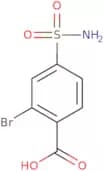
CAS:<p>Versatile small molecule scaffold</p>Formula:C6H11BrOPurezza:Min. 95%Peso molecolare:179.05 g/mol2-Bromo-4-sulfamoylbenzoic acid
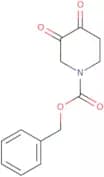
CAS:<p>Versatile small molecule scaffold</p>Formula:C7H6BrNO4SPurezza:Min. 95%Peso molecolare:280.1 g/molBenzyl 3,4-dioxopiperidine-1-carboxylate
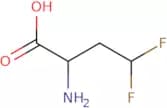
CAS:<p>Versatile small molecule scaffold</p>Formula:C13H13NO4Purezza:Min. 95%Peso molecolare:247.25 g/mol(2R)-2-Amino-4,4-difluorobutanoic acid
CAS:<p>Versatile small molecule scaffold</p>Formula:C4H7F2NO2Purezza:Min. 95%Peso molecolare:139.1 g/mol2,4-Dimethyl-5-[4-(trifluoromethyl)phenyl]pyrimidine
CAS:<p>Versatile small molecule scaffold</p>Formula:C13H11F3N2Purezza:Min. 95%Peso molecolare:252.23 g/mol4-[2-(Trifluoromethyl)phenoxy]aniline
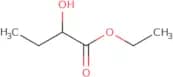
CAS:<p>Versatile small molecule scaffold</p>Formula:C13H10F3NOPurezza:Min. 95%Peso molecolare:253.22 g/mol(R)-Ethyl 2-hydroxybutanoate
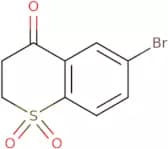
CAS:<p>Versatile small molecule scaffold</p>Formula:C6H12O3Purezza:Min. 95%Peso molecolare:132.16 g/mol6-Bromo-2,3-dihydrothiochromen-1,1-dioxide-4-one
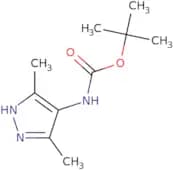
CAS:<p>Versatile small molecule scaffold</p>Formula:C9H7BrO3SPurezza:Min. 95%Peso molecolare:275.12 g/moltert-Butyl N-(3,5-dimethyl-1H-pyrazol-4-yl)carbamate
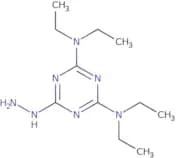
CAS:<p>Versatile small molecule scaffold</p>Formula:C10H17N3O2Purezza:Min. 95%Peso molecolare:211.26 g/molN2,N2,N4,N4-Tetraethyl-6-hydrazinylidene-3,6-dihydro-1,3,5-triazine-2,4-diamine
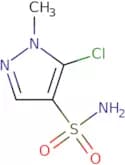
CAS:<p>Tetrodotoxin is a potent neurotoxin that blocks the transfer of nerve impulses. It is used as a pharmacological treatment for diseases of the urinary tract such as bladder and urethral spasms, bladder dysfunction, and urinary retention. Tetrodotoxin can also be used for the treatment of other conditions that affect the target tissue such as stenosis or cavity. This drug has been shown to be beneficial in autoimmune diseases, inflammatory diseases, and infections. Tetrodotoxin is implanted into the body through devices such as catheters or balloons to treat these conditions. The drug has anticholinergic properties which may cause side effects like dry mouth, blurred vision, difficulty urinating, and dizziness.</p>Formula:C11H23N7Purezza:Min. 95%Peso molecolare:253.35 g/mol5-Chloro-1-methyl-1H-pyrazole-4-sulfonamide
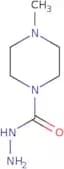
CAS:<p>Versatile small molecule scaffold</p>Formula:C4H6ClN3O2SPurezza:Min. 95%Peso molecolare:195.63 g/mol4-Methylpiperazine-1-carbohydrazide
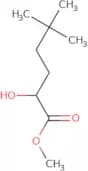
CAS:<p>Versatile small molecule scaffold</p>Formula:C6H14N4OPurezza:Min. 95%Peso molecolare:158.2 g/molMethyl 2-hydroxy-5,5-dimethylhexanoate
CAS:<p>Versatile small molecule scaffold</p>Formula:C9H18O3Purezza:Min. 95%Peso molecolare:174.24 g/mol7-Iodo-5h-Pyrrolo[2,3-B]Pyrazine
CAS:<p>Versatile small molecule scaffold</p>Formula:C6H4N3IPurezza:Min. 95%Peso molecolare:245.02 g/mol4-(1-Naphthyl)piperidine hydrochloride
CAS:<p>Versatile small molecule scaffold</p>Formula:C15H18ClNPurezza:Min. 95%Peso molecolare:247.76 g/mol4-[(tert-Butoxy)methyl]aniline
CAS:<p>Versatile small molecule scaffold</p>Formula:C11H17NOPurezza:Min. 95%Peso molecolare:179.26 g/mol5-Chloro-2-(1H-pyrrol-1-yl)aniline
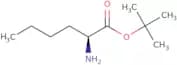
CAS:<p>Versatile small molecule scaffold</p>Formula:C10H9ClN2Purezza:Min. 95%Peso molecolare:192.64 g/moltert-butyl (2S)-2-aminohexanoate
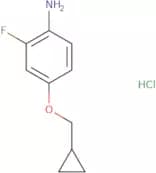
CAS:<p>Tert-butyl (2S)-2-aminohexanoate is an intermediate that is used in the synthesis of glycine by the reaction of benzyl bromide and tert-butyl amine. The stereospecifically incorporated tert-butyl group has a high degree of enantioselectivity, which makes this intermediate useful in the synthesis of glycine. Tert-butyl (2S)-2-aminohexanoate can be synthesized using lithium diisopropylamide and a tertiary amine as an alkylating agent.</p>Formula:C10H21NO2Purezza:Min. 95%Peso molecolare:187.3 g/mol4-(Cyclopropylmethoxy)-2-fluoroaniline hydrochloride
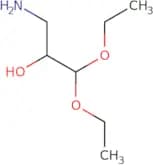
CAS:<p>Versatile small molecule scaffold</p>Formula:C10H13ClFNOPurezza:Min. 95%Peso molecolare:217.67 g/mol3-Amino-1,1-diethoxypropan-2-ol
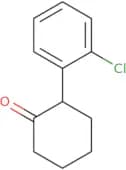
CAS:<p>Versatile small molecule scaffold</p>Formula:C7H17NO3Purezza:Min. 95%Peso molecolare:163.21 g/mol2-(2-Chlorophenyl)cyclohexan-1-one
CAS:<p>Versatile small molecule scaffold</p>Formula:C12H13ClOPurezza:Min. 95%Peso molecolare:208.68 g/mol3-Chloro-1,2,4-benzotriazine
CAS:<p>3-Chloro-1,2,4-benzotriazine is an organic compound that is used as an anti-cancer agent. It is a cytotoxin that inhibits the growth of cells by binding to DNA. The Suzuki reaction was used to synthesize this compound in high yields. 3-Chloro-1,2,4-benzotriazine has potential anti-cancer activity and can be used in conjunction with other cytotoxic agents to treat cancer. This drug has been shown to have cytotoxic effects on tumor cells by inhibiting DNA synthesis and cell division.</p>Formula:C7H4ClN3Purezza:Min. 95%Peso molecolare:165.58 g/molPyrazolo[1,5-a]pyridin-4-ol
CAS:<p>Pyrazolo[1,5-a]pyridin-4-ol is a heteroaromatic compound that acts as an inhibitor of phosphodiesterase (PDE). It prevents the breakdown of cyclic nucleotides and thus leads to increased levels of cAMP and cGMP. Pyrazolo[1,5-a]pyridin-4-ol has been shown to have bronchodilatory activity in animal models. The drug also inhibits the production of inflammatory mediators such as prostaglandins by inhibiting cyclooxygenases. In addition, pyrazolo[1,5-a]pyridin-4-ol has been shown to be a potential PDE inhibitor replacement for the more commonly used PDE inhibitors such as sildenafil and tadalafil. However, due to its lack of stereochemistry and its bicyclic chemical structure, pyrazolo[1,5-a]</p>Formula:C7H6N2OPurezza:Min. 95%Peso molecolare:134.14 g/mol5-(3-Fluoro-4-methylphenyl)-1,3,4-oxadiazol-2-amine
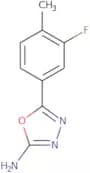
CAS:<p>Versatile small molecule scaffold</p>Formula:C9H8FN3OPurezza:Min. 95%Peso molecolare:193.18 g/mol1,5-Diphenylpentan-3-ol
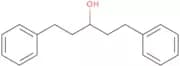
CAS:<p>Flindersia laevicarpa is a small tree native to Australia. The leaves of the tree are used for medicinal purposes and contain 1,5-diphenylpentan-3-ol. Flindersia laevicarpa has been shown to have anti-inflammatory and antioxidant properties, as well as an ability to inhibit platelet aggregation.</p>Formula:C17H20OPurezza:Min. 95%Peso molecolare:240.34 g/mol4-Methylpyridine-2-thiol
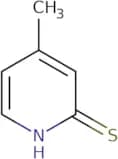
CAS:<p>4-Methylpyridine-2-thiol is a ligand that binds to metal ions. It has been shown to be an effective photoelectron scavenger for mercury and lead, as well as a wide variety of other metals. 4-Methylpyridine-2-thiol is also an important monomer in the preparation of polymers and resins. This ligand has been used in the synthesis of compounds with cyclic structures and hydrochloric acid, as well as being crystallized with x-ray crystallography. The properties of this ligand have been studied by voltammetry, spectroscopies, and crystallography. 4-Methylpyridine-2-thiol interacts with chloride ions in acetonitrile to form a salt called methylpyridinium chloride.</p>Formula:C6H7NSPurezza:Min. 95%Peso molecolare:125.19 g/mol5-(Iodomethyl)-6-azaspiro[3.4]octan-7-one
CAS:Versatile small molecule scaffoldFormula:C8H12INOPurezza:Min. 95%Peso molecolare:265.1 g/mol5-(4-Methoxyphenyl)-4,5-dihydro-1,2-oxazole-3-carboxylic acid
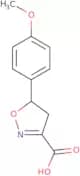
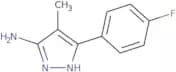
CAS:<p>Versatile small molecule scaffold</p>Formula:C11H11NO4Purezza:Min. 95%Peso molecolare:221.21 g/mol5-(4-Fluoro-phenyl)-4-methyl-2H-pyrazol-3-ylamine
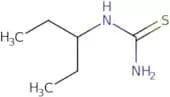
CAS:<p>Versatile small molecule scaffold</p>Formula:C10H10FN3Purezza:Min. 95%Peso molecolare:191.2 g/mol(Pentan-3-yl)thiourea
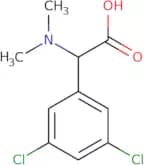
CAS:<p>Versatile small molecule scaffold</p>Formula:C6H14N2SPurezza:Min. 95%Peso molecolare:146.26 g/mol2-(3,5-Dichlorophenyl)-2-(dimethylamino)acetic acid
CAS:<p>Versatile small molecule scaffold</p>Formula:C10H11Cl2NO2Purezza:Min. 95%Peso molecolare:248.1 g/mol(2R,5R)-5-Phenylpyrrolidine-2-carboxamide hydrochloride
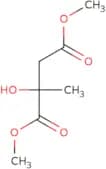
CAS:<p>Versatile small molecule scaffold</p>Formula:C11H15ClN2OPurezza:Min. 95%Peso molecolare:226.7 g/mol1,4-Dimethyl 2-hydroxy-2-methylbutanedioate
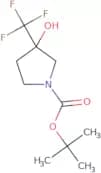
CAS:<p>1,4-Dimethyl 2-hydroxy-2-methylbutanedioate is an allylating agent that modifies the amino acid lysine residues in proteins. It has been shown to be effective in the treatment of skin lesions caused by Staphylococcus aureus and other bacteria because it inhibits bacterial growth through an antimicrobial effect. 1,4-Dimethyl 2-hydroxy-2-methylbutanedioate also has been used as a precursor for the synthesis of vitamin D3. This compound is metabolized in mammalian cells to form cysteamine, which is further converted to S-(1,4-dimethylpentadienoyl)cysteamine (DMPE). The resulting product can be used as a functional group on collagen or malic acid. 1,4-Dimethyl 2-hydroxy-2-methylbutanedioate also is used for modifications of mucocutaneous tissues such as skin and oral muc</p>Formula:C7H12O5Purezza:Min. 95%Peso molecolare:176.17 g/moltert-Butyl 3-hydroxy-3-(trifluoromethyl)pyrrolidine-1-carboxylate
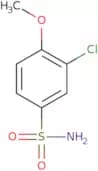
CAS:<p>Versatile small molecule scaffold</p>Formula:C10H16F3NO3Purezza:Min. 95%Peso molecolare:255.23 g/mol3-Chloro-4-methoxybenzene-1-sulfonamide
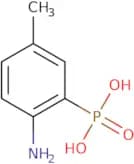
CAS:<p>Versatile small molecule scaffold</p>Formula:C7H8ClNO3SPurezza:Min. 95%Peso molecolare:221.66 g/mol(2-Amino-5-methylphenyl)phosphonic acid
CAS:<p>Versatile small molecule scaffold</p>Formula:C7H10NO3PPurezza:Min. 95%Peso molecolare:187.13 g/molN-[4-(Aminomethyl)phenyl]-4-butylcyclohexane-1-carboxamide
CAS:<p>Versatile small molecule scaffold</p>Formula:C18H28N2OPurezza:Min. 95%Peso molecolare:288.4 g/mol(2S,5S)-1-{[(9H-Fluoren-9-yl)methoxy]carbonyl}-5-phenylpyrrolidine-2-carboxylic acid
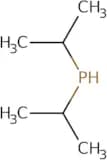
CAS:<p>Versatile small molecule scaffold</p>Formula:C26H23NO4Purezza:Min. 95%Peso molecolare:413.5 g/molDiisopropylphosphine, 10wt.% in hexane
CAS:<p>Please enquire for more information about Diisopropylphosphine, 10wt.% in hexane including the price, delivery time and more detailed product information at the technical inquiry form on this page</p>Formula:C6H15PPurezza:Min. 95%Peso molecolare:118.16 g/mol2-Chloro-1-[4-(furan-2-carbonyl)piperazin-1-yl]ethan-1-one
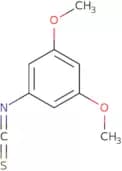
CAS:<p>Versatile small molecule scaffold</p>Formula:C11H13ClN2O3Purezza:Min. 95%Peso molecolare:256.68 g/mol3,5-dimethoxyphenyl isothiocyanate
CAS:<p>3,5-dimethoxyphenyl isothiocyanate (3,5-DMPIC) is a benzimidazole derivative that has been shown to be a potent and selective antagonist of the gonadotropin-releasing hormone (GnRH). 3,5-DMPIC has been shown to desensitize GnRH receptors on the pituitary gland and may have applications in the treatment of prostate cancer. It also inhibits the release of luteinizing hormone and follicle stimulating hormone from the pituitary gland.</p>Formula:C9H9NO2SPurezza:Min. 95%Peso molecolare:195.24 g/molThieno[2,3-b]pyridine-5-carbonitrile
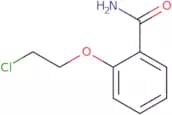
CAS:<p>Thienopyridine analogs are a class of chemical compounds that function as agonists of the receptor α. These compounds have been shown to inhibit fatty acid oxidation and ATP production in rat liver cells, which may be due to their ability to activate AMP-activated protein kinase (AMPK). Thienopyridine analogs are being investigated for use as anti-inflammatory agents and cancer treatments.</p>Formula:C8H4N2SPurezza:Min. 95%Peso molecolare:160.2 g/mol2-(2-Chloroethoxy)benzamide
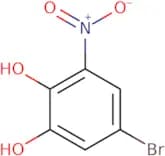
CAS:<p>Versatile small molecule scaffold</p>Formula:C9H10ClNO2Purezza:Min. 95%Peso molecolare:199.63 g/mol5-bromo-3-nitrobenzene-1,2-diol
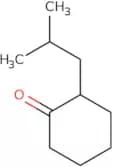
CAS:<p>Versatile small molecule scaffold</p>Formula:C6H4BrNO4Purezza:Min. 95%Peso molecolare:234.01 g/mol2-(2-Methylpropyl)cyclohexan-1-one
CAS:<p>2-(2-Methylpropyl)cyclohexan-1-one is a heterobicyclic compound with a hydroxyl group and two cyclohexane rings. It has a nitrogen atom with three substituents, one of which is a trifluoromethyl group. This molecule is used as a polymerization initiator for polyester and polycarbonate production. It also can be used in the production of liquid crystal compositions, aliphatic hydrocarbons, and organic solvents. 2-(2-Methylpropyl)cyclohexan-1-one is an organic solvent that can be used in the preparation of monomers such as carbonyl groups or cyanates.</p>Formula:C10H18OPurezza:Min. 95%Peso molecolare:154.25 g/mol[6-(Pyridin-2-yl)pyridin-3-yl]methanol
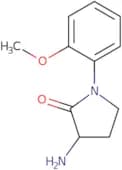
CAS:<p>Versatile small molecule scaffold</p>Formula:C11H10N2OPurezza:Min. 95%Peso molecolare:186.21 g/mol3-Amino-1-(2-methoxyphenyl)pyrrolidin-2-one
CAS:<p>Versatile small molecule scaffold</p>Formula:C11H14N2O2Purezza:Min. 95%Peso molecolare:206.24 g/mol2-Bromo-3,3,3-trifluoro-1-propene
CAS:Prodotto controllato<p>2-Bromo-3,3,3-trifluoro-1-propene is a chemical compound that has been synthesized in an asymmetric reaction. The reactant is bromopropane and the product is 2,2,2-trifluoropropene. The methylene group on the propene molecule is activated by the nucleophilic attack of a fluoride ion from hydrogen fluoride to form a cavity with a highly strained bond. The kinetic study of this reaction revealed that the activation energy for the reaction is 42 kJ/mol. Palladium-catalyzed coupling reactions are catalyzed by palladium and require nonpolar solvents such as toluene or dichloromethane. This type of reaction has been shown to be exothermic with an isolated yield of 1%.</p>Formula:C3H2BrF3Purezza:Min. 95%Colore e forma:Colorless PowderPeso molecolare:174.95 g/mol3-Boc-3-azabicyclo[3.2.1]octan-8-amine
CAS:<p>Versatile small molecule scaffold</p>Formula:C12H22N2O2Purezza:Min. 95%Peso molecolare:226.32 g/mol

![2,4-Dimethyl-5-[4-(trifluoromethyl)phenyl]pyrimidine](/_next/image/?url=https%3A%2Fstatic.cymitquimica.com%2Fproducts%2F3D%2Fthumb-webp%2FLAC75867.webp&w=3840&q=75)
![4-[2-(Trifluoromethyl)phenoxy]aniline](/_next/image/?url=https%3A%2Fstatic.cymitquimica.com%2Fproducts%2F3D%2Fthumb-webp%2FLCA94684.webp&w=3840&q=75)
![7-Iodo-5h-Pyrrolo[2,3-B]Pyrazine](/_next/image/?url=https%3A%2Fstatic.cymitquimica.com%2Fproducts%2F3D%2Fthumb-webp%2FPKB45126.webp&w=3840&q=75)

![4-[(tert-Butoxy)methyl]aniline](/_next/image/?url=https%3A%2Fstatic.cymitquimica.com%2Fproducts%2F3D%2Fthumb-webp%2FPRB31145.webp&w=3840&q=75)


![Pyrazolo[1,5-a]pyridin-4-ol](/_next/image/?url=https%3A%2Fstatic.cymitquimica.com%2Fproducts%2F3D%2Fthumb-webp%2FRFA03272.webp&w=3840&q=75)
![5-(Iodomethyl)-6-azaspiro[3.4]octan-7-one](/_next/image/?url=https%3A%2Fstatic.cymitquimica.com%2Fproducts%2F3D%2Fthumb-webp%2FTLD44509.webp&w=3840&q=75)
![N-[4-(Aminomethyl)phenyl]-4-butylcyclohexane-1-carboxamide](/_next/image/?url=https%3A%2Fstatic.cymitquimica.com%2Fproducts%2F3D%2Fthumb-webp%2FUQB40032.webp&w=3840&q=75)
![(2S,5S)-1-{[(9H-Fluoren-9-yl)methoxy]carbonyl}-5-phenylpyrrolidine-2-carboxylic acid](/_next/image/?url=https%3A%2Fstatic.cymitquimica.com%2Fproducts%2F3D%2Fthumb-webp%2FUYB95360.webp&w=3840&q=75)
![2-Chloro-1-[4-(furan-2-carbonyl)piperazin-1-yl]ethan-1-one](/_next/image/?url=https%3A%2Fstatic.cymitquimica.com%2Fproducts%2F3D%2Fthumb-webp%2FEEB57887.webp&w=3840&q=75)
![Thieno[2,3-b]pyridine-5-carbonitrile](/_next/image/?url=https%3A%2Fstatic.cymitquimica.com%2Fproducts%2F3D%2Fthumb-webp%2FWAA34431.webp&w=3840&q=75)
![[6-(Pyridin-2-yl)pyridin-3-yl]methanol](/_next/image/?url=https%3A%2Fstatic.cymitquimica.com%2Fproducts%2F3D%2Fthumb-webp%2FWFA58187.webp&w=3840&q=75)

![3-Boc-3-azabicyclo[3.2.1]octan-8-amine](/_next/image/?url=https%3A%2Fstatic.cymitquimica.com%2Fproducts%2F3D%2Fthumb-webp%2FFDC76351.webp&w=3840&q=75)