Building Blocks
This section contains fundamental products for the synthesis of organic and biological compounds. Building blocks are the essential starting materials used to construct complex molecules through various chemical reactions. They play a critical role in drug discovery, material science, and chemical research. At CymitQuimica, we offer a diverse range of high-quality building blocks to support your innovative research and industrial projects, ensuring you have the essential components for successful synthesis.
Sottocategorie di "Building Blocks"
- Boronic Acids & Boronic Acid Derivatives(5.756 prodotti)
- Chiral Building Blocks(1.242 prodotti)
- Hydrocarbon Building Blocks(6.095 prodotti)
- Organic Building Blocks(61.038 prodotti)
Trovati 196817 prodotti di "Building Blocks"
Ordinare per
Purezza (%)
0
100
|
0
|
50
|
90
|
95
|
100
3a-Phenyl-hexahydro-1H-2λ6-thieno[3,4-c]pyrrole-2,2-dione hydrochloride
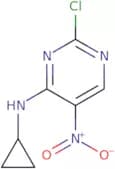
CAS:<p>Versatile small molecule scaffold</p>Formula:C12H16ClNO2SPurezza:Min. 95%Peso molecolare:273.8 g/mol2-Chloro-N-cyclopropyl-5-nitropyrimidin-4-amine
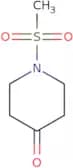
CAS:<p>Versatile small molecule scaffold</p>Formula:C7H7ClN4O2Purezza:Min. 95%Peso molecolare:214.61 g/mol1-N-(methylsulfonyl)-4-piperidinone
CAS:<p>1-N-(methylsulfonyl)-4-piperidinone is a compound that belongs to the group of secondary organic amines. It can be used as an intermediate in the synthesis of p-hydroxybenzoic acid and hydroxyl group compounds. 1-N-(methylsulfonyl)-4-piperidinone has been shown to inhibit protein synthesis in cultured cells by blocking the formation of aminoacyl-tRNA and preventing translocation of peptide chain from ribosomes to the site of peptide bond formation. This process is essential for the production of proteins, which are necessary for normal cell function. The inhibitory effect on protein synthesis was also observed when 1-N-(methylsulfonyl)-4-piperidinone was incubated with human erythrocytes, an enzyme isolated from calf thymus, and a monoclonal antibody (mAb). This mechanism is believed to be due</p>Formula:C6H11NO3SPurezza:Min. 95%Peso molecolare:177.22 g/mol5-Butyl-4H,7H-[1,2,4]triazolo[1,5-a]pyrimidin-7-one
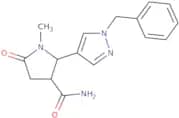
CAS:<p>Versatile small molecule scaffold</p>Formula:C9H12N4OPurezza:Min. 95%Peso molecolare:192.22 g/molrac-(2R,3R)-2-(1-Benzyl-1H-pyrazol-4-yl)-1-methyl-5-oxopyrrolidine-3-carboxamide
CAS:<p>Versatile small molecule scaffold</p>Formula:C16H18N4O2Purezza:Min. 95%Peso molecolare:298.3 g/mol3-[(2-Chlorophenyl)sulfamoyl]benzoic acid
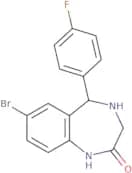
CAS:<p>Versatile small molecule scaffold</p>Formula:C13H10ClNO4SPurezza:Min. 95%Peso molecolare:311.74 g/mol7-Bromo-5-(4-fluorophenyl)-2,3,4,5-tetrahydro-1H-1,4-benzodiazepin-2-one
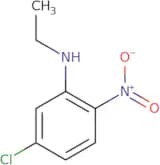
CAS:Prodotto controllato<p>Versatile small molecule scaffold</p>Formula:C15H12BrFN2OPurezza:Min. 95%Peso molecolare:335.17 g/mol5-Chloro-N-ethyl-2-nitroaniline
CAS:<p>Versatile small molecule scaffold</p>Formula:C8H9ClN2O2Purezza:Min. 95%Peso molecolare:200.62 g/molTetrahydrodicyclopentadiene
CAS:<p>Please enquire for more information about Tetrahydrodicyclopentadiene including the price, delivery time and more detailed product information at the technical inquiry form on this page</p>Formula:C10H16Purezza:Min. 95%Peso molecolare:136.23 g/mol4-Amino-1-[3-(trifluoromethyl)phenyl]pyrrolidin-2-one hydrochloride
CAS:<p>Versatile small molecule scaffold</p>Formula:C11H12ClF3N2OPurezza:Min. 95%Peso molecolare:280.67 g/mol4-Carboxymethyl-[1,4]diazepane-1-carboxylic acid tert-butyl ester
CAS:<p>Versatile small molecule scaffold</p>Formula:C12H22N2O4Purezza:Min. 95%Peso molecolare:258.32 g/mol5-Azaspiro[2.5]octan-6-one
CAS:<p>Versatile small molecule scaffold</p>Formula:C7H11NOPurezza:Min. 95%Peso molecolare:125.17 g/mol1-Azaspiro[4.4]nonan-4-ol
CAS:<p>Versatile small molecule scaffold</p>Formula:C8H15NOPurezza:Min. 95%Peso molecolare:141.21 g/mol2-Bromo-3,3,3-trifluoro-1-propene
CAS:Prodotto controllato<p>2-Bromo-3,3,3-trifluoro-1-propene is a chemical compound that has been synthesized in an asymmetric reaction. The reactant is bromopropane and the product is 2,2,2-trifluoropropene. The methylene group on the propene molecule is activated by the nucleophilic attack of a fluoride ion from hydrogen fluoride to form a cavity with a highly strained bond. The kinetic study of this reaction revealed that the activation energy for the reaction is 42 kJ/mol. Palladium-catalyzed coupling reactions are catalyzed by palladium and require nonpolar solvents such as toluene or dichloromethane. This type of reaction has been shown to be exothermic with an isolated yield of 1%.</p>Formula:C3H2BrF3Purezza:Min. 95%Colore e forma:Colorless PowderPeso molecolare:174.95 g/mol2-Cyano-5-fluorophenol
CAS:<p>2-Cyano-5-fluorophenol is an organic compound that is used as a precursor to medicines and other chemicals. It reacts with calcium hydroxide in water to form 2-cyano-5-hydroxyfluorobenzene, which can be hydrolyzed to form 2-cyano-5-chlorofluorobenzene. This compound can also react with sodium hydroxide to produce sodium cyanate, which can be hydrolyzed to form sodium chloride and hydrogen cyanide gas. The alkali metal ions are needed for this reaction, which is why the product should not be exposed to water or moisture. 2-Cyano-5-fluorophenol has been shown to have liquid crystal properties and is used in the production of certain types of polymers. 2Cyano-5Fluorophenol crystals are also used in some medicines such as acetaminophen (paracetamol).</p>Formula:C7H4FNOPurezza:Min. 95%Peso molecolare:137.11 g/mol2-Oxa-spiro[3.3]heptan-6-ol
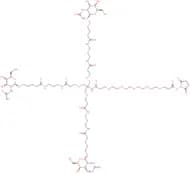
CAS:<p>Versatile small molecule scaffold</p>Formula:C6H10O2Purezza:Min. 95%Peso molecolare:114.14 g/molTri-b-GalNAc-PEG5-NHS ester
CAS:<p>Tri-GalNAc-NHS ester is a multivalent molecule composed of three GalNAc cluster arms. It is a protein degrader and a ligand of the asialoglycoprotein receptor (ASGPR) used for the development of targeted therapies for liver diseases. The GalNAc arms enable high-affinity binding to the ASGPR on hepatocyte surfaces. The crucial functional group, N-hydroxysuccinimide (NHS) ester, is known for its ease of conjugation with various biomolecules possessing amine (NH2) groups. This biocompatible reaction strategy allows the design and development of targeted conjugates such as drug-GalNAc conjugates, siRNA delivery vehicles, or probes for ASGPR imaging in the liver.</p>Formula:C79H137N11O37Purezza:Min. 95%Colore e forma:PowderPeso molecolare:1,832.99 g/molRef: 3D-FT183733
Prodotto fuori produzione
![3a-Phenyl-hexahydro-1H-2λ6-thieno[3,4-c]pyrrole-2,2-dione hydrochloride](/_next/image/?url=https%3A%2Fstatic.cymitquimica.com%2Fproducts%2F3D%2Fthumb-webp%2FTPD50501.webp&w=3840&q=75)

![5-Butyl-4H,7H-[1,2,4]triazolo[1,5-a]pyrimidin-7-one](/_next/image/?url=https%3A%2Fstatic.cymitquimica.com%2Fproducts%2F3D%2Fthumb-webp%2FTGA68647.webp&w=3840&q=75)
![3-[(2-Chlorophenyl)sulfamoyl]benzoic acid](/_next/image/?url=https%3A%2Fstatic.cymitquimica.com%2Fproducts%2F3D%2Fthumb-webp%2FANA73221.webp&w=3840&q=75)
![4-Amino-1-[3-(trifluoromethyl)phenyl]pyrrolidin-2-one hydrochloride](/_next/image/?url=https%3A%2Fstatic.cymitquimica.com%2Fproducts%2F3D%2Fthumb-webp%2FBFC38085.webp&w=3840&q=75)
![4-Carboxymethyl-[1,4]diazepane-1-carboxylic acid tert-butyl ester](/_next/image/?url=https%3A%2Fstatic.cymitquimica.com%2Fproducts%2F3D%2Fthumb-webp%2FTDC69777.webp&w=3840&q=75)
![5-Azaspiro[2.5]octan-6-one](/_next/image/?url=https%3A%2Fstatic.cymitquimica.com%2Fproducts%2F3D%2Fthumb-webp%2FDFC59996.webp&w=3840&q=75)
![1-Azaspiro[4.4]nonan-4-ol](/_next/image/?url=https%3A%2Fstatic.cymitquimica.com%2Fproducts%2F3D%2Fthumb-webp%2FDMC89622.webp&w=3840&q=75)


![2-Oxa-spiro[3.3]heptan-6-ol](/_next/image/?url=https%3A%2Fstatic.cymitquimica.com%2Fproducts%2F3D%2Fthumb-webp%2FNEC38108.webp&w=3840&q=75)