Building Blocks
Questa sezione contiene prodotti fondamentali per la sintesi di composti organici e biologici. Building blocks sono i materiali di partenza essenziali utilizzati per costruire molecole complesse attraverso varie reazioni chimiche. Svolgono un ruolo critico nella scoperta di farmaci, nella scienza dei materiali e nella ricerca chimica. Presso CymitQuimica, offriamo una gamma diversificata di building blocks di alta qualità per supportare le tue ricerche innovative e progetti industriali, assicurandoti di avere i componenti essenziali per una sintesi di successo.
Sottocategorie di "Building Blocks"
- Acidi boronici e derivati dell'acido boronico(5.756 prodotti)
- Building Blocks Chirali(1.242 prodotti)
- Building Blocks Idrocarburici(6.095 prodotti)
- Building Blocks organici(61.038 prodotti)
Trovati 196817 prodotti di "Building Blocks"
Ordinare per
Purezza (%)
0
100
|
0
|
50
|
90
|
95
|
100
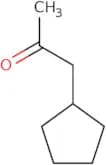
1-Cyclopentylpropan-2-one
CAS:<p>Cyclopentylpropan-2-one (1CPA) is an aliphatic hydrocarbon that has been shown to act as a light-sensitive molecule. It is used as a polymerization initiator and is also found in the human body as a metabolic intermediate. 1CPA is found in the form of a diacylglycerol and can be converted into an allyl carbonate, which reacts with methoxy groups to form an allyl ether. 1CPA has also been shown to have structural similarities with pyrimidine compounds and formyl groups. The 1CPA molecule contains a carbonyl group, which is the reactive functional group that allows for this chemical to react with other compounds.</p>Formula:C8H14OPurezza:Min. 95%Peso molecolare:126.2 g/mol2-[(Oxolan-2-yl)methoxy]benzaldehyde
CAS:<p>Versatile small molecule scaffold</p>Formula:C12H14O3Purezza:Min. 95%Peso molecolare:206.24 g/mol1-Butyl-2-(4-methoxyphenyl)-5-oxopyrrolidine-3-carboxylic acid
CAS:<p>Versatile small molecule scaffold</p>Formula:C16H21NO4Purezza:Min. 95%Peso molecolare:291.34 g/mol(3Z)-3-(Methoxymethylidene)-1-methylpiperidine
CAS:<p>Versatile small molecule scaffold</p>Formula:C8H15NOPurezza:Min. 95%Peso molecolare:141.21 g/molN-[3-(Aminomethyl)phenyl]cyclobutanecarboxamide
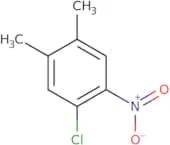
CAS:<p>Versatile small molecule scaffold</p>Formula:C12H16N2OPurezza:Min. 95%Peso molecolare:204.27 g/mol1-Chloro-4,5-dimethyl-2-nitrobenzene
CAS:<p>Versatile small molecule scaffold</p>Formula:C8H8ClNO2Purezza:Min. 95%Peso molecolare:185.61 g/molPB-22 3-carboxyindole metabolite solution
CAS:Prodotto controllato<p>PB-22 is a synthetic cannabinoid, which can be classified as a CB1 receptor agonist. It is one of the many cannabinoids that have been created in an attempt to circumvent drug laws by creating compounds that are similar to those found in cannabis but have different chemical structures. PB-22 has shown to increase locomotor activity and stimulate the cb1 receptor in mice. Magnetic resonance spectroscopy (MRS) and assays were used to determine the binding affinity of PB-22 for the CB1 receptor. The MRS data showed that PB-22 bound with high affinity to the CB1 receptor and had a lower affinity for CB2 receptors. This suggests that PB-22 may be more potent than other synthetic cannabinoids, such as JWH-018 and CP 55,940, which bind better with CB2 receptors than CB1 receptors.<br>PB-22 is an analog of JWH-073 and has been shown to have a stronger effect on locomotor activity than JWH</p>Formula:C14H17NO2Purezza:Min. 95%Peso molecolare:231.29 g/molMethyl 5-amino-2,3-difluorobenzoate
CAS:<p>Versatile small molecule scaffold</p>Formula:C8H7F2NO2Purezza:Min. 95%Peso molecolare:187.14 g/mol4,7-Dibromo-2,3-dihydro-1H-inden-1-one
CAS:<p>Versatile small molecule scaffold</p>Formula:C9H6Br2OPurezza:Min. 95%Peso molecolare:289.95 g/mol2-[2-(Trimethylsilyl)ethynyl]benzenamine
CAS:<p>2-[2-(Trimethylsilyl)ethynyl]benzenamine is an aromatic compound that is used as a starting material for the synthesis of other chemicals. It is prepared by reaction of 2-bromobenzene with ethynylmagnesium bromide and p-toluenesulfonic acid in the presence of aluminum chloride. The yield of the reaction product depends on the time and temperature. Elemental analysis reveals that the compound contains an alkyne group, which facilitates its conversion to quinoline derivatives. The chemical has been shown to react with x-rays to produce diffraction patterns, which can be analyzed to determine the structure of the molecule. X-ray diffraction analysis also revealed that this compound contains a quinoline ring system, which may contribute to its anti-inflammatory effects.</p>Formula:C11H15NSiPurezza:Min. 95%Peso molecolare:189.33 g/mol5-Azaspiro[2.5]octan-6-one
CAS:<p>Versatile small molecule scaffold</p>Formula:C7H11NOPurezza:Min. 95%Peso molecolare:125.17 g/mol2-{2-Azabicyclo[2.2.1]heptan-2-yl}ethan-1-amine
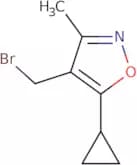
CAS:<p>Versatile small molecule scaffold</p>Formula:C8H16N2Purezza:Min. 95%Peso molecolare:140.2 g/mol4-(Bromomethyl)-5-cyclopropyl-3-methyl-1,2-oxazole
CAS:<p>Versatile small molecule scaffold</p>Formula:C8H10BrNOPurezza:Min. 95%Peso molecolare:216.07 g/mol2-Cyano-5-fluorophenol
CAS:<p>2-Cyano-5-fluorophenol is an organic compound that is used as a precursor to medicines and other chemicals. It reacts with calcium hydroxide in water to form 2-cyano-5-hydroxyfluorobenzene, which can be hydrolyzed to form 2-cyano-5-chlorofluorobenzene. This compound can also react with sodium hydroxide to produce sodium cyanate, which can be hydrolyzed to form sodium chloride and hydrogen cyanide gas. The alkali metal ions are needed for this reaction, which is why the product should not be exposed to water or moisture. 2-Cyano-5-fluorophenol has been shown to have liquid crystal properties and is used in the production of certain types of polymers. 2Cyano-5Fluorophenol crystals are also used in some medicines such as acetaminophen (paracetamol).</p>Formula:C7H4FNOPurezza:Min. 95%Peso molecolare:137.11 g/mol2-Oxa-spiro[3.3]heptan-6-ol
CAS:<p>Versatile small molecule scaffold</p>Formula:C6H10O2Purezza:Min. 95%Peso molecolare:114.14 g/mol2-Bromo-3,3,3-trifluoro-1-propene
CAS:Prodotto controllato<p>2-Bromo-3,3,3-trifluoro-1-propene is a chemical compound that has been synthesized in an asymmetric reaction. The reactant is bromopropane and the product is 2,2,2-trifluoropropene. The methylene group on the propene molecule is activated by the nucleophilic attack of a fluoride ion from hydrogen fluoride to form a cavity with a highly strained bond. The kinetic study of this reaction revealed that the activation energy for the reaction is 42 kJ/mol. Palladium-catalyzed coupling reactions are catalyzed by palladium and require nonpolar solvents such as toluene or dichloromethane. This type of reaction has been shown to be exothermic with an isolated yield of 1%.</p>Formula:C3H2BrF3Purezza:Min. 95%Colore e forma:Colorless PowderPeso molecolare:174.95 g/molTri-b-GalNAc-PEG5-NHS ester
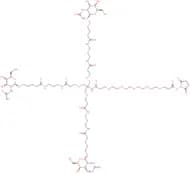
CAS:<p>Tri-GalNAc-NHS ester is a multivalent molecule composed of three GalNAc cluster arms. It is a protein degrader and a ligand of the asialoglycoprotein receptor (ASGPR) used for the development of targeted therapies for liver diseases. The GalNAc arms enable high-affinity binding to the ASGPR on hepatocyte surfaces. The crucial functional group, N-hydroxysuccinimide (NHS) ester, is known for its ease of conjugation with various biomolecules possessing amine (NH2) groups. This biocompatible reaction strategy allows the design and development of targeted conjugates such as drug-GalNAc conjugates, siRNA delivery vehicles, or probes for ASGPR imaging in the liver.</p>Formula:C79H137N11O37Purezza:Min. 95%Colore e forma:PowderPeso molecolare:1,832.99 g/molRef: 3D-FT183733
Prodotto fuori produzione

![2-[(Oxolan-2-yl)methoxy]benzaldehyde](/_next/image/?url=https%3A%2Fstatic.cymitquimica.com%2Fproducts%2F3D%2Fthumb-webp%2FBJB32426.webp&w=3840&q=75)


![N-[3-(Aminomethyl)phenyl]cyclobutanecarboxamide](/_next/image/?url=https%3A%2Fstatic.cymitquimica.com%2Fproducts%2F3D%2Fthumb-webp%2FBMB24704.webp&w=3840&q=75)


![2-[2-(Trimethylsilyl)ethynyl]benzenamine](/_next/image/?url=https%3A%2Fstatic.cymitquimica.com%2Fproducts%2F3D%2Fthumb-webp%2FDEA52916.webp&w=3840&q=75)
![5-Azaspiro[2.5]octan-6-one](/_next/image/?url=https%3A%2Fstatic.cymitquimica.com%2Fproducts%2F3D%2Fthumb-webp%2FDFC59996.webp&w=3840&q=75)
![2-{2-Azabicyclo[2.2.1]heptan-2-yl}ethan-1-amine](/_next/image/?url=https%3A%2Fstatic.cymitquimica.com%2Fproducts%2F3D%2Fthumb-webp%2FDKB15547.webp&w=3840&q=75)

![2-Oxa-spiro[3.3]heptan-6-ol](/_next/image/?url=https%3A%2Fstatic.cymitquimica.com%2Fproducts%2F3D%2Fthumb-webp%2FNEC38108.webp&w=3840&q=75)