


Building Blocks
Questa sezione contiene prodotti fondamentali per la sintesi di composti organici e biologici. Building blocks sono i materiali di partenza essenziali utilizzati per costruire molecole complesse attraverso varie reazioni chimiche. Svolgono un ruolo critico nella scoperta di farmaci, nella scienza dei materiali e nella ricerca chimica. Presso CymitQuimica, offriamo una gamma diversificata di building blocks di alta qualità per supportare le tue ricerche innovative e progetti industriali, assicurandoti di avere i componenti essenziali per una sintesi di successo.
Sottocategorie di "Building Blocks"
- Acidi boronici e derivati dell'acido boronico(5.756 prodotti)
- Building Blocks Chirali(1.242 prodotti)
- Building Blocks Idrocarburici(6.095 prodotti)
- Building Blocks organici(61.055 prodotti)
Trovati 199650 prodotti di "Building Blocks"
Ordinare per
Purezza (%)
0
100
|
0
|
50
|
90
|
95
|
100
4-[2-(Trifluoromethyl)phenoxy]aniline
CAS:<p>Versatile small molecule scaffold</p>Formula:C13H10F3NOPurezza:Min. 95%Peso molecolare:253.22 g/molN-(4-Fluorophenyl)-1,3-thiazolidine-4-carboxamide
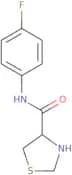
CAS:<p>Versatile small molecule scaffold</p>Formula:C10H11FN2OSPurezza:Min. 95%Peso molecolare:226.27 g/mol2,4-Dimethyl-5-[4-(trifluoromethyl)phenyl]pyrimidine
CAS:<p>Versatile small molecule scaffold</p>Formula:C13H11F3N2Purezza:Min. 95%Peso molecolare:252.23 g/mol4-Chloro-2-methyl-5-nitroaniline
CAS:<p>4-Chloro-2-methyl-5-nitroaniline is an organic compound with the chemical formula C6H4ClNO2. It is a nitro derivative of aniline. 4-Chloro-2-methyl-5-nitroaniline is a white solid that is soluble in water, alcohols, and ethers. It has a melting point around 206 °C and decomposes at temperatures over 350 °C. This compound can be obtained by reacting hydroxylamine with nitrous acid and chlorinating 2,5-dimethylaniline. The sequence of reactions can be summarized as follows: hydroxy group to nitro group, nitro group to methyl group, methyl group to acetyl or acetylamino, acetyl or acetylamino to acetylation or methylation, transformation from hydroxyl group to amino group and esterification from acid hydrazide to acid group.</p>Formula:C7H7ClN2O2Purezza:Min. 95%Peso molecolare:186.59 g/mol5-(3,4-Dichlorophenyl)pentanoic acid
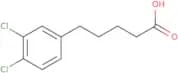
CAS:<p>Versatile small molecule scaffold</p>Formula:C11H12Cl2O2Purezza:Min. 95%Peso molecolare:247.11 g/mol(2-Bromophenyl)(phenyl)methanol
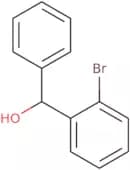
CAS:<p>The synthesis of (2-bromophenyl)(phenyl)methanol is accomplished by the reaction of an aldehyde with bromine followed by an alkylation with magnesium. The product is obtained as a racemic mixture of enantiomers with a chiral center, which can be resolved by fractional crystallization or other separation methods. This method has been shown to be efficient for the synthesis of alcohols and carbinols, and stereogenic reactions.</p>Formula:C13H11OBrPurezza:Min. 95%Peso molecolare:263.12 g/mol2-Bromo-4-sulfamoylbenzoic acid
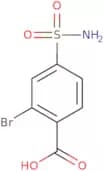
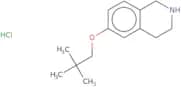
CAS:<p>Versatile small molecule scaffold</p>Formula:C7H6BrNO4SPurezza:Min. 95%Peso molecolare:280.1 g/mol6-(2,2-Dimethylpropoxy)-1,2,3,4-tetrahydroisoquinoline hydrochloride
CAS:<p>Versatile small molecule scaffold</p>Formula:C14H22ClNOPurezza:Min. 95%Peso molecolare:255.8 g/mol(2-Bromo-5-chlorophenyl)methanesulfonyl chloride
CAS:<p>Versatile small molecule scaffold</p>Formula:C7H5BrCl2O2SPurezza:Min. 95%Peso molecolare:303.99 g/molrac-2-[(1R,3S)-3-(Propan-2-yl)-2,3-dihydro-1H-inden-1-yl]acetic acid
CAS:<p>Versatile small molecule scaffold</p>Formula:C14H18O2Purezza:Min. 95%Peso molecolare:218.29 g/mol2-Chloro-1-[4-(furan-2-carbonyl)piperazin-1-yl]ethan-1-one
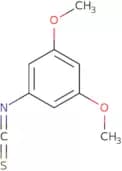
CAS:<p>Versatile small molecule scaffold</p>Formula:C11H13ClN2O3Purezza:Min. 95%Peso molecolare:256.68 g/mol3,5-dimethoxyphenyl isothiocyanate
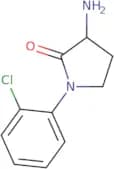
CAS:<p>3,5-dimethoxyphenyl isothiocyanate (3,5-DMPIC) is a benzimidazole derivative that has been shown to be a potent and selective antagonist of the gonadotropin-releasing hormone (GnRH). 3,5-DMPIC has been shown to desensitize GnRH receptors on the pituitary gland and may have applications in the treatment of prostate cancer. It also inhibits the release of luteinizing hormone and follicle stimulating hormone from the pituitary gland.</p>Formula:C9H9NO2SPurezza:Min. 95%Peso molecolare:195.24 g/mol3-Amino-1-(2-chlorophenyl)pyrrolidin-2-one
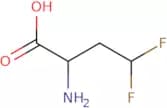
CAS:<p>Versatile small molecule scaffold</p>Formula:C10H11ClN2OPurezza:Min. 95%Peso molecolare:210.66 g/mol(2R)-2-Amino-4,4-difluorobutanoic acid
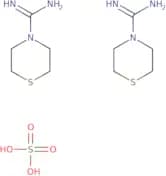
CAS:<p>Versatile small molecule scaffold</p>Formula:C4H7F2NO2Purezza:Min. 95%Peso molecolare:139.1 g/molBis(thiomorpholine-4-carboximidamide) sulfate
CAS:<p>Versatile small molecule scaffold</p>Formula:C10H24N6O4S3Purezza:Min. 95%Peso molecolare:388.5 g/mol(2R,5R)-5-Phenylpyrrolidine-2-carboxamide hydrochloride
CAS:<p>Versatile small molecule scaffold</p>Formula:C11H15ClN2OPurezza:Min. 95%Peso molecolare:226.7 g/molThieno[2,3-b]pyridine-5-carbonitrile
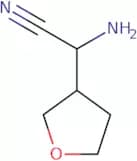
CAS:<p>Thienopyridine analogs are a class of chemical compounds that function as agonists of the receptor α. These compounds have been shown to inhibit fatty acid oxidation and ATP production in rat liver cells, which may be due to their ability to activate AMP-activated protein kinase (AMPK). Thienopyridine analogs are being investigated for use as anti-inflammatory agents and cancer treatments.</p>Formula:C8H4N2SPurezza:Min. 95%Peso molecolare:160.2 g/mol2-Amino-2-(oxolan-3-yl)acetonitrile
CAS:<p>Versatile small molecule scaffold</p>Formula:C6H10N2OPurezza:Min. 95%Peso molecolare:126.16 g/mol[6-(Pyridin-2-yl)pyridin-3-yl]methanol
CAS:<p>Versatile small molecule scaffold</p>Formula:C11H10N2OPurezza:Min. 95%Peso molecolare:186.21 g/mol3,8-Dioxa-11-azaspiro[5.6]dodecane
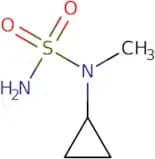
CAS:<p>Versatile small molecule scaffold</p>Formula:C9H17NO2Purezza:Min. 95%Peso molecolare:171.24 g/molN-Cyclopropyl-N-methylaminosulfonamide
CAS:<p>Versatile small molecule scaffold</p>Formula:C4H10N2O2SPurezza:Min. 95%Peso molecolare:150.2 g/molOctahydro-pyrazino[2,1-c][1,4]thiazine 2,2-dioxide hydrochloride
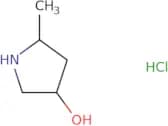
CAS:<p>Versatile small molecule scaffold</p>Formula:C7H16Cl2N2O2SPurezza:Min. 95%Peso molecolare:263.18 g/mol5-Methylpyrrolidin-3-ol hydrochloride
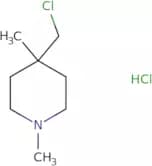
CAS:<p>Versatile small molecule scaffold</p>Formula:C5H12ClNOPurezza:Min. 95%Peso molecolare:137.61 g/mol4-(Chloromethyl)-1,4-dimethylpiperidine hydrochloride
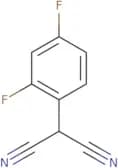
CAS:<p>Versatile small molecule scaffold</p>Formula:C8H17Cl2NPurezza:Min. 95%Peso molecolare:198.13 g/mol2-(2,4-Difluorophenyl)propanedinitrile
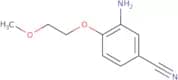
CAS:<p>Versatile small molecule scaffold</p>Formula:C9H4F2N2Purezza:Min. 95%Peso molecolare:178.14 g/mol3-Amino-4-(2-methoxyethoxy)benzonitrile
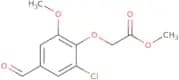
CAS:<p>Versatile small molecule scaffold</p>Formula:C10H12N2O2Purezza:Min. 95%Peso molecolare:192.21 g/molMethyl (2-chloro-4-formyl-6-methoxyphenoxy)acetate
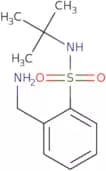
CAS:<p>Versatile small molecule scaffold</p>Formula:C11H11ClO5Purezza:Min. 95%Peso molecolare:258.65 g/mol2-(Aminomethyl)-N-tert-butylbenzene-1-sulfonamide
CAS:<p>Versatile small molecule scaffold</p>Formula:C11H18N2O2SPurezza:Min. 95%Peso molecolare:242.34 g/mol3-[(2-Methyl-2-propen-1-yl)thio]-5H-1,2,4-triazino[5,6-b]indole
CAS:<p>3-[(2-Methyl-2-propen-1-yl)thio]-5H-1,2,4-triazino[5,6-b]indole is a recombinant protein that binds to the ribosomal protein L11. It has been shown to inhibit the biosynthesis of the bacterial cell wall and therefore inhibit replication of the bacterial genome. 3-[(2-Methyl-2-propen-1-yl)thio]-5H-1,2,4-triazino[5,6-b]indole also inhibits the synthesis of proteins essential for cell division. This compound has been shown to bind to ribosomes in both prokaryotic and eukaryotic cells. It may have potential as an inhibitor of cancerous cells because it inhibits protein synthesis in mammalian cells.</p>Formula:C13H12N4SPurezza:Min. 95%Peso molecolare:256.33 g/molRef: 3D-DNA02311
Prodotto fuori produzionerac-(1R,5S,6R)-3-Benzyl-3-azabicyclo[3.1.0]hexan-6-amine dihydrochloride
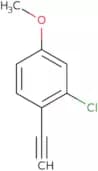
CAS:<p>Versatile small molecule scaffold</p>Formula:C12H18Cl2N2Purezza:Min. 95%Peso molecolare:261.19 g/mol2-Chloro-1-ethynyl-4-methoxybenzene
CAS:<p>Versatile small molecule scaffold</p>Formula:C9H7ClOPurezza:Min. 95%Peso molecolare:166.6 g/mol4,5-Dihydroxy-2,3-dihydro-1H-isoindole-1,3-dione
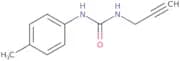
CAS:4,5-Dihydroxy-2,3-dihydro-1H-isoindole-1,3-dione is a molybdenum compound with a hydroxyl group. It has been shown to inhibit the growth of bacteria that are resistant to penicillin by binding to the penicillin-binding proteins in their cell wall. 4,5-Dihydroxy-2,3-dihydro-1H-isoindole-1,3-dione has been found to be an effective inhibitor of polymer film formation when used in conjunction with 3 chloroperoxybenzoic acid. This compound also has been shown to have anti bacterial properties against Escherichia coli and Pseudomonas aeruginosa. 4,5-Dihydroxy -2,3 -dihydro -1H -isoindole -1,3 -dione may also have environmental applications due itsFormula:C8H5NO4Purezza:Min. 95%Peso molecolare:179.13 g/mol1-(4-Methylphenyl)-3-(prop-2-yn-1-yl)urea
CAS:<p>1-(4-Methylphenyl)-3-(prop-2-yn-1-yl)urea is a fluorescent derivative that can be detected with certain techniques. It has been used to detect phosphatases in cervical cancer cells and tumor cells. This compound is a ligand for the surface antigen of placental alkaline phosphatase (PLAP). It can also bind to other organic ligands, such as recombinant human erythropoietin (EPO), which may be useful for redirecting the action of this protein. 1-(4-Methylphenyl)-3-(prop-2-yn-1-yl)urea is an organic bispecific molecule that binds to two receptors, one on tumor cells and one on normal cells. This binding leads to cell death by apoptosis through the release of cytochrome c from mitochondria.</p>Formula:C11H12N2OPurezza:Min. 95%Peso molecolare:188.23 g/molPB-22 3-carboxyindole metabolite solution
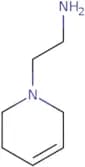
CAS:Prodotto controllato<p>PB-22 is a synthetic cannabinoid, which can be classified as a CB1 receptor agonist. It is one of the many cannabinoids that have been created in an attempt to circumvent drug laws by creating compounds that are similar to those found in cannabis but have different chemical structures. PB-22 has shown to increase locomotor activity and stimulate the cb1 receptor in mice. Magnetic resonance spectroscopy (MRS) and assays were used to determine the binding affinity of PB-22 for the CB1 receptor. The MRS data showed that PB-22 bound with high affinity to the CB1 receptor and had a lower affinity for CB2 receptors. This suggests that PB-22 may be more potent than other synthetic cannabinoids, such as JWH-018 and CP 55,940, which bind better with CB2 receptors than CB1 receptors.<br>PB-22 is an analog of JWH-073 and has been shown to have a stronger effect on locomotor activity than JWH</p>Formula:C14H17NO2Purezza:Min. 95%Peso molecolare:231.29 g/mol2-(1,2,3,6-Tetrahydropyridin-1-yl)ethan-1-amine
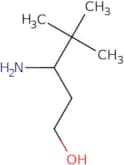
CAS:<p>Versatile small molecule scaffold</p>Formula:C7H14N2Purezza:Min. 95%Peso molecolare:126.2 g/mol3-Amino-4,4-dimethylpentan-1-ol
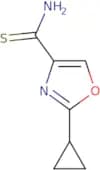
CAS:<p>Versatile small molecule scaffold</p>Formula:C7H17NOPurezza:Min. 95%Peso molecolare:131.22 g/mol2-Cyclopropyl-1,3-oxazole-4-carbothioamide
CAS:<p>Versatile small molecule scaffold</p>Formula:C7H8N2OSPurezza:Min. 95%Peso molecolare:168.22 g/mol2-[2-(Furan-2-yl)-2-oxoethylidene]-3-methyl-1,3-thiazolidin-4-one
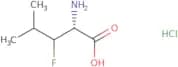
CAS:<p>Versatile small molecule scaffold</p>Formula:C10H9NO3SPurezza:Min. 95%Peso molecolare:223.25 g/mol(2R)-2-Amino-3-fluoro-4-methylpentanoic acid hydrochloride
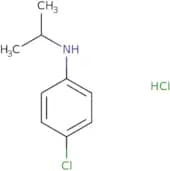
CAS:<p>Versatile small molecule scaffold</p>Formula:C6H13ClFNO2Purezza:Min. 95%Peso molecolare:185.6 g/mol4-Chloro-N-(propan-2-yl)aniline hydrochloride
CAS:<p>Versatile small molecule scaffold</p>Formula:C9H13Cl2NPurezza:Min. 95%Peso molecolare:206.11 g/molN-[1-(Furan-2-yl)ethyl]pyridin-2-amine
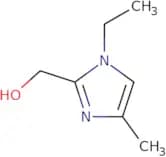
CAS:<p>Versatile small molecule scaffold</p>Formula:C11H12N2OPurezza:Min. 95%Peso molecolare:188.23 g/mol(1-Ethyl-4-methyl-1H-imidazol-2-yl)-methanol
CAS:<p>Versatile small molecule scaffold</p>Formula:C7H12N2OPurezza:Min. 95%Peso molecolare:140.18 g/molQuinoline-5-carbonitrile
CAS:<p>Quinoline-5-carbonitrile is a cyanide compound that can be used in the synthesis of heterocyclic compounds. The reaction between quinoline and 5-cyanovaleric acid produces 6-nitroquinoline, which is then converted to dimethyl sulfoxide by alcoholysis. This reaction product can then be used to synthesize an amide or nucleophile. Quinoline-5-carbonitrile reacts with potassium in the presence of bifunctional hydrazide to produce a cyanide ion, which can be hydrolyzed by an acid to release hydrogen cyanide gas. This experiment has been shown as a model for reactions involving cyano compounds.</p>Formula:C10H6N2Purezza:Min. 95%Peso molecolare:154.17 g/mol[(1-Amino-2-methylpropan-2-yl)oxy]benzene hydrochloride
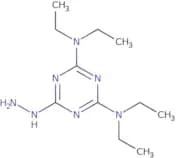
CAS:<p>Versatile small molecule scaffold</p>Formula:C10H16ClNOPurezza:Min. 95%Peso molecolare:201.69 g/molN2,N2,N4,N4-Tetraethyl-6-hydrazinylidene-3,6-dihydro-1,3,5-triazine-2,4-diamine
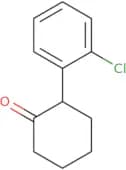
CAS:<p>Tetrodotoxin is a potent neurotoxin that blocks the transfer of nerve impulses. It is used as a pharmacological treatment for diseases of the urinary tract such as bladder and urethral spasms, bladder dysfunction, and urinary retention. Tetrodotoxin can also be used for the treatment of other conditions that affect the target tissue such as stenosis or cavity. This drug has been shown to be beneficial in autoimmune diseases, inflammatory diseases, and infections. Tetrodotoxin is implanted into the body through devices such as catheters or balloons to treat these conditions. The drug has anticholinergic properties which may cause side effects like dry mouth, blurred vision, difficulty urinating, and dizziness.</p>Formula:C11H23N7Purezza:Min. 95%Peso molecolare:253.35 g/mol2-(2-Chlorophenyl)cyclohexan-1-one
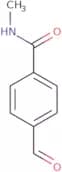
CAS:<p>Versatile small molecule scaffold</p>Formula:C12H13ClOPurezza:Min. 95%Peso molecolare:208.68 g/mol4-Formyl-N-methyl-benzamide
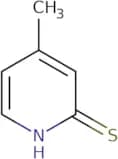
CAS:<p>Versatile small molecule scaffold</p>Formula:C9H9NO2Purezza:Min. 95%Peso molecolare:163.18 g/mol4-Methylpyridine-2-thiol
CAS:<p>4-Methylpyridine-2-thiol is a ligand that binds to metal ions. It has been shown to be an effective photoelectron scavenger for mercury and lead, as well as a wide variety of other metals. 4-Methylpyridine-2-thiol is also an important monomer in the preparation of polymers and resins. This ligand has been used in the synthesis of compounds with cyclic structures and hydrochloric acid, as well as being crystallized with x-ray crystallography. The properties of this ligand have been studied by voltammetry, spectroscopies, and crystallography. 4-Methylpyridine-2-thiol interacts with chloride ions in acetonitrile to form a salt called methylpyridinium chloride.</p>Formula:C6H7NSPurezza:Min. 95%Peso molecolare:125.19 g/mol3-Boc-3-azabicyclo[3.2.1]octan-8-amine
CAS:<p>Versatile small molecule scaffold</p>Formula:C12H22N2O2Purezza:Min. 95%Peso molecolare:226.32 g/mol2-Bromo-3,3,3-trifluoro-1-propene
CAS:Prodotto controllato<p>2-Bromo-3,3,3-trifluoro-1-propene is a chemical compound that has been synthesized in an asymmetric reaction. The reactant is bromopropane and the product is 2,2,2-trifluoropropene. The methylene group on the propene molecule is activated by the nucleophilic attack of a fluoride ion from hydrogen fluoride to form a cavity with a highly strained bond. The kinetic study of this reaction revealed that the activation energy for the reaction is 42 kJ/mol. Palladium-catalyzed coupling reactions are catalyzed by palladium and require nonpolar solvents such as toluene or dichloromethane. This type of reaction has been shown to be exothermic with an isolated yield of 1%.</p>Formula:C3H2BrF3Purezza:Min. 95%Colore e forma:Colorless PowderPeso molecolare:174.95 g/mol
![4-[2-(Trifluoromethyl)phenoxy]aniline](/_next/image/?url=https%3A%2Fstatic.cymitquimica.com%2Fproducts%2F3D%2Fthumb-webp%2FLCA94684.webp&w=3840&q=75)

![2,4-Dimethyl-5-[4-(trifluoromethyl)phenyl]pyrimidine](/_next/image/?url=https%3A%2Fstatic.cymitquimica.com%2Fproducts%2F3D%2Fthumb-webp%2FLAC75867.webp&w=3840&q=75)


![rac-2-[(1R,3S)-3-(Propan-2-yl)-2,3-dihydro-1H-inden-1-yl]acetic acid](/_next/image/?url=https%3A%2Fstatic.cymitquimica.com%2Fproducts%2F3D%2Fthumb-webp%2FZLD00010.webp&w=3840&q=75)
![2-Chloro-1-[4-(furan-2-carbonyl)piperazin-1-yl]ethan-1-one](/_next/image/?url=https%3A%2Fstatic.cymitquimica.com%2Fproducts%2F3D%2Fthumb-webp%2FEEB57887.webp&w=3840&q=75)
![Thieno[2,3-b]pyridine-5-carbonitrile](/_next/image/?url=https%3A%2Fstatic.cymitquimica.com%2Fproducts%2F3D%2Fthumb-webp%2FWAA34431.webp&w=3840&q=75)
![[6-(Pyridin-2-yl)pyridin-3-yl]methanol](/_next/image/?url=https%3A%2Fstatic.cymitquimica.com%2Fproducts%2F3D%2Fthumb-webp%2FWFA58187.webp&w=3840&q=75)
![3,8-Dioxa-11-azaspiro[5.6]dodecane](/_next/image/?url=https%3A%2Fstatic.cymitquimica.com%2Fproducts%2F3D%2Fthumb-webp%2FWQC17744.webp&w=3840&q=75)
![Octahydro-pyrazino[2,1-c][1,4]thiazine 2,2-dioxide hydrochloride](/_next/image/?url=https%3A%2Fstatic.cymitquimica.com%2Fproducts%2F3D%2Fthumb-webp%2FDXC60335.webp&w=3840&q=75)
![3-[(2-Methyl-2-propen-1-yl)thio]-5H-1,2,4-triazino[5,6-b]indole](/_next/image/?url=https%3A%2Fstatic.cymitquimica.com%2Fproducts%2F3D%2Fthumb-webp%2FDNA02311.webp&w=3840&q=75)
![rac-(1R,5S,6R)-3-Benzyl-3-azabicyclo[3.1.0]hexan-6-amine dihydrochloride](/_next/image/?url=https%3A%2Fstatic.cymitquimica.com%2Fproducts%2F3D%2Fthumb-webp%2FDJD39547.webp&w=3840&q=75)

![2-[2-(Furan-2-yl)-2-oxoethylidene]-3-methyl-1,3-thiazolidin-4-one](/_next/image/?url=https%3A%2Fstatic.cymitquimica.com%2Fproducts%2F3D%2Fthumb-webp%2FAQB93221.webp&w=3840&q=75)
![N-[1-(Furan-2-yl)ethyl]pyridin-2-amine](/_next/image/?url=https%3A%2Fstatic.cymitquimica.com%2Fproducts%2F3D%2Fthumb-webp%2FFPA83374.webp&w=3840&q=75)
![[(1-Amino-2-methylpropan-2-yl)oxy]benzene hydrochloride](/_next/image/?url=https%3A%2Fstatic.cymitquimica.com%2Fproducts%2F3D%2Fthumb-webp%2FLCC31526.webp&w=3840&q=75)
![3-Boc-3-azabicyclo[3.2.1]octan-8-amine](/_next/image/?url=https%3A%2Fstatic.cymitquimica.com%2Fproducts%2F3D%2Fthumb-webp%2FFDC76351.webp&w=3840&q=75)
