Building Blocks
Questa sezione contiene prodotti fondamentali per la sintesi di composti organici e biologici. Building blocks sono i materiali di partenza essenziali utilizzati per costruire molecole complesse attraverso varie reazioni chimiche. Svolgono un ruolo critico nella scoperta di farmaci, nella scienza dei materiali e nella ricerca chimica. Presso CymitQuimica, offriamo una gamma diversificata di building blocks di alta qualità per supportare le tue ricerche innovative e progetti industriali, assicurandoti di avere i componenti essenziali per una sintesi di successo.
Sottocategorie di "Building Blocks"
- Acidi boronici e derivati dell'acido boronico(5.756 prodotti)
- Building Blocks Chirali(1.242 prodotti)
- Building Blocks Idrocarburici(6.095 prodotti)
- Building Blocks organici(60.526 prodotti)
Trovati 195848 prodotti di "Building Blocks"
Ordinare per
Purezza (%)
0
100
|
0
|
50
|
90
|
95
|
100
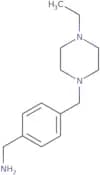
4-(4-Ethylpiperazin-1-ylmethyl)benzylamine
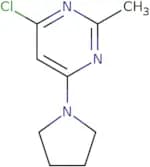
CAS:<p>Versatile small molecule scaffold</p>Formula:C14H23N3Purezza:Min. 95%Peso molecolare:233.35 g/mol4-Chloro-2-methyl-6-pyrrolidin-1-yl-pyrimidine
CAS:<p>Versatile small molecule scaffold</p>Formula:C9H12ClN3Purezza:Min. 95%Peso molecolare:197.66 g/mol4-Chloro-1-(trimethylsilyl)pent-1-yn-3-one
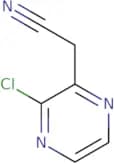
CAS:<p>Versatile small molecule scaffold</p>Formula:C8H13ClOSiPurezza:Min. 95%Peso molecolare:188.72 g/mol2-(3-Chloropyrazin-2-yl)acetonitrile
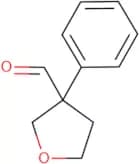
CAS:<p>Versatile small molecule scaffold</p>Formula:C6H4ClN3Purezza:Min. 95%Peso molecolare:153.57 g/mol3-Phenyloxolane-3-carbaldehyde
CAS:<p>Versatile small molecule scaffold</p>Formula:C11H12O2Purezza:Min. 95%Peso molecolare:176.21 g/mol3-Phenyloxolane-3-carboxylic acid
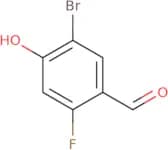
CAS:<p>Versatile small molecule scaffold</p>Formula:C11H12O3Purezza:Min. 95%Peso molecolare:192.21 g/mol5-Bromo-2-fluoro-4-hydroxybenzaldehyde
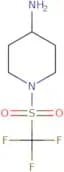
CAS:<p>Versatile small molecule scaffold</p>Formula:C7H4BrFO2Purezza:Min. 95%Peso molecolare:219.01 g/mol1-Trifluoromethanesulfonylpiperidin-4-amine
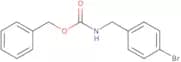
CAS:<p>Versatile small molecule scaffold</p>Formula:C6H11F3N2O2SPurezza:Min. 95%Peso molecolare:232.23 g/molBenzyl 4-bromobenzylcarbamate
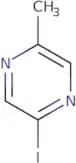
CAS:<p>Versatile small molecule scaffold</p>Formula:C15H14BrNO2Purezza:Min. 95%Peso molecolare:320.18 g/mol2-Iodo-5-methylpyrazine
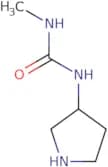
CAS:<p>Versatile small molecule scaffold</p>Formula:C5H5IN2Purezza:Min. 95%Peso molecolare:220.01 g/mol3-Methyl-1-(pyrrolidin-3-yl)urea
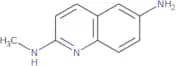
CAS:<p>Versatile small molecule scaffold</p>Formula:C6H13N3OPurezza:Min. 95%Peso molecolare:143.19 g/mol2-N-Methylquinoline-2,6-diamine
CAS:<p>Versatile small molecule scaffold</p>Formula:C10H11N3Purezza:Min. 95%Peso molecolare:173.21 g/mol(3R)-3-{[(tert-Butoxy)carbonyl](methyl)amino}butanoic acid
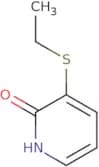
CAS:<p>Versatile small molecule scaffold</p>Formula:C10H19NO4Purezza:Min. 95%Peso molecolare:217.26 g/mol3-(Ethylsulfanyl)-1,2-dihydropyridin-2-one
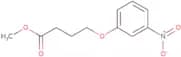
CAS:<p>Versatile small molecule scaffold</p>Formula:C7H9NOSPurezza:Min. 95%Peso molecolare:155.22 g/molMethyl 4-(3-nitrophenoxy)butanoate
CAS:Prodotto controllato<p>Versatile small molecule scaffold</p>Formula:C11H13NO5Purezza:Min. 95%Peso molecolare:239.22 g/mol2-({[(3-Bromophenyl)carbamoyl]methyl}sulfanyl)acetic acid
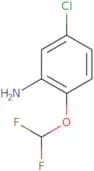
CAS:<p>Versatile small molecule scaffold</p>Formula:C10H10BrNO3SPurezza:Min. 95%Peso molecolare:304.16 g/mol5-Chloro-2-(difluoromethoxy)aniline
CAS:<p>Versatile small molecule scaffold</p>Formula:C7H6ClF2NOPurezza:Min. 95%Peso molecolare:193.58 g/mol{2-Amino-1-[4-(trifluoromethyl)phenyl]ethyl}diethylamine
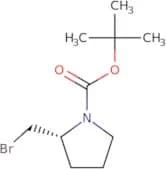
CAS:<p>Versatile small molecule scaffold</p>Formula:C13H19F3N2Purezza:Min. 95%Peso molecolare:260.3 g/mol(R)-Tert-butyl 2-(bromomethyl)pyrrolidine-1-carboxylate
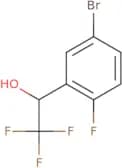
CAS:<p>Versatile small molecule scaffold</p>Formula:C10H18BrNO2Purezza:Min. 95%Peso molecolare:264.16 g/mol1-(5-Bromo-2-fluorophenyl)-2,2,2-trifluoroethan-1-ol
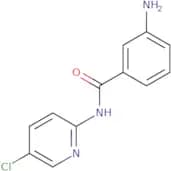
CAS:<p>Versatile small molecule scaffold</p>Formula:C8H5BrF4OPurezza:Min. 95%Peso molecolare:273.02 g/mol3-Amino-N-(5-chloropyridin-2-yl)benzamide
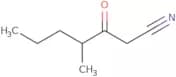
CAS:<p>Versatile small molecule scaffold</p>Formula:C12H10ClN3OPurezza:Min. 95%Peso molecolare:247.68 g/mol4-Methyl-3-oxoheptanenitrile
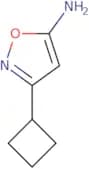
CAS:<p>Versatile small molecule scaffold</p>Formula:C8H13NOPurezza:Min. 95%Peso molecolare:139.19 g/mol3-cyclobutyl-1,2-oxazol-5-amine
CAS:<p>Versatile small molecule scaffold</p>Formula:C7H10N2OPurezza:Min. 95%Peso molecolare:138.17 g/mol3-[2-(Furan-2-yl)ethyl]-1,2-oxazol-5-amine
CAS:<p>Versatile small molecule scaffold</p>Formula:C9H10N2O2Purezza:Min. 95%Peso molecolare:178.19 g/molN-[(2,5-Dimethoxyphenyl)methyl]-2-iodoaniline
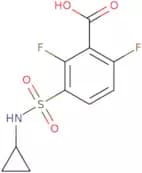
CAS:<p>Versatile small molecule scaffold</p>Formula:C15H16INO2Purezza:Min. 95%Peso molecolare:369.2 g/mol3-(Cyclopropylsulfamoyl)-2,6-difluorobenzoic acid
CAS:<p>Versatile small molecule scaffold</p>Formula:C10H9F2NO4SPurezza:Min. 95%Peso molecolare:277.25 g/mol4-[(4-Chloro-2-methylphenyl)amino]benzonitrile
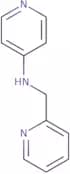
CAS:<p>Versatile small molecule scaffold</p>Formula:C14H11ClN2Purezza:Min. 95%Peso molecolare:242.7 g/molN-(Pyridin-2-ylmethyl)pyridin-4-amine
CAS:<p>Versatile small molecule scaffold</p>Formula:C11H11N3Purezza:Min. 95%Peso molecolare:185.22 g/mol2-(Chloromethyl)-3H,4H-thieno[2,3-d]pyrimidin-4-one
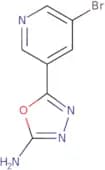
CAS:<p>Versatile small molecule scaffold</p>Formula:C7H5ClN2OSPurezza:Min. 95%Peso molecolare:200.65 g/mol5-(5-Bromopyridin-3-yl)-1,3,4-oxadiazol-2-amine
CAS:<p>Versatile small molecule scaffold</p>Formula:C7H5BrN4OPurezza:Min. 95%Peso molecolare:241.04 g/mol[(3-Fluorophenyl)methyl]urea
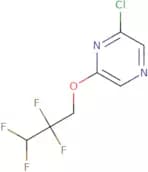
CAS:<p>Versatile small molecule scaffold</p>Formula:C8H9FN2OPurezza:Min. 95%Peso molecolare:168.17 g/mol2-Chloro-6-(2,2,3,3-tetrafluoropropoxy)pyrazine
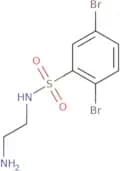
CAS:<p>2-Chloro-6-(2,2,3,3-tetrafluoropropoxy)pyrazine is a potent and selective activator of the chloride channel ClC-0. It binds to the extracellular domain of ClC-0. The binding of 2-chloro-6-(2,2,3,3-tetrafluoropropoxy)pyrazine to ClC-0 is reversible. 2-chloro-6-(2,2,3,3-tetrafluoropropoxy)pyrazine has been shown to inhibit cell proliferation in vitro and to inhibit tumor growth in vivo. It has also been used as a research tool for studies on ion channels and ligands.</p>Formula:C7H5ClF4N2OPurezza:Min. 95%Peso molecolare:244.57 g/molN-(2-Aminoethyl)-2,5-dibromobenzene-1-sulfonamide
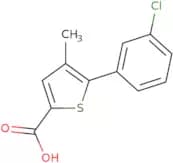
CAS:<p>Versatile small molecule scaffold</p>Formula:C8H10Br2N2O2SPurezza:Min. 95%Peso molecolare:358.05 g/mol5-(3-Chlorophenyl)-4-methylthiophene-2-carboxylic acid
CAS:<p>Versatile small molecule scaffold</p>Formula:C12H9ClO2SPurezza:Min. 95%Peso molecolare:252.72 g/mol5-[4-(Trifluoromethoxy)phenyl]thiophene-2-carboxylic acid
CAS:<p>Versatile small molecule scaffold</p>Formula:C12H7F3O3SPurezza:Min. 95%Peso molecolare:288.24 g/mol3-(Chloromethyl)-5-(2,3-dihydro-1,4-benzodioxin-2-yl)-1,2,4-oxadiazole
CAS:<p>Versatile small molecule scaffold</p>Formula:C11H9ClN2O3Purezza:Min. 95%Peso molecolare:252.65 g/mol3-[(2-Phenylethoxy)methyl]aniline
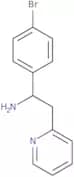
CAS:<p>Versatile small molecule scaffold</p>Formula:C15H17NOPurezza:Min. 95%Peso molecolare:227.3 g/mol1-(4-Bromophenyl)-2-(pyridin-2-yl)ethan-1-amine
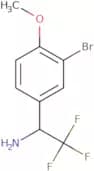
CAS:<p>Versatile small molecule scaffold</p>Formula:C13H13BrN2Purezza:Min. 95%Peso molecolare:277.16 g/mol1-(3-Bromo-4-methoxyphenyl)-2,2,2-trifluoroethan-1-amine
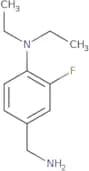
CAS:<p>Versatile small molecule scaffold</p>Formula:C9H9BrF3NOPurezza:Min. 95%Peso molecolare:284.07 g/mol4-(Aminomethyl)-N,N-diethyl-2-fluoroaniline
CAS:<p>4-(Aminomethyl)-N,N-diethyl-2-fluoroaniline is a ligand that binds to ion channels and is used as a research tool in cell biology and pharmacology. 4-(Aminomethyl)-N,N-diethyl-2-fluoroaniline has been shown to activate the nicotinic acetylcholine receptor by binding to it. The activation of this receptor leads to an increase in the release of neurotransmitters such as acetylcholine and dopamine, which can be observed using electrophysiological techniques. This compound has also been shown to inhibit the phosphorylation of protein kinase A (PKA) by inhibiting the activity of protein kinase C (PKC).</p>Formula:C11H17FN2Purezza:Min. 95%Peso molecolare:196.26 g/mol3-Fluoro-4-[2-(trifluoromethyl)phenoxy]aniline
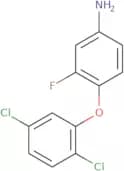
CAS:<p>Versatile small molecule scaffold</p>Formula:C13H9F4NOPurezza:Min. 95%Peso molecolare:271.21 g/mol4-(2,5-Dichlorophenoxy)-3-fluoroaniline
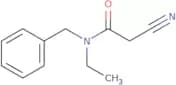
CAS:<p>Versatile small molecule scaffold</p>Formula:C12H8Cl2FNOPurezza:Min. 95%Peso molecolare:272.1 g/molN-Benzyl-2-cyano-N-ethylacetamide
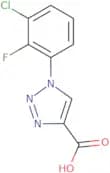
CAS:<p>Versatile small molecule scaffold</p>Formula:C12H14N2OPurezza:Min. 95%Peso molecolare:202.25 g/mol1-(3-Chloro-2-fluorophenyl)-1H-1,2,3-triazole-4-carboxylic acid
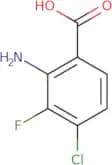
CAS:<p>Versatile small molecule scaffold</p>Formula:C9H5ClFN3O2Purezza:Min. 95%Peso molecolare:241.6 g/mol2-Amino-4-chloro-3-fluorobenzoic acid
CAS:<p>Versatile small molecule scaffold</p>Formula:C7H5ClFNO2Purezza:Min. 95%Peso molecolare:189.57 g/mol4-[(4-Iodophenyl)amino]butanoic acid
CAS:<p>Versatile small molecule scaffold</p>Formula:C10H12INO2Purezza:Min. 95%Peso molecolare:305.11 g/mol7-Chloro-8-fluoro-1,2,3,4-tetrahydroquinoline
CAS:<p>Versatile small molecule scaffold</p>Formula:C9H9ClFNPurezza:Min. 95%Peso molecolare:185.62 g/mol[4-(Dimethylamino)-3-nitrophenyl]methanol
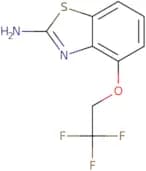
CAS:<p>Versatile small molecule scaffold</p>Formula:C9H12N2O3Purezza:Min. 95%Peso molecolare:196.2 g/mol4-(2,2,2-Trifluoroethoxy)-1,3-benzothiazol-2-amine
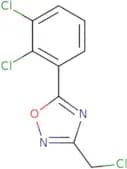
CAS:<p>Versatile small molecule scaffold</p>Formula:C9H7F3N2OSPurezza:Min. 95%Peso molecolare:248.23 g/mol3-(Chloromethyl)-5-(2,3-dichlorophenyl)-1,2,4-oxadiazole
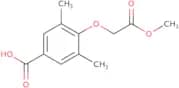
CAS:<p>Versatile small molecule scaffold</p>Formula:C9H5Cl3N2OPurezza:Min. 95%Peso molecolare:263.5 g/mol4-(2-Methoxy-2-oxoethoxy)-3,5-dimethylbenzoic acid
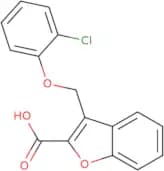
CAS:<p>Versatile small molecule scaffold</p>Formula:C12H14O5Purezza:Min. 95%Peso molecolare:238.24 g/mol3-(2-Chlorophenoxymethyl)-1-benzofuran-2-carboxylic acid
CAS:<p>Versatile small molecule scaffold</p>Formula:C16H11ClO4Purezza:Min. 95%Peso molecolare:302.71 g/mol3-[(Thiophen-2-ylsulfanyl)methyl]-1-benzofuran-2-carboxylic acid
CAS:<p>Versatile small molecule scaffold</p>Formula:C14H10O3S2Purezza:Min. 95%Peso molecolare:290.4 g/mol{3-Fluoro-4-[4-(pyrimidin-2-yl)piperazin-1-yl]phenyl}methanamine
CAS:<p>Versatile small molecule scaffold</p>Formula:C15H18FN5Purezza:Min. 95%Peso molecolare:287.34 g/mol1-[4-(Aminomethyl)-2-fluorophenyl]piperidin-4-ol
CAS:<p>Versatile small molecule scaffold</p>Formula:C12H17FN2OPurezza:Min. 95%Peso molecolare:224.27 g/mol[4-(4-Ethylpiperazin-1-yl)-3-fluorophenyl]methanamine
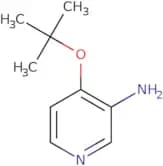
CAS:<p>Versatile small molecule scaffold</p>Formula:C13H20FN3Purezza:Min. 95%Peso molecolare:237.32 g/mol4-(tert-Butoxy)pyridin-3-amine
CAS:<p>Versatile small molecule scaffold</p>Formula:C9H14N2OPurezza:Min. 95%Peso molecolare:166.22 g/mol[4-(2,3-Dichlorophenoxy)phenyl]methanamine
CAS:<p>Versatile small molecule scaffold</p>Formula:C13H11Cl2NOPurezza:Min. 95%Peso molecolare:268.13 g/mol5-[3-(Difluoromethoxy)phenyl]-1,3,4-oxadiazol-2-amine
CAS:<p>Versatile small molecule scaffold</p>Formula:C9H7F2N3O2Purezza:Min. 95%Peso molecolare:227.17 g/mol1-(2-Fluoro-4-methylphenyl)-1H,4H,5H,6H-cyclopenta[C]pyrazole-3-carboxylic acid
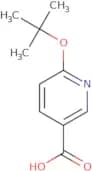
CAS:<p>Versatile small molecule scaffold</p>Formula:C14H13FN2O2Purezza:Min. 95%Peso molecolare:260.26 g/mol6-(tert-Butoxy)pyridine-3-carboxylic acid
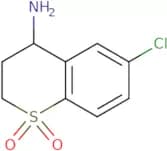
CAS:<p>Versatile small molecule scaffold</p>Formula:C10H13NO3Purezza:Min. 95%Peso molecolare:195.21 g/mol6-chloro-1,1-dioxo-3,4-dihydro-2H-thiochromen-4-amine
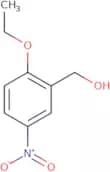
CAS:<p>Versatile small molecule scaffold</p>Formula:C9H10ClNO2SPurezza:Min. 95%Peso molecolare:231.7 g/mol(2-Ethoxy-5-nitrophenyl)methanol
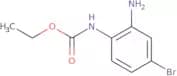
CAS:<p>Versatile small molecule scaffold</p>Formula:C9H11NO4Purezza:Min. 95%Peso molecolare:197.19 g/molEthyl N-(2-amino-4-bromophenyl)carbamate
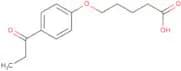
CAS:<p>Versatile small molecule scaffold</p>Formula:C9H11BrN2O2Purezza:Min. 95%Peso molecolare:259.1 g/mol5-(4-Propanoylphenoxy)pentanoic acid
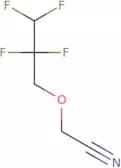
CAS:<p>Versatile small molecule scaffold</p>Formula:C14H18O4Purezza:Min. 95%Peso molecolare:250.29 g/mol2-(2,2,3,3-Tetrafluoropropoxy)acetonitrile
CAS:<p>Versatile small molecule scaffold</p>Formula:C5H5F4NOPurezza:Min. 95%Peso molecolare:171.09 g/mol3-{[(4-Hydroxypyrimidin-2-yl)sulfanyl]methyl}-1-benzofuran-2-carboxylic acid
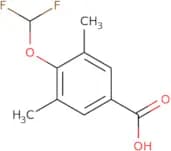
CAS:<p>Versatile small molecule scaffold</p>Formula:C14H10N2O4SPurezza:Min. 95%Peso molecolare:302.31 g/mol4-(Difluoromethoxy)-3,5-dimethylbenzoic acid
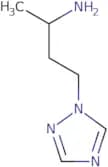
CAS:<p>Versatile small molecule scaffold</p>Formula:C10H10F2O3Purezza:Min. 95%Peso molecolare:216.18 g/mol4-(1H-1,2,4-Triazol-1-yl)butan-2-amine
CAS:<p>Versatile small molecule scaffold</p>Formula:C6H12N4Purezza:Min. 95%Peso molecolare:140.19 g/mol1-{4-[4-(Hydroxymethyl)phenyl]piperazin-1-yl}ethan-1-one
CAS:<p>Versatile small molecule scaffold</p>Formula:C13H18N2O2Purezza:Min. 95%Peso molecolare:234.29 g/mol2-{[(2-Methylbutan-2-yl)oxy]methyl}aniline
CAS:<p>Versatile small molecule scaffold</p>Formula:C12H19NOPurezza:Min. 95%Peso molecolare:193.28 g/mol[2-(Cyclopropylmethoxy)phenyl]methanol
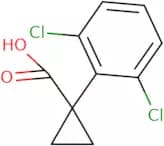
CAS:<p>Versatile small molecule scaffold</p>Formula:C11H14O2Purezza:Min. 95%Peso molecolare:178.23 g/mol1-(2,6-Dichlorophenyl)cyclopropane-1-carboxylic acid
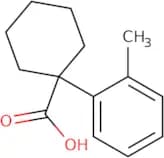
CAS:<p>Versatile small molecule scaffold</p>Formula:C10H8Cl2O2Purezza:Min. 95%Peso molecolare:231.07 g/mol1-(2-Methylphenyl)cyclohexane-1-carboxylic acid
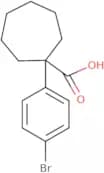
CAS:<p>Versatile small molecule scaffold</p>Formula:C14H18O2Purezza:Min. 95%Peso molecolare:218.29 g/mol1-(4-Bromophenyl)cycloheptane-1-carboxylic acid
CAS:<p>Versatile small molecule scaffold</p>Formula:C14H17BrO2Purezza:Min. 95%Peso molecolare:297.19 g/mol1-(4-Bromophenyl)-cyclobutanemethanamine
CAS:<p>Versatile small molecule scaffold</p>Formula:C11H14BrNPurezza:Min. 95%Peso molecolare:240.1 g/mol{1-[3-(Trifluoromethyl)phenyl]cyclobutyl}methanamine
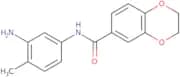
CAS:<p>Versatile small molecule scaffold</p>Formula:C12H14F3NPurezza:Min. 95%Peso molecolare:229.24 g/molN-(3-Amino-4-methylphenyl)-2,3-dihydro-1,4-benzodioxine-6-carboxamide
CAS:<p>Versatile small molecule scaffold</p>Formula:C16H16N2O3Purezza:Min. 95%Peso molecolare:284.3 g/mol3-[(Octyloxy)methyl]aniline
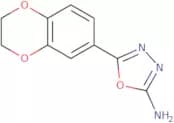
CAS:<p>Versatile small molecule scaffold</p>Formula:C15H25NOPurezza:Min. 95%Peso molecolare:235.36 g/mol5-(2,3-Dihydro-1,4-benzodioxin-6-yl)-1,3,4-oxadiazol-2-amine
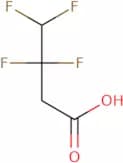
CAS:<p>Versatile small molecule scaffold</p>Formula:C10H9N3O3Purezza:Min. 95%Peso molecolare:219.2 g/mol3,3,4,4-Tetrafluorobutanoic acid
CAS:<p>Versatile small molecule scaffold</p>Formula:C4H4F4O2Purezza:Min. 95%Peso molecolare:160.07 g/mol3-{[(6-Methylcyclohex-3-en-1-yl)methoxy]methyl}benzoic acid
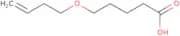
CAS:<p>Versatile small molecule scaffold</p>Formula:C16H20O3Purezza:Min. 95%Peso molecolare:260.33 g/mol5-(But-3-en-1-yloxy)pentanoic acid
CAS:<p>Versatile small molecule scaffold</p>Formula:C9H16O3Purezza:Min. 95%Peso molecolare:172.22 g/mol3-[(tert-Butoxy)methyl]aniline
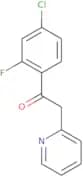
CAS:<p>Versatile small molecule scaffold</p>Formula:C11H17NOPurezza:Min. 95%Peso molecolare:179.26 g/mol1-(4-Chloro-2-fluorophenyl)-2-(pyridin-2-yl)ethan-1-one
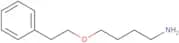
CAS:<p>Versatile small molecule scaffold</p>Formula:C13H9ClFNOPurezza:Min. 95%Peso molecolare:249.67 g/mol4-(2-Phenylethoxy)butan-1-amine
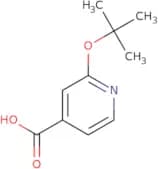
CAS:<p>Versatile small molecule scaffold</p>Formula:C12H19NOPurezza:Min. 95%Peso molecolare:193.28 g/mol2-(tert-Butoxy)pyridine-4-carboxylic acid
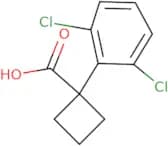
CAS:<p>Versatile small molecule scaffold</p>Formula:C10H13NO3Purezza:Min. 95%Peso molecolare:195.21 g/mol1-(2,6-Dichlorophenyl)cyclobutane-1-carboxylic acid
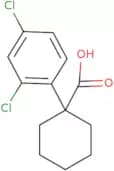
CAS:<p>Versatile small molecule scaffold</p>Formula:C11H10Cl2O2Purezza:Min. 95%Peso molecolare:245.1 g/mol1-(2,4-Dichlorophenyl)cyclohexane-1-carboxylic acid
CAS:<p>Versatile small molecule scaffold</p>Formula:C13H14Cl2O2Purezza:Min. 95%Peso molecolare:273.15 g/mol1-[4-(2-Methylpropoxy)phenyl]cyclopentane-1-carboxylic acid
CAS:<p>Versatile small molecule scaffold</p>Formula:C16H22O3Purezza:Min. 95%Peso molecolare:262.34 g/mol1-[1-(Pyridin-4-yl)ethyl]piperidin-4-amine
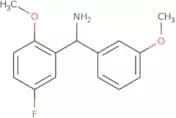
CAS:<p>Versatile small molecule scaffold</p>Formula:C12H19N3Purezza:Min. 95%Peso molecolare:205.3 g/mol(5-Fluoro-2-methoxyphenyl)(3-methoxyphenyl)methanamine
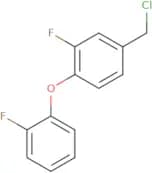
CAS:<p>Versatile small molecule scaffold</p>Formula:C15H16FNO2Purezza:Min. 95%Peso molecolare:261.29 g/mol4-(Chloromethyl)-2-fluoro-1-(2-fluorophenoxy)benzene
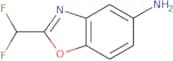
CAS:<p>Versatile small molecule scaffold</p>Formula:C13H9ClF2OPurezza:Min. 95%Peso molecolare:254.66 g/mol2-(Difluoromethyl)-1,3-benzoxazol-5-amine
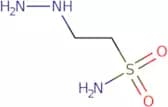
CAS:<p>Versatile small molecule scaffold</p>Formula:C8H6F2N2OPurezza:Min. 95%Peso molecolare:184.14 g/mol2-Hydrazinylethane-1-sulfonamide
CAS:<p>Versatile small molecule scaffold</p>Formula:C2H9N3O2SPurezza:Min. 95%Peso molecolare:139.18 g/mol4-Chloro-1-[4-(chloromethyl)phenoxy]-2-methylbenzene
CAS:<p>Versatile small molecule scaffold</p>Formula:C14H12Cl2OPurezza:Min. 95%Peso molecolare:267.1 g/mol3-{[(2-Chlorophenyl)sulfanyl]methyl}-1-benzofuran-2-carboxylic acid
CAS:Prodotto controllato<p>3-{[(2-Chlorophenyl)sulfanyl]methyl}-1-benzofuran-2-carboxylic acid is a research tool for studying protein interactions. It is a ligand that binds to the receptor and blocks it from interacting with other proteins. 3-{[(2-Chlorophenyl)sulfanyl]methyl}-1-benzofuran-2-carboxylic acid has been used as an inhibitor of ion channels in cell biology and pharmacology. This drug also inhibits antibody production by binding to the antigen binding site of antibodies and prevents their association with antigens. 3-(2,3,4,5,6,7,8,9,10,11)-Hexahydrobenzo[b]thiophene - 2-[(4'-chlorophenyl)sulfanyl]methyl - 1-(4'-methoxyphenyl)ethanone is</p>Formula:C16H11ClO3SPurezza:Min. 95%Peso molecolare:318.8 g/mol2-Chloro-5-[4-(trifluoromethyl)phenoxymethyl]pyridine
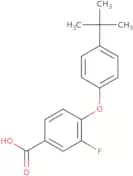
CAS:<p>Versatile small molecule scaffold</p>Formula:C13H9ClF3NOPurezza:Min. 95%Peso molecolare:287.66 g/mol4-(4-tert-Butylphenoxy)-3-fluorobenzoic acid
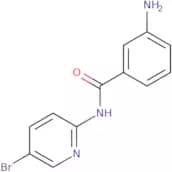
CAS:<p>Versatile small molecule scaffold</p>Formula:C17H17FO3Purezza:Min. 95%Peso molecolare:288.31 g/mol3-Amino-N-(5-bromopyridin-2-yl)benzamide
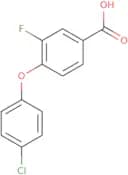
CAS:<p>Versatile small molecule scaffold</p>Formula:C12H10BrN3OPurezza:Min. 95%Peso molecolare:292.13 g/mol4-(4-Chlorophenoxy)-3-fluorobenzoic acid
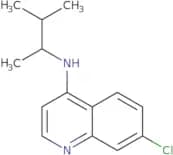
CAS:<p>Versatile small molecule scaffold</p>Formula:C13H8ClFO3Purezza:Min. 95%Peso molecolare:266.65 g/mol7-Chloro-N-(3-methylbutan-2-yl)quinolin-4-amine
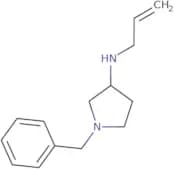
CAS:<p>Versatile small molecule scaffold</p>Formula:C14H17ClN2Purezza:Min. 95%Peso molecolare:248.75 g/mol1-Benzyl-N-(prop-2-en-1-yl)pyrrolidin-3-amine
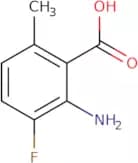
CAS:<p>Versatile small molecule scaffold</p>Formula:C14H20N2Purezza:Min. 95%Peso molecolare:216.32 g/mol2-amino-3-fluoro-6-methylbenzoic acid
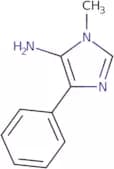
CAS:<p>Versatile small molecule scaffold</p>Formula:C8H8FNO2Purezza:Min. 95%Peso molecolare:169.16 g/mol1-Methyl-4-phenyl-1H-imidazol-5-amine
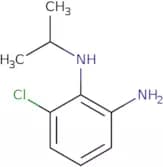
CAS:<p>Versatile small molecule scaffold</p>Formula:C10H11N3Purezza:Min. 95%Peso molecolare:173.21 g/mol6-Chloro-1-N-(propan-2-yl)benzene-1,2-diamine
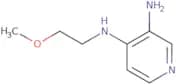
CAS:<p>Versatile small molecule scaffold</p>Formula:C9H13ClN2Purezza:Min. 95%Peso molecolare:184.66 g/molN4-(2-Methoxyethyl)pyridine-3,4-diamine
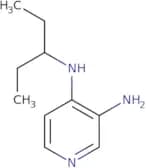
CAS:<p>Versatile small molecule scaffold</p>Formula:C8H13N3OPurezza:Min. 95%Peso molecolare:167.21 g/molN4-(Pentan-3-yl)pyridine-3,4-diamine
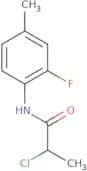
CAS:<p>Versatile small molecule scaffold</p>Formula:C10H17N3Purezza:Min. 95%Peso molecolare:179.26 g/mol2-Chloro-N-(2-fluoro-4-methylphenyl)propanamide
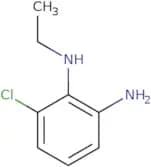
CAS:<p>Versatile small molecule scaffold</p>Formula:C10H11ClFNOPurezza:Min. 95%Peso molecolare:215.65 g/mol6-Chloro-1-N-ethylbenzene-1,2-diamine
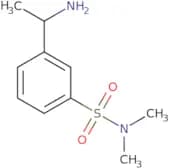
CAS:<p>Versatile small molecule scaffold</p>Formula:C8H11ClN2Purezza:Min. 95%Peso molecolare:170.64 g/mol3-(1-Aminoethyl)-N,N-dimethylbenzene-1-sulfonamide
CAS:<p>Versatile small molecule scaffold</p>Formula:C10H16N2O2SPurezza:Min. 95%Peso molecolare:228.31 g/mol5-Bromo-N-[3-(dimethylamino)propyl]pyridin-2-amine
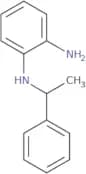
CAS:<p>Versatile small molecule scaffold</p>Formula:C10H16BrN3Purezza:Min. 95%Peso molecolare:258.16 g/mol1-N-(1-Phenylethyl)benzene-1,2-diamine
CAS:<p>Versatile small molecule scaffold</p>Formula:C14H16N2Purezza:Min. 95%Peso molecolare:212.29 g/mol2-[4-(4-Methoxyphenyl)piperazin-1-yl]propanoic acid
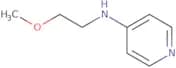
CAS:<p>Versatile small molecule scaffold</p>Formula:C14H20N2O3Purezza:Min. 95%Peso molecolare:264.32 g/molN-(2-Methoxyethyl)pyridin-4-amine
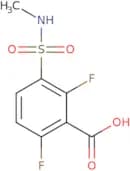
CAS:<p>Versatile small molecule scaffold</p>Formula:C8H12N2OPurezza:Min. 95%Peso molecolare:152.19 g/mol2,6-Difluoro-3-(methylsulfamoyl)benzoic acid
CAS:<p>Versatile small molecule scaffold</p>Formula:C8H7F2NO4SPurezza:Min. 95%Peso molecolare:251.21 g/mol4-[Ethyl(phenyl)amino]benzoic acid
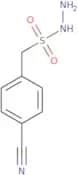
CAS:<p>Versatile small molecule scaffold</p>Formula:C15H15NO2Purezza:Min. 95%Peso molecolare:241.28 g/mol(4-Cyanophenyl)methanesulfonohydrazide
CAS:<p>Versatile small molecule scaffold</p>Formula:C8H9N3O2SPurezza:Min. 95%Peso molecolare:211.24 g/mol3-Azabicyclo[4.2.1]nonane-3-carboxamide
CAS:<p>Versatile small molecule scaffold</p>Formula:C9H16N2OPurezza:Min. 95%Peso molecolare:168.2 g/mol1-[(tert-Butoxy)carbonyl]-3-phenoxyazetidine-3-carboxylic acid
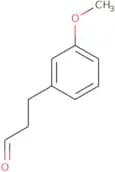
CAS:<p>Versatile small molecule scaffold</p>Formula:C15H19NO5Purezza:Min. 95%Peso molecolare:293.3 g/mol3-(3-Methoxyphenyl)propionaldehyde
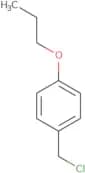
CAS:<p>3-(3-Methoxyphenyl)propionaldehyde is a ligand that interacts with the mosquito Aedes aegypti. It has been shown to be orally active and has an affinity for the interaction site on the mosquito's olfactory receptor, which is responsible for detecting odors. 3-(3-Methoxyphenyl)propionaldehyde modulates this receptor, thereby interfering with the mosquito's ability to detect certain odors. It is also known to have an affinity for trypsin and collagen and can be used as a potential drug in treating breast cancer.</p>Formula:C10H12O2Purezza:Min. 95%Peso molecolare:164.2 g/mol1-(Chloromethyl)-4-propoxybenzene
CAS:<p>Versatile small molecule scaffold</p>Formula:C10H13ClOPurezza:Min. 95%Peso molecolare:184.66 g/mol4-chlorobenzo[4,5]thieno[2,3-d]pyrimidine
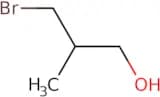
CAS:<p>Versatile small molecule scaffold</p>Formula:C10H5ClN2SPurezza:Min. 95%Peso molecolare:220.67 g/mol3-Bromo-2-methylpropan-1-ol
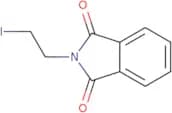
CAS:<p>3-Bromo-2-methylpropan-1-ol is a chiral, neurotoxic alcohol. It has been shown to be a precursor for the synthesis of neurotrophic analogues, which are compounds that help maintain the structure and function of neurons, such as 3-bromo-2-methylpropanal (BMPA) and 3-bromoacetophenone. The enantiomers of BMPA have different effects on fetal rat cerebral neuronal cells. One enantiomer inhibits the growth of neurons, while the other promotes their growth. These differences may be related to their optical activity: one enantiomer is active when present in the form of left circularly polarized light and the other is active in right circularly polarized light.</p>Formula:C4H9BrOPurezza:Min. 95%Peso molecolare:153.02 g/mol2-(2-Iodoethyl)-2,3-dihydro-1H-isoindole-1,3-dione
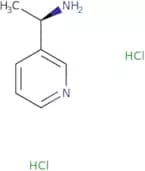
CAS:<p>2-(2-Iodoethyl)-2,3-dihydro-1H-isoindole-1,3-dione is a crystalline compound that is an n-substituted derivative of phthalimide. It has been shown to be effective for the treatment of tuberculosis. This drug binds to DNA and inhibits transcription and replication. 2-(2-Iodoethyl)-2,3-dihydro-1H-isoindole-1,3-dione also inhibits bacterial growth by binding to RNA polymerase.</p>Formula:C10H8INO2Purezza:Min. 95%Peso molecolare:301.08 g/mol(R)-1-(Pyridin-3-yl)ethan-1-amine dihydrochloride
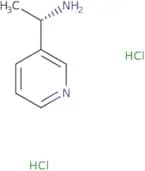
CAS:<p>Versatile small molecule scaffold</p>Formula:C7H10N2·2HClPurezza:Min. 95%Peso molecolare:122.17 g/mol(S)-1-(Pyridin-4-yl)ethanamine diHCl ee
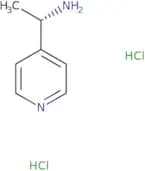
CAS:<p>Versatile small molecule scaffold</p>Formula:C7H12Cl2N2Purezza:Min. 95%Peso molecolare:195.09 g/mol(S)-1-Pyridin-3-yl-ethylamine 2HCl
CAS:<p>Versatile small molecule scaffold</p>Formula:C7H12Cl2N2Purezza:Min. 95%Peso molecolare:195.09 g/molSodium 3-(4-chlorophenyl)-3-oxoprop-1-en-1-olate
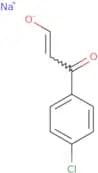
CAS:<p>Versatile small molecule scaffold</p>Formula:C9H6ClNaO2Purezza:Min. 95%Peso molecolare:204.58 g/mol1-(4-Phenyl-1H-pyrrol-3-yl)ethan-1-one
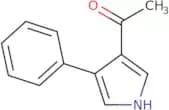
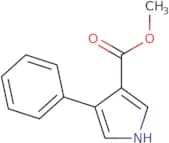
CAS:<p>Versatile small molecule scaffold</p>Formula:C12H11NOPurezza:Min. 95%Peso molecolare:185.22 g/molMethyl 4-phenyl-1H-pyrrole-3-carboxylate
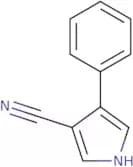
CAS:<p>Versatile small molecule scaffold</p>Formula:C12H11NO2Purezza:Min. 95%Peso molecolare:201.22 g/mol4-Phenyl-1H-pyrrole-3-carbonitrile
CAS:<p>4-Phenyl-1H-pyrrole-3-carbonitrile is an acrylonitrile derivative that is a fungicide. It is used to control fungal diseases on plants and to prevent the spread of fungi in commercial buildings. The compound is used as a seed treatment and as a foliar spray. 4-Phenyl-1H-pyrrole-3-carbonitrile has been shown to be effective against many types of fungi, including species of Aspergillus, Alternaria, Cladosporium, Fusarium, Penicillium, Rhizopus, Scopulariopsis and Trichoderma. However it has little or no activity against bacteria or viruses. This fungicide can be absorbed through the skin and may cause kidney damage if ingested in large quantities.</p>Formula:C11H8N2Purezza:Min. 95%Peso molecolare:168.19 g/mol2-{[(4-Methylphenyl)methyl]amino}ethan-1-ol
CAS:<p>Versatile small molecule scaffold</p>Formula:C10H15NOPurezza:Min. 95%Peso molecolare:165.23 g/mol2-{[(2,4-Dimethoxyphenyl)methyl]amino}ethan-1-ol
CAS:<p>Versatile small molecule scaffold</p>Formula:C11H17NO3Purezza:Min. 95%Peso molecolare:211.26 g/mol2-{[(2,5-Dimethoxyphenyl)methyl]amino}ethan-1-ol
CAS:<p>Versatile small molecule scaffold</p>Formula:C11H17NO3Purezza:Min. 95%Peso molecolare:211.26 g/mol[(3,4-Dimethoxyphenyl)methyl](ethyl)amine
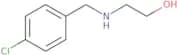
CAS:<p>Versatile small molecule scaffold</p>Formula:C11H18ClNO2Purezza:Min. 95%Peso molecolare:231.72 g/mol2-(4-Chloro-benzylamino)-ethanol
CAS:<p>Versatile small molecule scaffold</p>Formula:C9H12ClNOPurezza:Min. 95%Peso molecolare:185.65 g/mol2-{[(3,4-Dichlorophenyl)methyl]amino}ethan-1-ol
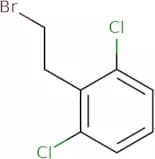
CAS:<p>Versatile small molecule scaffold</p>Formula:C9H11Cl2NOPurezza:Min. 95%Peso molecolare:220.09 g/mol2,6-Dichlorophenethyl bromide
CAS:<p>2,6-Dichlorophenethyl bromide is a heterocyclic compound that is an agonist of the farnesoid X receptor (FXR). It has been shown to be effective in treating metabolic diseases such as diabetes and obesity. 2,6-Dichlorophenethyl bromide has also been shown to reduce liver damage in experimental models of nonalcoholic steatohepatitis. This drug binds to FXR and activates the receptor, which then induces the production of bile acids. These bile acids are important for the digestion of fats and absorption of fat soluble vitamins. 2,6-Dichlorophenethyl bromide is metabolized by CYP3A4 enzyme and can cause drug interactions with other drugs that are metabolized by this enzyme.</p>Formula:C8H7BrCl2Purezza:Min. 95%Peso molecolare:253.95 g/mol2-ethynylquinoline
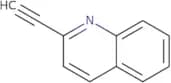
CAS:<p>2-Ethynylquinoline is a molecule that has been found to be effective in the treatment of leukemia and other cancers. It inhibits protein synthesis in cells by binding to the molecule eIF4E, which prevents the production of proteins vital for cell division. 2-Ethynylquinoline has been shown to have anti-inflammatory properties, which may be due to its ability to inhibit prostaglandin synthesis. This drug also has a toxic effect on respiratory system cells, which may be due to its ability to induce apoptosis.<br>2-Ethynylquinoline is a potent cytotoxic agent that inhibits the growth of cancer cells by inhibiting protein synthesis and mitochondrial membrane potential. The drug also suppresses oxidative injury and cardiac dysfunction induced by fatty acid oxidation. In vivo studies have shown that 2-ethynylquinoline can cause regression of bronchial tumors in mice with pulmonary carcinomas, as well as regression of alveolar tumors in mice with metastatic lung</p>Formula:C11H7NPurezza:Min. 95%Peso molecolare:153.17 g/mol2-Ethynylbenzothiazole
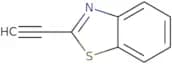
CAS:<p>2-Ethynylbenzothiazole is a synthetic chemical that can be used as a fluorescent probe. It has been shown to react with nucleophilic compounds, such as thiols and amines, in the presence of palladium complexes. The reaction is catalyzed by the addition of hydrogen chloride. 2-Ethynylbenzothiazole reacts with thiols and amines to form a new compound called 2-chlorobenzothiazole. This reaction also produces hydrogen gas and heat. When 2-ethynylbenzothiazole is combined with vitamin B1, it undergoes electrophilic attack by an electron-rich heterocycle, leading to the formation of an intermediate product that fluoresces brightly.</p>Formula:C9H5NSPurezza:Min. 95%Peso molecolare:159.21 g/mol1-(2,5-Dimethoxyphenyl)propan-2-ol
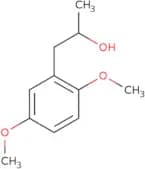
CAS:Prodotto controllato<p>Versatile small molecule scaffold</p>Formula:C11H16O3Purezza:Min. 95%Peso molecolare:196.24 g/mol2-Phenylbenzene-1-sulfonamide
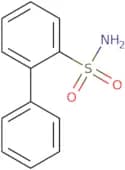
CAS:<p>2-Phenylbenzene-1-sulfonamide is a biphenyl compound that inhibits the production of endothelin, a peptide hormone that plays a role in regulating blood pressure and blood flow. It has been shown to be effective in vitro against experimental models of congestive heart disease and bowel disease. 2-Phenylbenzene-1-sulfonamide also inhibits the activity of x-ray crystal structures, which are proteins involved in apoptosis or programmed cell death. 2-Phenylbenzene-1-sulfonamide is not active against bacteria, but it has been shown to inhibit Mcl-1 protein, which regulates the process of apoptosis. This drug also has sodium salt forms that are used to treat metabolic disorders such as diabetes mellitus type II.</p>Formula:C12H11NO2SPurezza:Min. 95%Peso molecolare:233.29 g/molN-Methyl-2-phenylbenzene-1-sulfonamide
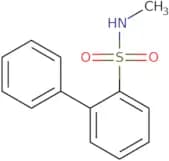
CAS:<p>Versatile small molecule scaffold</p>Formula:C13H13NO2SPurezza:Min. 95%Peso molecolare:247.31 g/molN-(3-Acetyl-4-hydroxyphenyl)butanamide
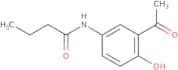
CAS:<p>N-(3-Acetyl-4-hydroxyphenyl)butanamide (NAAB) is a flavonoid that has been shown to be activated by the addition of urine samples. This activation leads to protein synthesis and exfoliation. NAAB fluoresces in the presence of an ultraviolet light, making it a useful fluorescent probe for the detection of human serum amide. NAAB is also low molecular weight and linear range, making it suitable for use as a reticulum deformation agent.</p>Formula:C12H15NO3Purezza:Min. 95%Peso molecolare:221.25 g/mol[(2,3-Dihydro-1H-inden-1-yl)methyl](methyl)amine
CAS:<p>Versatile small molecule scaffold</p>Formula:C11H15NPurezza:Min. 95%Peso molecolare:161.24 g/mol3-Iodo-2,5-dimethylthiophene
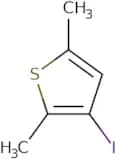
CAS:<p>3-Iodo-2,5-dimethylthiophene is an alkenylation agent. It can be synthesized by reacting 3-iodo-2,4,6-trimethylphenol with boronic acid in the presence of ethylene at high temperatures. The reaction is irreversible and can be used to form substituted derivatives that are irreversibly alkenylated. 3-Iodo-2,5-dimethylthiophene has a number of optical properties including photochromism and diffraction. It has been shown to be useful for the synthesis of novel materials with optical properties such as photochromism and diffraction.</p>Formula:C6H7ISPurezza:Min. 95%Peso molecolare:238.09 g/molMethyl 2-cyclopentylideneacetate
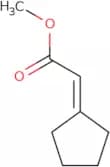
CAS:<p>Methyl 2-cyclopentylideneacetate is a molecule that is used in cosmetics. It has viscosity-increasing properties, which are beneficial in products that require a creamy consistency. Methyl 2-cyclopentylideneacetate also has an average particle diameter of less than 20 microns and is soluble in water. This compound can be found in fatty acids, ethyl groups, and crystalline cellulose. The deodorizing effects of this product come from the particles it produces when mixed with magnesium oxide. Methyl 2-cyclopentylideneacetate also contains acidic ph levels and is an ester compound.</p>Formula:C8H12O2Purezza:Min. 95%Peso molecolare:140.18 g/molMethyl 2-cyclohexylideneacetate
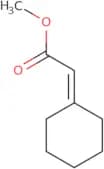
CAS:<p>Methyl 2-cyclohexylideneacetate is a stereospecific, geranyl, and biomimetic chemical compound. It has been shown to be an effective inhibitor of bacterial enzymes that produce ozonides. Methyl 2-cyclohexylideneacetate also inhibits the biosynthesis of phytosteroids in plants and the synthesis of farnesyl diphosphate, which is an intermediate in the production of cholesterol. The compound has been postulated to inhibit bacterial enzyme activity by binding to the active site on the enzyme.</p>Formula:C9H14O2Purezza:Min. 95%Peso molecolare:154.21 g/molmono-Benzyl malonate
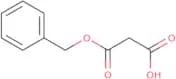
CAS:<p>Mono-benzyl malonate is a synthetic molecule that inhibits the growth of cancer cells. It has an intramolecular hydrogen bond that stabilizes the molecule, and it has been shown to be effective at a low dose in preventing tumor growth. Mono-benzyl malonate also binds to receptors and blocks their activity, which may help to reduce insulin resistance in a similar way as metformin. The biological properties of this compound are still being studied.</p>Formula:C10H10O4Purezza:Min. 95%Peso molecolare:194.18 g/mol4-(2-Methoxyphenyl)-3-thiosemicarbazide
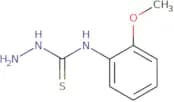
CAS:<p>4-(2-Methoxyphenyl)-3-thiosemicarbazide is a fluorescent compound that has been shown to have an inhibitory effect on bacteria. This compound binds to anions and can be used in the clarification of water. 4-(2-Methoxyphenyl)-3-thiosemicarbazide is also active as an antibacterial agent against gram-negative bacteria, such as Escherichia coli and Klebsiella pneumoniae. The antibacterial activity of 4-(2-Methoxyphenyl)-3-thiosemicarbazide may be due to its ability to inhibit the synthesis of proteins necessary for cell division.<br>4-(2-Methoxyphenyl)-3-thiosemicarbazide is a tautomeric, fluorescent compound that belongs to the class of antibiotic drugs. It has been shown to have chemosensor properties and can be used in the detection</p>Formula:C8H11N3OSPurezza:Min. 95%Peso molecolare:197.26 g/mol4-(4-Methoxyphenyl)-3-thiosemicarbazide
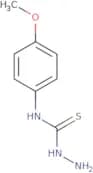
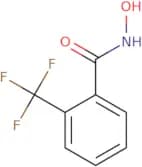
CAS:<p>4-(4-Methoxyphenyl)-3-thiosemicarbazide is a carbonyl compound that has been shown to have anticancer activity. It inhibits the growth of cancer cells by binding to the DNA of tumor cells, causing them to undergo apoptosis. 4-(4-Methoxyphenyl)-3-thiosemicarbazide also inhibits influenza virus and bacteria by inhibiting the enzyme ribonucleotide reductase and preventing the synthesis of viral RNA. This agent has potent inhibitory activity against gram-negative species such as Escherichia coli and Pseudomonas aeruginosa.</p>Formula:C8H11N3OSPurezza:Min. 95%Peso molecolare:197.26 g/molN-Hydroxy-2-(trifluoromethyl)benzamide
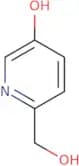
CAS:<p>Versatile small molecule scaffold</p>Formula:C8H6F3NO2Purezza:Min. 95%Peso molecolare:205.13 g/mol6-(hydroxymethyl)pyridin-3-ol
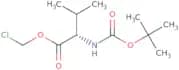
CAS:<p>6-(hydroxymethyl)pyridin-3-ol is a metabolite of the indole alkaloid, bufotenine. It has been shown to have cytotoxic activity against the human lung carcinoma cell line A549 and adipose cells, as well as antioxidant properties. 6-(hydroxymethyl)pyridin-3-ol also has been shown to modulate the production of reactive oxygen species in cells by inhibiting lipid peroxidation. This compound can be found in neutral pH environments, such as water and soil. 6-(hydroxymethyl)pyridin-3-ol can be synthesized from furfural or 5-hydroxymethylfurfural (HMF), which are produced through the degradation of glucose and other carbohydrates. The reaction between HMF with urea produces 6-(hydroxymethyl)pyridin-3-ol, leading to its presence in food chemistry.</p>Formula:C6H7NO2Purezza:Min. 95%Peso molecolare:125.12 g/mol(S)-Chloromethyl 2-((tert-butoxycarbonyl)amino)-3-methylbutanoate
CAS:<p>Versatile small molecule scaffold</p>Formula:C11H20ClNO4Purezza:Min. 95%Peso molecolare:265.73 g/mol3-[(3-Aminopropyl)amino]-1-propanol
CAS:<p>3-[(3-Aminopropyl)amino]-1-propanol is a complex chemical compound. It is a convergent synthesis and has the potential to be used in the field of chemistry, where it can be used to create new molecules with complex structures. 3-[(3-Aminopropyl)amino]-1-propanol can also be used to synthesize dendrons and dendrimers, which are highly symmetrical and designed architectures that have been shown to have orthogonal reactivity.</p>Formula:C6H16N2OPurezza:Min. 95%Peso molecolare:132.21 g/mol[4-(Hydroxymethyl)-1,3-thiazol-2-yl]methanol
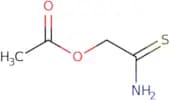
CAS:<p>Thiazole is a heterocyclic organic compound that is composed of three carbon atoms and two sulfur atoms. They are classified as either acidic or basic, depending on the substituents. 4-(Hydroxymethyl)-1,3-thiazol-2-yl]methanol is a diluent that is used in pharmaceuticals and other chemical products. It has been shown to have cardiovascular, nervous and circulatory effects, as well as an effect on the central nervous system. This diluent also acts as a cholinesterase inhibitor, which causes acetylcholine to accumulate at nerve endings and results in paralysis of the victim’s voluntary muscles. This can lead to death if the victim cannot be treated with an antidote.</p>Formula:C5H7NO2SPurezza:Min. 95%Peso molecolare:145.18 g/molCarbamothioylmethyl acetate
CAS:<p>Versatile small molecule scaffold</p>Formula:C4H7NO2SPurezza:Min. 95%Peso molecolare:133.17 g/molEthyl 2-(hydroxymethyl)thiazole-4-carboxylate
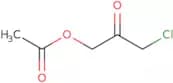
CAS:<p>Versatile small molecule scaffold</p>Formula:C7H9NO3SPurezza:Min. 95%Peso molecolare:187.22 g/mol3-Chloro-2-oxopropyl acetate
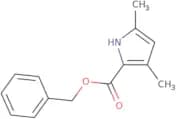
CAS:<p>3-Chloro-2-oxopropyl acetate is a chloride compound that is used as an acid catalyst. It has been shown to exhibit hypochlorous and cytostatic effects in animals. 3-Chloro-2-oxopropyl acetate is also a structural modification of chloroacetone, which has been shown to have antitumor effects. This compound can be used as an acid catalyst for the synthesis of chlorinated benzoates. 3-Chloro-2-oxopropyl acetate also exhibits cytostatic and antiinflammatory activities in animal studies.</p>Formula:C5H7ClO3Purezza:Min. 95%Peso molecolare:150.56 g/molBenzyl 3,5-dimethylpyrrole-2-carboxylate
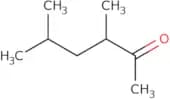
CAS:Prodotto controllato<p>Benzyl 3,5-dimethylpyrrole-2-carboxylate is an enol ether that is stabilized by hydrogen bonds. This compound has a polymeric structure and forms dimers and dimers. The chains of the molecule are stabilized by hydrogen bonds. It has a carbonyl group and a carbonyl group that form hydrogen bonds with each other. There are also hydrogen bonding interactions between the benzyl chain and the acetyl groups present in the molecule. Benzyl 3,5-dimethylpyrrole-2-carboxylate is a part of the class of compounds known as polymeric ketones or polyketones, which are characterized by their chains of repeating units.</p>Formula:C14H15NO2Purezza:Min. 95%Peso molecolare:229.27 g/mol3,5-Dimethylhexan-2-one
CAS:<p>Versatile small molecule scaffold</p>Formula:C8H16OPurezza:Min. 95%Peso molecolare:128.21 g/mol3-Propylhexan-2-one
CAS:<p>Versatile small molecule scaffold</p>Formula:C9H18OPurezza:Min. 95%Peso molecolare:142.2 g/mol4,6-Dimethylheptan-3-one
CAS:<p>Versatile small molecule scaffold</p>Formula:C9H18OPurezza:Min. 95%Peso molecolare:142.2 g/mol1,2,3,6-Tetrahydropyridine-1-carbonyl chloride
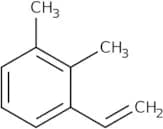
CAS:<p>Versatile small molecule scaffold</p>Formula:C6H8ClNOPurezza:Min. 95%Peso molecolare:145.59 g/mol1-Ethenyl-2,3-dimethylbenzene
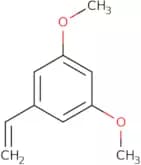
CAS:<p>1-Ethenyl-2,3-dimethylbenzene is a monomer that is used to prepare polymers. It has coagulation properties and can be used as a solid catalyst for the production of polyurethanes. 1-Ethenyl-2,3-dimethylbenzene is an oxidizing agent that can react with styrene to form copolymers. This chemical has been immobilized on silica gel using a surfactant coating to produce coatings. The hydroxyl group in this compound is acidic and reacts with inorganic acids such as hydrochloric acid or sulfuric acid to form esters.</p>Formula:C10H12Purezza:Min. 95%Peso molecolare:132.2 g/mol1-Ethenyl-3,5-dimethoxybenzene
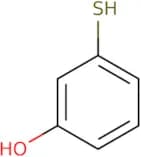
CAS:<p>1-Ethenyl-3,5-dimethoxybenzene is a monomer that can be used for anionic polymerization. This monomer is characterized by its high yield, which is consistent with the predictable conformation of the phenyl ring and the symmetric nature of the magnetic resonance spectra. The 1-ethenyl-3,5-dimethoxybenzene molecule has an anionic charge. It is also known to have a phenolic group, which provides ultraviolet absorption properties. The temperature range for this monomer's transition ranges from -20°C to 100°C.</p>Formula:C10H12O2Purezza:Min. 95%Peso molecolare:164.2 g/mol3-Hydroxybenzenethiol
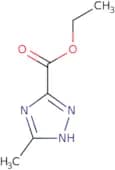
CAS:<p>3-Hydroxybenzenethiol is a reactive chemical that binds to human liver microsomes and inhibits the activity of cytochrome P450, an enzyme that is required for the metabolism of many drugs. 3-Hydroxybenzenethiol has been shown to have inhibitory properties against a number of bacterial enzymes including beta-lactamase and penicillinase. 3-Hydroxybenzenethiol also inhibits the uptake of flavonoids by cells, which may be due to its ability to bind to flavonoid derivatives. The molecule has been used in studies on monoclonal antibodies and enzyme inhibitors.</p>Formula:C6H6OSPurezza:Min. 95%Peso molecolare:126.17 g/molEthyl 5-methyl-4H-1,2,4-triazole-3-carboxylate
CAS:<p>Versatile small molecule scaffold</p>Formula:C6H9N3O2Purezza:Min. 95%Peso molecolare:155.15 g/mol2-[4-(2-Methoxyphenyl)piperazin-1-yl]ethan-1-amine
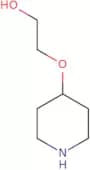
CAS:<p>Versatile small molecule scaffold</p>Formula:C13H21N3OPurezza:Min. 95%Peso molecolare:235.33 g/mol2-(Piperidin-4-yloxy)ethan-1-ol
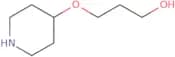
CAS:<p>Versatile small molecule scaffold</p>Formula:C7H15NO2Purezza:Min. 95%Peso molecolare:145.2 g/mol3-(Piperidin-4-yloxy)propan-1-ol
CAS:<p>Versatile small molecule scaffold</p>Formula:C8H17NO2Purezza:Min. 95%Peso molecolare:159.23 g/mol9-Benzyl-1,5-dioxa-9-azaspiro[5.5]undecane
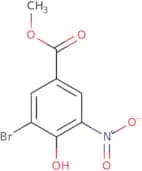
CAS:<p>Versatile small molecule scaffold</p>Formula:C15H21NO2Purezza:Min. 95%Peso molecolare:247.33 g/molMethyl 3-bromo-4-hydroxy-5-nitrobenzenecarboxylate
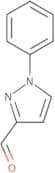
CAS:<p>Versatile small molecule scaffold</p>Formula:C8H6BrNO5Purezza:Min. 95%Peso molecolare:276.05 g/mol1-Phenyl-1H-pyrazole-3-carbaldehyde
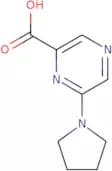
CAS:<p>1-Phenyl-1H-pyrazole-3-carbaldehyde is a pyrazole derivative that is used as a precursor in the synthesis of other compounds. The compound can be synthesized by nitro group reduction of 1,2,3-triazoles followed by chlorination of the resulting hydrazine. This reaction yields phenylhydrazones which undergo dehydrative condensation with carboxylic acids to give pyrazoles. These reactions are reversible and are catalyzed by acid or base. 1-Phenyl-1H-pyrazole-3-carbaldehyde has been shown to react with glucosyl residues in carbohydrates to form acetylated dihydroxyethyl moieties, which have been implicated in the prevention of diabetes and obesity.</p>Formula:C10H8N2OPurezza:Min. 95%Peso molecolare:172.18 g/mol6-(Pyrrolidin-1-yl)pyrazine-2-carboxylic acid
CAS:<p>Versatile small molecule scaffold</p>Formula:C9H11N3O2Purezza:Min. 95%Peso molecolare:193.2 g/mol2-N,6-N-Dimethylpyridine-2,6-diamine
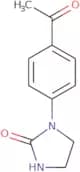
CAS:<p>2-N,6-N-Dimethylpyridine-2,6-diamine is a macrocyclic diamine that has been synthesized in the form of a monoanion. It has an X-ray crystallography with a molecular structure that is consistent with the coordination of copper ions to two nitrogen atoms and two oxygen atoms. The ligand is coordinated in the axial position, with sulfate ions occupying the equatorial positions. The conformation of this compound is linear, which may be due to its negative charge. The crystal structure of 2-N,6-N-Dimethylpyridine-2,6-diamine is hexagonal.</p>Formula:C7H11N3Purezza:Min. 95%Peso molecolare:137.18 g/mol1-(4-Acetylphenyl)imidazolidin-2-one
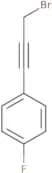
CAS:<p>Versatile small molecule scaffold</p>Formula:C11H12N2O2Purezza:Min. 95%Peso molecolare:204.22 g/mol1-(3-Bromoprop-1-yn-1-yl)-4-fluorobenzene
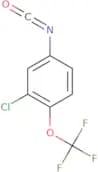
CAS:<p>Versatile small molecule scaffold</p>Formula:C9H6BrFPurezza:Min. 95%Peso molecolare:213.05 g/mol2-Chloro-4-isocyanato-1-(trifluoromethoxy)benzene
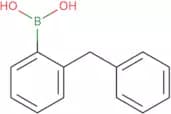
CAS:<p>Versatile small molecule scaffold</p>Formula:C8H3ClF3NO2Purezza:Min. 95%Peso molecolare:237.56 g/mol(2-Benzylphenyl)boronic acid
CAS:<p>2-Benzylphenylboronic acid is a heterocycle. It is an ester that can be made from the reaction of 2-benzylphenol and borane in the presence of ethanolamine. This compound has a 6-membered ring with three carbon atoms, two of which are attached to the boron atom. Pyrolysis results in the formation of benzene, nitrobenzene, and phenol.</p>Formula:C13H13BO2Purezza:Min. 95%Peso molecolare:212.05 g/mol(5,6,7,8-Tetrahydro-benzo[4,5]thieno[2,3- D ]pyrimidin-4-ylsulfanyl)-acetic acid
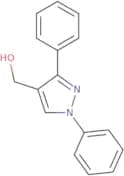
CAS:<p>Versatile small molecule scaffold</p>Formula:C12H12N2O2S2Purezza:Min. 95%Peso molecolare:280.4 g/mol(1,3-diphenylpyrazol-4-yl)methanol
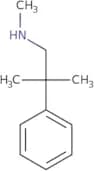
CAS:<p>Versatile small molecule scaffold</p>Formula:C16H14N2OPurezza:Min. 95%Peso molecolare:250.3 g/molMethyl(2-methyl-2-phenylpropyl)amine
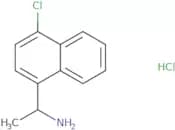
CAS:<p>Versatile small molecule scaffold</p>Formula:C11H17NPurezza:Min. 95%Peso molecolare:163.26 g/mol1-(4-Chloronaphthalen-1-yl)ethan-1-amine hydrochloride
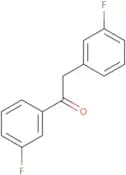
CAS:<p>Versatile small molecule scaffold</p>Formula:C12H13Cl2NPurezza:Min. 95%Peso molecolare:242.14 g/mol3'-Fluoro-2-(3-fluorophenyl)acetophenone
CAS:<p>Versatile small molecule scaffold</p>Formula:C14H10F2OPurezza:Min. 95%Peso molecolare:232.23 g/mol2-Chloro-5-(2-methoxyphenyl)-1,3,4-thiadiazole
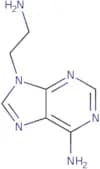
CAS:<p>Versatile small molecule scaffold</p>Formula:C9H7ClN2OSPurezza:Min. 95%Peso molecolare:226.68 g/mol9-(2-Aminoethyl)-9H-purin-6-amine
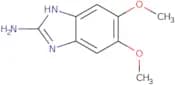
CAS:<p>9-(2-Aminoethyl)-9H-purin-6-amine is a nucleotide analog that has been used as a template for the synthesis of polymers with other heterocycles. The monomeric units are linked by crosslinks, which are formed by reacting two or more chains with an amine group on one of the chains. 9-(2-Aminoethyl)-9H-purin-6-amine is insoluble in water and reacts with cyanogen to form cyanuric acid. The phosphate groups can be reacted with chloride ions to form uracil, which is insoluble in water.</p>Formula:C7H10N6Purezza:Min. 95%Peso molecolare:178.2 g/mol5,6-Dimethoxy-1H-1,3-benzodiazol-2-amine
CAS:<p>Versatile small molecule scaffold</p>Formula:C9H11N3O2Purezza:Min. 95%Peso molecolare:193.2 g/mol2-(4-Chlorophenyl)cyclopentan-1-amine hydrochloride
CAS:<p>Versatile small molecule scaffold</p>Formula:C11H15Cl2NPurezza:Min. 95%Peso molecolare:232.15 g/mol2-(4-Chlorophenyl)cyclopentan-1-one
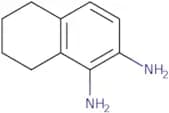
CAS:<p>Versatile small molecule scaffold</p>Formula:C11H11ClOPurezza:Min. 95%Peso molecolare:194.66 g/mol5,6,7,8-Tetrahydronaphthalene-1,2-diamine
CAS:<p>Versatile small molecule scaffold</p>Formula:C10H14N2Purezza:Min. 95%Peso molecolare:162.23 g/mol3,4-Dimethoxybenzamidoxime
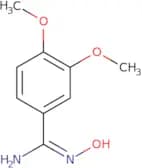
CAS:<p>Versatile small molecule scaffold</p>Formula:C9H12N2O3Purezza:Min. 95%Peso molecolare:196.2 g/molT62
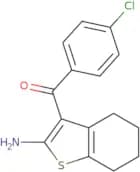
CAS:<p>T62 is a chemical element that belongs to the group of rare-earth metals. It is used in a variety of different industries, such as for the manufacture of magnets and batteries. T62 has been shown to be an effective inhibitor of bacterial ubiquitin ligases, which are enzymes that regulate protein degradation by attaching ubiquitin molecules to proteins. T62 has also been shown to inhibit chronic pain in animal models due to its ability to inhibit adenosine receptors. This drug has shown efficacy in treating bladder cancer and hematopoietic disorders.</p>Formula:C15H14ClNOSPurezza:Min. 95%Peso molecolare:291.8 g/molN-(3-Benzoyl-4,5,6,7-tetrahydro-1-benzothiophen-2-yl)-2-chloroacetamide
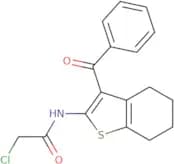
CAS:<p>Versatile small molecule scaffold</p>Formula:C17H16ClNO2SPurezza:Min. 95%Peso molecolare:333.8 g/mol[5-(2-Chlorophenyl)fur-2-yl]methanol
CAS:<p>Versatile small molecule scaffold</p>Formula:C11H9ClO2Purezza:Min. 95%Peso molecolare:208.64 g/mol2-(5-Methyl-1,3-dioxo-2,3-dihydro-1H-isoindol-2-yl)acetic acid
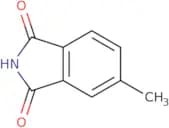
CAS:<p>Versatile small molecule scaffold</p>Formula:C11H9NO4Purezza:Min. 95%Peso molecolare:219.19 g/mol4-Methylphthalimide
CAS:<p>4-Methylphthalimide is a chiral, birefringent, colorless crystalline compound. It is soluble in water and has a molecular weight of 98.4 g/mol. 4-Methylphthalimide is synthesized by the treatment of methylester with an oxidant and catalytic amide. The chemical reaction yields an isomeric mixture. 4-Methylphthalimide can be used in the treatment of biomolecular research as a chiral stationary phase for gel permeation chromatography (GPC). The compound's high refractive index leads to its use in densities measurements.br>br><br>br>br><br>Densities: 4-methylphthalimide has a density of 1.394 g/cm3 at 20 degrees Celsius and 1 atmosphere pressure.br>br><br>Temperature: 4-methylphthalimide melts at 247 degrees Celsius.br>br><br>Chiral: 4-methyl</p>Formula:C9H7NO2Purezza:Min. 95%Peso molecolare:161.15 g/mol4,6-Dichloropyridine-2-carbonitrile
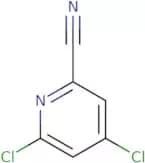
CAS:<p>Versatile small molecule scaffold</p>Formula:C6H2N2Cl2Purezza:Min. 95%Peso molecolare:172.99 g/mol3,4-Dihydro-2H-1-benzothiopyran-4-ol
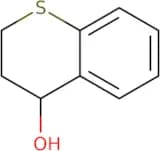
CAS:<p>3,4-Dihydro-2H-1-benzothiopyran-4-ol is a reactive intermediate that can be generated by dehydrogenation of benzothiophene. 3,4-Dihydro-2H-1-benzothiopyran-4-ol is used as an activating agent for cross coupling reactions and has been shown to possess functional groups such as cyclopentyl. 3,4-Dihydro-2H-1-benzothiopyran-4-ol has been detected in significant amounts in the X ray crystal structures of lipases. This compound binds to the substrate binding site on lipases and participates in catalytic cleavage. The rate of this reaction increases with temperature and decreases with increasing organic solvent concentration.</p>Formula:C9H10OSPurezza:Min. 95%Peso molecolare:166.24 g/mol

amino}butanoic acid](/_next/image/?url=https%3A%2Fstatic.cymitquimica.com%2Fproducts%2F3D%2Fthumb-webp%2FPLB46160.webp&w=3840&q=75)
![2-({[(3-Bromophenyl)carbamoyl]methyl}sulfanyl)acetic acid](/_next/image/?url=https%3A%2Fstatic.cymitquimica.com%2Fproducts%2F3D%2Fthumb-webp%2FPLB63014.webp&w=3840&q=75)
![{2-Amino-1-[4-(trifluoromethyl)phenyl]ethyl}diethylamine](/_next/image/?url=https%3A%2Fstatic.cymitquimica.com%2Fproducts%2F3D%2Fthumb-webp%2FPLB63597.webp&w=3840&q=75)
![3-[2-(Furan-2-yl)ethyl]-1,2-oxazol-5-amine](/_next/image/?url=https%3A%2Fstatic.cymitquimica.com%2Fproducts%2F3D%2Fthumb-webp%2FPRB83344.webp&w=3840&q=75)
![N-[(2,5-Dimethoxyphenyl)methyl]-2-iodoaniline](/_next/image/?url=https%3A%2Fstatic.cymitquimica.com%2Fproducts%2F3D%2Fthumb-webp%2FPRB83470.webp&w=3840&q=75)
![4-[(4-Chloro-2-methylphenyl)amino]benzonitrile](/_next/image/?url=https%3A%2Fstatic.cymitquimica.com%2Fproducts%2F3D%2Fthumb-webp%2FPRB83886.webp&w=3840&q=75)
![2-(Chloromethyl)-3H,4H-thieno[2,3-d]pyrimidin-4-one](/_next/image/?url=https%3A%2Fstatic.cymitquimica.com%2Fproducts%2F3D%2Fthumb-webp%2FPRB84782.webp&w=3840&q=75)
![[(3-Fluorophenyl)methyl]urea](/_next/image/?url=https%3A%2Fstatic.cymitquimica.com%2Fproducts%2F3D%2Fthumb-webp%2FPRB85238.webp&w=3840&q=75)
![5-[4-(Trifluoromethoxy)phenyl]thiophene-2-carboxylic acid](/_next/image/?url=https%3A%2Fstatic.cymitquimica.com%2Fproducts%2F3D%2Fthumb-webp%2FPRB85973.webp&w=3840&q=75)

![3-[(2-Phenylethoxy)methyl]aniline](/_next/image/?url=https%3A%2Fstatic.cymitquimica.com%2Fproducts%2F3D%2Fthumb-webp%2FPRB86268.webp&w=3840&q=75)
![3-Fluoro-4-[2-(trifluoromethyl)phenoxy]aniline](/_next/image/?url=https%3A%2Fstatic.cymitquimica.com%2Fproducts%2F3D%2Fthumb-webp%2FPRB86892.webp&w=3840&q=75)
![4-[(4-Iodophenyl)amino]butanoic acid](/_next/image/?url=https%3A%2Fstatic.cymitquimica.com%2Fproducts%2F3D%2Fthumb-webp%2FPRB87915.webp&w=3840&q=75)

![[4-(Dimethylamino)-3-nitrophenyl]methanol](/_next/image/?url=https%3A%2Fstatic.cymitquimica.com%2Fproducts%2F3D%2Fthumb-webp%2FPRB88200.webp&w=3840&q=75)
![3-[(Thiophen-2-ylsulfanyl)methyl]-1-benzofuran-2-carboxylic acid](/_next/image/?url=https%3A%2Fstatic.cymitquimica.com%2Fproducts%2F3D%2Fthumb-webp%2FPRB89126.webp&w=3840&q=75)
![{3-Fluoro-4-[4-(pyrimidin-2-yl)piperazin-1-yl]phenyl}methanamine](/_next/image/?url=https%3A%2Fstatic.cymitquimica.com%2Fproducts%2F3D%2Fthumb-webp%2FPRB89192.webp&w=3840&q=75)
![1-[4-(Aminomethyl)-2-fluorophenyl]piperidin-4-ol](/_next/image/?url=https%3A%2Fstatic.cymitquimica.com%2Fproducts%2F3D%2Fthumb-webp%2FPRB89260.webp&w=3840&q=75)
![[4-(4-Ethylpiperazin-1-yl)-3-fluorophenyl]methanamine](/_next/image/?url=https%3A%2Fstatic.cymitquimica.com%2Fproducts%2F3D%2Fthumb-webp%2FPRB89284.webp&w=3840&q=75)
![[4-(2,3-Dichlorophenoxy)phenyl]methanamine](/_next/image/?url=https%3A%2Fstatic.cymitquimica.com%2Fproducts%2F3D%2Fthumb-webp%2FPRB89409.webp&w=3840&q=75)
![5-[3-(Difluoromethoxy)phenyl]-1,3,4-oxadiazol-2-amine](/_next/image/?url=https%3A%2Fstatic.cymitquimica.com%2Fproducts%2F3D%2Fthumb-webp%2FPRB89932.webp&w=3840&q=75)
![1-(2-Fluoro-4-methylphenyl)-1H,4H,5H,6H-cyclopenta[C]pyrazole-3-carboxylic acid](/_next/image/?url=https%3A%2Fstatic.cymitquimica.com%2Fproducts%2F3D%2Fthumb-webp%2FPRB90017.webp&w=3840&q=75)
![3-{[(4-Hydroxypyrimidin-2-yl)sulfanyl]methyl}-1-benzofuran-2-carboxylic acid](/_next/image/?url=https%3A%2Fstatic.cymitquimica.com%2Fproducts%2F3D%2Fthumb-webp%2FPRB92241.webp&w=3840&q=75)
![1-{4-[4-(Hydroxymethyl)phenyl]piperazin-1-yl}ethan-1-one](/_next/image/?url=https%3A%2Fstatic.cymitquimica.com%2Fproducts%2F3D%2Fthumb-webp%2FPRB92966.webp&w=3840&q=75)
![2-{[(2-Methylbutan-2-yl)oxy]methyl}aniline](/_next/image/?url=https%3A%2Fstatic.cymitquimica.com%2Fproducts%2F3D%2Fthumb-webp%2FPRB93062.webp&w=3840&q=75)
![[2-(Cyclopropylmethoxy)phenyl]methanol](/_next/image/?url=https%3A%2Fstatic.cymitquimica.com%2Fproducts%2F3D%2Fthumb-webp%2FPRB93123.webp&w=3840&q=75)
![{1-[3-(Trifluoromethyl)phenyl]cyclobutyl}methanamine](/_next/image/?url=https%3A%2Fstatic.cymitquimica.com%2Fproducts%2F3D%2Fthumb-webp%2FPRB93276.webp&w=3840&q=75)
![3-[(Octyloxy)methyl]aniline](/_next/image/?url=https%3A%2Fstatic.cymitquimica.com%2Fproducts%2F3D%2Fthumb-webp%2FPRB93371.webp&w=3840&q=75)
![3-{[(6-Methylcyclohex-3-en-1-yl)methoxy]methyl}benzoic acid](/_next/image/?url=https%3A%2Fstatic.cymitquimica.com%2Fproducts%2F3D%2Fthumb-webp%2FPRB94517.webp&w=3840&q=75)
![3-[(tert-Butoxy)methyl]aniline](/_next/image/?url=https%3A%2Fstatic.cymitquimica.com%2Fproducts%2F3D%2Fthumb-webp%2FPRB94612.webp&w=3840&q=75)
![1-[4-(2-Methylpropoxy)phenyl]cyclopentane-1-carboxylic acid](/_next/image/?url=https%3A%2Fstatic.cymitquimica.com%2Fproducts%2F3D%2Fthumb-webp%2FPRB95252.webp&w=3840&q=75)
![1-[1-(Pyridin-4-yl)ethyl]piperidin-4-amine](/_next/image/?url=https%3A%2Fstatic.cymitquimica.com%2Fproducts%2F3D%2Fthumb-webp%2FPRB95275.webp&w=3840&q=75)
![4-Chloro-1-[4-(chloromethyl)phenoxy]-2-methylbenzene](/_next/image/?url=https%3A%2Fstatic.cymitquimica.com%2Fproducts%2F3D%2Fthumb-webp%2FPRB96236.webp&w=3840&q=75)
![3-{[(2-Chlorophenyl)sulfanyl]methyl}-1-benzofuran-2-carboxylic acid](/_next/image/?url=https%3A%2Fstatic.cymitquimica.com%2Fproducts%2F3D%2Fthumb-webp%2FPRB96731.webp&w=3840&q=75)
![2-Chloro-5-[4-(trifluoromethyl)phenoxymethyl]pyridine](/_next/image/?url=https%3A%2Fstatic.cymitquimica.com%2Fproducts%2F3D%2Fthumb-webp%2FPRB96930.webp&w=3840&q=75)
![5-Bromo-N-[3-(dimethylamino)propyl]pyridin-2-amine](/_next/image/?url=https%3A%2Fstatic.cymitquimica.com%2Fproducts%2F3D%2Fthumb-webp%2FPRB98725.webp&w=3840&q=75)
![2-[4-(4-Methoxyphenyl)piperazin-1-yl]propanoic acid](/_next/image/?url=https%3A%2Fstatic.cymitquimica.com%2Fproducts%2F3D%2Fthumb-webp%2FPRB99312.webp&w=3840&q=75)
![4-[Ethyl(phenyl)amino]benzoic acid](/_next/image/?url=https%3A%2Fstatic.cymitquimica.com%2Fproducts%2F3D%2Fthumb-webp%2FPRB99585.webp&w=3840&q=75)
![3-Azabicyclo[4.2.1]nonane-3-carboxamide](/_next/image/?url=https%3A%2Fstatic.cymitquimica.com%2Fproducts%2F3D%2Fthumb-webp%2FPRD81804.webp&w=3840&q=75)
![1-[(tert-Butoxy)carbonyl]-3-phenoxyazetidine-3-carboxylic acid](/_next/image/?url=https%3A%2Fstatic.cymitquimica.com%2Fproducts%2F3D%2Fthumb-webp%2FPRD95586.webp&w=3840&q=75)
![4-chlorobenzo[4,5]thieno[2,3-d]pyrimidine](/_next/image/?url=https%3A%2Fstatic.cymitquimica.com%2Fproducts%2F3D%2Fthumb-webp%2FQBA14292.webp&w=3840&q=75)
![2-{[(4-Methylphenyl)methyl]amino}ethan-1-ol](/_next/image/?url=https%3A%2Fstatic.cymitquimica.com%2Fproducts%2F3D%2Fthumb-webp%2FQBA17187.webp&w=3840&q=75)
![2-{[(2,4-Dimethoxyphenyl)methyl]amino}ethan-1-ol](/_next/image/?url=https%3A%2Fstatic.cymitquimica.com%2Fproducts%2F3D%2Fthumb-webp%2FQBA17189.webp&w=3840&q=75)
![2-{[(2,5-Dimethoxyphenyl)methyl]amino}ethan-1-ol](/_next/image/?url=https%3A%2Fstatic.cymitquimica.com%2Fproducts%2F3D%2Fthumb-webp%2FQBA17190.webp&w=3840&q=75)
amine](/_next/image/?url=https%3A%2Fstatic.cymitquimica.com%2Fproducts%2F3D%2Fthumb-webp%2FQBA17195.webp&w=3840&q=75)
![2-{[(3,4-Dichlorophenyl)methyl]amino}ethan-1-ol](/_next/image/?url=https%3A%2Fstatic.cymitquimica.com%2Fproducts%2F3D%2Fthumb-webp%2FQBA17206.webp&w=3840&q=75)
amine](/_next/image/?url=https%3A%2Fstatic.cymitquimica.com%2Fproducts%2F3D%2Fthumb-webp%2FQBA19137.webp&w=3840&q=75)
![3-[(3-Aminopropyl)amino]-1-propanol](/_next/image/?url=https%3A%2Fstatic.cymitquimica.com%2Fproducts%2F3D%2Fthumb-webp%2FQBA22615.webp&w=3840&q=75)
![[4-(Hydroxymethyl)-1,3-thiazol-2-yl]methanol](/_next/image/?url=https%3A%2Fstatic.cymitquimica.com%2Fproducts%2F3D%2Fthumb-webp%2FQBA23557.webp&w=3840&q=75)



![2-[4-(2-Methoxyphenyl)piperazin-1-yl]ethan-1-amine](/_next/image/?url=https%3A%2Fstatic.cymitquimica.com%2Fproducts%2F3D%2Fthumb-webp%2FQBA25548.webp&w=3840&q=75)
![9-Benzyl-1,5-dioxa-9-azaspiro[5.5]undecane](/_next/image/?url=https%3A%2Fstatic.cymitquimica.com%2Fproducts%2F3D%2Fthumb-webp%2FQBA25627.webp&w=3840&q=75)

![(5,6,7,8-Tetrahydro-benzo[4,5]thieno[2,3- D ]pyrimidin-4-ylsulfanyl)-acetic acid](/_next/image/?url=https%3A%2Fstatic.cymitquimica.com%2Fproducts%2F3D%2Fthumb-webp%2FQBA27759.webp&w=3840&q=75)


![[5-(2-Chlorophenyl)fur-2-yl]methanol](/_next/image/?url=https%3A%2Fstatic.cymitquimica.com%2Fproducts%2F3D%2Fthumb-webp%2FQBA31366.webp&w=3840&q=75)