


Building Blocks
Sottocategorie di "Building Blocks"
- Acidi boronici e derivati dell'acido boronico(5.778 prodotti)
- Building Blocks Chirali(1.243 prodotti)
- Building Blocks Idrocarburici(6.099 prodotti)
- Building Blocks organici(61.038 prodotti)
Trovati 205376 prodotti di "Building Blocks"
Methyl[1-(4-methylphenyl)butan-2-yl]amine
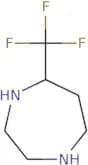
CAS:Prodotto controllatoVersatile small molecule scaffoldFormula:C12H19NPurezza:Min. 95%Peso molecolare:177.29 g/mol5-(Trifluoromethyl)-1,4-diazepane
CAS:Versatile small molecule scaffold
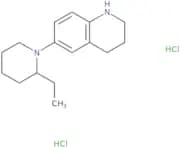
Formula:C6H11F3N2Purezza:Min. 95%Peso molecolare:168.16 g/mol6-(2-Ethylpiperidin-1-yl)-1,2,3,4-tetrahydroquinoline dihydrochloride
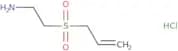
CAS:Versatile small molecule scaffoldFormula:C16H26Cl2N2Purezza:Min. 95%Peso molecolare:317.3 g/mol3-(2-Aminoethanesulfonyl)prop-1-ene hydrochloride
CAS:Versatile small molecule scaffold
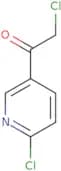
Formula:C5H12ClNO2SPurezza:Min. 95%Peso molecolare:185.67 g/mol2-Chloro-1-(6-chloropyridin-3-yl)ethanone
CAS:Versatile small molecule scaffold
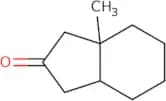
Formula:C7H5Cl2NOPurezza:Min. 95%Peso molecolare:190.02 g/molrac-(3aR,7aS)-3a-Methyl-octahydro-1H-inden-2-one
CAS:Versatile small molecule scaffold
Formula:C10H16OPurezza:Min. 95%Peso molecolare:152.23 g/mol1-Benzenesulfonyl-piperidine-4-carboxylic acid ethyl ester
CAS:1-Benzenesulfonyl-piperidine-4-carboxylic acid ethyl ester is an inhibitor of acetylcholinesterase. It is a white solid that can be synthesized in two steps from commercially available starting materials. Inhibition of this enzyme leads to the accumulation of acetylcholine, which causes increased stimulation of nicotinic and muscarinic receptors. This drug has been shown to have IC50 values that are similar to those of the reference inhibitor donepezil. 1-Benzenesulfonyl-piperidine-4-carboxylic acid ethyl ester also interacts with sulfonyl chlorides, butyrylcholinesterase, and other proteins in a manner similar to donepezil. The molecular docking studies suggest that this compound binds competitively with the active site of acetylcholinesterase.
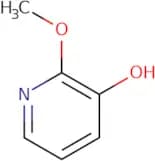
Formula:C14H19NO4SPurezza:Min. 95%Peso molecolare:297.37 g/mol2-Methoxypyridin-3-ol
CAS:2-Methoxypyridin-3-ol is a nitro compound that can be used as a lead compound to produce an inhibitor of oxime reductase. It can also be used as a pyridine ring, which is an important functional group in many organic compounds. 2-Methoxypyridin-3-ol has the ability to inhibit the enzyme oxime reductase, which catalyzes the formation of hydroxyl radicals from nitrosating agents and hydroxylamine, leading to their detoxification. This substance has been shown to be efficient in the orientation of nitro groups and ethers.
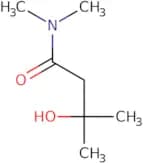
Formula:C6H7NO2Purezza:Min. 95%Peso molecolare:125.13 g/mol3-Hydroxy-N,N,3-trimethylbutanamide
CAS:3-Hydroxy-N,N,3-trimethylbutanamide is a liquid at room temperature. It is an additive that can be used in the production of nitrocellulose and as a preservative for nitrate film. 3-Hydroxy-N,N,3-trimethylbutanamide decomposes on exposure to UV light to form nitric oxide. It is also used as a photoinitiator in the synthesis of polymers by free radical polymerization reactions. The liquid composition can be thermally treated to produce stable silver nanoparticles.
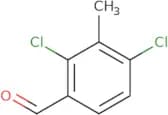
Formula:C7H15NO2Purezza:Min. 95%Peso molecolare:145.2 g/mol2,4-Dichloro-3-methylbenzaldehyde
CAS:Versatile small molecule scaffold
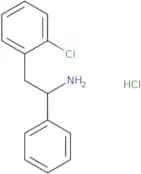
Formula:C8H6Cl2OPurezza:Min. 95%Peso molecolare:189.04 g/mol2-(2-Chlorophenyl)-1-phenylethan-1-amine hydrochloride
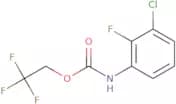
CAS:Prodotto controllatoVersatile small molecule scaffoldFormula:C14H15Cl2NPurezza:Min. 95%Peso molecolare:268.2 g/mol2,2,2-Trifluoroethyl N-(3-chloro-2-fluorophenyl)carbamate
CAS:Versatile small molecule scaffold
Formula:C9H6ClF4NO2Purezza:Min. 95%Peso molecolare:271.59 g/mol2-[6-(Furan-2-yl)-3-methyl-4-(trifluoromethyl)-1H-pyrazolo[3,4-b]pyridin-1-yl]acetic acid
CAS:Versatile small molecule scaffoldFormula:C14H10F3N3O3Purezza:Min. 95%Peso molecolare:325.24 g/mol2-{3-Cyclopropyl-5-methyl-1H-pyrazolo[3,4-b]pyridin-1-yl}acetic acid
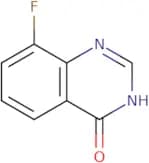
CAS:Versatile small molecule scaffoldFormula:C12H13N3O2Purezza:Min. 95%Peso molecolare:231.25 g/mol8-Fluoroquinazolin-4(1H)-one
CAS:Versatile small molecule scaffold
Formula:C8H5FN2OPurezza:Min. 95%Peso molecolare:164.14 g/mol4-[(2-Amino-1,3-thiazol-5-yl)methyl]-3-(trifluoromethyl)benzonitrile
CAS:Versatile small molecule scaffold
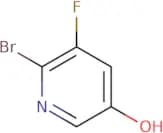
Formula:C12H8F3N3SPurezza:Min. 95%Peso molecolare:283.27 g/mol6-Bromo-5-fluoropyridin-3-ol
CAS:Versatile small molecule scaffold
Formula:C5H3BrFNOPurezza:Min. 95%Peso molecolare:191.99 g/moltert-Butyl (2,2-difluoro-3-hydroxypropyl)carbamate
CAS:Versatile small molecule scaffoldFormula:C10H13NO4Purezza:Min. 95%Peso molecolare:211.21 g/mol4,5-Dihydro-1H-imidazol-2-amine hydrochloride
CAS:Please enquire for more information about 4,5-Dihydro-1H-imidazol-2-amine hydrochloride including the price, delivery time and more detailed product information at the technical inquiry form on this page
Formula:C3H7N3•HClPurezza:Min. 95%Peso molecolare:121.57 g/mol4-Chloro-2-hydroxy-6-methylphenylboronic acid
CAS:Versatile small molecule scaffoldFormula:C7H8BClO3Purezza:Min. 95%Peso molecolare:186.4 g/mol1-Hydroxycyclopentane-1-carbonitrile
CAS:1-Hydroxycyclopentane-1-carbonitrile is a monomer that is hydrolyzed to form benzoin and cyanohydrins. It can be used in the production of scifinder as a monomer or dimerizer.
Formula:C6H9NOPurezza:Min. 95%Peso molecolare:111.14 g/mol3-Hydroxy-5-methylpyridine
CAS:3-Hydroxy-5-methylpyridine (3HMP) is a chemical substance that has been classified as an amine. It is a product of the metabolism of purines, which are nitrogenous bases found in DNA and RNA. 3HMP is produced by aerogenic bacteria (such as Enterobacter), and can be used to estimate the number of these bacteria present in water samples. 3HMP has been shown to have antiviral properties against influenza virus, and can be used as a biomarker for the presence of other viruses in animals. 3HMP also has mineralization properties, which have been studied extensively, particularly with regards to pancreatic disease.
Formula:C6H7NOPurezza:Min. 95%Colore e forma:PowderPeso molecolare:109.13 g/molRef: 3D-FH16174
Prodotto fuori produzione2-Bromo-3,3,3-trifluoro-1-propene
CAS:Prodotto controllato2-Bromo-3,3,3-trifluoro-1-propene is a chemical compound that has been synthesized in an asymmetric reaction. The reactant is bromopropane and the product is 2,2,2-trifluoropropene. The methylene group on the propene molecule is activated by the nucleophilic attack of a fluoride ion from hydrogen fluoride to form a cavity with a highly strained bond. The kinetic study of this reaction revealed that the activation energy for the reaction is 42 kJ/mol. Palladium-catalyzed coupling reactions are catalyzed by palladium and require nonpolar solvents such as toluene or dichloromethane. This type of reaction has been shown to be exothermic with an isolated yield of 1%.
Formula:C3H2BrF3Purezza:Min. 95%Colore e forma:Colorless PowderPeso molecolare:174.95 g/mol8-Bromo-2-methylimidazo[1,2-a]pyridine
CAS:Versatile small molecule scaffold
Formula:C8H7N2BrPurezza:Min. 95%Peso molecolare:211.05 g/mol4,5-Dihydroxy-2,3-Pentanedione
CAS:4,5-Dihydroxy-2,3-pentanedione is a carbonyl compound that is the product of the oxidation of ascorbic acid. It is used in wastewater treatment and has antimicrobial properties against infectious diseases. This compound has been shown to inhibit protein synthesis by binding to the ribosome and preventing the formation of peptide bonds between amino acids. 4,5-Dihydroxy-2,3-pentanedione has also been shown to bind to plasma proteins, which may be due to its acyl chain structure. 4,5-Dihydroxy-2,3-pentanedione can be synthesized in a catalytic mechanism that involves dehydroascorbic acid and molecular oxygen.
Formula:C5H8O4Purezza:Min. 95%Colore e forma:PowderPeso molecolare:132.11 g/molRef: 3D-FD180770
Prodotto fuori produzionePiperyline
CAS:Piperyline is an alkanoic acid that has shown to be effective against skin cancer. It also has antimicrobial properties, which may be due to its ability to bind metal ions and form polymeric compounds. Piperyline inhibits microbial growth by inhibiting the synthesis of proteins and nucleic acids. The antimicrobial activity is related to its cationic polymerization with hydroxyl groups, which forms a structure that can inhibit microbial enzymes and disrupt microbial cell membranes. This compound also interacts with the skin's natural lipids, making it difficult for microorganisms to attach and grow on the skin. Piperyline is synthesized in organic chemistry laboratories as an amide precursor of other pharmaceuticals such as penicillin.
Formula:C16H17NO3Purezza:Min. 95%Peso molecolare:271.31 g/mol
![Methyl[1-(4-methylphenyl)butan-2-yl]amine](/_next/image/?url=https%3A%2Fstatic.cymitquimica.com%2Fproducts%2F3D%2Fthumb-webp%2FLJB19921.webp&w=3840&q=75)


![2-[6-(Furan-2-yl)-3-methyl-4-(trifluoromethyl)-1H-pyrazolo[3,4-b]pyridin-1-yl]acetic acid](/_next/image/?url=https%3A%2Fstatic.cymitquimica.com%2Fproducts%2F3D%2Fthumb-webp%2FMMB60578.webp&w=3840&q=75)
![2-{3-Cyclopropyl-5-methyl-1H-pyrazolo[3,4-b]pyridin-1-yl}acetic acid](/_next/image/?url=https%3A%2Fstatic.cymitquimica.com%2Fproducts%2F3D%2Fthumb-webp%2FMMB60570.webp&w=3840&q=75)
![4-[(2-Amino-1,3-thiazol-5-yl)methyl]-3-(trifluoromethyl)benzonitrile](/_next/image/?url=https%3A%2Fstatic.cymitquimica.com%2Fproducts%2F3D%2Fthumb-webp%2FMMB62900.webp&w=3840&q=75)






![8-Bromo-2-methylimidazo[1,2-a]pyridine](/_next/image/?url=https%3A%2Fstatic.cymitquimica.com%2Fproducts%2F3D%2Fthumb-webp%2FUXB37475.webp&w=3840&q=75)

