Building Blocks
Sottocategorie di "Building Blocks"
- Acidi boronici e derivati dell'acido boronico(5.784 prodotti)
- Building Blocks Chirali(1.242 prodotti)
- Building Blocks Idrocarburici(6.105 prodotti)
- Building Blocks organici(61.065 prodotti)
Trovati 205418 prodotti di "Building Blocks"
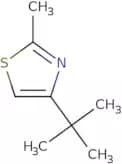
4-(tert-Butyl)-2-methyl-1,3-thiazole
CAS:4-(tert-Butyl)-2-methyl-1,3-thiazole is a catalyst that is used in carbonyl, heteroaryl and heteroaromatic arylation reactions. 4-(tert-Butyl)-2-methyl-1,3-thiazole has been shown to produce high yields of product and to be an effective catalyst for arylation reactions.Formula:C8H13NSPurezza:Min. 95%Peso molecolare:155.26 g/mol2,2',5,5'-Tetrachlorobenzidine
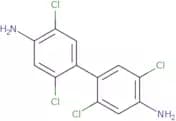
CAS:2,2',5,5'-Tetrachlorobenzidine (TCB) is a diacid that has been shown to have thermal expansion properties. TCB is also hydrophobic and exhibits a fatty acid-like structure. This compound has been used in the synthesis of several other compounds such as alicyclic amides, birefringent dyes, and polarizers. TCB has also been used in the production of polymer films for optical purposes such as hydrochloric acid particle size analysis.Formula:C12H8Cl4N2Purezza:Min. 95%Peso molecolare:322.01 g/mol3-Amino-5,5-dimethyloxolan-2-one hydrochloride
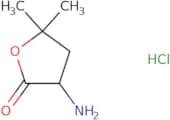
CAS:Versatile small molecule scaffoldFormula:C6H12ClNO2Purezza:Min. 95%Peso molecolare:165.62 g/mol2-Phenylamino-propionic acid
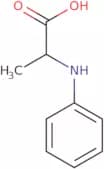
CAS:2-Phenylamino-propionic acid is an analogue of acrylic acid with two methyl groups on the terminal carbon. It is a colorless liquid that can be synthesized by the reaction of acrylic acid with sodium amide in the presence of benzene. 2-Phenylamino-propionic acid has been shown to undergo homogeneous and cyclic reactions, as well as elimination and monoxide reactions. The experimental value obtained for its rate constant, k, was found to be 1.6 × 10^6 L/mol*s using acrylic acid as a substrate. This product may also be used as a catalyst for radical reactions or in catalytic pyrolysis reactions.
Formula:C9H11NO2Purezza:Min. 95%Peso molecolare:165.19 g/molProp-2-en-1-yl 2-methylpropanoate
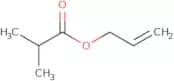
CAS:Prop-2-en-1-yl 2-methylpropanoate is a hydrocarbon with two hydroxyl groups. It is a reactive, functional group that is monosubstituted by fluorine atoms. The carboxylate group of prop-2-en-1-yl 2-methylpropanoate has a divalent hydrocarbon structure and contains one reactive, functional group. Prop-2-en-1-yl 2-methylpropanoate can be found as bound form in endophytic fungi and in the leaves of plants. It can also be found as an unbound form in organic solvents and fatty acids.
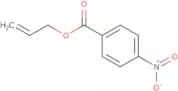
Formula:C7H12O2Purezza:Min. 95%Peso molecolare:128.17 g/molAllyl 4-nitrobenzoate
CAS:Versatile small molecule scaffoldFormula:C10H9NO4Purezza:Min. 95%Peso molecolare:207.18 g/mol1-bromo-4-[(methylsulfanyl)methyl]benzene
CAS:Versatile small molecule scaffold
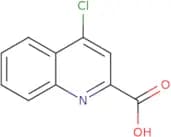
Formula:C8H9BrSPurezza:Min. 95%Peso molecolare:217.12 g/mol4-Chloroquinoline-2-carboxylic acid
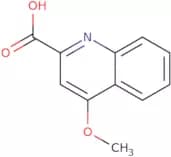
CAS:Versatile small molecule scaffoldFormula:C10H6ClNO2Purezza:Min. 95%Peso molecolare:207.61 g/mol4-Methoxy-2-quinolinecarboxylic acid
CAS:4-Methoxy-2-quinolinecarboxylic acid is a compound that contains a phenyl ring with two substituents, one of which is a methoxy group. It has been shown to regenerate primary alcohols from the corresponding hydroxyaldehyde under mild conditions. 4-Methoxy-2-quinolinecarboxylic acid also reacts with aldehydes to form an oxime and an acetal in the presence of base. The functional theory proposes that the molecular orbitals are formed by the overlap of atomic orbitals and may be used to explain reactions such as these. The neurotoxic effect of 4-methoxy-2-quinolinecarboxylic acid has been observed in rats after intraperitoneal injection. This compound also has been shown to catalyze the formation of bidentate ligands and chelate ligands.
Formula:C11H9NO3Purezza:Min. 95%Peso molecolare:203.19 g/mol6-Methylquinoline-2-Carboxylic Acid
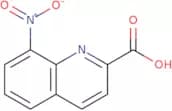
CAS:6-Methylquinoline-2-carboxylic acid is a chromophore that is found in the molecule isoquinoline-3-carboxylic acid. It is an antibacterial agent that has been shown to inhibit bacterial biosynthesis and growth. 6-Methylquinoline-2-Carboxylic Acid may also have potential as a chemotherapeutic agent for cancer treatment due to its ability to bind to DNA and inhibit RNA synthesis. This drug is synthesized by the condensation of quinoline derivatives with carboxylic acids, followed by reduction of the resulting imine with sodium dithionite. The product can be purified using high performance liquid chromatography, incubated with magnetic particles, and desorbed from the beads using protonation.Formula:C11H9NO2Purezza:Min. 95%Peso molecolare:187.2 g/mol8-Nitroquinoline-2-carboxylic acid
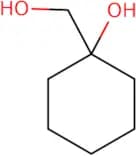
CAS:8-Nitroquinoline-2-carboxylic acid is a spectrometric, inorganic compound that is structurally modified to have an electron-donating group. Modifications on the nitrogen atoms of 8-Nitroquinoline-2-carboxylic acid allow for long-term treatment. It is also used as a fluorophore and has shown to interact with metal ions and form an inorganic complex. 8-Nitroquinoline-2-carboxylic acid can be used for the detection of metal ions by mass spectrometry and microscopy. This compound has been shown to be effective in preventing nitrosamine formation and in the prevention of cancer cells from proliferating.Formula:C10H6N2O4Purezza:Min. 95%Peso molecolare:218.17 g/mol1-(Hydroxymethyl)cyclohexan-1-ol
CAS:1-(Hydroxymethyl)cyclohexan-1-ol is a ligand that binds to transition metal ions. It has been shown to bind to a variety of metals, including Cu(II), Fe(III), Zn(II), and Ni(II). 1-(Hydroxymethyl)cyclohexan-1-ol is also able to coordinate with glucokinase activators, such as 5-hydroxytryptamine (5HT), which can lead to an increase in the activity of this enzyme.Formula:C7H14O2Purezza:Min. 95%Peso molecolare:130.18 g/molrac-(1R,3S)-3-(Hydroxymethyl)cyclohexan-1-ol
CAS:Versatile small molecule scaffoldFormula:C7H14O2Purezza:Min. 95%Peso molecolare:130.2 g/mol2-Phenylimidazo[1,2-a]pyrimidine
CAS:2-Phenylimidazo[1,2-a]pyrimidine is an optical isomer of imidazo[1,2-a]pyrimidine. It contains a pyrazinyl group that has a nitrogen atom in the alpha position and a thiophenyl group that has a single bond to the alpha carbon. This compound is used as a diagnostic agent for Alzheimer's disease because it can be detected in the cerebrospinal fluid of patients with this disorder. The enantiomers are racemic mixtures and are typically not separated during chemical synthesis.
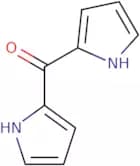
Formula:C12H9N3Purezza:Min. 95%Peso molecolare:195.22 g/mol2-(1H-Pyrrole-2-carbonyl)-1H-pyrrole
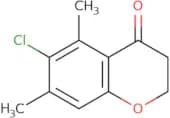
CAS:2-(1H-Pyrrole-2-carbonyl)-1H-pyrrole is a chloride salt that inhibits the growth of tuberculosis by inhibiting the replication of bacterial DNA. It has also been shown to inhibit HIV replication in vitro. 2-(1H-Pyrrole-2-carbonyl)-1H-pyrrole is insoluble in water, so it can be dissolved in organic solvents such as carbon tetrachloride or chloroform. The solubility of this compound may be due to its ability to exist as a tautomeric pair. The geometric isomers of this compound are also possible due to its chiral center.Formula:C9H8N2OPurezza:Min. 95%Peso molecolare:160.17 g/mol6-Chloro-5,7-dimethyl-3,4-dihydro-2H-1-benzopyran-4-one
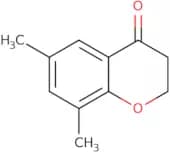
CAS:Versatile small molecule scaffoldFormula:C11H11ClO2Purezza:Min. 95%Peso molecolare:210.65 g/mol6,8-Dimethyl-3,4-dihydro-2H-1-benzopyran-4-one
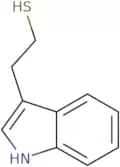
CAS:Versatile small molecule scaffoldFormula:C11H12O2Purezza:Min. 95%Peso molecolare:176.21 g/mol2-(1H-Indol-3-yl)ethane-1-thiol
CAS:Versatile small molecule scaffold
Formula:C10H11NSPurezza:Min. 95%Peso molecolare:177.27 g/molN-(5-Butyl-1,3,4-thiadiazol-2-yl)-2-chloroacetamide
CAS:Versatile small molecule scaffoldFormula:C8H12ClN3OSPurezza:Min. 95%Peso molecolare:233.72 g/mol2-Chloro-N-[5-(2-methylpropyl)-1,3,4-thiadiazol-2-yl]acetamide
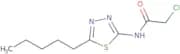
CAS:Versatile small molecule scaffoldFormula:C8H12ClN3OSPurezza:Min. 95%Peso molecolare:233.72 g/mol2-Chloro-N-(5-pentyl-1,3,4-thiadiazol-2-yl)acetamide
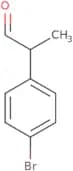
CAS:Versatile small molecule scaffoldFormula:C9H14ClN3OSPurezza:Min. 95%Peso molecolare:247.75 g/mol2-(4-Bromophenyl)propanal
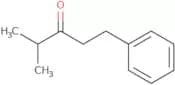
CAS:Versatile small molecule scaffoldFormula:C9H9BrOPurezza:Min. 95%Peso molecolare:213.07 g/mol4-Methyl-1-phenylpentan-3-one
CAS:Versatile small molecule scaffoldFormula:C12H16OPurezza:Min. 95%Peso molecolare:176.25 g/mol2-Methoxy-6,7,8,9-tetrahydro-5H-benzo[7]annulen-6-one
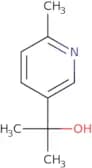
CAS:Versatile small molecule scaffoldFormula:C12H14O2Purezza:Min. 95%Peso molecolare:190.24 g/mol2-(6-Methylpyridin-3-yl)propan-2-ol
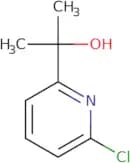
CAS:Versatile small molecule scaffoldFormula:C9H13NOPurezza:Min. 95%Peso molecolare:151.21 g/mol2-(6-Chloropyridin-2-yl)propan-2-ol
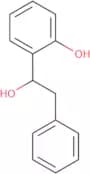
CAS:Versatile small molecule scaffoldFormula:C8H10ClNOPurezza:Min. 95%Peso molecolare:171.62 g/mol2-(1-Hydroxy-2-phenylethyl)phenol
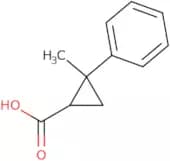
CAS:Versatile small molecule scaffoldFormula:C14H14O2Purezza:Min. 95%Peso molecolare:214.26 g/mol2-Methyl-2-phenylcyclopropane-1-carboxylic acid
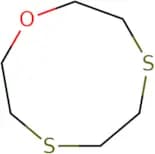
CAS:Versatile small molecule scaffoldFormula:C11H12O2Purezza:Min. 95%Peso molecolare:176.21 g/mol1,4,7-Oxadithionane
CAS:Versatile small molecule scaffold
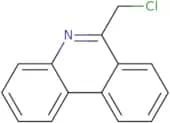
Formula:C6H12OS2Purezza:Min. 95%Peso molecolare:164.3 g/mol6-(Chloromethyl)phenanthridine
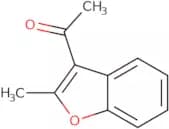
CAS:6-(Chloromethyl)phenanthridine is a fatty acid that has been shown to have anti-inflammatory effects. It has also been shown to be effective in the treatment of humans and animals with musculoskeletal disorders. 6-(Chloromethyl)phenanthridine is soluble in deionized water and hydroxide solution, but insoluble in ethanol and acetone. This compound can be used as an ingredient in detergent compositions for use on clothes. It can also be used as a microcapsule coating material or as an acid catalyst in the production of soybean extract.Formula:C14H10ClNPurezza:Min. 95%Peso molecolare:227.69 g/mol1-(2-Methyl-1-benzofuran-3-yl)ethan-1-one
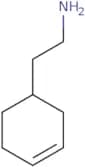
CAS:Versatile small molecule scaffoldFormula:C11H10O2Purezza:Min. 95%Peso molecolare:174.2 g/mol2-(Cyclohex-3-en-1-yl)ethan-1-amine
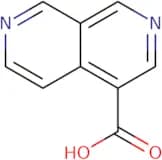
CAS:Versatile small molecule scaffoldFormula:C8H15NPurezza:Min. 95%Peso molecolare:125.21 g/mol2,7-Naphthyridine-4-carboxylic acid
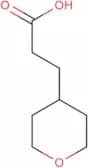
CAS:Versatile small molecule scaffoldFormula:C9H6N2O2Purezza:Min. 95%Peso molecolare:174.16 g/mol3-(Tetrahydro-2H-pyran-4-yl)propanoic acid
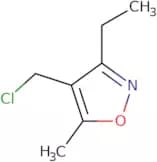
CAS:Versatile small molecule scaffoldFormula:C8H14O3Purezza:Min. 95%Peso molecolare:158.19 g/mol4-(Chloromethyl)-3-ethyl-5-methyl-1,2-oxazole
CAS:Versatile small molecule scaffoldFormula:C7H10ClNOPurezza:Min. 95%Peso molecolare:159.61 g/molMethyl 4'-hydroxy-[1,1'-biphenyl]-4-carboxylate
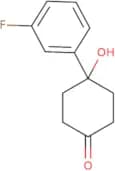
CAS:Methyl 4'-hydroxy-[1,1'-biphenyl]-4-carboxylate is a liquid crystal with a molecular weight of 244.3 g/mol. It is synthesized from benzaldehyde and 4-bromobenzaldehyde in the presence of sodium hydroxide and potassium carbonate in methanol at reflux temperature. The compound crystallizes as an asymmetric carbon atom with a biphenyl skeleton. It has been shown to be soluble in chloroform and benzene, but not in ether or acetone. The compound exhibits ferroelectric properties and has been used for the synthesis of dendrimers and supramolecular structures.Formula:C14H12O3Purezza:Min. 95%Peso molecolare:228.24 g/mol4-(3-Fluorophenyl)-4-hydroxycyclohexan-1-one
CAS:Versatile small molecule scaffoldFormula:C12H13FO2Purezza:Min. 95%Peso molecolare:208.23 g/mol4-[3-(Trifluoromethyl)phenyl]cyclohexan-1-one
CAS:Versatile small molecule scaffoldFormula:C13H13F3OPurezza:Min. 95%Peso molecolare:242.24 g/mol2-Aminothieno[2,3-d]thiazole
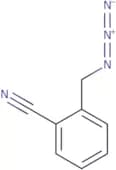
CAS:2-Aminothieno[2,3-d]thiazole is a heterocyclic compound that has been used as a building block in organic synthesis. It has been found to be an intermediate in the deamination of 2-aminopyrimidine and the reductive chlorination of ethyl or benzyl thiocyanate. 2-Aminothieno[2,3-d]thiazole is produced by the decarboxylation of 2-aminoacetophenone and can be oxidized to produce 2,4-diaminothiazole. The optical rotation varies with the solvent used, with values given for ethanol being [α] = -8.5° (c=0.1 in HCl) and for methanol [α] = +6.7° (c=0.1 in HCl). 2-Aminothieno[2,3-d]thiazFormula:C5H4N2S2Purezza:Min. 95%Peso molecolare:156.23 g/mol2-(Azidomethyl)benzonitrile
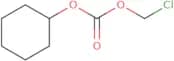
CAS:Versatile small molecule scaffoldFormula:C8H6N4Purezza:Min. 95%Peso molecolare:158.16 g/molChloromethyl cyclohexyl carbonate
CAS:Chloromethyl cyclohexyl carbonate is a new acyclic nucleoside phosphonate that has been shown to have antiviral properties. It is active against HIV strains and inhibits the production of clotting factors. Chloromethyl cyclohexyl carbonate can be used as a drug substance for treating bowel disease, hepatitis, and cancer. It also modulates syncytial cells and heterocycles. Pharmacokinetic studies on chloromethyl cyclohexyl carbonate have shown that it has high bioavailability in the small intestine and liver after oral administration. It is metabolized by tyrosine kinase, which indicates that it may interfere with other drugs such as warfarin or phenytoin. Chloromethyl cyclohexyl carbonate has been found to be effective in treating gastritis and cancer in animal models.
Formula:C8H13ClO3Purezza:Min. 95%Peso molecolare:192.64 g/mol3H,4H-Pyrido[3,4-d]pyridazin-4-one
CAS:Versatile small molecule scaffoldFormula:C7H5N3OPurezza:Min. 95%Peso molecolare:147.13 g/mol2-{[(tert-butoxy)carbonyl]amino}-2-(3-methoxyphenyl)acetic acid
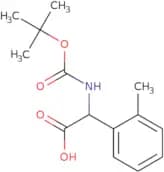
CAS:Versatile small molecule scaffoldFormula:C14H19NO5Purezza:Min. 95%Peso molecolare:281.3 g/molBoc-DL-(2-methylphenyl)glycine
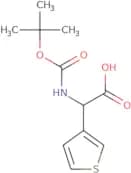
CAS:Versatile small molecule scaffoldFormula:C14H19NO4Purezza:Min. 95%Peso molecolare:265.31 g/mol2-(Boc-amino)-2-(3-thiophenyl)acetic acid
CAS:2-(Boc-amino)-2-(3-thiophenyl)acetic acid is a synthetic polymer that is synthesized from ethynyl bromide and 3-thiophenylacetic acid. It is conjugated to a model compound, which has been shown to fluoresce. This polymer can be used as a model for polymers with similar properties.Formula:C11H15NO4SPurezza:Min. 95%Peso molecolare:257.31 g/mol4-Hydroxy-8-(trifluoromethoxy)quinoline-3-carboxylic acid
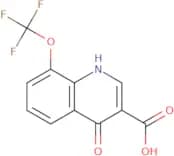
CAS:Versatile small molecule scaffold
Formula:C11H6F3NO4Purezza:Min. 95%Peso molecolare:273.16 g/mol8-(Trifluoromethoxy)-4-hydroxyquinoline
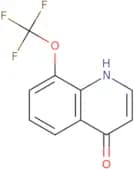
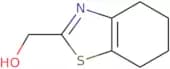
CAS:Versatile small molecule scaffoldFormula:C10H6NO2F3Purezza:Min. 95%Peso molecolare:229.15 g/mol(4,5,6,7-Tetrahydro-1,3-benzothiazol-2-yl)methanol
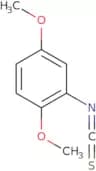
CAS:Versatile small molecule scaffoldFormula:C8H11NOSPurezza:Min. 95%Peso molecolare:169.25 g/mol2,5-Dimethoxyphenyl isothiocyanate
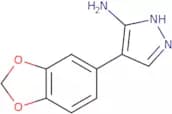
CAS:Versatile small molecule scaffoldFormula:C9H9NO2SPurezza:Min. 95%Peso molecolare:195.24 g/mol4-(1,3-Dioxaindan-5-yl)-1H-pyrazol-5-amine
CAS:Versatile small molecule scaffold
Formula:C10H9N3O2Purezza:Min. 95%Peso molecolare:203.2 g/mol

![1-bromo-4-[(methylsulfanyl)methyl]benzene](/_next/image/?url=https%3A%2Fstatic.cymitquimica.com%2Fproducts%2F3D%2Fthumb-webp%2FQAA73307.webp&w=3840&q=75)


![2-Phenylimidazo[1,2-a]pyrimidine](/_next/image/?url=https%3A%2Fstatic.cymitquimica.com%2Fproducts%2F3D%2Fthumb-webp%2FQAA76447.webp&w=3840&q=75)

![2-Chloro-N-[5-(2-methylpropyl)-1,3,4-thiadiazol-2-yl]acetamide](/_next/image/?url=https%3A%2Fstatic.cymitquimica.com%2Fproducts%2F3D%2Fthumb-webp%2FQAA77746.webp&w=3840&q=75)
![2-Methoxy-6,7,8,9-tetrahydro-5H-benzo[7]annulen-6-one](/_next/image/?url=https%3A%2Fstatic.cymitquimica.com%2Fproducts%2F3D%2Fthumb-webp%2FQBA46328.webp&w=3840&q=75)
![Methyl 4'-hydroxy-[1,1'-biphenyl]-4-carboxylate](/_next/image/?url=https%3A%2Fstatic.cymitquimica.com%2Fproducts%2F3D%2Fthumb-webp%2FQBA50141.webp&w=3840&q=75)
![4-[3-(Trifluoromethyl)phenyl]cyclohexan-1-one](/_next/image/?url=https%3A%2Fstatic.cymitquimica.com%2Fproducts%2F3D%2Fthumb-webp%2FQBA50393.webp&w=3840&q=75)
![2-Aminothieno[2,3-d]thiazole](/_next/image/?url=https%3A%2Fstatic.cymitquimica.com%2Fproducts%2F3D%2Fthumb-webp%2FQBA50756.webp&w=3840&q=75)
![3H,4H-Pyrido[3,4-d]pyridazin-4-one](/_next/image/?url=https%3A%2Fstatic.cymitquimica.com%2Fproducts%2F3D%2Fthumb-webp%2FQBA51170.webp&w=3840&q=75)
![2-{[(tert-butoxy)carbonyl]amino}-2-(3-methoxyphenyl)acetic acid](/_next/image/?url=https%3A%2Fstatic.cymitquimica.com%2Fproducts%2F3D%2Fthumb-webp%2FQBA51237.webp&w=3840&q=75)