Building Blocks
Questa sezione contiene prodotti fondamentali per la sintesi di composti organici e biologici. Building blocks sono i materiali di partenza essenziali utilizzati per costruire molecole complesse attraverso varie reazioni chimiche. Svolgono un ruolo critico nella scoperta di farmaci, nella scienza dei materiali e nella ricerca chimica. Presso CymitQuimica, offriamo una gamma diversificata di building blocks di alta qualità per supportare le tue ricerche innovative e progetti industriali, assicurandoti di avere i componenti essenziali per una sintesi di successo.
Sottocategorie di "Building Blocks"
- Acidi boronici e derivati dell'acido boronico(5.778 prodotti)
- Building Blocks Chirali(1.243 prodotti)
- Building Blocks Idrocarburici(6.097 prodotti)
- Building Blocks organici(61.048 prodotti)
Trovati 203115 prodotti di "Building Blocks"
Ordinare per
Purezza (%)
0
100
|
0
|
50
|
90
|
95
|
100
tert-Butyl azetidine-3-carboxylate
CAS:<p>Please enquire for more information about tert-Butyl azetidine-3-carboxylate including the price, delivery time and more detailed product information at the technical inquiry form on this page</p>Formula:C8H15NO2Purezza:Min. 95%Peso molecolare:157.21 g/molBenzydamine hydrochloride EP Impurity D
CAS:Prodotto controllato<p>Please enquire for more information about Benzydamine hydrochloride EP Impurity D including the price, delivery time and more detailed product information at the technical inquiry form on this page</p>Formula:C23H32N4OPurezza:Min. 95%Peso molecolare:380.53 g/molBis[(pinacolato)boryl]methane
CAS:Bis[(pinacolato)boryl]methane is a bifunctional organoboron reagent with an allyl group on one end and a cyclopropane on the other end. It is useful in organic synthesis as a nucleophile for allylation, as well as for the synthesis of unsymmetrical cyclopropanes. This compound can be used to catalyze asymmetric methods, such as the synthesis of alicyclic compounds. Bis[(pinacolato)boryl]methane can also be used to synthesize biomolecules.Formula:C13H26B2O4Purezza:Min. 95%Colore e forma:White To Off-White SolidPeso molecolare:267.97 g/molBis[2-(perfluorooctyl)ethyl] phosphate
CAS:Prodotto controllatoBis[2-(perfluorooctyl)ethyl] phosphate is a perfluorinated compound that can be used as an alternative to polyvinyl chloride in the manufacture of children's toys and other consumer products. It has been shown to have no health effects on humans, unlike other perfluorinated compounds, in a study where human serum was analyzed. Bis[2-(perfluorooctyl)ethyl] phosphate also has a high affinity for polyfluoroalkyl substances (PFASs) and can be used in analytical methods for their detection. The optimised extraction procedure is simple and rapid, using ultrasonic extraction with no need for any organic solvents. Recoveries are high (>99%) and the method does not require any volatile solvents.Formula:C20H9F34O4PPurezza:Min. 95%Peso molecolare:990.2 g/molBromoacetaldehyde diethyl acetal
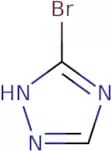
CAS:<p>Bromoacetaldehyde diethyl acetal (BDAE) is an organic compound that has been shown to have receptor binding activity. BDAE binds to the ethylene diamine receptor and competes with ethylene diamine for binding sites. It also forms acid from sodium carbonate and hydrochloric acid, which may be due to its ability to act as a solid catalyst. BDAE has shown activity in hiv infection, with a potency comparable to that of dimethyl fumarate. The synthesis of BDAE can be accomplished by reacting monosodium malonate ester hydrochloride with adenine nucleotide and malonic acid. The reaction solution is heated until the desired product crystallizes out of solution.</p>Formula:C6H13BrO2Purezza:Min. 95%Peso molecolare:197.07 g/mol5-Bromo-1H-1,2,4-triazole
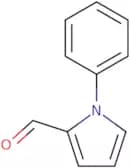
CAS:3-Bromo-1H-1,2,4-triazole belongs to the group of annular azoles. It has been found in the form of two tautomers: 1H-1,2,4-triazole and 2H-1,2,4-triazole. 3-Bromo-1H-1,2,4-triazole has been synthesized at low temperatures (below -30°C) as a result of coordination with bromine atoms. This triazole has also been analysed using x ray diffraction and vibrational spectroscopy. The chemical analyses have shown that 3-bromo 1H-1,2,4 triazole is not stable at high temperatures and decomposes into a mixture of the two tautomers. Tautomeric analysis showed that the 1H form is more stable than the 2H form.Formula:C2H2BrN3Purezza:95%NmrColore e forma:PowderPeso molecolare:147.96 g/mol1-Phenyl-1H-pyrrole-2-carbaldehyde
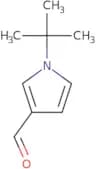
CAS:Versatile small molecule scaffoldFormula:C11H9NOPurezza:Min. 95%Peso molecolare:171.2 g/mol1-tert-Butyl-1H-pyrrole-3-carbaldehyde
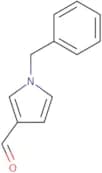
CAS:Versatile small molecule scaffoldFormula:C9H13NOPurezza:Min. 95%Peso molecolare:151.21 g/mol1-Benzyl-1H-pyrrole-3-carbaldehyde
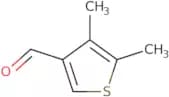
CAS:1-Benzyl-1H-pyrrole-3-carbaldehyde is an acylpyrrole that can be synthesized from the reaction of sodium borohydride with acetaldehyde or benzaldehyde. It is used in heteroarylation reactions, which are efficient methods for the synthesis of a variety of indoles. 1-Benzyl-1H-pyrrole-3-carbaldehyde has also been shown to be effective in reductive amination reactions, which are used to generate pyrroles from indole and aldehyde precursors.Formula:C12H11NOPurezza:Min. 95%Peso molecolare:185.22 g/mol4,5-Dimethylthiophene-3-carbaldehyde
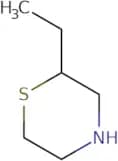
CAS:Versatile small molecule scaffoldFormula:C7H8OSPurezza:Min. 95%Peso molecolare:140.2 g/mol2-Ethylthiomorpholine
CAS:<p>Versatile small molecule scaffold</p>Formula:C6H13NSPurezza:Min. 95%Peso molecolare:131.24 g/mol2-Methylthiomorpholine hydrochloride
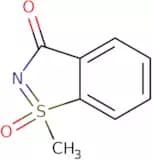
CAS:Versatile small molecule scaffoldFormula:C5H12ClNSPurezza:Min. 95%Peso molecolare:153.7 g/mol1-Methyl-3H-1λ⁶,2-benzothiazole-1,3-dione
CAS:Versatile small molecule scaffoldFormula:C8H7NO2SPurezza:Min. 95%Peso molecolare:181.21 g/molOctahydrocyclopenta[b]thiomorpholine
CAS:<p>Versatile small molecule scaffold</p>Formula:C7H13NSPurezza:Min. 95%Peso molecolare:143.25 g/molrac-(3aR,6aR)-Hexahydrofuro[3,4-d][1,3]oxazol-2-one
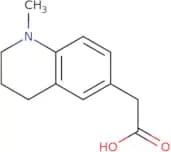
CAS:<p>Versatile small molecule scaffold</p>Formula:C5H7NO3Purezza:Min. 95%Peso molecolare:129.1 g/mol2-(1-Methyl-1,2,3,4-tetrahydroquinolin-6-yl)acetic acid
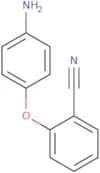
CAS:<p>Versatile small molecule scaffold</p>Formula:C12H15NO2Purezza:Min. 95%Peso molecolare:205.25 g/mol2-(4-Aminophenoxy)benzonitrile
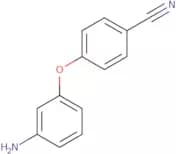
CAS:Versatile small molecule scaffoldFormula:C13H10N2OPurezza:Min. 95%Peso molecolare:210.23 g/mol4-(3-Aminophenoxy)benzonitrile
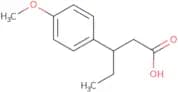
CAS:Versatile small molecule scaffoldFormula:C13H10N2OPurezza:Min. 95%Peso molecolare:210.23 g/mol3-(4-Methoxyphenyl)pentanoic acid
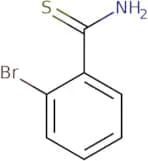
CAS:<p>Versatile small molecule scaffold</p>Formula:C12H16O3Purezza:Min. 95%Peso molecolare:208.25 g/mol2-Bromothiobenzamide
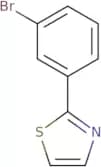
CAS:<p>2-Bromothiobenzamide is an organic solvent that is used as a reactant in the production of 2-bromothiolane. It is synthesized from the reaction of bromine with thiourea, which is then hydrolyzed to form the desired product. The reaction system is acidic, which leads to high yields and can be carried out on a large scale. It has a ligand that reacts with copper metal to form a reagent that can be used for the synthesis of various organic compounds. This product has a high yield (90%), and can be easily purified by filtration. Its efficiency makes it an ideal choice for industrial use.</p>Formula:C7H6BrNSPurezza:Min. 95%Peso molecolare:216.1 g/mol2-(3-Bromophenyl)-1,3-thiazole
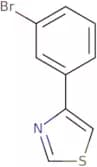
CAS:<p>Versatile small molecule scaffold</p>Formula:C9H6BrNSPurezza:Min. 95%Peso molecolare:240.12 g/mol4-(3-Bromophenyl)-1,3-thiazole
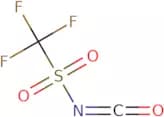
CAS:Versatile small molecule scaffoldFormula:C9H6BrNSPurezza:Min. 95%Peso molecolare:240.12 g/molTrifluoromethanesulfonyl isocyanate
CAS:<p>Trifluoromethanesulfonyl isocyanate (TMS) is a linker molecule that has been used to connect copper salt and hydroxyl groups. TMS has been shown to absorb ultraviolet light, which affects its conformational properties. TMS is also an aromatic hydrocarbon with vibrational and amide bonds. This compound can be used in the synthesis of anti-HIV drugs and as a metal halide. TMS is also a molecule consisting of carbon, hydrogen, fluorine, sulfur, and nitrogen atoms.</p>Formula:C2F3NO3SPurezza:90%MinPeso molecolare:175.09 g/mol6-methyl-4-nitropyridine-2-carboxylic acid
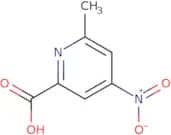
CAS:<p>6-Methyl-4-nitropyridine-2-carboxylic acid is an antagonist that is structurally related to pyridine. It has been shown to inhibit the binding of norepinephrine and serotonin to their receptors in vitro, with a potency that is comparable to other phenoxybenzamine analogues. The compound has also been shown to have a high affinity for the α1A receptor, as well as for other homologous receptors. In addition, 6-methyl-4-nitropyridine-2-carboxylic acid inhibits the hydrolysis of cyano groups and nitriles, which allows it to be used as a synthetic precursor in the synthesis of various drugs.</p>Formula:C7H6N2O4Purezza:Min. 95%Peso molecolare:182.1 g/mol4-chloro-3-methylpyridine-2-carboxylic acid
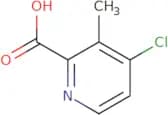
CAS:Versatile small molecule scaffoldFormula:C7H6ClNO2Purezza:Min. 95%Peso molecolare:171.6 g/molBenzyl N-(5,5-dimethyl-2-oxooxolan-3-yl)carbamate
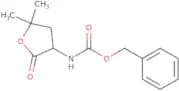
CAS:Versatile small molecule scaffoldFormula:C14H17NO4Purezza:Min. 95%Peso molecolare:263.29 g/mol2-Cyclopentyl-5-methyl-2H-pyrazol-3-ylamine
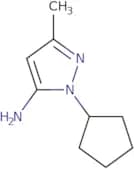
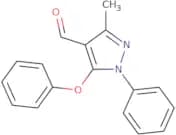
CAS:Versatile small molecule scaffoldFormula:C9H15N3Purezza:Min. 95%Peso molecolare:165.24 g/mol3-Methyl-5-phenoxy-1-phenyl-1H-pyrazole-4-carbaldehyde
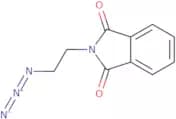
CAS:3-Methyl-5-phenoxy-1-phenyl-1H-pyrazole-4-carbaldehyde is a dihedral molecule that contains a pyrazole ring with three methyl substituents and one phenyl substituent. The molecule has hydrogen bonds between the pyrazole ring and the hydroxyl group of the phenol.Formula:C17H14N2O2Purezza:Min. 95%Peso molecolare:278.3 g/mol2-(2-azidoethyl)-1H-isoindole-1,3(2H)-dione
CAS:Versatile small molecule scaffoldFormula:C10H8N4O2Purezza:Min. 95%Peso molecolare:216.2 g/mol6'-Methoxy-3',4'-dihydro-2'H-spiro[imidazolidine-4,1'-naphthalene]-2,5-dione
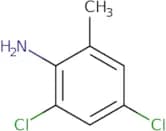
CAS:Versatile small molecule scaffoldFormula:C13H14N2O3Purezza:Min. 95%Peso molecolare:246.26 g/mol2,4-Dichloro-6-methylaniline
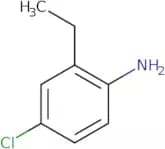
CAS:<p>Versatile small molecule scaffold</p>Formula:C7H7Cl2NPurezza:Min. 95%Peso molecolare:176.04 g/mol(4-Chloro-2-ethylphenyl)amine
CAS:<p>4-Chloro-2-ethylphenyl)amine is a carcinogen that has been shown to damage mammalian cells. The compound causes mutations in the DNA of cells, and is mutagenic and damaging. 4-Chloro-2-ethylphenyl)amine can be eliminated from the body through metabolic processes, but also can be metabolized by reagents to form other compounds that are mutagenic or carcinogenic. This chemical has been shown to cause mutations in the DNA of Salmonella typhimurium and Typhimurium strains, as well as causing damage to their DNA.</p>Formula:C8H10ClNPurezza:Min. 95%Peso molecolare:155.63 g/mol4-Phenyl-1,2,3,4-tetrahydroquinoline
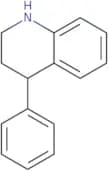
CAS:Versatile small molecule scaffoldFormula:C15H15NPurezza:Min. 95%Peso molecolare:209.29 g/molMethyl (2R)-2-isocyanatopropanoate
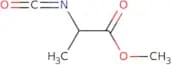
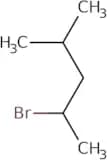
CAS:Versatile small molecule scaffoldFormula:C5H7NO3Purezza:Min. 95%Peso molecolare:129.11 g/mol2-Bromo-4-methylpentane
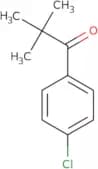
CAS:<p>2-Bromo-4-methylpentane is an isomeric, branched-chain fatty acid. It has been observed to desorb from the surface of polyethylene terephthalate in a conformational fashion. This reaction was shown to be first order with respect to bromine concentration and was found to be reversible. The kinetics were found to be second order with respect to bromine concentration and first order with respect to polyethylene terephthalate surface area. The rates of the desorption of 2-bromo-4-methylpentane were found not to be affected by the presence of chloride ions.<br>2-Bromo-4-methylpentane can also undergo a Suzuki coupling reaction with amines in the presence of palladium catalysts and chiral phosphoric acid ligands. This reaction can produce substituted benzo[b]thiophenes, which are useful for organic synthesis reactions such as phthal</p>Formula:C6H13BrPurezza:Min. 95%Peso molecolare:165.08 g/mol4'-Chloro-2,2-dimethylpropiophenone
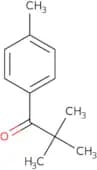
CAS:Versatile small molecule scaffoldFormula:C11H13ClOPurezza:Min. 95%Peso molecolare:196.67 g/mol4',2,2-Trimethylpropiophenone
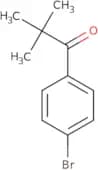
CAS:4',2,2-Trimethylpropiophenone is a benzyl derivative that lowers blood glucose levels in animals by inhibiting the activity of glycogen synthase. It also enhances the efficiency of maltase and decreases the rate of red blood cell maturation. 4',2,2-Trimethylpropiophenone has been shown to be a radioprotector in mice, protecting against radiation damage and hyperglycemia in diabetic mice. The drug has been shown to decrease the severity of diabetes mellitus type 1 in rats, as well as reduce the incidence and severity of diabetes mellitus type 2 in rats fed a high-fat diet. This drug is not active against lactose or animal cells.Formula:C12H16OPurezza:Min. 95%Peso molecolare:176.26 g/mol4'-Bromo-2,2-dimethylpropiophenone
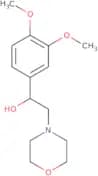
CAS:<p>Versatile small molecule scaffold</p>Formula:C11H13BrOPurezza:Min. 95%Peso molecolare:241.13 g/mol1-(3,4-Dimethoxyphenyl)-2-(morpholin-4-yl)ethan-1-ol
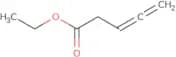
CAS:Prodotto controllatoVersatile small molecule scaffoldFormula:C14H21NO4Purezza:Min. 95%Peso molecolare:267.32 g/molEthyl penta-3,4-dienoate
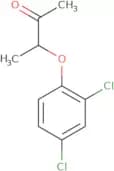
CAS:<p>Versatile small molecule scaffold</p>Formula:C7H10O2Purezza:Min. 95%Peso molecolare:126.15 g/mol3-(2,4-Dichlorophenoxy)butan-2-one
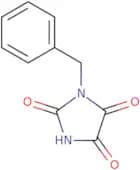
CAS:Versatile small molecule scaffoldFormula:C10H10Cl2O2Purezza:Min. 95%Peso molecolare:233.09 g/mol1-Benzylimidazolidine-2,4,5-trione
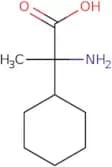
CAS:<p>Versatile small molecule scaffold</p>Formula:C10H8N2O3Purezza:Min. 95%Peso molecolare:204.18 g/mol(2S)-2-Amino-2-cyclohexylpropanoic acid
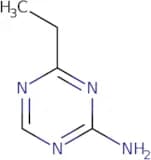
CAS:Versatile small molecule scaffoldFormula:C9H17NO2Purezza:Min. 95%Peso molecolare:171.24 g/mol4-Ethyl-1,3,5-triazin-2-amine
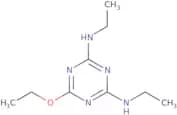
CAS:<p>Versatile small molecule scaffold</p>Formula:C5H8N4Purezza:Min. 95%Peso molecolare:124.14 g/mol6-Ethoxy-2-N,4-N-diethyl-1,3,5-triazine-2,4-diamine
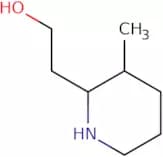
CAS:<p>Versatile small molecule scaffold</p>Formula:C9H17N5OPurezza:Min. 95%Peso molecolare:211.26 g/mol2-(3-Methylpiperidin-2-yl)ethan-1-ol
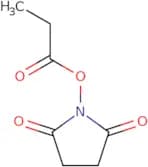
CAS:<p>Versatile small molecule scaffold</p>Formula:C8H17NOPurezza:Min. 95%Peso molecolare:143.23 g/molN-(Propionyloxy)succinimide
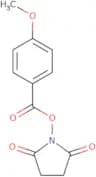
CAS:<p>N-(Propionyloxy)succinimide (NPS) is an analog of the natural hormone cortisol. It binds to the glucocorticoid receptor and activates it by binding to the cytoplasmic region of the receptor, which leads to inhibition of the transcription factor c-jun. This inhibits tumor necrosis factor-related apoptosis-inducing ligand (TRAIL) production, leading to decreased epidermal growth factor (EGF) synthesis, and prevents monocyte chemotaxis. NPS also has a high affinity for kidney bean α-amylase and can be used as a probe in studies investigating this enzyme.</p>Formula:C7H9NO4Purezza:Min. 95%Peso molecolare:171.15 g/mol2,5-Dioxopyrrolidin-1-yl 4-methoxybenzoate
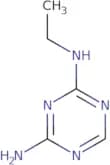
CAS:<p>Versatile small molecule scaffold</p>Formula:C12H11NO5Purezza:Min. 95%Peso molecolare:249.22 g/mol2-N-Ethyl-1,3,5-triazine-2,4-diamine
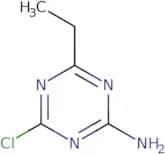
CAS:Versatile small molecule scaffoldFormula:C5H9N5Purezza:Min. 95%Peso molecolare:139.16 g/mol4-chloro-6-ethyl-1,3,5-triazin-2-amine
CAS:Versatile small molecule scaffoldFormula:C5H7N4ClPurezza:Min. 95%Peso molecolare:158.59 g/mol



![Bis[(pinacolato)boryl]methane](/_next/image/?url=https%3A%2Fstatic.cymitquimica.com%2Fproducts%2F3D%2Fthumb-webp%2FFB18774.webp&w=3840&q=75)
![Bis[2-(perfluorooctyl)ethyl] phosphate](/_next/image/?url=https%3A%2Fstatic.cymitquimica.com%2Fproducts%2F3D%2Fthumb-webp%2FFB18790.webp&w=3840&q=75)

![Octahydrocyclopenta[b]thiomorpholine](/_next/image/?url=https%3A%2Fstatic.cymitquimica.com%2Fproducts%2F3D%2Fthumb-webp%2FFBA19620.webp&w=3840&q=75)
![rac-(3aR,6aR)-Hexahydrofuro[3,4-d][1,3]oxazol-2-one](/_next/image/?url=https%3A%2Fstatic.cymitquimica.com%2Fproducts%2F3D%2Fthumb-webp%2FFBA19756.webp&w=3840&q=75)
![6'-Methoxy-3',4'-dihydro-2'H-spiro[imidazolidine-4,1'-naphthalene]-2,5-dione](/_next/image/?url=https%3A%2Fstatic.cymitquimica.com%2Fproducts%2F3D%2Fthumb-webp%2FFBA26510.webp&w=3840&q=75)