Building Blocks
Questa sezione contiene prodotti fondamentali per la sintesi di composti organici e biologici. Building blocks sono i materiali di partenza essenziali utilizzati per costruire molecole complesse attraverso varie reazioni chimiche. Svolgono un ruolo critico nella scoperta di farmaci, nella scienza dei materiali e nella ricerca chimica. Presso CymitQuimica, offriamo una gamma diversificata di building blocks di alta qualità per supportare le tue ricerche innovative e progetti industriali, assicurandoti di avere i componenti essenziali per una sintesi di successo.
Sottocategorie di "Building Blocks"
- Acidi boronici e derivati dell'acido boronico(5.756 prodotti)
- Building Blocks Chirali(1.242 prodotti)
- Building Blocks Idrocarburici(6.095 prodotti)
- Building Blocks organici(61.037 prodotti)
Trovati 196139 prodotti di "Building Blocks"
Ordinare per
Purezza (%)
0
100
|
0
|
50
|
90
|
95
|
100
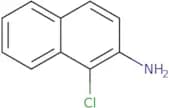
1-Chloronaphthalen-2-amine
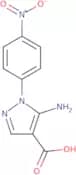
CAS:<p>1-Chloronaphthalen-2-amine is an organic compound that belongs to the group of amines. It is a colorless liquid with a molecular weight of 122.14 and a boiling point of 164°C. This compound is an isomer of naphthalene, which means it has the same chemical formula but different arrangement of atoms within the molecule. 1-Chloronaphthalen-2-amine can be used in pharmaceuticals as well as in nature, where it reacts with singlet oxygen to form nitrosonium ion, which can then react with benzoate to produce nitrobenzene. The enzyme catalysis process involves the use of 1-chloronaphthalen-2-amine as a substrate and acetonitrile as a catalyst to produce 2,6 -dichloroisonicotinic acid.</p>Formula:C10H8ClNPurezza:Min. 95%Peso molecolare:177.63 g/mol5-Amino-1-(4-nitrophenyl)-1H-pyrazole-4-carboxylic acid
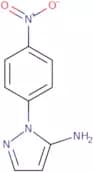
CAS:<p>Versatile small molecule scaffold</p>Formula:C10H8N4O4Purezza:Min. 95%Peso molecolare:248.19 g/mol1-(4-Nitrophenyl)-1H-pyrazol-5-amine
CAS:<p>Versatile small molecule scaffold</p>Formula:C9H8N4O2Purezza:Min. 95%Peso molecolare:204.19 g/mol3,4-Diaminopyrazole
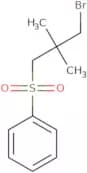
CAS:<p>3,4-Diaminopyrazole is a heterocyclic compound that has been used as a colorant in the textile industry. It is also known to be an effective acceptor for hydrogen bonding in human keratin. 3,4-Diaminopyrazole reacts with primary alcohols to form chalcones and the long-term exposure of this compound has been shown to cause fatty alcohols. This heterocyclic compound undergoes a bathochromic shift under UV light and can be used as a spectral marker in vitro.</p>Formula:C3H8N4O4SPurezza:Min. 95%Peso molecolare:196.19 g/mol(3-Bromo-2,2-dimethylpropanesulfonyl)benzene
CAS:<p>Versatile small molecule scaffold</p>Formula:C11H15BrO2SPurezza:Min. 95%Peso molecolare:291.21 g/mol4-Methyl-1H,2H,3H-pyrrolo[2,3-b]pyridine
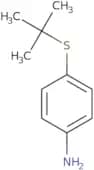
CAS:<p>The protonation of 4-methyl-1H,2H,3H-pyrrolo[2,3-b]pyridine can be described by the following equilibrium equation:</p>Formula:C8H10N2Purezza:Min. 95%Peso molecolare:134.18 g/mol4-(tert-Butylsulfanyl)aniline
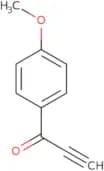
CAS:<p>Versatile small molecule scaffold</p>Formula:C10H15NSPurezza:Min. 95%Peso molecolare:181.3 g/mol1-(4-Methoxyphenyl)prop-2-yn-1-one
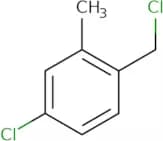
CAS:<p>Versatile small molecule scaffold</p>Formula:C10H8O2Purezza:Min. 95%Peso molecolare:160.17 g/mol4-Chloro-1-(chloromethyl)-2-methyl-benzene
CAS:<p>Lidamine is a potential drug candidate for use in cancer therapy. It has been shown to be cytotoxic, meaning it kills cancer cells. Lidamine was also found to inhibit the growth of cancer cells in vitro and in vivo. More research is needed to investigate lidamine as a potential treatment for cancer.</p>Formula:C8H8Cl2Purezza:Min. 95%Peso molecolare:175.05 g/mol4-Oxatricyclo[4.2.1.0,3,7]nonane-2,5-dione
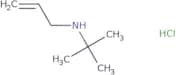
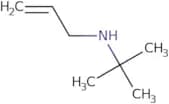
CAS:<p>Versatile small molecule scaffold</p>Formula:C8H8O3Purezza:Min. 95%Peso molecolare:152.15 g/moltert-Butyl(prop-2-en-1-yl)amine hydrochloride
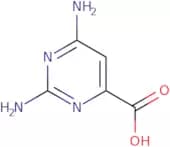
CAS:<p>Versatile small molecule scaffold</p>Formula:C7H16ClNPurezza:Min. 95%Peso molecolare:149.66 g/mol2,6-Diaminopyrimidine-4-carboxylic acid
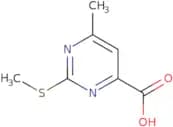
CAS:<p>Versatile small molecule scaffold</p>Formula:C5H6N4O2Purezza:Min. 95%Peso molecolare:154.13 g/mol6-Methyl-2-(methylsulfanyl)pyrimidine-4-carboxylic acid
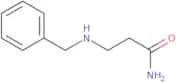
CAS:<p>Versatile small molecule scaffold</p>Formula:C7H8N2O2SPurezza:Min. 95%Peso molecolare:184.22 g/mol3-(Benzylamino)propanamide
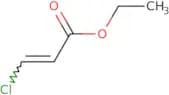
CAS:<p>Versatile small molecule scaffold</p>Formula:C10H14N2OPurezza:Min. 95%Peso molecolare:178.23 g/molEthyl (2Z)-3-chloroprop-2-enoate
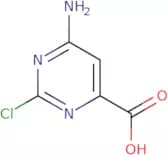
CAS:<p>Versatile small molecule scaffold</p>Formula:C5H7ClO2Purezza:Min. 95%Peso molecolare:134.56 g/mol6-Amino-2-chloropyrimidine-4-carboxylic acid
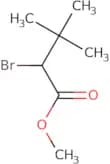
CAS:<p>Versatile small molecule scaffold</p>Formula:C5H4ClN3O2Purezza:Min. 95%Peso molecolare:173.56 g/molMethyl 2-bromo-3,3-dimethylbutanoate
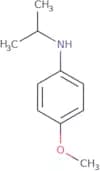
CAS:<p>Versatile small molecule scaffold</p>Formula:C7H13BrO2Purezza:Min. 95%Peso molecolare:209.08 g/molN-iso-Propyl-4-methoxyaniline
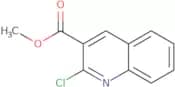
CAS:<p>N-iso-Propyl-4-methoxyaniline is a supramolecular framework that has been demonstrated to be mediated by nitrogen atoms. This framework has been shown to form when the two isomers are mixed together, which leads to the formation of an alkylation reaction. The isomerism of this compound can be quantified and is unique in that it destabilizes the molecule. X-ray crystallography has been used to study the molecular structure and elucidate the non-covalent interactions. N-iso-Propyl-4-methoxyaniline's destabilization may be attributed to its ability to form hydrogen bonds with water molecules, as well as its hydrophobic character.</p>Formula:C10H15NOPurezza:Min. 95%Peso molecolare:165.24 g/molMethyl 2-chloro-3-quinolinecarboxylate
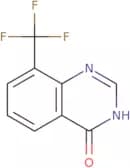
CAS:<p>Methyl 2-chloro-3-quinolinecarboxylate is a heterocycle that inhibits bacterial growth by binding to the DNA gyrase and topoisomerase IV. This antibiotic has been shown to be active against Pseudomonas aeruginosa and other bacteria, including those that are resistant to quinolones. Methyl 2-chloro-3-quinolinecarboxylate binds to the enzyme's active site, inhibiting its function and halting DNA synthesis. It also contains a halogen group that may interact with the enzyme's active site, thereby preventing the formation of an enzyme-substrate complex.</p>Formula:C11H8ClNO2Purezza:Min. 95%Peso molecolare:221.64 g/mol8-(Trifluoromethyl)-3,4-dihydroquinazolin-4-one
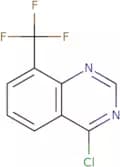
CAS:<p>Versatile small molecule scaffold</p>Formula:C9H5F3N2OPurezza:Min. 95%Peso molecolare:214.14 g/mol4-Chloro-8-(trifluoromethyl)quinazoline
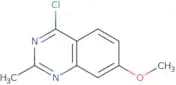
CAS:<p>Versatile small molecule scaffold</p>Formula:C9H4ClF3N2Purezza:Min. 95%Peso molecolare:232.59 g/mol4-Chloro-7-methoxy-2-methylquinazoline
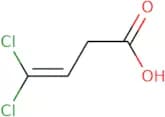
CAS:<p>Versatile small molecule scaffold</p>Formula:C10H9ClN2OPurezza:Min. 95%Peso molecolare:208.64 g/mol4,4-Dichlorobut-3-enoic acid
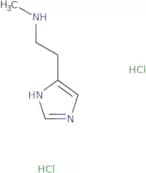
CAS:<p>Versatile small molecule scaffold</p>Formula:C4H4Cl2O2Purezza:Min. 95%Peso molecolare:154.98 g/molN±-Methylhistamine dihydrochloride
CAS:<p>N±-Methylhistamine dihydrochloride is a metabolite of histamine that has been shown to be produced in mononuclear phagocytes by the oxidation of histamine. N±-Methylhistamine dihydrochloride has been shown to cause oxidative damage to cells, and causes cell response, which may lead to radical formation. It has also been shown to damage DNA and RNA.</p>Formula:C6H11N3·2HClPurezza:Min. 95%Peso molecolare:198.09 g/molMethyl 3-methyl-4-nitrobutanoate
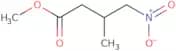
CAS:<p>Methyl 3-methyl-4-nitrobutanoate is a reagent that can be used in the synthesis of pyrrolo, quinazolone, and deoxyvasicinone analogues. It has been shown to react with electrophiles such as epoxides and aziridines to form six-membered heterocycles. Methyl 3-methyl-4-nitrobutanoate is a useful synthetic intermediate for the preparation of various analogues of vasicinone.</p>Formula:C6H11NO4Purezza:Min. 95%Peso molecolare:161.16 g/mol4-Phenyl-1-butyne
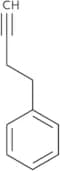
CAS:<p>4-Phenyl-1-butyne is an organic molecule that can be synthesized in a number of ways, including using an asymmetric synthesis. It is one of the two structural isomers of terminal alkynes and has been shown to inhibit the enzyme carboxylesterase. 4-Phenyl-1-butyne has also been shown to have a control experiment, which may help to identify the chemical mechanism of reaction. The optimal reaction time for this molecule is between 1 and 2 hours at a temperature of 100 degrees Celsius. 4-Phenyl-1-butyne reacts with acid molecules such as hydrochloric acid or sulfuric acid to form monocarboxylic acids. This molecular structure also reacts with water to produce hydrogen gas and carbon dioxide.</p>Formula:C10H10Purezza:Min. 95%Peso molecolare:130.19 g/mol2-[(4-Methylphenyl)amino]benzoic acid
CAS:<p>Versatile small molecule scaffold</p>Formula:C14H13NO2Purezza:Min. 95%Peso molecolare:227.26 g/molHexanethioamide
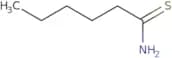
CAS:<p>Hexanethioamide is an organic compound that is a nitro, fluoroalkyl, and thioacetamide. It is used as an acid catalyst in the synthesis of various pharmaceuticals, such as sulfonylureas and antibiotics. Hexanethioamide has been shown to possess viscosity-increasing properties. The functional theory for hexanethioamide is that it adsorbs on the surface of the polymer chain with its nitro group, which becomes protonated. This increases the acidity of the surface and lowers the pKa value of the amide group. Hexanethioamide has been used in pest control as a control agent for termites and other insects.</p>Formula:C6H13NSPurezza:Min. 95%Peso molecolare:131.24 g/mol4-Methylpentanethioamide
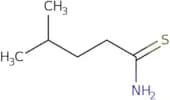
CAS:<p>Versatile small molecule scaffold</p>Formula:C6H13NSPurezza:Min. 95%Peso molecolare:131.24 g/mol1,3,5-Cyclohexanetricarboxylic acid
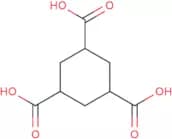
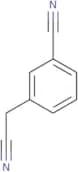
CAS:<p>1,3,5-Cyclohexanetricarboxylic acid is a supramolecular molecule with an imine nitrogen and chloride. It has been analyzed by X-ray crystallography and was found to have the structure of a monoclinic crystal. The deionized water molecules form hydrogen bonds with the carboxylate group on the molecule. The hydrogen bonds are intermolecular and are formed between two different molecules of water. 1,3,5-Cyclohexanetricarboxylic acid is also able to form hydrogen bonds with other molecules that contain a nitrogen atom, such as ammonia or amines. Molecular modeling software was used to show how a cavity is created in the center of the molecule from which it can bind to other molecules.</p>Formula:C9H12O6Purezza:Min. 95%Peso molecolare:216.19 g/mol3-Cyanbenzylcyanide
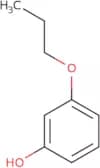
CAS:<p>3-Cyanbenzylcyanide is a synthetic compound that belongs to the class of benzonitriles. It is used as an intermediate in organic synthesis, most notably for the production of atorvastatin and gabapentin. 3-Cyanbenzylcyanide is used in synthesizing amides, such as amides with acetonitrile. It has been shown to be a chemists' tool for elucidating the structures of complex molecules. The systematic study of 3-cyanbenzylcyanide has led to modifications that can be applied to other chemical compounds. The chemists have also examined the biotransformations of 3-cyanbenzylcyanide and found that it can be biotransformed into diacids and gabapentin by modifying its structure. The integration of 3-cyanbenzylcyanide with other compounds has led to new discoveries in the field</p>Formula:C9H6N2Purezza:Min. 95%Peso molecolare:142.16 g/mol3-Propoxyphenol
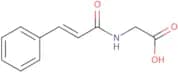
CAS:<p>3-Propoxyphenol is a compound that is used as an intermediate in the synthesis of other organic compounds. It has been shown to have homologous properties with 3-phenoxypropionitrile, which can be used to synthesize violaceum and other organic compounds. The protonation of 3-propoxyphenol at pH 7.2 produces a stable ion pair, which can be quantified by chromatography. The x-ray structure analysis of this compound showed that it contains a dipole moment of 1.406 D and that it has high affinity for hydrocarbons, providing a possible explanation for its thermal stability and high yield.</p>Formula:C9H12O2Purezza:Min. 95%Peso molecolare:152.19 g/molN-Cinnamylglycine
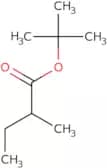
CAS:<p>N-Cinnamylglycine is a compound that belongs to the class of amino acids and has a hydroxyl group and an ethylene diamine side chain. It is an endogenous metabolite which can be found in skin cells, body mass index, gamma-aminobutyric acid, and epidermal growth factor. N-Cinnamylglycine has been identified as a potential biomarker for glomerular filtration rate (GFR). This amino acid may also serve as a biomarker for atherosclerotic cardiovascular disease. N-Cinnamylglycine may be involved in metabolic disorders due to its involvement in microbial metabolism of fatty acids.</p>Formula:C11H11NO3Purezza:Min. 95%Peso molecolare:205.21 g/moltert-Butyl 2-methylbutanoate
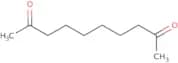
CAS:<p>Versatile small molecule scaffold</p>Formula:C9H18O2Purezza:Min. 95%Peso molecolare:158.24 g/molDecane-2,9-dione
CAS:<p>Decane-2,9-dione is a ketone that is used as an intermediate in organic synthesis. It can be used to synthesize terminal alkyne compounds. Decane-2,9-dione also has the ability to react with chloride or hydration to form methoxymethylene chloride or methyl ketones. Decane-2,9-dione can also be used as a catalyst for various reactions including the transfer of rhodium and benzene. The nature of this compound is not known but it is speculated that it may be a natural product from catalysis by ruthenium and rhodium.</p>Formula:C10H18O2Purezza:Min. 95%Peso molecolare:170.25 g/molN-[(3-Bromophenyl)methyl]-N-methylaniline
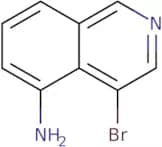
CAS:<p>Versatile small molecule scaffold</p>Formula:C14H14BrNPurezza:Min. 95%Peso molecolare:276.17 g/mol4-bromoisoquinolin-5-amine
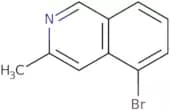
CAS:<p>Versatile small molecule scaffold</p>Formula:C9H7BrN2Purezza:Min. 95%Peso molecolare:223.1 g/mol5-bromo-3-methylisoquinoline
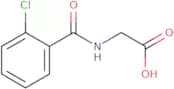
CAS:<p>Versatile small molecule scaffold</p>Formula:C10H8NBrPurezza:Min. 95%Peso molecolare:222.08 g/mol2-Chlorohippuric acid
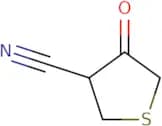
CAS:<p>2-Chlorohippuric acid is a synthetic, non-natural molecule that has been shown to inhibit the growth of liver cells. This drug also has an analytical method for detecting the presence of 2-chlorohippuric acid in urine samples. The terminal half-life is about 30 minutes, and this drug also inhibits the synthesis of hippuric acid, which is a metabolite of benzoic acid. The acylation reaction enhances the elimination of 2-chlorohippuric acid from the body.</p>Formula:C9H8ClNO3Purezza:Min. 95%Peso molecolare:213.62 g/mol4-Cyano-3-tetrahydrothiophenone
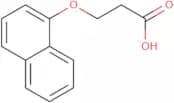
CAS:<p>4-Cyano-3-tetrahydrothiophenone is a simple compound that can be synthesized in a variety of ways. It is not symmetrical, and has been shown to have biological properties. This compound has been used in the synthesis of other compounds with optical properties. 4-Cyano-3-tetrahydrothiophenone is also used as a precursor for the preparation of other compounds that are used as acceptors, such as diethyl ether and thioglycolate. Preparative methods for this compound involve the use of acrylonitrile and solar cells.</p>Formula:C5H5NOSPurezza:Min. 95%Peso molecolare:127.16 g/mol3-(Naphthalen-1-yloxy)propanoic acid
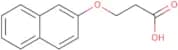
CAS:<p>Versatile small molecule scaffold</p>Formula:C13H12O3Purezza:Min. 95%Peso molecolare:216.23 g/mol3-(Naphthalen-2-yloxy)propanoic acid
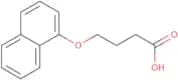
CAS:<p>Versatile small molecule scaffold</p>Formula:C13H12O3Purezza:Min. 95%Peso molecolare:216.23 g/mol4-(Naphthalen-1-yloxy)butanoic acid
CAS:Prodotto controllato<p>Versatile small molecule scaffold</p>Formula:C14H14O3Purezza:Min. 95%Peso molecolare:230.26 g/mol2H,3H,4H,5H-Naphtho[1,2-b]oxepin-5-one
CAS:<p>Naphtho[1,2-b]oxepin-5-one is a crystalline compound that is a derivative of naphthalene. It has an elemental composition of C10H8O and a molecular weight of 142.16 g/mol. Naphtho[1,2-b]oxepin-5-one is stabilized by hydrogen bonding interactions with the hydroxyl groups on the benzene rings and has been shown to have a crystallographic space group of P21/c. The molecule can be analyzed using x-ray diffraction studies, which will provide information about its atomic structure and topology. Computational analysis of the molecule reveals that it has non-covalent interactions at its surface that are due to van der Waals forces. Nature also plays an important role in determining the structural properties of this compound by providing an environment for it to exist in, such as water or air.</p>Formula:C14H12O2Purezza:Min. 95%Peso molecolare:212.24 g/mol1-(5,6-Dimethyl-1-benzofuran-2-yl)ethan-1-one
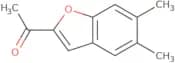
CAS:<p>Versatile small molecule scaffold</p>Formula:C12H12O2Purezza:Min. 95%Peso molecolare:188.22 g/mol1-(6-Methyl-1-benzofuran-2-yl)ethan-1-one
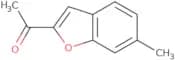
CAS:<p>Versatile small molecule scaffold</p>Formula:C11H10O2Purezza:Min. 95%Peso molecolare:174.2 g/molMethyl 2-(1,3-thiazol-5-yl)acetate
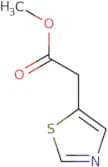
CAS:<p>Versatile small molecule scaffold</p>Formula:C6H7NO2SPurezza:Min. 95%Peso molecolare:157.19 g/mol8-Bromo-6-chloroquinoline
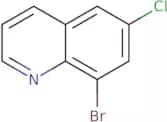
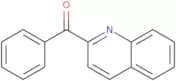
CAS:<p>8-Bromo-6-chloroquinoline (8BCQ) is a fluorescent dye that emits blue light. It has photophysical properties such as its emission, absorption, and fluorescence. 8BCQ is an isomeric compound that can be used to study the relationship between emission and absorption spectra. It has been shown to be a good mediator of cross-coupling reactions in the synthesis of heterocycles. 8BCQ has a high yield as it can be synthesized by heating dioxane with potassium carbonate and palladium chloride under pressure.</p>Formula:C9H5BrClNPurezza:Min. 95%Peso molecolare:242.5 g/mol2-Benzoylquinoline
CAS:<p>2-Benzoylquinoline is an antimicrobial agent that can be used as a corrosion inhibitor. It contains a nitro group, an inorganic acid, and an aliphatic hydrocarbon. The molecule has been shown to be effective against Gram-positive and Gram-negative bacteria, fungi, and yeast. 2-Benzoylquinoline is also an efficient method for the synthesis of β-unsaturated ketones.</p>Formula:C16H11NOPurezza:Min. 95%Peso molecolare:233.26 g/mol


![4-Methyl-1H,2H,3H-pyrrolo[2,3-b]pyridine](/_next/image/?url=https%3A%2Fstatic.cymitquimica.com%2Fproducts%2F3D%2Fthumb-webp%2FRAA46294.webp&w=3840&q=75)
![4-Oxatricyclo[4.2.1.0,3,7]nonane-2,5-dione](/_next/image/?url=https%3A%2Fstatic.cymitquimica.com%2Fproducts%2F3D%2Fthumb-webp%2FRAA47973.webp&w=3840&q=75)
![2-[(4-Methylphenyl)amino]benzoic acid](/_next/image/?url=https%3A%2Fstatic.cymitquimica.com%2Fproducts%2F3D%2Fthumb-webp%2FRAA52423.webp&w=3840&q=75)
![N-[(3-Bromophenyl)methyl]-N-methylaniline](/_next/image/?url=https%3A%2Fstatic.cymitquimica.com%2Fproducts%2F3D%2Fthumb-webp%2FRAA54715.webp&w=3840&q=75)
![2H,3H,4H,5H-Naphtho[1,2-b]oxepin-5-one](/_next/image/?url=https%3A%2Fstatic.cymitquimica.com%2Fproducts%2F3D%2Fthumb-webp%2FRAA56358.webp&w=3840&q=75)