Building Blocks
Questa sezione contiene prodotti fondamentali per la sintesi di composti organici e biologici. Building blocks sono i materiali di partenza essenziali utilizzati per costruire molecole complesse attraverso varie reazioni chimiche. Svolgono un ruolo critico nella scoperta di farmaci, nella scienza dei materiali e nella ricerca chimica. Presso CymitQuimica, offriamo una gamma diversificata di building blocks di alta qualità per supportare le tue ricerche innovative e progetti industriali, assicurandoti di avere i componenti essenziali per una sintesi di successo.
Sottocategorie di "Building Blocks"
- Acidi boronici e derivati dell'acido boronico(5.756 prodotti)
- Building Blocks Chirali(1.242 prodotti)
- Building Blocks Idrocarburici(6.093 prodotti)
- Building Blocks organici(60.519 prodotti)
Trovati 195533 prodotti di "Building Blocks"
Ordinare per
Purezza (%)
0
100
|
0
|
50
|
90
|
95
|
100
4-Fluoronaphthalen-2-ol
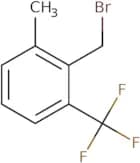
CAS:<p>Versatile small molecule scaffold</p>Formula:C10H7FOPurezza:Min. 95%Peso molecolare:162.16 g/mol2-Methyl-6-trifluoromethylbenzyl bromide
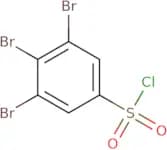
CAS:<p>Versatile small molecule scaffold</p>Formula:C9H8BrF3Purezza:Min. 95%Peso molecolare:253.06 g/mol3,4,5-Tribromobenzene-1-sulfonyl chloride
CAS:<p>Versatile small molecule scaffold</p>Formula:C6H2Br3ClO2SPurezza:Min. 95%Peso molecolare:413.31 g/mol2-Chloro-5-methylpyridine-4-carbonitrile
CAS:<p>2-Chloro-5-methylpyridine-4-carbonitrile (2CMP) is an organic compound that is used as a reagent in organic synthesis. 2CMP has been shown to have bifunctional properties and inhibitory effects on the human glucose transporter 1 (GLUT1). It also inhibits the activation of neutrophils. 2CMP has been used to develop monoclonal antibodies and x-ray crystal structures of biological molecules. The efficient method for synthesizing alkene was discovered using 2CMP as a precursor. Crystal structures of the enzyme catalytic mechanism were also elucidated by this reactant.</p>Formula:C7H5ClN2Purezza:Min. 95%Peso molecolare:152.58 g/mol3-Chloro-4-iodobenzonitrile
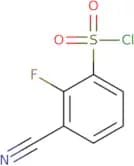
CAS:<p>Versatile small molecule scaffold</p>Formula:C7H3ClINPurezza:Min. 95%Peso molecolare:263.46 g/mol3-Cyano-2-fluorobenzene-1-sulfonyl chloride
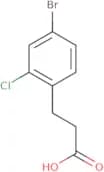
CAS:<p>Versatile small molecule scaffold</p>Formula:C7H3ClFNO2SPurezza:Min. 95%Peso molecolare:219.62 g/mol3-(4-Bromo-2-chlorophenyl)propanoic acid
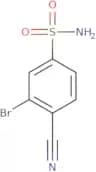
CAS:<p>Versatile small molecule scaffold</p>Formula:C9H8BrClO2Purezza:Min. 95%Peso molecolare:263.52 g/mol3-Bromo-4-cyanobenzene-1-sulfonamide
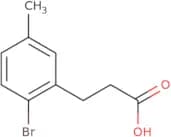
CAS:<p>Versatile small molecule scaffold</p>Formula:C7H5BrN2O2SPurezza:Min. 95%Peso molecolare:261.1 g/mol3-(2-Bromo-5-methylphenyl)propanoic acid
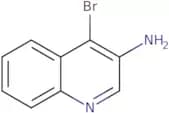
CAS:<p>Versatile small molecule scaffold</p>Formula:C10H11BrO2Purezza:Min. 95%Peso molecolare:243.1 g/mol4-Bromoquinolin-3-amine
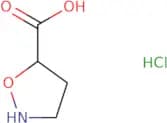
CAS:<p>Versatile small molecule scaffold</p>Formula:C9H7BrN2Purezza:Min. 95%Peso molecolare:223.07 g/mol1,2-Oxazolidine-5-carboxylic acid hydrochloride
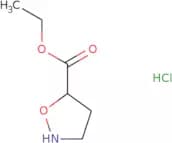
CAS:<p>Versatile small molecule scaffold</p>Formula:C4H8ClNO3Purezza:Min. 95%Peso molecolare:153.56 g/molEthyl 1,2-oxazolidine-5-carboxylate hydrochloride
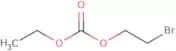
CAS:<p>Versatile small molecule scaffold</p>Formula:C6H12ClNO3Purezza:Min. 95%Peso molecolare:181.62 g/mol2-Bromoethyl ethyl carbonate
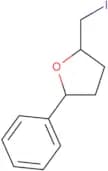
CAS:<p>Versatile small molecule scaffold</p>Formula:C5H9BrO3Purezza:Min. 95%Peso molecolare:197.03 g/mol2-(Iodomethyl)-5-phenyloxolane
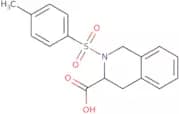
CAS:<p>Versatile small molecule scaffold</p>Formula:C11H13IOPurezza:Min. 95%Peso molecolare:288.12 g/mol2-(4-Methylbenzenesulfonyl)-1,2,3,4-tetrahydroisoquinoline-3-carboxylic acid
CAS:<p>Versatile small molecule scaffold</p>Formula:C17H17NO4SPurezza:Min. 95%Peso molecolare:331.4 g/mol3-[(2-Bromophenyl)carbamoyl]prop-2-enoic acid
CAS:<p>Versatile small molecule scaffold</p>Formula:C10H8BrNO3Purezza:Min. 95%Peso molecolare:270.08 g/mol3-Amino-2-(3,4-dimethoxyphenyl)propan-1-ol hydrochloride
CAS:<p>Versatile small molecule scaffold</p>Formula:C11H18ClNO3Purezza:Min. 95%Peso molecolare:247.72 g/molN-(2-Aminoethyl)-2-phenylacetamide hydrochloride
CAS:<p>Versatile small molecule scaffold</p>Formula:C10H15ClN2OPurezza:Min. 95%Peso molecolare:214.7 g/mol2-[5-(Thiophen-2-yl)-2H-1,2,3,4-tetrazol-2-yl]acetic acid
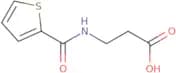
CAS:<p>Versatile small molecule scaffold</p>Formula:C7H6N4O2SPurezza:Min. 95%Peso molecolare:210.22 g/mol3-(Thiophen-2-ylformamido)propanoic acid
CAS:<p>Versatile small molecule scaffold</p>Formula:C8H9NO3SPurezza:Min. 95%Peso molecolare:199.23 g/mol3-(2-Methoxyacetamido)propanoic acid
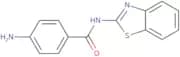
CAS:<p>Versatile small molecule scaffold</p>Formula:C6H11NO4Purezza:Min. 95%Peso molecolare:161.16 g/mol4-Amino-N-benzothiazol-2-yl-benzamide
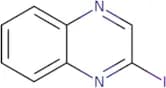
CAS:<p>Versatile small molecule scaffold</p>Formula:C14H11N3OSPurezza:Min. 95%Peso molecolare:269.32 g/mol2-Iodoquinoxaline
CAS:<p>2-Iodoquinoxaline is a heterocyclic compound that contains an ethyl diazoacetate group. It can be synthesised from chloroformate and ferredoxin, which are both five-membered rings. 2-Iodoquinoxaline is used to make other heterocyclic compounds, such as the phosphonium salt and the dioxolane. This molecule has also been shown to be a good acceptor for evaporation of liquids. When exposed to radiation, 2-iodoquinoxaline converts into a molybdenum (Mo) molecule, which is important in the synthesis of many organic compounds. This compound can also be synthesized by reacting styrene with olefinic molecules under appropriate conditions.</p>Formula:C8H5IN2Purezza:Min. 95%Peso molecolare:256.04 g/molEthyl 4-amino-3-thia-1-azatricyclo[5.2.2.0,2,6]undeca-2(6),4-diene-5-carboxylate
CAS:<p>Ethyl 4-amino-3-thia-1-azatricyclo[5.2.2.0,2,6]undeca-2(6),4-diene-5-carboxylate is an acylated amino acid that contains a cyanoacetic acid moiety with an elemental sulfur atom in the side chain. It is used in the production of acrylamide and as a precursor to various pharmaceuticals, pesticides, and dyes.</p>Formula:C12H16N2O2SPurezza:Min. 95%Peso molecolare:252.33 g/mol1-(1,3-Benzothiazol-2-yl)propan-2-one
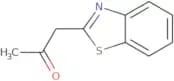
CAS:<p>1-(1,3-Benzothiazol-2-yl)propan-2-one is a type of benzene compound with substituent groups. It has the formula CHCHS. The substituents are methyl and acetate. The benzene ring is substituted with two substituents in the coplanar arrangement. Benzene rings can form condensation products through a process called electrophilic substitution. This process involves the addition of an electron pair to an atom or molecule by an electrophile to form a covalent bond. One example of this reaction is the formation of methyl acetate from 1-(1,3-benzothiazol-2-yl)propan-2-one by heating it with methanol.</p>Formula:C10H9NOSPurezza:Min. 95%Peso molecolare:191.25 g/mol5-(tert-Butyl)thiophene-2-carbaldehyde
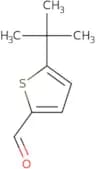
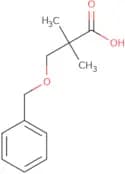
CAS:<p>Versatile small molecule scaffold</p>Formula:C9H12OSPurezza:Min. 95%Peso molecolare:168.26 g/mol3-(Benzyloxy)-2,2-dimethylpropanoic acid
CAS:<p>3-(Benzyloxy)-2,2-dimethylpropanoic acid (BPD) is a carboxylic acid derivative that is used as a reagent in organic synthesis. It is also used to acylate fatty acids to form esters or amides. BPD is also used in the preparation of anhydrides and halides.</p>Formula:C12H16O3Purezza:Min. 95%Peso molecolare:208.25 g/mol(3,4-dihydro-2h-benzo[b][1,4]oxazin-3-yl)methanol
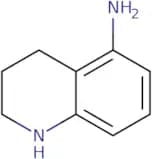
CAS:<p>Versatile small molecule scaffold</p>Formula:C9H11NO2Purezza:Min. 95%Peso molecolare:165.19 g/mol1,2,3,4-Tetrahydroquinolin-5-amine
CAS:<p>1,2,3,4-Tetrahydroquinolin-5-amine (1,2,3,4-THQ) is a hydrazine derivative that has been used in organic synthesis as a reagent for the reductive amination of amines. It is also used as a precursor for the synthesis of other heteroaromatic compounds. The 1,2,3,4-THQ can be prepared by condensation of aniline with nitroethane and phenylenediamine in the presence of Raney nickel. Analogous reactions have been reported using benzylamine derivatives.</p>Formula:C9H12N2Purezza:Min. 95%Peso molecolare:148.2 g/mol3,3-Dimethyl-1-(2-nitrophenyl)urea
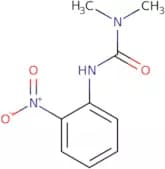
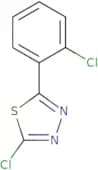
CAS:<p>Versatile small molecule scaffold</p>Formula:C9H11N3O3Purezza:Min. 95%Peso molecolare:209.2 g/mol2-Chloro-5-(2-chlorophenyl)-1,3,4-thiadiazole
CAS:<p>Versatile small molecule scaffold</p>Formula:C8H4Cl2N2SPurezza:Min. 95%Peso molecolare:231.1 g/mol1,2-Diazaspiro[2.5]oct-1-ene-6-carboxylic acid
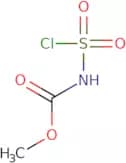
CAS:<p>Versatile small molecule scaffold</p>Formula:C7H10N2O2Purezza:Min. 95%Peso molecolare:154.17 g/molMethyl N-(chlorosulfonyl)carbamate
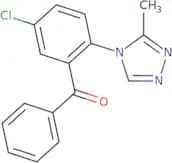
CAS:<p>Methyl N-(chlorosulfonyl)carbamate is a potential drug candidate that was developed to inhibit the activity of peptidases, an enzyme that breaks down proteins. It has been found to inhibit the activity of a variety of peptidases and is stable at temperatures up to 80°C. This reagent is used for medicinal chemistry research and can be used as a starting material for optimization and structural studies. Methyl N-(chlorosulfonyl)carbamate has also been shown to inhibit the activity of other enzymes, such as epoxide hydrolase, which breaks down epoxides. This inhibitor may have therapeutic potential in diseases such as cancer or inflammation.</p>Formula:C2H4ClNO4SPurezza:Min. 95%Peso molecolare:173.58 g/mol5-Chloro-2-(3-methyl-4H-1,2,4-triazol-4-yl)benzophenone
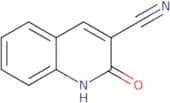
CAS:<p>5-Chloro-2-(3-methyl-4H-1,2,4-triazol-4-yl)benzophenone (CMTP) is a trifluoromethyl, chloro, fluoro, triazolyl compound. It is an intermediate in the synthesis of benzophenones and nitro compounds. CMTP can be synthesized by a multistep process from bromobenzene or chlorobenzene. This compound is used as a tranquilizer and sedative in the treatment of anxiety and insomnia.</p>Formula:C16H12ClN3OPurezza:Min. 95%Peso molecolare:297.74 g/mol2-Oxo-1,2-dihydroquinoline-3-carbonitrile
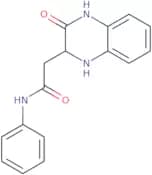
CAS:<p>2-Oxo-1,2-dihydroquinoline-3-carbonitrile is a chemical compound that is used as an antiallergic agent. It has been shown to inhibit the release of histamine from mast cells and also inhibits the release of prostaglandins from human platelets. The compound is synthesized by condensation of ammonium chloride with nitropropane in the presence of sodium azide. The x-ray analysis shows that this compound has a quinoline ring.</p>Formula:C10H6N2OPurezza:Min. 95%Peso molecolare:170.17 g/mol2-(3-Oxo-1,2,3,4-tetrahydroquinoxalin-2-yl)-N-phenylacetamide
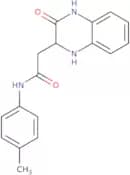
CAS:<p>Versatile small molecule scaffold</p>Formula:C16H15N3O2Purezza:Min. 95%Peso molecolare:281.31 g/molN-(4-Methylphenyl)-2-(3-oxo-1,2,3,4-tetrahydroquinoxalin-2-yl)acetamide
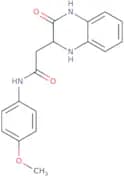
CAS:<p>Versatile small molecule scaffold</p>Formula:C17H17N3O2Purezza:Min. 95%Peso molecolare:295.34 g/molN-(4-Methoxyphenyl)-2-(3-oxo-1,2,3,4-tetrahydroquinoxalin-2-yl)acetamide
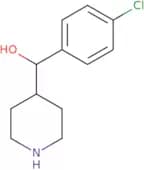
CAS:<p>Versatile small molecule scaffold</p>Formula:C17H17N3O3Purezza:Min. 95%Peso molecolare:311.33 g/mol(4-Chlorophenyl)(piperidin-4-yl)methanol
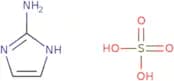
CAS:<p>Versatile small molecule scaffold</p>Formula:C12H16ClNOPurezza:Min. 95%Peso molecolare:225.71 g/mol2-Aminoimidazole sulfate
CAS:<p>2-Aminoimidazole sulfate is a diazonium salt that is used as a contrast agent in radiological imaging. It has been shown to have potent antagonistic effects on the growth factor receptor tyrosine kinase. 2-Aminoimidazole sulfate can be administered orally or intravenously and is stable at pH values of 4.5 to 8. It is also used as an anticholinesterase agent, which prevents the breakdown of acetylcholine by inhibiting cholinesterases in the body. This drug has been shown to be effective in chronic bronchitis and asthma treatment, although it has not yet been approved for these purposes. 2-Aminoimidazole sulfate binds to proteins through covalent cross-linking reactions with amine groups on lysine residues, which inhibits protein function. This drug is also used in industrial wastewater treatment, where it reacts with ethyl eth</p>Formula:C3H7N3O4SPurezza:Min. 95%Peso molecolare:181.17 g/mol2,4-Dichlorothieno[3,4-d]pyrimidine
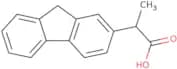
CAS:<p>Versatile small molecule scaffold</p>Formula:C6H2Cl2N2SPurezza:Min. 95%Peso molecolare:205.06 g/mol2-(9H-Fluoren-2-yl)propanoic acid
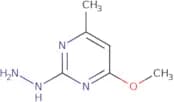
CAS:<p>2-(9H-Fluoren-2-yl)propanoic acid (2FP) is a fatty acid that has been shown to be effective in the treatment of diabetic patients. It is also used as an anti-inflammatory drug, and may have potential for the treatment of cardiac hypertrophy, cardiac arrhythmias, and inflammatory diseases. 2FP has been shown to inhibit the activity of cyclooxygenase enzymes and reduce prostaglandin synthesis. The biological properties of 2FP are similar to that of other nonsteroidal anti-inflammatory drugs (NSAIDs). 2FP has been found to be biocompatible with polymer materials, which means it can be used in diagnostic agents such as contrast agents for CT scans or PET imaging. The Friedel-Crafts reaction between 2FP and phenol yields para-nitrophenol, which reacts with mercury chloride to form a red dye called resorcinol. This dye can then be used as a</p>Formula:C16H14O2Purezza:Min. 95%Peso molecolare:238.28 g/mol2-Hydrazinyl-4-methoxy-6-methylpyrimidine
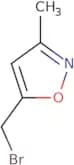
CAS:<p>Versatile small molecule scaffold</p>Formula:C6H10N4OPurezza:Min. 95%Peso molecolare:154.17 g/mol5-Bromomethyl-3-methyl-isoxazole+
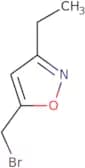
CAS:<p>5-Bromomethyl-3-methyl-isoxazole+ is an inhibitor of thymidylate synthase (TS). TS catalyzes the conversion of deoxyuridine monophosphate to dUMP and dihydrofolate. 5-Bromomethyl-3-methyl-isoxazole+ shows significant inhibition of cell proliferation, with a potency similar to that of the lead compound Lsd1. In addition, this inhibitor has good oral bioavailability in humans and does not show any cytotoxicity towards human cells. The IC50 for 5-bromomethyl-3-methyl-isoxazole+ is less than 1 nM.</p>Formula:C5H6BrNOPurezza:Min. 95%Peso molecolare:176.02 g/mol5-(Bromomethyl)-3-ethyl-1,2-oxazole
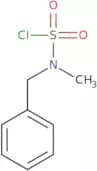
CAS:<p>5-(Bromomethyl)-3-ethyl-1,2-oxazole is a hydroxylamine derivative that has been used in the synthesis of amines. It reacts with primary amines to form oxazoles. This compound has also been shown to react with hydroxylamine to form an oxazole. 5-(Bromomethyl)-3-ethyl-1,2-oxazole is a white solid that can be synthesized by reacting aniline with bromoethane and ethylhydroxyamine in the presence of hydrochloric acid.</p>Formula:C6H8BrNOPurezza:Min. 95%Peso molecolare:190.04 g/molBenzylmethylsulfamoyl chloride
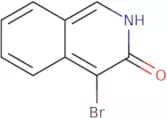
CAS:<p>Versatile small molecule scaffold</p>Formula:C8H10ClNO2SPurezza:Min. 95%Peso molecolare:219.69 g/mol4-bromoisoquinolin-3-ol
CAS:<p>Versatile small molecule scaffold</p>Formula:C9H6NOBrPurezza:Min. 95%Peso molecolare:224.05 g/mol[1-(4-Methoxyphenyl)cyclohexyl]methanamine
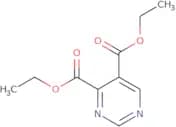
CAS:<p>Versatile small molecule scaffold</p>Formula:C14H21NOPurezza:Min. 95%Peso molecolare:219.32 g/mol4,5-Diethyl pyrimidine-4,5-dicarboxylate
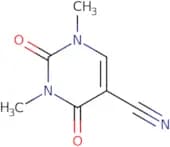
CAS:<p>Versatile small molecule scaffold</p>Formula:C10H12N2O4Purezza:Min. 95%Peso molecolare:224.21 g/mol1,3-Dimethyl-2,4-dioxo-1,2,3,4-tetrahydropyrimidine-5-carbonitrile
CAS:<p>Versatile small molecule scaffold</p>Formula:C7H7N3O2Purezza:Min. 95%Peso molecolare:165.15 g/mol




![3-[(2-Bromophenyl)carbamoyl]prop-2-enoic acid](/_next/image/?url=https%3A%2Fstatic.cymitquimica.com%2Fproducts%2F3D%2Fthumb-webp%2FLBA84785.webp&w=3840&q=75)

![2-[5-(Thiophen-2-yl)-2H-1,2,3,4-tetrazol-2-yl]acetic acid](/_next/image/?url=https%3A%2Fstatic.cymitquimica.com%2Fproducts%2F3D%2Fthumb-webp%2FLBA85510.webp&w=3840&q=75)

![Ethyl 4-amino-3-thia-1-azatricyclo[5.2.2.0,2,6]undeca-2(6),4-diene-5-carboxylate](/_next/image/?url=https%3A%2Fstatic.cymitquimica.com%2Fproducts%2F3D%2Fthumb-webp%2FLBA86049.webp&w=3840&q=75)
![(3,4-dihydro-2h-benzo[b][1,4]oxazin-3-yl)methanol](/_next/image/?url=https%3A%2Fstatic.cymitquimica.com%2Fproducts%2F3D%2Fthumb-webp%2FLBA88417.webp&w=3840&q=75)
![1,2-Diazaspiro[2.5]oct-1-ene-6-carboxylic acid](/_next/image/?url=https%3A%2Fstatic.cymitquimica.com%2Fproducts%2F3D%2Fthumb-webp%2FLBA90876.webp&w=3840&q=75)
![2,4-Dichlorothieno[3,4-d]pyrimidine](/_next/image/?url=https%3A%2Fstatic.cymitquimica.com%2Fproducts%2F3D%2Fthumb-webp%2FLBA94821.webp&w=3840&q=75)
![[1-(4-Methoxyphenyl)cyclohexyl]methanamine](/_next/image/?url=https%3A%2Fstatic.cymitquimica.com%2Fproducts%2F3D%2Fthumb-webp%2FLBA97020.webp&w=3840&q=75)