Building Blocks
Questa sezione contiene prodotti fondamentali per la sintesi di composti organici e biologici. Building blocks sono i materiali di partenza essenziali utilizzati per costruire molecole complesse attraverso varie reazioni chimiche. Svolgono un ruolo critico nella scoperta di farmaci, nella scienza dei materiali e nella ricerca chimica. Presso CymitQuimica, offriamo una gamma diversificata di building blocks di alta qualità per supportare le tue ricerche innovative e progetti industriali, assicurandoti di avere i componenti essenziali per una sintesi di successo.
Sottocategorie di "Building Blocks"
- Acidi boronici e derivati dell'acido boronico(5.756 prodotti)
- Building Blocks Chirali(1.242 prodotti)
- Building Blocks Idrocarburici(6.095 prodotti)
- Building Blocks organici(61.037 prodotti)
Trovati 196139 prodotti di "Building Blocks"
Ordinare per
Purezza (%)
0
100
|
0
|
50
|
90
|
95
|
100
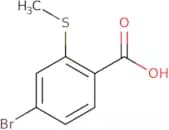
4-Bromo-2-(methylsulfanyl)benzoic acid
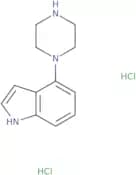
CAS:<p>Versatile small molecule scaffold</p>Formula:C8H7BrO2SPurezza:Min. 95%Peso molecolare:247.11 g/mol1H-Indole-4-(1-piperazinyl)dihydrochloride
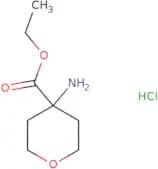
CAS:<p>Versatile small molecule scaffold</p>Formula:C12H17Cl2N3Purezza:Min. 95%Peso molecolare:274.19 g/molethyl 4-aminotetrahydro-2h-pyran-4-carboxylate hcl
CAS:<p>Versatile small molecule scaffold</p>Formula:C8H16ClNO3Purezza:Min. 95%Peso molecolare:209.67 g/mol7-Amino-2-methylpyrazolo[1,5-a]pyrimidine-6-carbonitrile
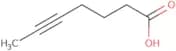
CAS:<p>Versatile small molecule scaffold</p>Formula:C8H7N5Purezza:Min. 95%Peso molecolare:173.18 g/molHept-5-ynoic acid
CAS:<p>Hept-5-ynoic acid is an organometallic compound that is a perimeter. It has been used in the stereoselective synthesis of epilachnene and macrocyclic compounds, as well as in the preparation of cyclopentenones. Hept-5-ynoic acid also reacts with oxygen to form peroxide, which can be used for the oxidation of alcohols. This compound has been found to be a potent inhibitor of prostaglandin synthesis in lung diseases such as asthma, bronchitis, and emphysema. Hept-5-ynoic acid is an organic compound that contains both amido and carboxyl functionalities.</p>Formula:C7H10O2Purezza:Min. 95%Peso molecolare:126.15 g/mol6-Bromo-4-methyl-1H-benzo[d]imidazole
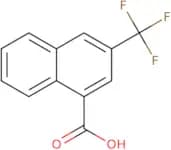
CAS:<p>Versatile small molecule scaffold</p>Formula:C8H7BrN2Purezza:Min. 95%Peso molecolare:211.06 g/mol3-(Trifluoromethyl)naphthalene-1-carboxylic acid
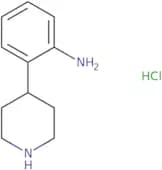
CAS:<p>Versatile small molecule scaffold</p>Formula:C12H7F3O2Purezza:Min. 95%Peso molecolare:240.18 g/mol2-(Piperidin-4-yl)aniline
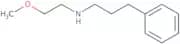
CAS:<p>Versatile small molecule scaffold</p>Formula:C11H17ClN2Purezza:Min. 95%Peso molecolare:212.72 g/mol(2-Methoxyethyl)(3-phenylpropyl)amine
CAS:<p>Versatile small molecule scaffold</p>Formula:C12H19NOPurezza:Min. 95%Peso molecolare:193.28 g/molN-Isopropyl carvedilol
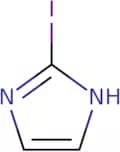
CAS:<p>Please enquire for more information about N-Isopropyl carvedilol including the price, delivery time and more detailed product information at the technical inquiry form on this page</p>Formula:C27H32N2O4Purezza:Min. 95%Peso molecolare:448.56 g/mol2-Iodo-1H-imidazole
CAS:<p>2-Iodo-1H-imidazole is an asymmetric molecule that is synthesized by a Suzuki coupling reaction between malonic acid and tautomers of 2-iodo-1H-imidazole. This molecule inhibits the activity of inhibitor molecules, such as nitrogen atoms, which are used in pesticide production. It also has pesticidal activity and can be used to treat cancer or autoimmune diseases. 2-Iodo-1H-imidazole is metabolized through a number of metabolic transformations, including hydrolysis by esterases or glucuronidases, oxidation by cytochrome P450 enzymes, reduction by glutathione reductase, or conjugation with glucuronic acid.</p>Formula:C3H3IN2Purezza:Min. 95%Colore e forma:White PowderPeso molecolare:193.97 g/mol6-Hydroxy-5-nitronicotinic acid
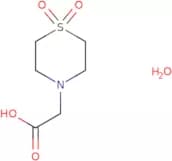
CAS:<p>Please enquire for more information about 6-Hydroxy-5-nitronicotinic acid including the price, delivery time and more detailed product information at the technical inquiry form on this page</p>Formula:C6H4N2O5Purezza:Min. 95%Peso molecolare:184.11 g/mol(1,1-Dioxidothiomorpholin-4-yl)acetic acid
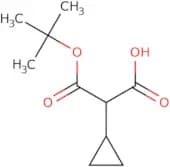
CAS:<p>Versatile small molecule scaffold</p>Formula:C6H11NO4SPurezza:Min. 95%Peso molecolare:193.22 g/mol3-(tert-Butoxy)-2-cyclopropyl-3-oxopropanoic acid
CAS:<p>Versatile small molecule scaffold</p>Formula:C10H16O4Purezza:Min. 95%Peso molecolare:200.23 g/mol2,3-Dimethyl-4-furo[3,2-b]pyrrole-5-carbohydrazide
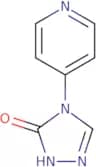
CAS:<p>Versatile small molecule scaffold</p>Formula:C9H11N3O2Purezza:Min. 95%Peso molecolare:193.2 g/mol4-(Pyridin-4-yl)-4,5-dihydro-1H-1,2,4-triazol-5-one
CAS:<p>Versatile small molecule scaffold</p>Formula:C7H6N4OPurezza:Min. 95%Peso molecolare:162.15 g/mol1-(4-Methoxyphenyl)-2,3-dihydro-1H-imidazol-2-one
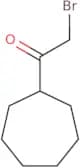
CAS:<p>Versatile small molecule scaffold</p>Formula:C10H10N2O2Purezza:Min. 95%Peso molecolare:190.2 g/mol2-Bromo-1-cycloheptylethan-1-one
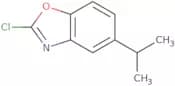
CAS:<p>2-Bromo-1-cycloheptylethan-1-one is a reagent that has been used to synthesize dialkylamino cyclic compounds. This compound is prepared in high yields by the reaction of cyclohexanone with bromine and ethyl nitrite. 2-Bromo-1-cycloheptylethan-1-one has been used as a bronchodilator for chronic bronchitis and asthma, as well as for nitrobenzene reduction to aniline. This compound also has been shown to be an effective bronchial smooth muscle relaxant, with the potential for use in bronchial asthma. The structural formula can be seen below:</p>Formula:C9H15BrOPurezza:Min. 95%Peso molecolare:219.12 g/mol2-Chloro-5-(propan-2-yl)-1,3-benzoxazole
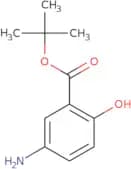
CAS:<p>Versatile small molecule scaffold</p>Formula:C10H10ClNOPurezza:Min. 95%Peso molecolare:195.64 g/moltert-Butyl 5-amino-2-hydroxybenzoate
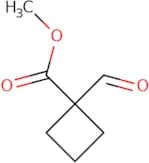
CAS:<p>Versatile small molecule scaffold</p>Formula:C11H15NO3Purezza:Min. 95%Peso molecolare:209.24 g/molMethyl 1-formylcyclobutane-1-carboxylate
CAS:<p>Versatile small molecule scaffold</p>Formula:C7H10O3Purezza:Min. 95%Peso molecolare:142.15 g/mol(2E)-3-[4-(Chlorosulfonyl)phenyl]prop-2-enoic acid
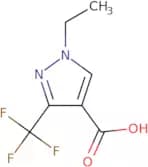
CAS:<p>(2E)-3-[4-(Chlorosulfonyl)phenyl]prop-2-enoic acid is a chemical compound that has been shown to be useful in the synthesis of stereoselectively propanoic acid. The resulting propanoic acid can then be used in the synthesis of amines, which are often precursors to pharmaceuticals. This process was found to be more efficient when done using microwave irradiation.</p>Formula:C9H7ClO4SPurezza:Min. 95%Peso molecolare:246.67 g/mol1-Ethyl-3-(trifluoromethyl)-1H-pyrazole-4-carboxylic acid
CAS:<p>Versatile small molecule scaffold</p>Formula:C7H7F3N2O2Purezza:Min. 95%Peso molecolare:208.14 g/molN-Cyclobutylaniline
CAS:<p>N-Cyclobutylaniline is an organic compound that contains a hydroxyl group, a hydroxy group, and an alkylthio group. It is mainly used as an intermediate for the production of dyes and pharmaceuticals. N-Cyclobutylaniline has been shown to inhibit viral polymerase activity in vitro and in vivo. This inhibition is due to its ability to react with the chlorine atom on the viral DNA polymerase, which results in termination of the transfer reaction.<br>N-Cyclobutylaniline also inhibits the ns5b polymerase, which is responsible for transcription of viral RNA. N-Cyclobutylaniline binds to the carboxylic acid site on the enzyme and prevents it from functioning properly.</p>Formula:C10H13NPurezza:Min. 95%Peso molecolare:147.22 g/mol1-[(tert-Butoxy)carbonyl]-4,4-dimethylpiperidine-2-carboxylic acid
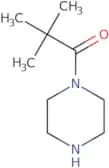
CAS:<p>Versatile small molecule scaffold</p>Formula:C13H23NO4Purezza:Min. 95%Peso molecolare:257.33 g/mol1-Pivaloyl-piperazine
CAS:<p>Versatile small molecule scaffold</p>Formula:C9H18N2OPurezza:Min. 95%Peso molecolare:170.26 g/mol5-(1,3-Dioxolan-2-yl)thiophene-3-carbaldehyde
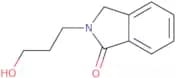
CAS:<p>Versatile small molecule scaffold</p>Formula:C8H8O3SPurezza:Min. 95%Peso molecolare:184.21 g/mol2-(3-Hydroxypropyl)isoindolin-1-one
CAS:<p>Versatile small molecule scaffold</p>Formula:C11H13NO2Purezza:Min. 95%Peso molecolare:191.23 g/mol3-(Piperidin-4-yl)propan-1-ol hydrochloride
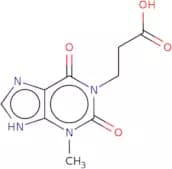
CAS:<p>Versatile small molecule scaffold</p>Formula:C8H18ClNOPurezza:Min. 95%Peso molecolare:179.69 g/mol3-(3-Methyl-2,6-dioxo-2,3,6,9-tetrahydro-1H-purin-1-yl)propanoic acid
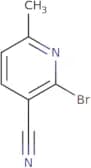
CAS:Prodotto controllato<p>Versatile small molecule scaffold</p>Formula:C9H10N4O4Purezza:Min. 95%Peso molecolare:238.2 g/mol2-Bromo-6-methylnicotinonitrile
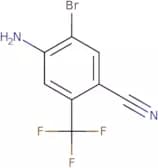
CAS:<p>2-Bromo-6-methylnicotinonitrile is a reactive heterocyclic compound that has been used as a palladium catalyst. It undergoes substitution reactions with halides and polyhalogenated compounds. The yield of this reaction depends on the substituents and functional groups present. 2-Bromo-6-methylnicotinonitrile can also be used to form alkynes, alkynes, and heterocycles.<br>2-Bromo-6-methylnicotinonitrile is an alkyne that has two functional groups: a nitrile group and a bromine group. It reacts with nucleophiles such as ammonia or amines to form the corresponding amide or amine in good yields.</p>Formula:C7H5BrN2Purezza:Min. 95%Peso molecolare:197.03 g/mol4-Amino-5-bromo-2-(trifluoromethyl)benzonitrile
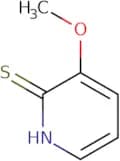
CAS:<p>Versatile small molecule scaffold</p>Formula:C8H4BrF3N2Purezza:Min. 95%Peso molecolare:265.3 g/mol3-Methoxypyridine-2-thiol
CAS:<p>Versatile small molecule scaffold</p>Formula:C6H7NOSPurezza:Min. 95%Peso molecolare:141.19 g/mol1,2-Benzoxazol-3-ylmethanamine
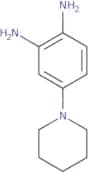
CAS:<p>Versatile small molecule scaffold</p>Formula:C8H8N2OPurezza:Min. 95%Peso molecolare:148.16 g/mol4-(Piperidin-1-yl)benzene-1,2-diamine
CAS:<p>Versatile small molecule scaffold</p>Formula:C11H17N3Purezza:Min. 95%Peso molecolare:191.27 g/mol7-Chloro-5-methyl-2,3-dihydro-1H-indole-2,3-dione
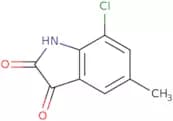
CAS:<p>Versatile small molecule scaffold</p>Formula:C9H6ClNO2Purezza:Min. 95%Peso molecolare:195.6 g/mol2-{[(tert-Butoxy)carbonyl]amino}-2-(2,3-dihydro-1H-inden-2-yl)acetic acid
CAS:<p>Versatile small molecule scaffold</p>Formula:C16H21NO4Purezza:Min. 95%Peso molecolare:291.34 g/molMethyl 2-amino-2-(2,3-dihydro-1H-inden-2-yl)acetate hydrochloride
CAS:<p>Versatile small molecule scaffold</p>Formula:C12H16ClNO2Purezza:Min. 95%Peso molecolare:241.71 g/mol2-(3-Nitrophenyl)ethane-1-thiol
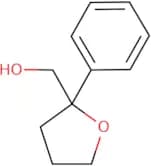
CAS:<p>Versatile small molecule scaffold</p>Formula:C8H9NO2SPurezza:Min. 95%Peso molecolare:183.2 g/mol(2-Phenyloxolan-2-yl)methanol
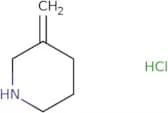
CAS:<p>Versatile small molecule scaffold</p>Formula:C11H14O2Purezza:Min. 95%Peso molecolare:178.23 g/mol3-Methylidenepiperidine hydrochloride
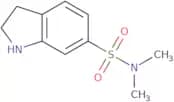
CAS:<p>Versatile small molecule scaffold</p>Formula:C6H12ClNPurezza:Min. 95%Peso molecolare:133.62 g/molN,N-Dimethyl-2,3-dihydro-1H-indole-6-sulfonamide
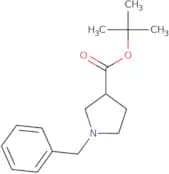
CAS:<p>Versatile small molecule scaffold</p>Formula:C10H14N2O2SPurezza:Min. 95%Peso molecolare:226.3 g/moltert-Butyl 1-benzylpyrrolidine-3-carboxylate
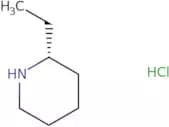
CAS:<p>Versatile small molecule scaffold</p>Formula:C16H23NO2Purezza:Min. 95%Peso molecolare:261.36 g/mol(R)-2-Ethylpiperidine hydrochloride
CAS:<p>Versatile small molecule scaffold</p>Formula:C7H15N·HClPurezza:Min. 95%Peso molecolare:149.66 g/moltert-Butyl N-[(tert-butoxy)carbonyl]-N-(2-oxoethyl)carbamate
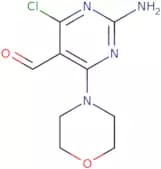
CAS:<p>Versatile small molecule scaffold</p>Formula:C12H21NO5Purezza:Min. 95%Peso molecolare:259.3 g/mol2-Amino-4-chloro-6-(morpholin-4-yl)pyrimidine-5-carbaldehyde
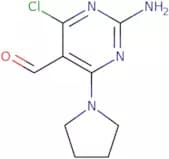
CAS:<p>Versatile small molecule scaffold</p>Formula:C9H11ClN4O2Purezza:Min. 95%Peso molecolare:242.66 g/mol2-Amino-4-chloro-6-(pyrrolidin-1-yl)pyrimidine-5-carbaldehyde
CAS:<p>Versatile small molecule scaffold</p>Formula:C9H11ClN4OPurezza:Min. 95%Peso molecolare:226.66 g/mol2-[4-(Benzyloxy)phenyl]propane-1,3-diol
CAS:<p>Versatile small molecule scaffold</p>Formula:C16H18O3Purezza:Min. 95%Peso molecolare:258.3 g/mol2-[(4-Fluorophenyl)sulfanyl]propanoic acid
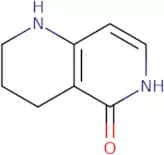
CAS:<p>Versatile small molecule scaffold</p>Formula:C9H9FO2SPurezza:Min. 95%Peso molecolare:200.23 g/mol1,2,3,4-Tetrahydro-1,6-naphthyridin-5-ol
CAS:<p>Versatile small molecule scaffold</p>Formula:C8H10N2OPurezza:Min. 95%Peso molecolare:150.18 g/mol

![7-Amino-2-methylpyrazolo[1,5-a]pyrimidine-6-carbonitrile](/_next/image/?url=https%3A%2Fstatic.cymitquimica.com%2Fproducts%2F3D%2Fthumb-webp%2FFKA38959.webp&w=3840&q=75)
![6-Bromo-4-methyl-1H-benzo[d]imidazole](/_next/image/?url=https%3A%2Fstatic.cymitquimica.com%2Fproducts%2F3D%2Fthumb-webp%2FFKA06410.webp&w=3840&q=75)

![2,3-Dimethyl-4-furo[3,2-b]pyrrole-5-carbohydrazide](/_next/image/?url=https%3A%2Fstatic.cymitquimica.com%2Fproducts%2F3D%2Fthumb-webp%2FFGA44545.webp&w=3840&q=75)
![(2E)-3-[4-(Chlorosulfonyl)phenyl]prop-2-enoic acid](/_next/image/?url=https%3A%2Fstatic.cymitquimica.com%2Fproducts%2F3D%2Fthumb-webp%2FFGA37873.webp&w=3840&q=75)

![1-[(tert-Butoxy)carbonyl]-4,4-dimethylpiperidine-2-carboxylic acid](/_next/image/?url=https%3A%2Fstatic.cymitquimica.com%2Fproducts%2F3D%2Fthumb-webp%2FFGA30206.webp&w=3840&q=75)



![2-{[(tert-Butoxy)carbonyl]amino}-2-(2,3-dihydro-1H-inden-2-yl)acetic acid](/_next/image/?url=https%3A%2Fstatic.cymitquimica.com%2Fproducts%2F3D%2Fthumb-webp%2FFGA17273.webp&w=3840&q=75)

![tert-Butyl N-[(tert-butoxy)carbonyl]-N-(2-oxoethyl)carbamate](/_next/image/?url=https%3A%2Fstatic.cymitquimica.com%2Fproducts%2F3D%2Fthumb-webp%2FFGA08906.webp&w=3840&q=75)
![2-[4-(Benzyloxy)phenyl]propane-1,3-diol](/_next/image/?url=https%3A%2Fstatic.cymitquimica.com%2Fproducts%2F3D%2Fthumb-webp%2FFGA06229.webp&w=3840&q=75)
![2-[(4-Fluorophenyl)sulfanyl]propanoic acid](/_next/image/?url=https%3A%2Fstatic.cymitquimica.com%2Fproducts%2F3D%2Fthumb-webp%2FFGA05910.webp&w=3840&q=75)