Building Blocks
Questa sezione contiene prodotti fondamentali per la sintesi di composti organici e biologici. Building blocks sono i materiali di partenza essenziali utilizzati per costruire molecole complesse attraverso varie reazioni chimiche. Svolgono un ruolo critico nella scoperta di farmaci, nella scienza dei materiali e nella ricerca chimica. Presso CymitQuimica, offriamo una gamma diversificata di building blocks di alta qualità per supportare le tue ricerche innovative e progetti industriali, assicurandoti di avere i componenti essenziali per una sintesi di successo.
Sottocategorie di "Building Blocks"
- Acidi boronici e derivati dell'acido boronico(5.756 prodotti)
- Building Blocks Chirali(1.242 prodotti)
- Building Blocks Idrocarburici(6.093 prodotti)
- Building Blocks organici(60.529 prodotti)
Trovati 195534 prodotti di "Building Blocks"
Ordinare per
Purezza (%)
0
100
|
0
|
50
|
90
|
95
|
100
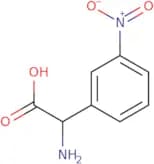
2-amino-2-(3-nitrophenyl)acetic acid
CAS:<p>Versatile small molecule scaffold</p>Formula:C8H8N2O4Purezza:Min. 95%Peso molecolare:196.16 g/mol4-Bromo-2-nitro-1H-pyrrole
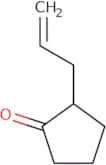
CAS:<p>Versatile small molecule scaffold</p>Formula:C4H3BrN2O2Purezza:Min. 95%Peso molecolare:190.98 g/mol2-(Prop-2-en-1-yl)cyclopentan-1-one
CAS:<p>2-(Prop-2-en-1-yl)cyclopentan-1-one (propargyl alcohol) is a heterocyclic compound that is the simplest member of the cyclopentanones. It has been shown to be an effective inhibitor of human viruses such as Hepatitis C virus, HIV, and influenza A virus. The antiviral activity of propargyl alcohol is attributed to its ability to inhibit viral DNA polymerase and RNA polymerase in the infected cells. Propargyl alcohol also inhibits glycol dimethyl ether, which is a cofactor for some cellular enzymes involved in lipid metabolism. This compound can also act as a substrate for allylation reactions with other compounds such as 1,3 butadiene or ethylene.</p>Formula:C8H12OPurezza:Min. 95%Peso molecolare:124.18 g/mol3-{[(4-Chlorophenyl)sulfanyl]methyl}benzoic acid
CAS:<p>Versatile small molecule scaffold</p>Formula:C14H11ClO2SPurezza:Min. 95%Peso molecolare:278.8 g/mol3-(2-Chlorophenoxymethyl)benzoic acid
CAS:<p>Versatile small molecule scaffold</p>Formula:C14H11ClO3Purezza:Min. 95%Peso molecolare:262.69 g/mol2-Bromo-1-[4-(2-methylpropyl)phenyl]ethan-1-one
CAS:<p>Versatile small molecule scaffold</p>Formula:C12H15BrOPurezza:Min. 95%Peso molecolare:255.15 g/mol2-Bromo-1-(3-chloro-4-methoxyphenyl)ethan-1-one
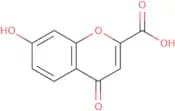
CAS:<p>Versatile small molecule scaffold</p>Formula:C9H8BrClO2Purezza:Min. 95%Peso molecolare:263.51 g/mol7-Hydroxy-4-oxo-4H-chromene-2-carboxylic acid
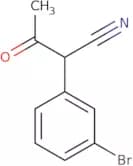
CAS:<p>7-Hydroxy-4-oxo-4H-chromene-2-carboxylic acid is a molecule that is found in the human body. It has been shown to have cationic polymer activity and to inhibit the growth of bacteria by binding to the hydroxyl group of DNA. 7-Hydroxy-4-oxo-4H-chromene-2-carboxylic acid has potent inhibitory activity against Gram positive and Gram negative bacteria, including Mycobacterium tuberculosis and Staphylococcus aureus. This compound can be used as an antibiotic for bacterial infections due to its ability to bind with high concentrations of the hydroxyl group on DNA.</p>Formula:C10H6O5Purezza:Min. 95%Peso molecolare:206.15 g/mol2-(3-Bromophenyl)-3-oxobutanenitrile
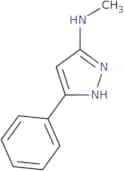
CAS:<p>Versatile small molecule scaffold</p>Formula:C10H8BrNOPurezza:Min. 95%Peso molecolare:238.08 g/molN-Methyl-5-phenyl-1H-pyrazol-3-amine
CAS:<p>Versatile small molecule scaffold</p>Formula:C10H11N3Purezza:Min. 95%Peso molecolare:173.21 g/mol1,3-Dichloropentane
CAS:<p>1,3-Dichloropentane is a molecule that consists of chlorine and hydrogen atoms. It has been studied extensively in kinetic isotope effect experiments for its transport properties. The kinetic isotope effect is the change in reaction rate due to the presence of an atom with an atomic mass different from the reactant or product. 1,3-Dichloropentane has also been studied for its role in cell membrane transport. This molecule is not reactive, but it does have a reactive isotope effect on cells when it reacts with chlorine atoms.</p>Formula:C5H10Cl2Purezza:Min. 95%Peso molecolare:141.04 g/mol1-Benzylpyrrolidine-2,4-dione
CAS:<p>Versatile small molecule scaffold</p>Formula:C11H11NO2Purezza:Min. 95%Peso molecolare:189.21 g/mol1-Bromo-4-(trifluoromethyl)cyclohexane
CAS:<p>Versatile small molecule scaffold</p>Formula:C7H10BrF3Purezza:Min. 95%Peso molecolare:231.05 g/mol4-Chloro-6-methyl-1H-pyrazolo[3,4-d]pyrimidine
CAS:<p>Versatile small molecule scaffold</p>Formula:C6H5ClN4Purezza:Min. 95%Peso molecolare:168.58 g/mol6-Methyl-1H-pyrazolo[3,4-d]pyrimidin-4(7H)-one
CAS:<p>Versatile small molecule scaffold</p>Formula:C6H6N4OPurezza:Min. 95%Peso molecolare:150.14 g/molEthyl 3-bromo-2-oxocyclohexanecarboxylate
CAS:<p>3-Bromo-2-oxocyclohexanecarboxylate is a diterpene alkaloid that has been prepared by the Friedel-Crafts reaction of ethyl bromoacetate and cyclohexane. The product is an intramolecular arylation, which means that the two carbons in the ring are bonded to each other. This type of reaction usually produces a group specific functional group, such as an acid chloride or ester, but in this case it produces an alcohol. 3-Bromo-2-oxocyclohexanecarboxylate is used as a precursor for silver salts which are used to make photographic film.</p>Formula:C9H13BrO3Purezza:Min. 95%Peso molecolare:249.1 g/mol2-[(3-Phenylpropyl)sulfanyl]acetic acid
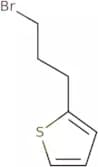
CAS:<p>Versatile small molecule scaffold</p>Formula:C11H14O2SPurezza:Min. 95%Peso molecolare:210.29 g/mol2-(3-Bromopropyl)-thiophene
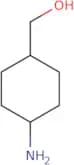
CAS:<p>Versatile small molecule scaffold</p>Formula:C7H9BrSPurezza:Min. 95%Peso molecolare:205.12 g/molCyclohexanemethanol, 4-amino-, cis-
CAS:<p>Versatile small molecule scaffold</p>Formula:C7H15NOPurezza:Min. 95%Peso molecolare:129.2 g/mol2-(4-Chlorobenzoyl)-1-methyl-1H-imidazole
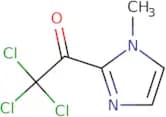
CAS:Prodotto controllato<p>Versatile small molecule scaffold</p>Formula:C11H9ClN2OPurezza:Min. 95%Peso molecolare:220.65 g/mol1-Methyl-2-(trichloroacetyl)imidazole
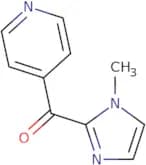
CAS:<p>1-Methyl-2-(trichloroacetyl)imidazole is a small molecule that is synthesized for the treatment of cancer. It interacts with dna and inhibits its function by binding to the minor groove in DNA, which causes conformational changes. 1-Methyl-2-(trichloroacetyl)imidazole has been shown to be effective against cancer cells that are resistant to other anticancer compounds. The molecular target for this compound is not fully understood, but it may work by inhibiting DNA synthesis or by inducing apoptosis. 1-Methyl-2-(trichloroacetyl)imidazole has shown some activity against leukemia and colon cancer cell lines in vitro and in vivo.</p>Formula:C6H5Cl3N2OPurezza:Min. 95%Peso molecolare:227.48 g/mol4-(1-Methyl-1H-imidazole-2-carbonyl)pyridine
CAS:<p>Versatile small molecule scaffold</p>Formula:C10H9N3OPurezza:Min. 95%Peso molecolare:187.2 g/mol2-(2-Chlorobenzoyl)-1-methyl-1H-imidazole
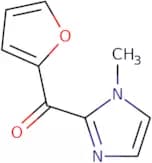
CAS:Prodotto controllato<p>Versatile small molecule scaffold</p>Formula:C11H9ClN2OPurezza:Min. 95%Peso molecolare:220.65 g/mol2-(Furan-2-carbonyl)-1-methyl-1H-imidazole
CAS:<p>Versatile small molecule scaffold</p>Formula:C9H8N2O2Purezza:Min. 95%Peso molecolare:176.17 g/mol3-[3-(4-Bromo-phenyl)-[1,2,4]oxadiazol-5-yl]-propionic acid
CAS:<p>Versatile small molecule scaffold</p>Formula:C11H9BrN2O3Purezza:Min. 95%Peso molecolare:297.1 g/mol4-Bromo-3-methylthiophene-2-carboxaldehyde
CAS:<p>Versatile small molecule scaffold</p>Formula:C6H5BrOSPurezza:Min. 95%Peso molecolare:205.07 g/mol4,5-Dibromo-3-methylthiophene-2-carbaldehyde
CAS:<p>Versatile small molecule scaffold</p>Formula:C6H4Br2OSPurezza:Min. 95%Peso molecolare:283.97 g/mol1-(Pyridin-2-yl)-2-(pyridin-4-yl)ethan-1-one
CAS:<p>Versatile small molecule scaffold</p>Formula:C12H10N2OPurezza:Min. 95%Peso molecolare:198.22 g/mol1-(3-Pyridyl)-2-thiourea
CAS:<p>1-(3-Pyridyl)-2-thiourea is an organic compound that belongs to the thiourea functional group. It is a white crystalline solid that has orthorhombic symmetry. 1-(3-Pyridyl)-2-thiourea has a protonated nitrogen atom on its pyridine ring, which gives it a positive charge. This functional group interacts with other molecules due to the presence of lone electron pairs on the nitrogen atom and the carbonyl oxygen atom. Crystal x-ray diffraction studies have shown that 1-(3-Pyridyl)-2-thiourea crystallizes in the group p2 space group and is oriented along [001]. The ligand coordinates are nitrate and solvent.</p>Formula:C6H7N3SPurezza:Min. 95%Peso molecolare:153.2 g/mol(Quinolin-3-yl)thiourea
CAS:<p>Versatile small molecule scaffold</p>Formula:C10H9N3SPurezza:Min. 95%Peso molecolare:203.27 g/mol2-(2-methyl-1H-imidazol-1-yl)acetic acid hydrochloride
CAS:<p>Versatile small molecule scaffold</p>Formula:C6H9ClN2O2Purezza:Min. 95%Peso molecolare:176.6 g/mol3-(5,6-Dimethyl-1H-1,3-benzodiazol-1-yl)propanoic acid hydrochloride
CAS:<p>Versatile small molecule scaffold</p>Formula:C12H15ClN2O2Purezza:Min. 95%Peso molecolare:254.71 g/mol2-[(Carboxymethyl)dimethylazaniumyl]acetate
CAS:<p>Versatile small molecule scaffold</p>Formula:C6H11NO4Purezza:Min. 95%Peso molecolare:161.16 g/mol3,6-Bis(3,5-dimethyl-1H-pyrazol-1-yl)-1,2,4,5-tetrazine
CAS:<p>3,6-Bis(3,5-dimethyl-1H-pyrazol-1-yl)-1,2,4,5-tetrazine is a group P2 molecule that diffracts well with x-rays. The compound has a molecular weight of 270.27 g/mol and the chemical formula is C12H11N5. 3,6-Bis(3,5-dimethyl-1H-pyrazol-1-yl)-1,2,4,5-tetrazine is soluble in acetonitrile but insoluble in water. The compound is stable at room temperature but will evaporate when heated to higher temperatures. 3,6bis(3,5dimethyl 1Hpyrazol 1yl) 1 2 4 5 tetrazine can be found in biochemical reactions as a nucleophile or can act as an inhibitor to enzymes such as cytochrome c oxidase or ATP synthase</p>Formula:C12H14N8Purezza:Min. 95%Peso molecolare:270.29 g/mol6-Chloro-4-phenylquinolin-2(1H)-one
CAS:<p>Dimethyl sulfate (DMS) is a highly toxic industrial chemical that is used in the production of other chemicals and as an analytical reagent. DMS is mainly used in the production of phenols, alkyl sulfates, and other organic compounds. Dimethyl sulfate is also used as a laboratory reagent for the synthesis of various organic compounds.</p>Formula:C15H10NOClPurezza:Min. 95%Peso molecolare:255.69 g/mol4-[(6-Chloropyridazin-3-yl)oxy]aniline
CAS:<p>Versatile small molecule scaffold</p>Formula:C10H8ClN3OPurezza:Min. 95%Peso molecolare:221.64 g/molrac-(2R,3S)-3-Amino-2-phenylbutan-2-ol hydrochloride
CAS:<p>Versatile small molecule scaffold</p>Formula:C10H16ClNOPurezza:Min. 95%Peso molecolare:201.69 g/mol1-(4-Methoxyphenyl)-1H-pyrrole-2-carbaldehyde
CAS:<p>Versatile small molecule scaffold</p>Formula:C12H11NO2Purezza:Min. 95%Peso molecolare:201.23 g/molCyanogen bromide
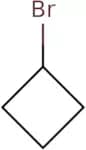
CAS:<p>Used as a condensing agent during chemical ligation of oligodeoxyribonucleotides, for peptide cleavage and in protein immobilization procedures. Other applications include inorganic synthesis to prepare cyanamides, dicyanamides, cyanuric bromide, guanidines and hydroxylguanidines.</p>Formula:CNBrPurezza:Min. 95%Colore e forma:PowderPeso molecolare:105.92 g/molCyclobutyl bromide
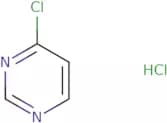
CAS:<p>Cyclobutyl bromide is a cyclopentyl compound that has an hydroxyl group. It is a potent inhibitor of the CB2 receptor, which is primarily expressed on cells of the immune system. Cyclobutyl bromide has been shown to inhibit the uptake of uv light and also has anti-inflammatory properties. Studies have confirmed that this drug inhibits the production of cytokines and chemokines in chronic bronchitis patients, as well as other inflammatory diseases such as rheumatoid arthritis.</p>Formula:C4H7BrPurezza:Min. 95%Colore e forma:Clear LiquidPeso molecolare:135 g/mol4-Chloropyrimidine HCl
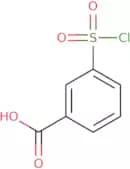
CAS:<p>4-Chloropyrimidine HCl is a covalent molecule that contains 4-chloropyridine and hydrogen chloride. It exists as two tautomers, the enol form and the keto form. The protonation of the proton on nitrogen will determine which tautomer it will exist in. When there is no proton present, the molecule will exist in its enol form. Resonance is also an important factor with this molecule because it can have a variety of resonance forms. Resonance spectrometry has been used to identify 4-chloropyrimidine HCl because it produces a specific resonance pattern when exposed to magnetic fields. 4-Chloropyridinium trifluoroacetate is another name for this compound that is formed when the chlorine atom bonds with trifluoroacetic acid. This chemical does not have any interactions with azide but can react with tetrazole to produce a stable compound, which can be easily</p>Formula:C4H3ClN2·HClPurezza:Min. 95%Colore e forma:PowderPeso molecolare:150.99 g/mol3-(Chlorosulfonyl)benzoic acid
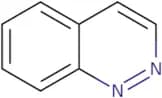
CAS:<p>3-(Chlorosulfonyl)benzoic acid is a synthetic compound that inhibits histone lysine methylation. It has been shown to protect against neuronal injury and cognitive impairment. 3-(Chlorosulfonyl)benzoic acid also has an inhibitory effect on the activation of Sirt2, which is an enzyme involved in cellular processes such as cancer, diabetes, inflammation, and aging. 3-(Chlorosulfonyl)benzoic acid has low potency and is not very soluble in water. It can be used to treat metabolic disorders by increasing the amount of insulin released from the pancreas and lowering blood glucose levels.</p>Formula:C7H5ClO4SPurezza:Min. 95%Peso molecolare:220.63 g/molCinnoline
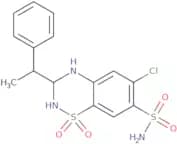
CAS:<p>Cinnoline is a chemical compound that is structurally similar to phenol, containing a hydroxyl group, two nitrogen atoms and a cyclic structure. Cinnoline has been shown to have anti-inflammatory activity in rats with adjuvant-induced arthritis. The mechanism of the anti-inflammatory effect of cinnoline is not fully understood, but it may be due to its stability and ability to bind to biological molecules or its conformational properties. Cinnoline does not react with nitric acid, making it a good candidate for use in infectious diseases such as tuberculosis. It has also been shown to be stable in human serum and has low pharmacokinetic properties. The fluorescence intensity of cinnoline was found to increase when exposed to an electrochemical potential and can be used as a probe molecule for pharmacokinetics studies.</p>Formula:C8H6N2Purezza:Min. 95%Colore e forma:PowderPeso molecolare:130.15 g/mol6-Chloro-3,4-dihydro-3-(a-methylbenzyl)-2H-1,2,4-benzothiadiazine-7-sulfonamide 1,1-dioxide
CAS:<p>6-Chloro-3,4-dihydro-3-(a-methylbenzyl)-2H-1,2,4-benzothiadiazine-7-sulfonamide 1,1-dioxide is an active metabolite of the drug benzbromarone. It is primarily administered as a diuretic to treat high blood pressure and congestive heart failure. The pharmacodynamics of this drug are related to its ability to inhibit the activity of sodium channels in vascular smooth muscle cells and thereby reduce the force of contraction and relax the vessel wall. 6CBDMTD has shown an increase in glomerular filtration rate in patients with congestive heart failure. This drug also decreases the plasma concentration of fatty acids by inhibiting the formation of lipoprotein particles. 6CBDMTD has been shown to be effective at lowering diastolic and systolic blood pressure levels in patients with hypertension.</p>Formula:C15H16ClN3O4S2Purezza:Min. 95%Peso molecolare:401.89 g/molChlorobutanol
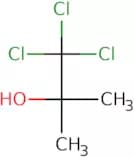
CAS:<p>Chlorobutanol is an antimicrobial agent that is used in the preservation of pharmaceuticals, cosmetics, and other products. It has been shown to be effective against a variety of bacterial and fungal organisms. Chlorobutanol is also used as a preservative in topical ophthalmic preparations. In addition, chlorobutanol has been found to be a potent inhibitor of histone deacetylase (HDAC) activity, which may be due to its ability to bind to the active site of HDACs. This binding prevents acetylation of lysine residues on histones, thereby preventing transcriptional activation.</p>Formula:C4H7OCl3Purezza:Min. 95%Colore e forma:White To Off-White SolidPeso molecolare:177.46 g/mol4-Chloro-2-aminophenol
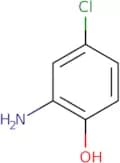
CAS:<p>4-Chloro-2-aminophenol is a chemical compound that can be found in nature or synthesized. It has antibacterial properties and is used as an antimicrobial agent. 4-Chloro-2-aminophenol inhibits the growth of bacteria by inhibiting nitrogenase enzyme activity, which is required for the production of amino acids and nucleic acids. This compound also induces cytotoxicity and significant cell death in colorectal adenocarcinoma cells. 4-Chloro-2-aminophenol is a weak acid that reacts with hydrochloric acid to form a diazonium salt, which reacts with benzene to form an intramolecular hydrogen bond. The final product of this reaction is a solid phase microextraction (SPME) sorbent that can be used to extract analytes from liquid samples.</p>Formula:C6H6ClNOPurezza:Min. 95%Peso molecolare:143.57 g/molCyclopropyl isocyanate
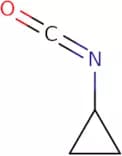
CAS:<p>Cyclopropyl isocyanate (CPC) is an aliphatic hydrocarbon that is structurally similar to butane. Cyclopropyl isocyanate has a variety of functional groups including a hydroxy group, a serine protease, and an amino group. CPC has been shown to be a potent activator of the enzyme histone h3 lysine 4 trimethyltranferase, which is involved in the regulation of inflammatory diseases. The synthesis of cyclopropyl isocyanate can be done through the reaction with diazomethane and zinc chloride or by treating 1-chlorocyclohexene with nitrous acid.</p>Formula:C4H5NOPurezza:Min. 95%Colore e forma:Clear LiquidPeso molecolare:83.09 g/mol5-Chloro-4-methylpyrimidine
CAS:<p>Please enquire for more information about 5-Chloro-4-methylpyrimidine including the price, delivery time and more detailed product information at the technical inquiry form on this page</p>Formula:C5H5ClN2Purezza:Min. 95%Peso molecolare:128.56 g/mol2-Chloro-10-[3-[[3-(dimethylamino)propyl]methylamino]propyl]phenothiazine dihydrochloride
CAS:<p>Please enquire for more information about 2-Chloro-10-[3-[[3-(dimethylamino)propyl]methylamino]propyl]phenothiazine dihydrochloride including the price, delivery time and more detailed product information at the technical inquiry form on this page</p>Formula:C21H28ClN3S•(HCl)2Purezza:Min. 95%Peso molecolare:462.91 g/molCinidon ethyl
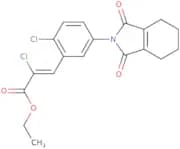
CAS:<p>Please enquire for more information about Cinidon ethyl including the price, delivery time and more detailed product information at the technical inquiry form on this page</p>Formula:C19H17Cl2NO4Purezza:Min. 95%Colore e forma:PowderPeso molecolare:394.2 g/mol


![3-{[(4-Chlorophenyl)sulfanyl]methyl}benzoic acid](/_next/image/?url=https%3A%2Fstatic.cymitquimica.com%2Fproducts%2F3D%2Fthumb-webp%2FFBA08241.webp&w=3840&q=75)

![2-Bromo-1-[4-(2-methylpropyl)phenyl]ethan-1-one](/_next/image/?url=https%3A%2Fstatic.cymitquimica.com%2Fproducts%2F3D%2Fthumb-webp%2FFBA09548.webp&w=3840&q=75)



![4-Chloro-6-methyl-1H-pyrazolo[3,4-d]pyrimidine](/_next/image/?url=https%3A%2Fstatic.cymitquimica.com%2Fproducts%2F3D%2Fthumb-webp%2FFBA12953.webp&w=3840&q=75)
![6-Methyl-1H-pyrazolo[3,4-d]pyrimidin-4(7H)-one](/_next/image/?url=https%3A%2Fstatic.cymitquimica.com%2Fproducts%2F3D%2Fthumb-webp%2FFBA12957.webp&w=3840&q=75)

![2-[(3-Phenylpropyl)sulfanyl]acetic acid](/_next/image/?url=https%3A%2Fstatic.cymitquimica.com%2Fproducts%2F3D%2Fthumb-webp%2FFBA13408.webp&w=3840&q=75)


![3-[3-(4-Bromo-phenyl)-[1,2,4]oxadiazol-5-yl]-propionic acid](/_next/image/?url=https%3A%2Fstatic.cymitquimica.com%2Fproducts%2F3D%2Fthumb-webp%2FFBA14994.webp&w=3840&q=75)


![2-[(Carboxymethyl)dimethylazaniumyl]acetate](/_next/image/?url=https%3A%2Fstatic.cymitquimica.com%2Fproducts%2F3D%2Fthumb-webp%2FFBA16390.webp&w=3840&q=75)


![4-[(6-Chloropyridazin-3-yl)oxy]aniline](/_next/image/?url=https%3A%2Fstatic.cymitquimica.com%2Fproducts%2F3D%2Fthumb-webp%2FFBA18497.webp&w=3840&q=75)



![2-Chloro-10-[3-[[3-(dimethylamino)propyl]methylamino]propyl]phenothiazine dihydrochloride](/_next/image/?url=https%3A%2Fstatic.cymitquimica.com%2Fproducts%2F3D%2Fthumb-webp%2FFC183794.webp&w=3840&q=75)