Building Blocks
Questa sezione contiene prodotti fondamentali per la sintesi di composti organici e biologici. Building blocks sono i materiali di partenza essenziali utilizzati per costruire molecole complesse attraverso varie reazioni chimiche. Svolgono un ruolo critico nella scoperta di farmaci, nella scienza dei materiali e nella ricerca chimica. Presso CymitQuimica, offriamo una gamma diversificata di building blocks di alta qualità per supportare le tue ricerche innovative e progetti industriali, assicurandoti di avere i componenti essenziali per una sintesi di successo.
Sottocategorie di "Building Blocks"
- Acidi boronici e derivati dell'acido boronico(5.756 prodotti)
- Building Blocks Chirali(1.242 prodotti)
- Building Blocks Idrocarburici(6.095 prodotti)
- Building Blocks organici(60.526 prodotti)
Trovati 195848 prodotti di "Building Blocks"
Ordinare per
Purezza (%)
0
100
|
0
|
50
|
90
|
95
|
100
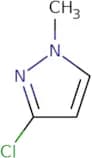
3-Chloro-1-methyl-1H-pyrazole
CAS:<p>3-Chloro-1-methyl-1H-pyrazole is a regioselective, heterocyclic compound. It is a halovinyl derivative of pyrazole and is used in the synthesis of other heterocycles. 3-Chloro-1-methyl-1H-pyrazole has been found to be an efficient synthetic intermediate for both ketones and pyrazoles. The reaction mechanism for this compound involves an initial alkylation followed by a substitution reaction with the nucleophilic hydroxyl group. The final product is formed via a heterocyclization step involving fragmentation and halogenation.</p>Formula:C4H5ClN2Purezza:Min. 95%Peso molecolare:116.55 g/mol1-Cbz-2-methylpyrrolidine-2-carboxylic acid
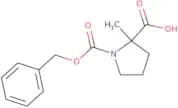
CAS:<p>1-Cbz-2-methylpyrrolidine-2-carboxylic acid is an orally active PARP inhibitor that has been shown to inhibit tumor growth in clinical trials. It is a carboxamide derivative with a cyclic structure. 1-Cbz-2-methylpyrrolidine-2-carboxylic acid blocks cellular proliferation and induces apoptosis by inhibiting DNA synthesis and protein expression. This agent also inhibits the growth of murine melanoma cells in vitro, as well as xenografts in vivo. In addition, 1-Cbz-2-methylpyrrolidine-2-carboxylic acid has been shown to be more potent against cancer cells than other PARP inhibitors, such as abt 888.</p>Formula:C14H17NO4Purezza:Min. 95%Peso molecolare:263.29 g/mol3-(4-Formyl-2-methoxyphenoxy)propanoic acid
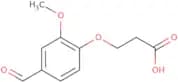
CAS:<p>Versatile small molecule scaffold</p>Formula:C11H12O5Purezza:Min. 95%Peso molecolare:224.21 g/mol6,7-Dimethoxy-3-methyl-1-benzofuran-2-carboxylic acid
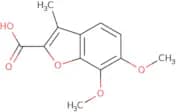
CAS:<p>Versatile small molecule scaffold</p>Formula:C12H12O5Purezza:Min. 95%Peso molecolare:236.22 g/mol3-Methyl-1,5,6,7-tetrahydroindazol-4-one
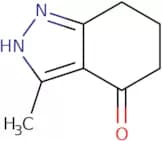
CAS:<p>Versatile small molecule scaffold</p>Formula:C8H10N2OPurezza:Min. 95%Peso molecolare:150.18 g/molMethyl 4-aminobenzoate hydrochloride
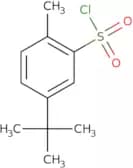
CAS:<p>Methyl 4-aminobenzoate hydrochloride is a compound that is soluble in water and has a molecular weight of 155.14 g/mol. The compound has an acidic nature, with the pKa being 2.5, which makes it a proton donor and an acid catalyst. It can be used to synthesize retinoic acid, which is used to treat acne, by reacting with glycinamide ribonucleotide. Methyl 4-aminobenzoate hydrochloride can also be used for sample pretreatment before analysis by gas chromatography (GC), liquid chromatography (LC) or mass spectrometry (MS). This compound is not highly polar and can therefore be dissolved in non-polar solvents such as hexane or dichloromethane. Methyl 4-aminobenzoate hydrochloride reacts with anthracene and amines to form methyl derivatives.</p>Formula:C8H9NO2·HClPurezza:Min. 95%Peso molecolare:187.63 g/mol5-tert-Butyl-2-methyl-benzenesulfonyl chloride
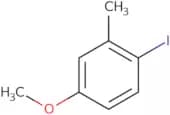
CAS:<p>Versatile small molecule scaffold</p>Formula:C11H15ClO2SPurezza:Min. 95%Peso molecolare:246.75 g/mol1-Iodo-4-methoxy-2-methylbenzene
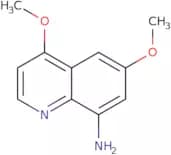
CAS:<p>1-Iodo-4-methoxy-2-methylbenzene (1IMMB) is an iodide which has been used as a precursor in the synthesis of carbonyl groups. This compound has also been shown to have high yields and mechanistic. The carbonyl group is located at the 1,3 positions and the methoxy group is located at the 2 position. This compound reacts with acetonitrile to form a naphthalene derivative. 1IMMB also reacts with an alcohol to form a cyclic ether with regiospecificity. It can also be used as a catalyst in the synthesis of unsymmetrical compounds that contain both carbonyl groups and alcohols.</p>Formula:C8H9IOPurezza:Min. 95%Peso molecolare:248.06 g/mol4,6-Dimethoxyquinolin-8-amine
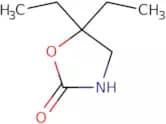
CAS:<p>Versatile small molecule scaffold</p>Formula:C11H12N2O2Purezza:Min. 95%Peso molecolare:204.22 g/mol5,5-Diethyl-1,3-oxazolidin-2-one
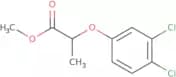
CAS:<p>Versatile small molecule scaffold</p>Formula:C7H13NO2Purezza:Min. 95%Peso molecolare:143.18 g/molMethyl 2-(3,4-dichlorophenoxy)propanoate
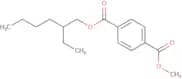
CAS:<p>Versatile small molecule scaffold</p>Formula:C10H10Cl2O3Purezza:Min. 95%Peso molecolare:249.09 g/mol1-(2-Ethylhexyl) 4-methyl benzene-1,4-dicarboxylate
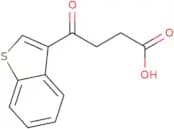
CAS:<p>1-(2-Ethylhexyl) 4-methyl benzene-1,4-dicarboxylate is a silylated, polysulphide sealant with good adhesion to many plastics and metals. It is also used as a plasticizer for acrylates and a sealant for polyurethanes. This product has been shown to be an effective sealant for terephthalate and polyethers. The molecule contains two ester groups that react with the hydroxyl groups on the surface of the substrate to form the crosslinked network.</p>Formula:C17H24O4Purezza:Min. 95%Peso molecolare:292.4 g/mol4-(1-Benzothiophen-3-yl)-4-oxobutanoic acid
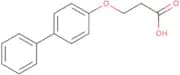
CAS:<p>Versatile small molecule scaffold</p>Formula:C12H10O3SPurezza:Min. 95%Peso molecolare:234.27 g/mol3-(4-Phenylphenoxy)propanoic acid
CAS:<p>Versatile small molecule scaffold</p>Formula:C15H14O3Purezza:Min. 95%Peso molecolare:242.27 g/molEthyl 5-iodonicotinate
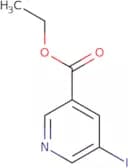
CAS:<p>Versatile small molecule scaffold</p>Formula:C8H8INO2Purezza:Min. 95%Peso molecolare:277.06 g/molChroman-6-yl-acetic acid
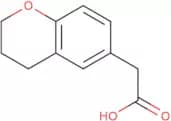
CAS:<p>Versatile small molecule scaffold</p>Formula:C11H12O3Purezza:Min. 95%Peso molecolare:192.22 g/mol7-Methyl-1H-benzo[d][1,3]oxazine-2,4-dione
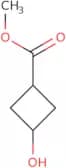
CAS:<p>Versatile small molecule scaffold</p>Formula:C9H7NO3Purezza:Min. 95%Peso molecolare:177.16 g/molMethyl cis-3-hydroxycyclobutanecarboxylate
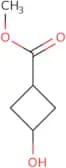
CAS:<p>Versatile small molecule scaffold</p>Formula:C6H10O3Purezza:Min. 95%Peso molecolare:130.14 g/molTrans-methyl 3-hydroxycyclobutanecarboxylate
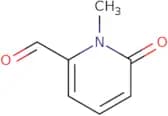
CAS:<p>Versatile small molecule scaffold</p>Formula:C6H10O3Purezza:Min. 95%Peso molecolare:130.1 g/mol1-Methyl-6-oxo-1,6-dihydropyridine-2-carbaldehyde
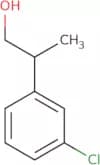
CAS:<p>Versatile small molecule scaffold</p>Formula:C7H7NO2Purezza:Min. 95%Peso molecolare:137.14 g/mol2-(3-Chlorophenyl)propan-1-ol
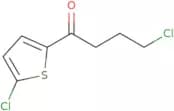
CAS:<p>Versatile small molecule scaffold</p>Formula:C9H11ClOPurezza:Min. 95%Peso molecolare:170.63 g/mol4-Chloro-1-(5-chlorothiophen-2-yl)butan-1-one
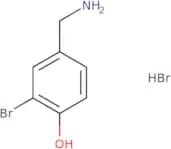
CAS:<p>Versatile small molecule scaffold</p>Formula:C8H8Cl2OSPurezza:Min. 95%Peso molecolare:223.12 g/mol4-(Aminomethyl)-2-bromophenol hydrobromide
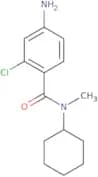
CAS:<p>Versatile small molecule scaffold</p>Formula:C7H9Br2NOPurezza:Min. 95%Peso molecolare:282.96 g/mol4-Amino-2-chloro-N-cyclohexyl-N-methylbenzamide
CAS:<p>Versatile small molecule scaffold</p>Formula:C14H19ClN2OPurezza:Min. 95%Peso molecolare:266.76 g/mol8-Chloro-1H-benzo[D][1,3]oxazine-2,4-dione
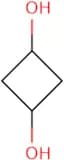
CAS:<p>8-Chloro-1H-benzo[D][1,3]oxazine-2,4-dione is an organic chemical used as a precursor to pharmaceuticals. It is produced by the esterification of an acid chloride with a carboxylic acid. This chemical can be converted into other products through hydrogenation or hydrochlorination. 8-Chloro-1H-benzo[D][1,3]oxazine-2,4-dione is also used in the production of xylene and dichlorobenzene. This compound has two isomers that differ in their reactivity due to steric hindrance. The less reactive isomer has been shown to have antiinflammatory effects in mice.</p>Formula:C8H4ClNO3Purezza:Min. 95%Peso molecolare:197.58 g/molCyclobutane-1,3-diol
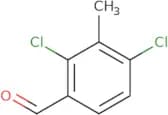
CAS:<p>Cyclobutane-1,3-diol is an organic compound that is a viscous liquid at room temperature. It is used in the production of polyesters and coatings. Cyclobutane-1,3-diol has been shown to be a good ligation partner with ethylene glycol in the liquid phase. It also has been used as an impurity scavenger and as a skeleton for other compounds. Cyclobutane-1,3-diol can be purified by distillation or crystallization, but it may contain fluorine or alkali metal residues that are difficult to remove. There are two stereoisomers of cyclobutane-1,3-diol: D-(+)-cyclobutane-1,3-diol and L-(+)-cyclobutane-1,3-diol.</p>Formula:C4H8O2Purezza:Min. 95%Peso molecolare:88.11 g/mol2,4-Dichloro-3-methylbenzaldehyde
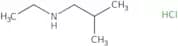
CAS:<p>Versatile small molecule scaffold</p>Formula:C8H6Cl2OPurezza:Min. 95%Peso molecolare:189.04 g/molEthyl(2-methylpropyl)amine hydrochloride
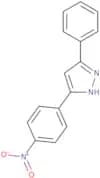
CAS:<p>Versatile small molecule scaffold</p>Formula:C6H16ClNPurezza:Min. 95%Peso molecolare:137.65 g/mol3-(4-Nitrophenyl)-5-phenyl-1H-pyrazole
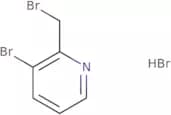
CAS:<p>3-(4-Nitrophenyl)-5-phenyl-1H-pyrazole is a dipole tautomeric proton tautomer with a fluorescence photophysical. It has a molecular orbital that is acidic. 3-(4-Nitrophenyl)-5-phenyl-1H-pyrazole has the following transfer functional groups: nitro, fluorescence, and photophysical. 3-(4-Nitrophenyl)-5-phenyl-1H-pyrazole is an experimentally determined molecule with a molecular orbitals of acidic. It has two tautomers, which are the dipole and tautomers. The dipole tautomeric proton tautomer is the more stable form of 3-(4-Nitrophenyl)-5-phenyl-1H-pyrazole in solution.</p>Formula:C15H11N3O2Purezza:Min. 95%Peso molecolare:265.27 g/mol3-Bromo-2-(bromomethyl)pyridine hydrobromide
CAS:<p>Versatile small molecule scaffold</p>Formula:C6H6Br3NPurezza:Min. 95%Peso molecolare:331.83 g/molBiphenyl-4-yl-hydrazine hydrochloride
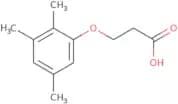
CAS:<p>Versatile small molecule scaffold</p>Formula:C12H13ClN2Purezza:Min. 95%Peso molecolare:220.7 g/mol3-(2,3,5-Trimethylphenoxy)propanoic acid
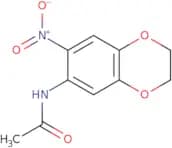
CAS:<p>Versatile small molecule scaffold</p>Formula:C12H16O3Purezza:Min. 95%Peso molecolare:208.25 g/molN-(7-Nitro-2,3-dihydro-1,4-benzodioxin-6-yl)acetamide
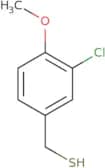
CAS:<p>Versatile small molecule scaffold</p>Formula:C10H10N2O5Purezza:Min. 95%Peso molecolare:238.2 g/mol(3-Chloro-4-methoxyphenyl)methanethiol
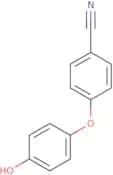
CAS:<p>Versatile small molecule scaffold</p>Formula:C8H9ClOSPurezza:Min. 95%Peso molecolare:188.67 g/mol4-(4-Hydroxyphenoxy)benzonitrile
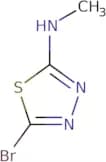
CAS:<p>Versatile small molecule scaffold</p>Formula:C13H9NO2Purezza:Min. 95%Peso molecolare:211.22 g/mol5-Bromo-N-methyl-1,3,4-thiadiazol-2-amine
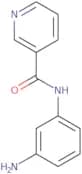
CAS:<p>Versatile small molecule scaffold</p>Formula:C3H4BrN3SPurezza:Min. 95%Peso molecolare:194.06 g/molN-(3-Aminophenyl)nicotinamide
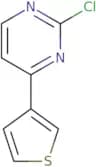
CAS:<p>Versatile small molecule scaffold</p>Formula:C12H11N3OPurezza:Min. 95%Peso molecolare:213.23 g/mol2-Chloro-4-(thiophen-3-yl)pyrimidine
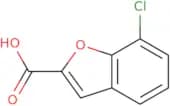
CAS:<p>Versatile small molecule scaffold</p>Formula:C8H5ClN2SPurezza:Min. 95%Peso molecolare:196.66 g/mol7-Chlorobenzofuran-2-carboxylic acid
CAS:<p>Versatile small molecule scaffold</p>Formula:C9H5O3ClPurezza:Min. 95%Peso molecolare:196.58 g/moltert-butyl N-{[(1s,3s)-3-aminocyclobutyl]methyl}carbamate, cis
CAS:<p>Versatile small molecule scaffold</p>Formula:C10H20N2O2Purezza:Min. 95%Peso molecolare:200.3 g/mol2-(tert-Butoxycarbonyl)-2-azaspiro[4.5]decane-8-carboxylic acid
CAS:<p>Versatile small molecule scaffold</p>Formula:C15H25NO4Purezza:Min. 95%Peso molecolare:283.36 g/molmethyl 5H-pyrrolo[2,3-b]pyrazine-2-carboxylate
CAS:<p>Versatile small molecule scaffold</p>Formula:C8H7N3O2Purezza:Min. 95%Peso molecolare:177.16 g/molmethyl 1H-pyrazolo[3,4-c]pyridine-4-carboxylate
CAS:<p>Versatile small molecule scaffold</p>Formula:C8H7N3O2Purezza:Min. 95%Peso molecolare:177.16 g/mol6-Boc-1-oxo-6-azaspiro[3.5]nonane
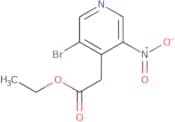
CAS:<p>Versatile small molecule scaffold</p>Formula:C13H21NO3Purezza:Min. 95%Peso molecolare:239.31 g/molEthyl 2-(3-bromo-5-nitropyridin-4-yl)acetate
CAS:<p>Versatile small molecule scaffold</p>Formula:C9H9BrN2O4Purezza:Min. 95%Peso molecolare:289.08 g/mol1-(Boc-aminomethyl)cyclobutan-3-methanamine
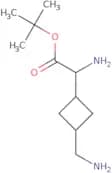
CAS:<p>Versatile small molecule scaffold</p>Formula:C11H22N2O2Purezza:90%Peso molecolare:214.3 g/moltert-Butyl N-[3-(hydroxymethyl)oxetan-3-yl]carbamate
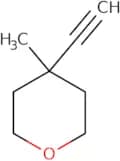
CAS:<p>Versatile small molecule scaffold</p>Formula:C9H17NO4Purezza:Min. 95%Peso molecolare:203.24 g/mol4-Ethynyl-4-methyloxane
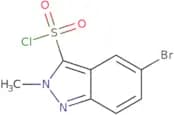
CAS:<p>Versatile small molecule scaffold</p>Formula:C8H12OPurezza:Min. 95%Peso molecolare:124.18 g/mol5-Bromo-2-methyl-2H-indazole-3-sulfonyl chloride
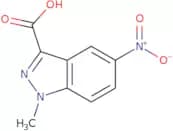
CAS:<p>Versatile small molecule scaffold</p>Formula:C8H6BrClN2O2SPurezza:Min. 95%Peso molecolare:309.57 g/mol1-methyl-5-nitro-1H-indazole-3-carboxylic acid
CAS:Prodotto controllato<p>Versatile small molecule scaffold</p>Formula:C9H7N3O4Purezza:Min. 95%Peso molecolare:221.17 g/mol

![7-Methyl-1H-benzo[d][1,3]oxazine-2,4-dione](/_next/image/?url=https%3A%2Fstatic.cymitquimica.com%2Fproducts%2F3D%2Fthumb-webp%2FNCA48011.webp&w=3840&q=75)
![8-Chloro-1H-benzo[D][1,3]oxazine-2,4-dione](/_next/image/?url=https%3A%2Fstatic.cymitquimica.com%2Fproducts%2F3D%2Fthumb-webp%2FNCA49760.webp&w=3840&q=75)

![tert-butyl N-{[(1s,3s)-3-aminocyclobutyl]methyl}carbamate, cis](/_next/image/?url=https%3A%2Fstatic.cymitquimica.com%2Fproducts%2F3D%2Fthumb-webp%2FNEC38181.webp&w=3840&q=75)
![2-(tert-Butoxycarbonyl)-2-azaspiro[4.5]decane-8-carboxylic acid](/_next/image/?url=https%3A%2Fstatic.cymitquimica.com%2Fproducts%2F3D%2Fthumb-webp%2FNEC38187.webp&w=3840&q=75)
![methyl 5H-pyrrolo[2,3-b]pyrazine-2-carboxylate](/_next/image/?url=https%3A%2Fstatic.cymitquimica.com%2Fproducts%2F3D%2Fthumb-webp%2FNEC38189.webp&w=3840&q=75)
![methyl 1H-pyrazolo[3,4-c]pyridine-4-carboxylate](/_next/image/?url=https%3A%2Fstatic.cymitquimica.com%2Fproducts%2F3D%2Fthumb-webp%2FNEC38190.webp&w=3840&q=75)
![6-Boc-1-oxo-6-azaspiro[3.5]nonane](/_next/image/?url=https%3A%2Fstatic.cymitquimica.com%2Fproducts%2F3D%2Fthumb-webp%2FNEC38196.webp&w=3840&q=75)
![tert-Butyl N-[3-(hydroxymethyl)oxetan-3-yl]carbamate](/_next/image/?url=https%3A%2Fstatic.cymitquimica.com%2Fproducts%2F3D%2Fthumb-webp%2FNEC38211.webp&w=3840&q=75)